The Surprisingly High Level of Live Performance Seen Through Pink Floyd’s 50th Anniversary Album Wish You Were Here
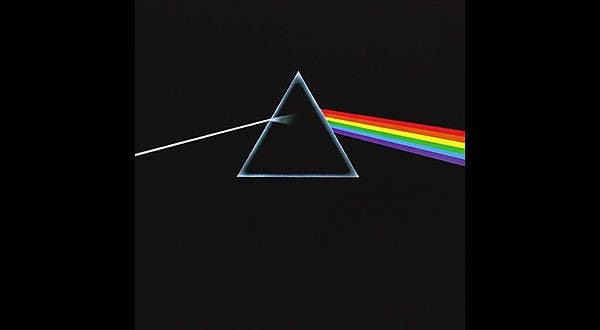
Among the takes included in Wish You Were Here, the Pink Floyd album I covered last time, there were tracks other than those from the original album. Among them were live takes from the masterpiece The Dark Side of the Moon. The Dark Side of the Moon is a historic masterpiece released by Pink Floyd in 1973, and it continues to receive overwhelming support from many Pink Floyd fans even today. Its artistic value goes beyond the framework of progressive rock and continues to shine brilliantly in the history of rock. I don’t know why live takes from The Dark Side of the Moon were included on the album Wish You Were Here, but what surprised me was the remarkably high level of reproducibility in these live takes of Pink Floyd’s The Dark Side of the Moon.
Pink Floyd, Technically Speaking…
Progressive rock, and Pink Floyd in particular, often features album concepts that are more complex compared to straightforward rock bands. The Dark Side of the Moon, especially, is constructed with an abundance of sound elements such as sound effects, screams, heartbeat sounds, running footsteps, and clock bells. Furthermore, Pink Floyd worked with the brilliant recording engineer Alan Parsons. Alan Parsons was a renowned first-call recording engineer who worked on legendary albums such as the Beatles’ Abbey Road. The Dark Side of the Moon was recorded by such a top-tier engineer it’s an album that fully utilized studio techniques. I had always thought that reproducing such intricately crafted original tracks in a live setting would be virtually impossible, and I doubt I was the only one who felt that way.
In particular, the 50th Anniversary Japan Edition includes live takes from 1975—live recordings made two years after the release of The Dark Side of the Moon. Considering that this was done with equipment from 50 years ago, not the technologically advanced gear of the 2000s, I thought it would be nearly impossible to reproduce their music to such an extent.
At its core, Pink Floyd originally had folk-like pop songs as its foundation. If you listen to the B-side of Atom Heart Mother, which gained attention for its collaboration with an orchestra, you’ll find tracks where Pink Floyd plays folk-style songs and blues—the complete opposite of grand, epic compositions. In songs featuring acoustic guitar such as “If,” “Fat Old Sun,” and “Summer ’68,” you can hear an acoustic touch reminiscent of piano-and-vocal performances, with beautiful, distinctly British melodic lines that linger in the ear. Early songs like “See Emily Play” show psychedelic aspects, but while Pink Floyd could be seen as a high-quality British pop band, they were also viewed by some as an oddball band with experimental and psychedelic elements. As they incorporated classical and progressive elements, the band’s overall character began to change. These elements increased the difficulty of reproducing the songs, ultimately leading to The Dark Side of the Moon. It goes without saying that the mysterious artwork by the British design collective Hipgnosis also played a major role. Because they were originally that kind of band, my belief was that reproducing the complex music from The Dark Side of the Moon would be impossible.
■ Recommended Album: Pink Floyd Pink Floyd at Pompeii (2025)
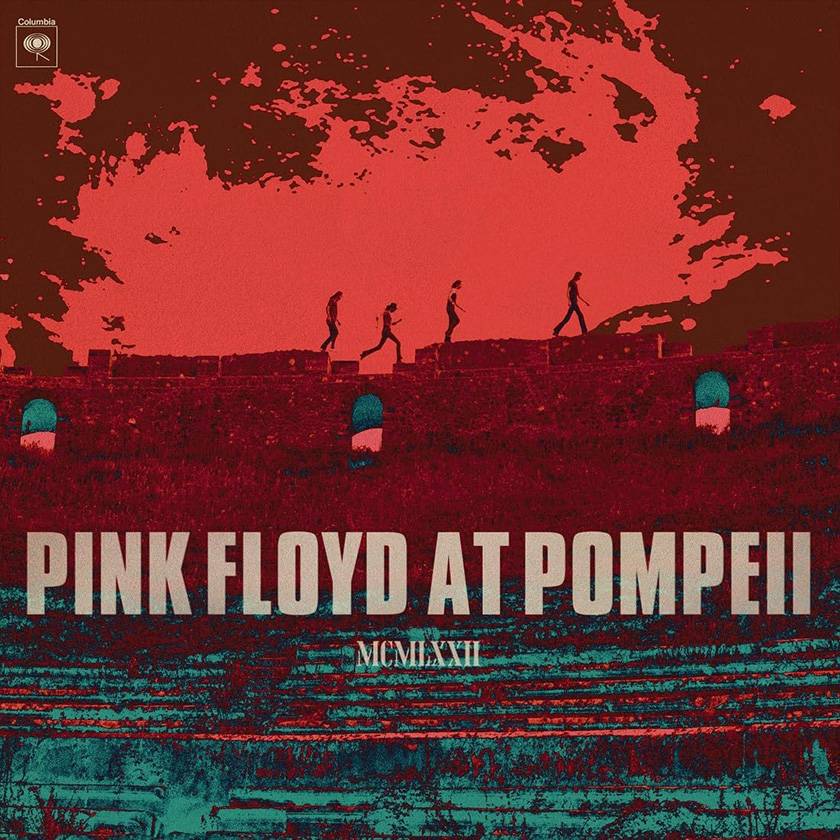
A live album recorded in Pompeii and released in 1971.
What is astonishing is that it almost perfectly reproduces the epic track “Echoes” from the album Meddle.
The mysterious opening “ping” sound—whose source was widely debated, with guesses ranging from a piano processed through a ring modulator to a synthesizer—was eventually revealed to be an acoustic piano run through a Leslie speaker, which then deeply reverberated and equalized. Because it was created using studio techniques, many thought it would be impossible to reproduce that sound live, yet in the Pompeii performance, the sound is perfectly recreated. I was amazed that Pink Floyd had the performance ability to reproduce “Echoes.” The vocals are also almost indistinguishable from the studio recording.
■ Recommended Album: Pink Floyd - Wish You Were Here (2025)
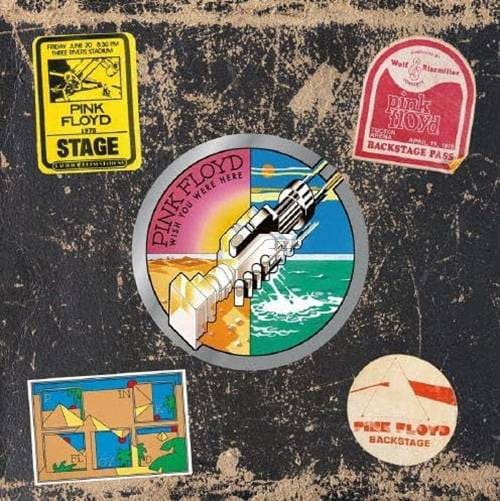
A special release commemorating the 50th anniversary of Pink Floyd’s Wish You Were Here. This Wish You Were Here – 50th Anniversary Japan Edition includes a 1975 bootleg live recording from the Los Angeles Sports Arena of the album The Dark Side of the Moon. Listening to this live take shows that, as of 1975, the tracks from The Dark Side of the Moon could be reproduced live almost perfectly. My humbled assumptions were completely overturned by them.
Recommended Track: “On the Run”
This iconic track is known for translating the concept of running around into music using an 8-note sequence programmed on a synthesizer from the UK’s EMS (Electronic Music Studios). While automated synthesizer performance is commonplace today, in 1973, people were amazed and asked, “What is this phrase?! Who is playing it?” Pink Floyd introduced this EMS synthesizer in their live performances, achieving its wonderfully mysterious sound.
Musicians, Albums, and Recommended Tracks Featured This Time
- Artist: Pink Floyd, David Gilmour, Rick Wright, Roger Waters, Nick Mason
- Albums: Pink Floyd at Pompeii, Wish You Were Here – 50th Anniversary Japan Edition
- Recommended Tracks: “Echoes,” “On the Run”
The “sound & person” column is made up of contributions from you.
For details about contributing, click here.










 フェンダーアコースティックギターのすゝめ
 シンセサイザー 入門ガイド
 人気のワイヤレスイヤホン おすすめランキング
 ギタースタートガイド
 ヘッドホン初心者講座
 Discount Sale
 Outlet
 New Arrivals
 Podcast (streaming)
 Headphones / Earphones
 Microphones
 Wireless Equipment
 Speakers
 Power Amps
 Mixers
 Processors
 Portable PA Systems
 Recorders
 Karaoke
 Guitars
 Basses
 Ukuleles
 Drums & Percussion
 Pianos / Synthesizers
 Wind Instruments
 Stringed Instruments
 Japanese Instruments
 Harmonicas, Other
 Software
 DJ & VJ
 Stands
 Cables & Connectors
 Racks & Cases
 Lighting
 Stage & Truss
 Video Equipment
 PC PERIPHERALS
 Power Supplies
 Studio Furniture
 Household Items, Other
 Alcoholic Beverages