Hello! I’m Sugimoto, a PA staff member at Sound House, and I also play drums in my private life.
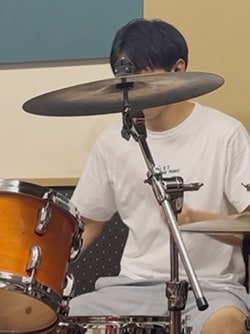
These days, it’s no longer unusual for a band to have a drummer who also handles backing vocals. Adding backing vocals gives a song more depth and raises the overall quality of a live performance. From a PA perspective, however, drum vocals can be a somewhat challenging part to handle. Since loud sounds such as the snare and cymbals are constantly coming from around the drum kit, the vocal microphone is likely to pick up not only the singer’s voice but also the sound of the drums, and the backing vocals can easily get buried.
This time, I’ll introduce some setting tips and recommended gear to make drum vocals as easy to hear as possible.
01First, Reconsider Your Setup
Actually, before replacing any equipment, there are some points you can improve with your current setup.
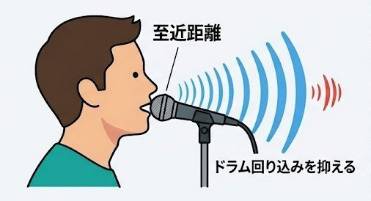
Keep the Microphone as Close to Your Mouth as Possible
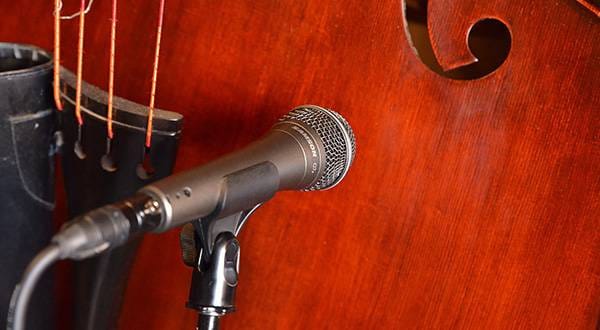
When singing, it is recommended to use the microphone as close to your mouth as possible. Even if your mouth moves just a little farther away from the microphone, the attack of the snare and the high frequencies of the cymbals can get into that gap. Even if you’re thinking from the PA position, “I want to turn up the backing vocals more,” if the microphone is picking up too much of the drums, turning up the backing vocal volume will also turn up the surrounding drum sounds by the same amount. As a result, you may end up being unable to raise the volume any further. When singing, try to keep the microphone extremely close—close enough that your mouth is almost touching the microphone grille. This alone can make it easier to reduce drum bleed.
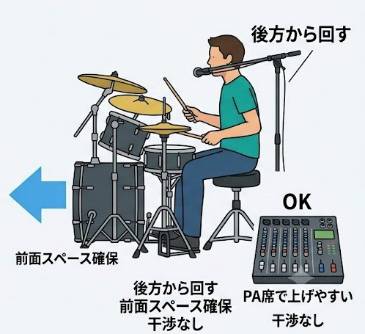
Bring the Stand Around from Behind
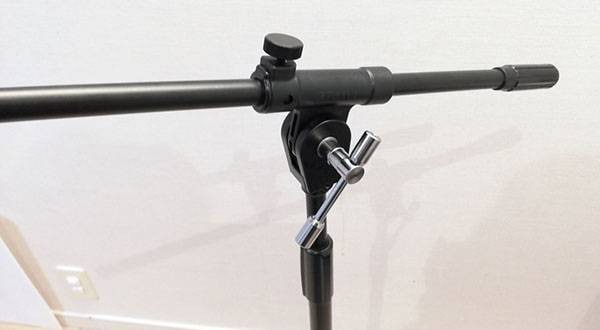
If you extend a straight stand from the side or front of the drums, the sticks can hit it when moving around the toms or crashing the cymbals, and it can also get in the way of your view. That’s why I recommend routing a boom stand around from behind your body (from the back) and bringing the microphone down to your mouth from above. This keeps the performance space in front of you clear, making it less likely for the stand to interfere with your sticks or arms while playing. It also reduces the risk of the microphone position shifting during a live performance, allowing you to sing from a stable position.
02Sometimes Simply Changing the Microphone Can Help
If you’ve reconsidered your setup but are still bothered by surrounding sounds getting into the microphone, reviewing your choice of microphone can also be an effective solution.
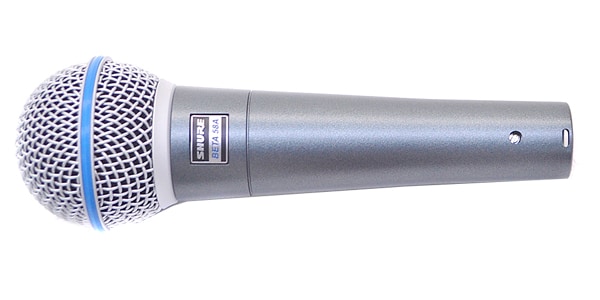
The BETA58A is a standard model for live vocals. Compared with the SM58 (cardioid), which is often found in studios and other environments, it uses a supercardioid pattern, which has a narrower pickup area. It has characteristics that make it easy to capture the singing voice directly in front of the microphone while shutting out instrument sounds entering from the sides and rear. This makes it a very easy microphone to use for drum vocals, where cymbals are sounding right behind you. It is an excellent choice as an upgrade from the SM58, as well as a first personal microphone.
03If You Want to Make Active Use of Backing Vocals, Consider a Vocal Processor
For those who want to create the same quality of performance every time, such as layering harmonies to match the song or adding beautiful reverb, a vocal processor can also be very useful.
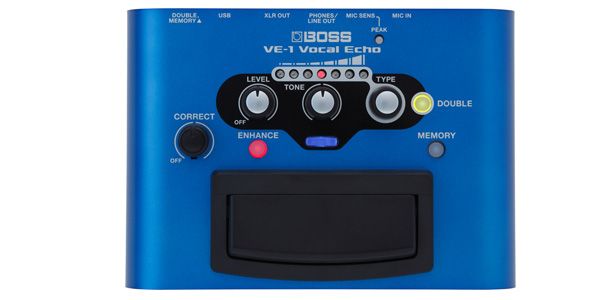
BOSS / VE-1 Vocal Effects Processor
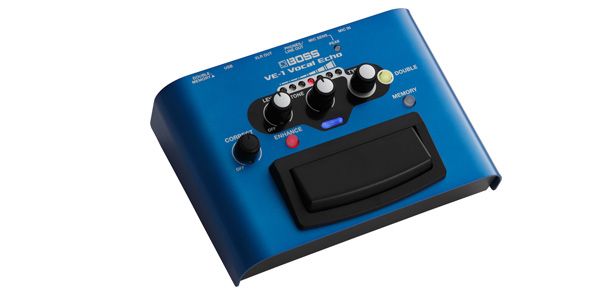
The VE-1 is a compact model equipped with vocal effects that are easy to use live, such as harmony and reverb. Its simple operation makes it easy to use even between playing, and it is also ideal as a first vocal effects processor. Rather than creating flashy effects, it makes it easy to create natural-sounding backing vocals, making it a unit that is also easy to incorporate into drum vocals.
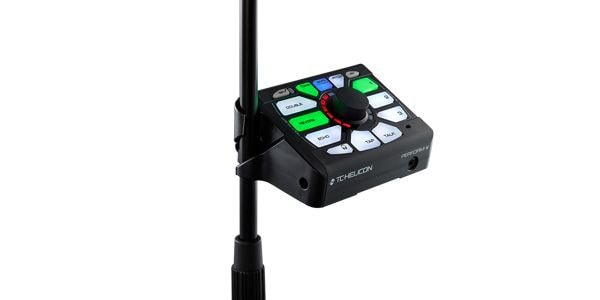
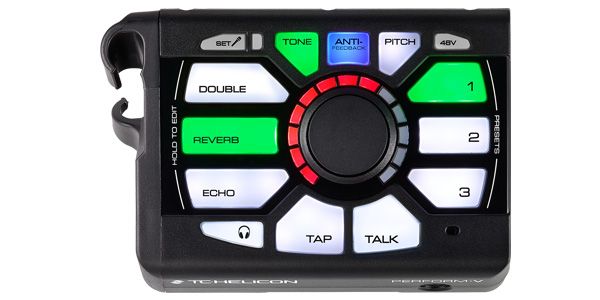
The Perform-V is a vocal processor designed for live use that can be attached directly to a microphone stand. Harmony, reverb, and other effects can be easily controlled, making it an easy-to-use model even with a drum kit where performance space is limited. It is recommended for anyone who wants to actively incorporate backing vocals into live performances.
04Convenient to Have! Consider a Gooseneck
When setting up drum vocals, you may sometimes find yourself struggling with fine adjustments, such as “I want to move the microphone just a few centimeters closer” or “I want to angle it just a little more.” Another common issue for drummers is that the screws on the boom stand loosen due to the intense vibrations from the drums, causing the microphone to gradually drop during a performance (essentially, it starts bowing down).
That’s where a flexible gooseneck that attaches to the end of a microphone stand comes in handy. It allows you to make fine angle adjustments, weaving through the precise gaps between toms and cymbals, making it possible to create a setup that matches your playing form 100%.
In fact, Tatsuya, the drummer of Crossfaith, also uses a gooseneck within his fortress-like live setup, making it a particularly well-suited item for drummers who sing while playing intensely. It may not be flashy equipment, but if you want to increase the flexibility and stability of your setup, it is definitely worth giving one a try.
If you’re interested in seeing an actual setup, be sure to check out the YouTube video below for reference.
Conclusion
With drum vocals, even small adjustments to the microphone position and the way you sing can make a significant difference in how your voice comes across to the audience.
I recommend starting with free adjustments, such as reconsidering the distance from the microphone and the position of the stand, and then, as needed, making use of useful gear such as highly directional microphones, vocal processors, and goosenecks.
When the backing vocals come through clearly, the overall sound scale of the band can be elevated by one or even two levels. Please give these tips a try at your next rehearsal or live performance.
That’s all from Sugimoto, your PA staff member!





 PLAYTECH ドラム 特集
 コンデンサーマイクで「合唱」を収録!
 BOSS ボーカル・エフェクターのススメ
 コンデンサーマイクとは
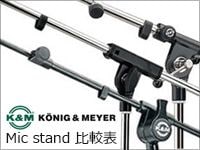 K&M マイクスタンド比較表
 ワンランク上のボーカルマイク選び
 Discount Sale
 Outlet
 New Arrivals
 Podcast (streaming)
 Headphones / Earphones
 Microphones
 Wireless Equipment
 Speakers
 Power Amps
 Mixers
 Processors
 Portable PA Systems
 Recorders
 Karaoke
 Guitars
 Basses
 Ukuleles
 Drums & Percussion
 Pianos / Synthesizers
 Wind Instruments
 Stringed Instruments
 Japanese Instruments
 Harmonicas, Other
 Software
 DJ & VJ
 Stands
 Cables & Connectors
 Racks & Cases
 Lighting
 Stage & Truss
 Video Equipment
 PC PERIPHERALS
 Power Supplies
 Studio Furniture
 Household Items, Other
 Alcoholic Beverages