Shure’s GLX-D+ is a wireless system for guitar.
It’s a very convenient product, but I’ve always wanted to tidy up the power adapter cable!
So this time, I used a USB PD trigger cable and a mobile battery to free the GLXD6+ from the wall outlet.
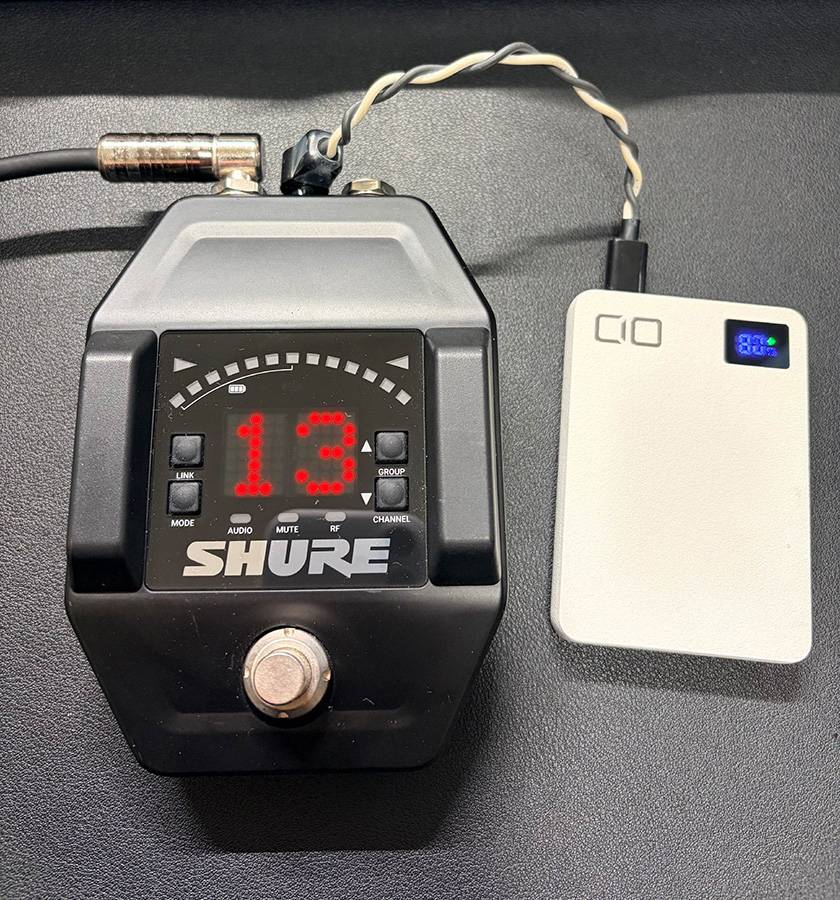
Powering the GLX-D+ via USB Type-C
USB PD is a standard that allows power to be supplied via USB Type-C at voltages of not only 5V, but also 9V, 12V, and so on.
Using a trigger cable, you can power DC devices such as effects pedals from a USB PD-compatible mobile battery or USB charger. We’re now in an era where effects pedals and musical equipment can be powered via Type-C!
The power specifications for the GLXD6+ used in this test are DC 9-15V/400mA or higher. It supports both center-positive and center-negative polarity.
This time, I used a 5,000mAh mobile battery compatible with 20W USB PD and a 9V trigger cable.
OYAIDE / DC-3398USB PDT 9V(-)/0.3m

*For the photos, I used a trigger cable for testing operation. Its appearance and other details differ slightly from those of the OYAIDE cable featured in this article.
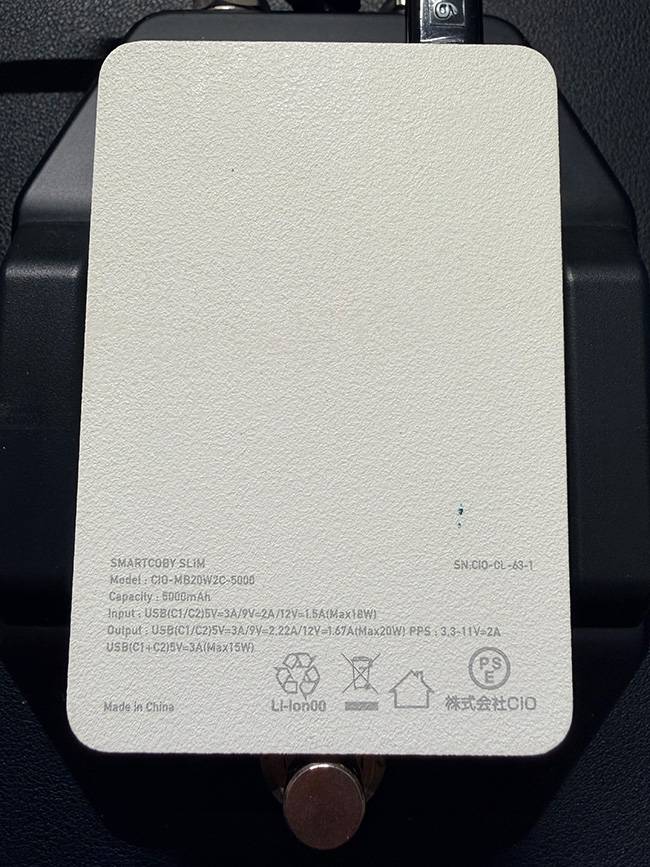
Speaking of mobile batteries, Sound House has started carrying Anker products, so be sure to check them out!


Putting It to the Test
The connection is simply:
Mobile battery
↓
9V trigger cable
↓
GLXD6+
That’s all there is to it.
As soon as I plugged in the connector, the unit powered up without any problems. I also connected a guitar and confirmed that it worked normally.
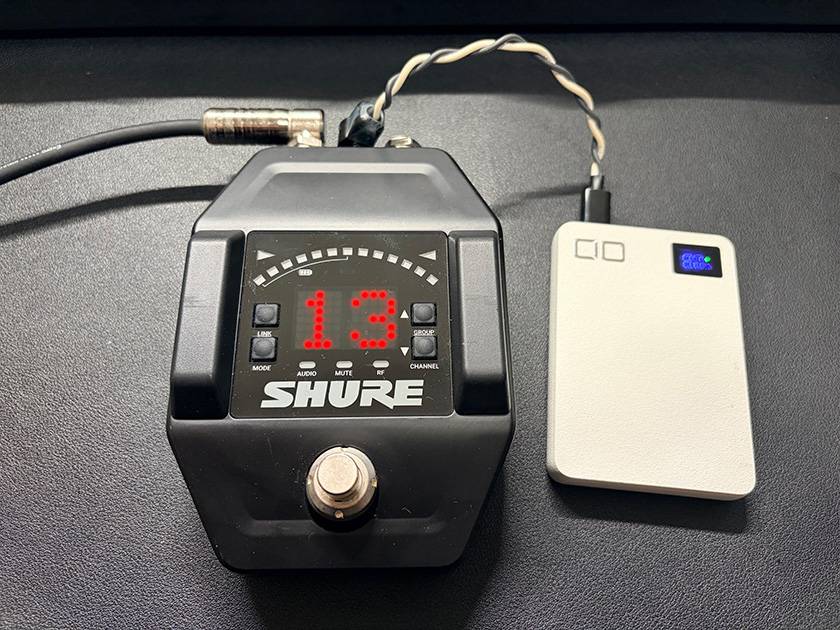
With a mobile battery, there’s no need to look for a wall outlet or deal with routing a power cable.
You can position the GLXD6+ and effects pedals wherever you like, making the setup considerably more hassle-free.
In my setup, the 5,000mAh battery lasted approximately 3-4 hours. That’s practical enough for live performances and studio rehearsals. When stacked together, the setup is quite compact.
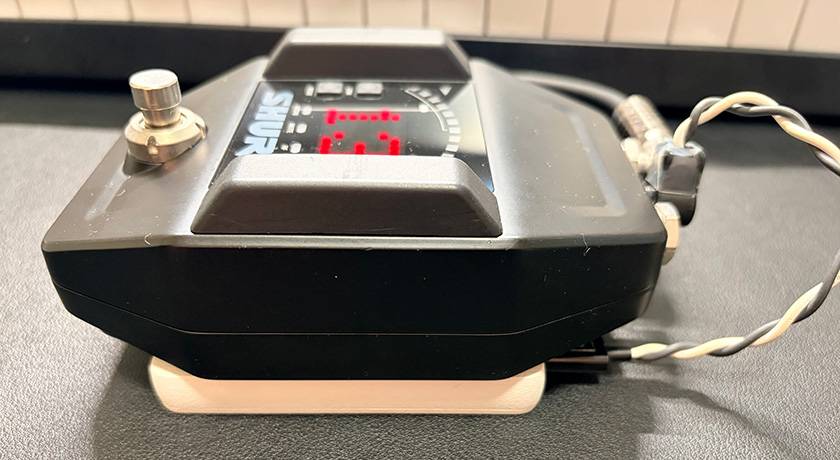
You can also power the unit using a USB PD-compatible AC adapter, not just a mobile battery.

Precautions When Using It
So far, I’ve focused on the convenience of this setup, but mobile batteries differ in their output specifications and protection features depending on the product.
Before use, be sure to check the device’s voltage, required current, polarity, and plug size, as well as whether the mobile battery supports the USB PD output required by the device.
Depending on the model, the battery may interpret a low power consumption state as “no load” and automatically stop supplying power.
If you notice anything unusual during use, such as the mobile battery or cable becoming noticeably hotter than usual, an unusual odor, swelling, or unstable power delivery, stop using it immediately.
Incidentally, I’ve been using this setup without any problems so far, but I can’t guarantee that it will work with every combination of mobile battery and equipment.
So, here comes the usual disclaimer...
Make sure to check the specifications carefully, and ultimately, use it at your own risk lol.
Conclusion
Powering effects pedals and musical equipment via USB Type-C is simpler and more convenient than you might imagine.
I really hope trigger cables become more popular!
Give it a try yourself!
*Before use, be sure to check the device’s voltage, required current, polarity, DC plug specifications, and the output specifications of the USB PD power supply.






 BOSS ワイヤレス特集
 はじめてのギター
 audio-technica ワイヤレスシステム
 ギターケーブルの作り方
 ケーブル購入ガイド
 Discount Sale
 Outlet
 New Arrivals
 Podcast (streaming)
 Headphones / Earphones
 Microphones
 Wireless Equipment
 Speakers
 Power Amps
 Mixers
 Processors
 Portable PA Systems
 Recorders
 Karaoke
 Guitars
 Basses
 Ukuleles
 Drums & Percussion
 Pianos / Synthesizers
 Wind Instruments
 Stringed Instruments
 Japanese Instruments
 Harmonicas, Other
 Software
 DJ & VJ
 Stands
 Cables & Connectors
 Racks & Cases
 Lighting
 Stage & Truss
 Video Equipment
 PC PERIPHERALS
 Power Supplies
 Studio Furniture
 Household Items, Other
 Alcoholic Beverages