Today, the shakuhachi is known as a traditional Japanese instrument.
When I first started playing the shakuhachi, I had only a general understanding of it as an instrument that has been in Japan since ancient times. Based on its name and its distinctive appearance made of bamboo, I had always thought it was an instrument that originated in Japan. However, when I took another look at its history, I discovered that the shakuhachi has a much longer and more surprising history than I had imagined.
Tracing the history of the shakuhachi reveals that the ancient shakuhachi introduced to Japan during the Nara period was not passed down continuously to the present day. Instead, it disappeared from the historical stage for a time. Later, over the centuries, it developed into a form that led to the modern shakuhachi, and during the Edo period, it came to have a deep connection with komusō monks and the Fuke sect. In other words, the shakuhachi is not an instrument that has continued in the same form since ancient times. It is an instrument that has changed its form through the changing eras, eventually leading to the shakuhachi we know today. In this article, I will introduce the history of the shakuhachi, explaining each period as clearly as possible.
■ Shakuhachi History Timeline
| Period | Event |
|---|---|
| 7th-8th centuries | Vertical flutes, the ancestors of the shakuhachi, were played in Tang China |
| 710-794 | Introduced to Japan by Japanese envoys to Tang China during the Nara period |
| Around 756 | Ancient shakuhachi were placed in the Shōsōin Repository |
| 794-1185 | Disappeared from gagaku court music during the Heian period |
| 16th-17th centuries | The prototype of the modern shakuhachi became widespread |
| Edo period | Developed as a ritual instrument of komusō monks and the Fuke sect |
| From the Meiji period onward | Became widely played as a general musical instrument |
1. The Shakuhachi Has Its Roots in China
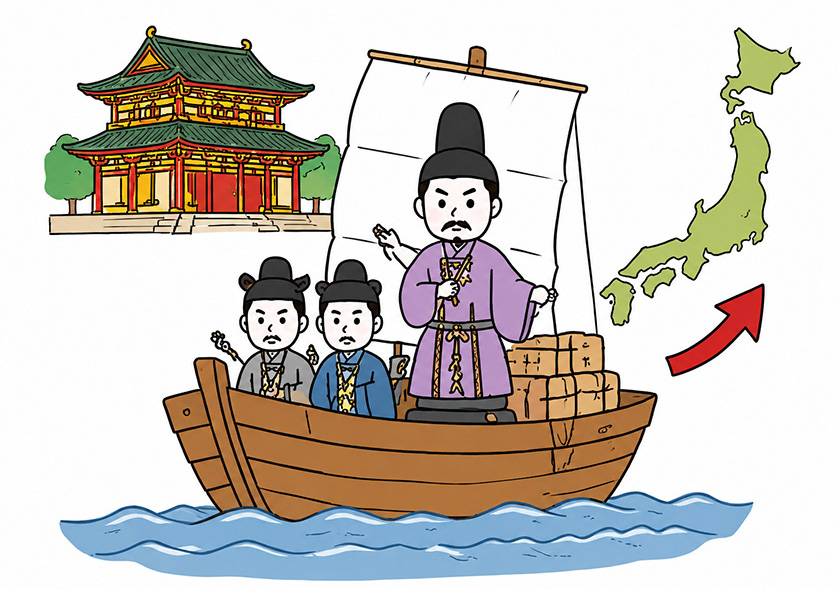
Although the shakuhachi is now known as a traditional Japanese instrument, its roots are believed to lie in Tang China, around the 7th and 8th centuries. According to materials from the Tokyo National Museum (Cultural Heritage Online) and the National Theatre of Japan, vertical flutes were widely played in China at the time and were introduced to Japan during the Nara period (710-794) through Japanese envoys to Tang China and other channels.
At the time, Japan was adopting many aspects of Chinese culture, including political systems, Buddhism, architecture, and calligraphy. Music was no exception, and the shakuhachi was one of the things introduced. In other words, although the shakuhachi is now familiar as a Japanese traditional instrument, it was originally an instrument that crossed the sea to Japan.
The name ‘shakuhachi’ comes from its standard length of one shaku and eight sun (approximately 54.5 cm). The instrument I usually play is also the standard 1.8-shaku model. However, shakuhachi come in various lengths, including 1.6-shaku and 2.0-shaku models, and their ranges vary depending on their length. When I had just started playing the shakuhachi, I remember finding it a little puzzling and wondering, “It isn’t 1.8 shaku long, so is this also called a shakuhachi?”
2. Introduced as an Instrument of Gagaku During the Nara Period
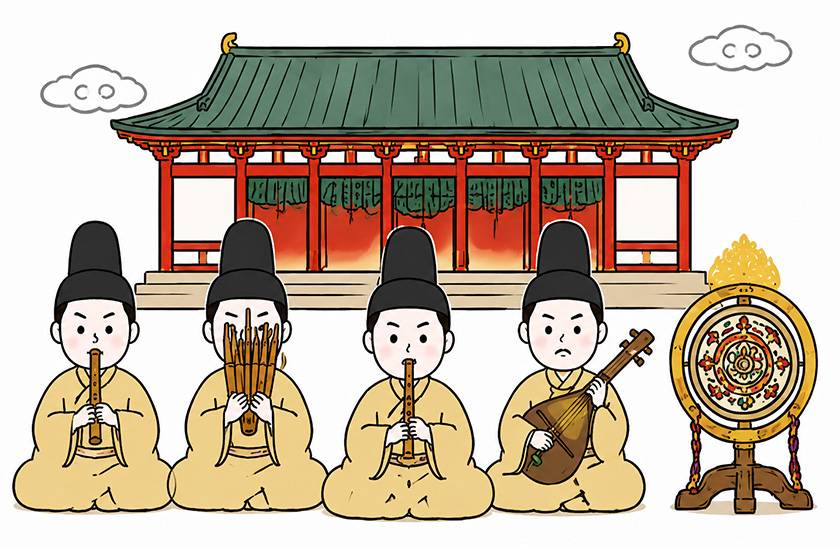
Japanese envoys were sent to Tang China over a period of approximately 260 years, from 630 to 894. Their role was not limited to diplomacy; they also brought the latest culture and technology back to Japan. The shakuhachi was one of the instruments introduced during this period and is believed to have been used in gagaku, Japanese court music, alongside instruments such as the shō, hichiriki, and ryūteki. At the imperial court of the time, music introduced from overseas was considered cutting-edge culture, and the shakuhachi was also played before members of the aristocracy.
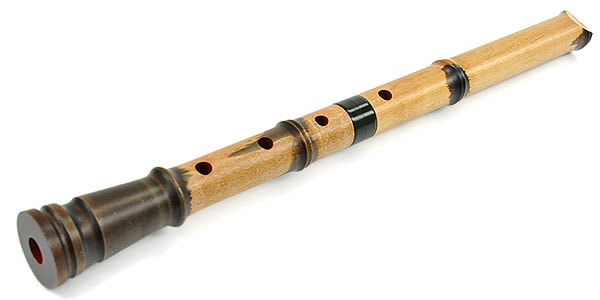
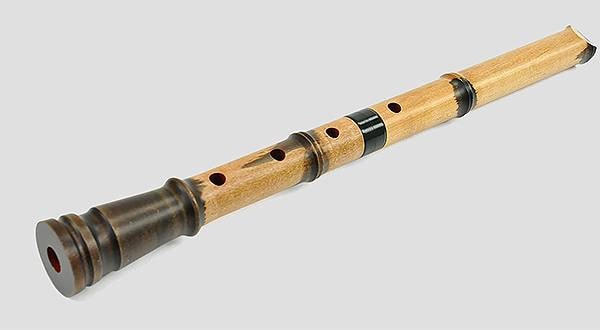
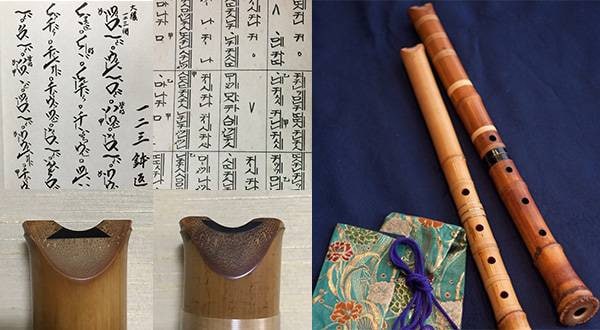
Modern shakuhachi have five finger holes, but the shakuhachi of this period were known as kodai shakuhachi, or ancient shakuhachi, and had six finger holes. Their appearance and blowing edges differed from those of modern instruments, and their playing techniques are also thought to have been different.
3. Shakuhachi from Approximately 1,300 Years Ago Preserved at the Shōsōin Repository
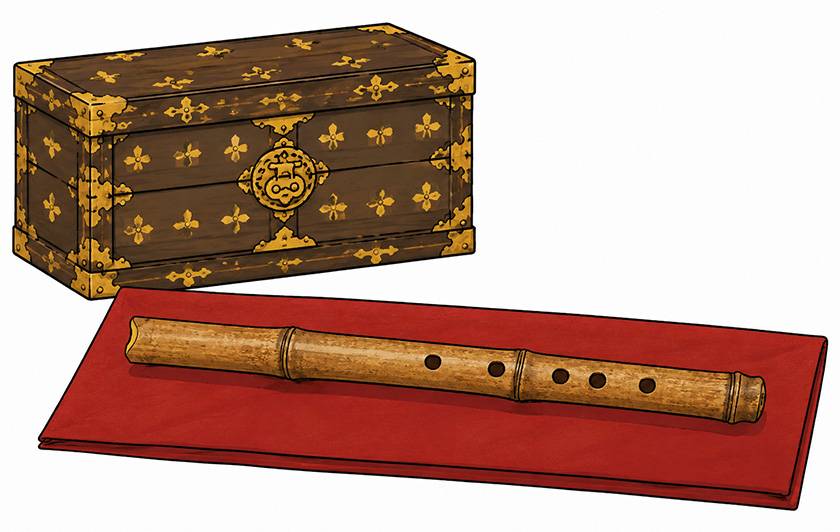
The Shōsōin Repository, managed by the Imperial Household Agency, still preserves eight ancient shakuhachi from the Nara period. The fact that instruments dating back approximately 1,300 years have survived in good condition is of great value on a global scale.
Some of the shakuhachi in the Shōsōin are beautifully decorated not only with bamboo but also with materials such as gemstones and ivory, offering a glimpse into the high level of craftsmanship of the time. Many people have probably seen the name Shōsōin in history textbooks, but it is perhaps not widely known that shakuhachi are preserved there.
When you look at the actual reference materials, these instruments make quite a different impression from modern shakuhachi. Even though they share the same name, it may be easier to understand them as a different instrument from the modern shakuhachi.
I play the shakuhachi myself, and when I first saw a photograph of an ancient shakuhachi, I was intrigued by its six finger holes and thought, “Oh, so it’s different from the shakuhachi we have today.” Modern shakuhachi generally have five holes, so I was struck by how dramatically the instrument’s appearance differs depending on the period, despite sharing the same name.
4. It Disappeared During the Heian Period
The ancient shakuhachi, which played a role in gagaku during the Nara period, gradually fell out of use during the Heian period (794-1185). There are various theories as to why, but it is believed that the shakuhachi disappeared as the ensemble of gagaku was reorganized, bringing its performance to an end.
It is easy to assume that the same shakuhachi has continued from the Nara period to the present day, but in reality, it disappeared from the historical stage for a time. This is one of the fascinating aspects of the shakuhachi’s history.
How, then, did the shakuhachi, after disappearing once, eventually lead to the instrument we know today? In the next article, I will introduce the history from the emergence of the hitoyogiri flute through the komusō monks and the Fuke sect, and on to the shakuhachi of the Edo period.
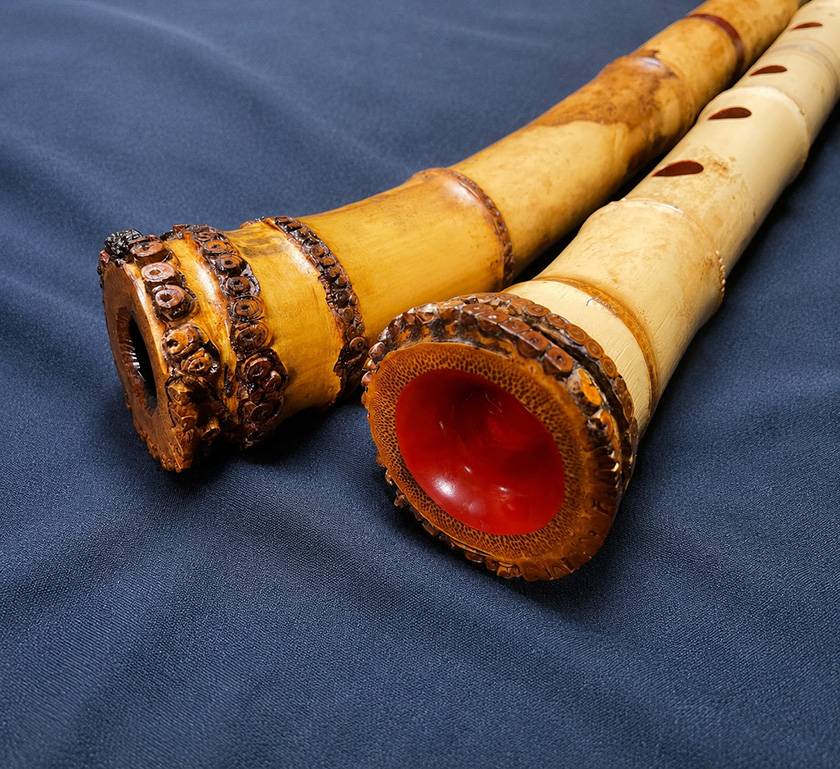
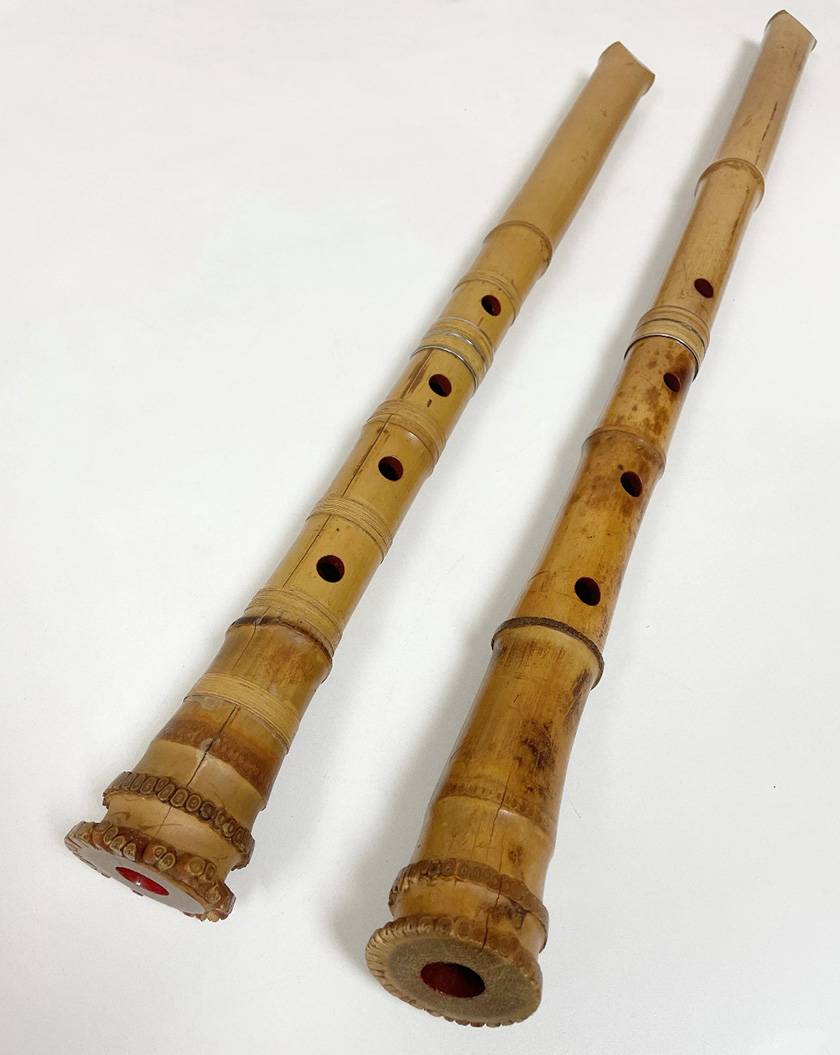
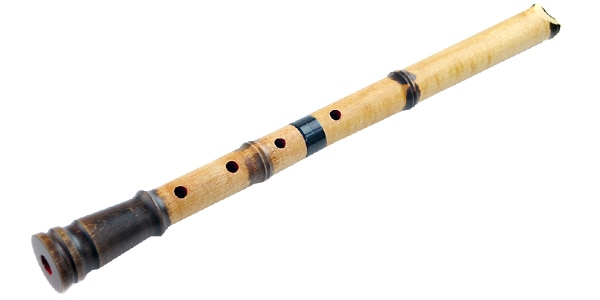
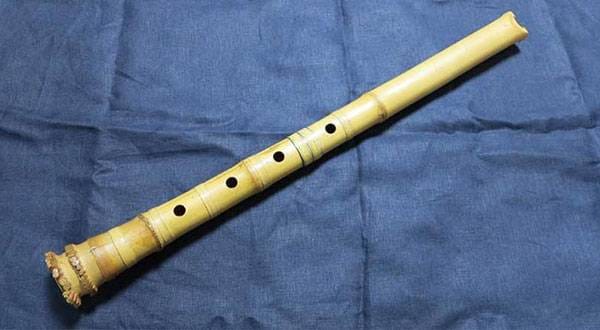
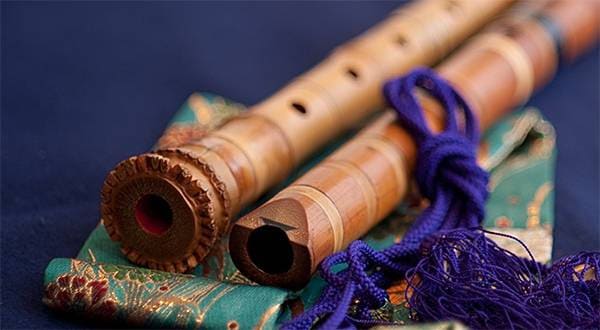
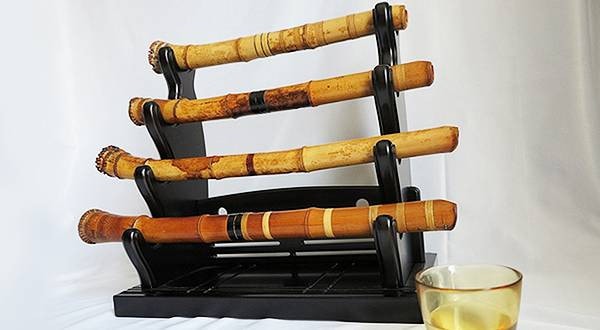
Finally, here is a shakuhachi that I personally own. Even among shakuhachi, each instrument has its own unique character, from the color of the bamboo and the shape of its nodes to the root section. Researching its history reveals how the instrument has been passed down through the ages, changing its form along the way, from the ancient shakuhachi of approximately 1,300 years ago to the shakuhachi we play today. Perhaps the shakuhachi we casually pick up and play every day looks a little different after learning about its history.
■ Main Reference Materials
- Agency for Cultural Affairs website
- Imperial Household Agency, “Shōsōin” website
- Cultural Heritage Online (Agency for Cultural Affairs)
- Tokyo National Museum (Cultural Heritage Online)
- National Theatre of Japan (Japan Arts Council)
- Encyclopedia of Musical Instruments: Shakuhachi (Tokyo Ongakusha)
- Shakuhachi Odyssey (Kawade Shobō Shinsha)


 REMO パーカッション
 カリンバとは
 CLASSIC PRO こだわり商品特集
 木管楽器の特徴と種類
 管楽器ってどんな楽器?
 超オススメのフレーズ道場 尺八
 Discount Sale
 Outlet
 New Arrivals
 Podcast (streaming)
 Headphones / Earphones
 Microphones
 Wireless Equipment
 Speakers
 Power Amps
 Mixers
 Processors
 Portable PA Systems
 Recorders
 Karaoke
 Guitars
 Basses
 Ukuleles
 Drums & Percussion
 Pianos / Synthesizers
 Wind Instruments
 Stringed Instruments
 Japanese Instruments
 Harmonicas, Other
 Software
 DJ & VJ
 Stands
 Cables & Connectors
 Racks & Cases
 Lighting
 Stage & Truss
 Video Equipment
 PC PERIPHERALS
 Power Supplies
 Studio Furniture
 Household Items, Other
 Alcoholic Beverages