Nemoto: This is an article where we are going to talk about the weight reduction of musical instruments, a topic that was briefly touched upon in "Nemoto Headless & Fanned Fret."
- Profiles -
Cheena: Currently spending days searching for used listings after realizing that the Yamaha RGX-A2 (2.5kg) and RBX4-A2 (3.2kg), which I had been wanting for a while, have been discontinued.
→ List of Cheena's articles Nemoto
Nemoto: Recently, I’ve been very interested in semi-hollow guitars because I want something light. Although it's hard to find one with the exact specs and sound I want.
→ List of Nemoto's articles
Nemoto: Well, shall we get started?
There are many approaches when it comes to the term "weight reduction," so let's start with semi-solid (chambered) bodies for now.
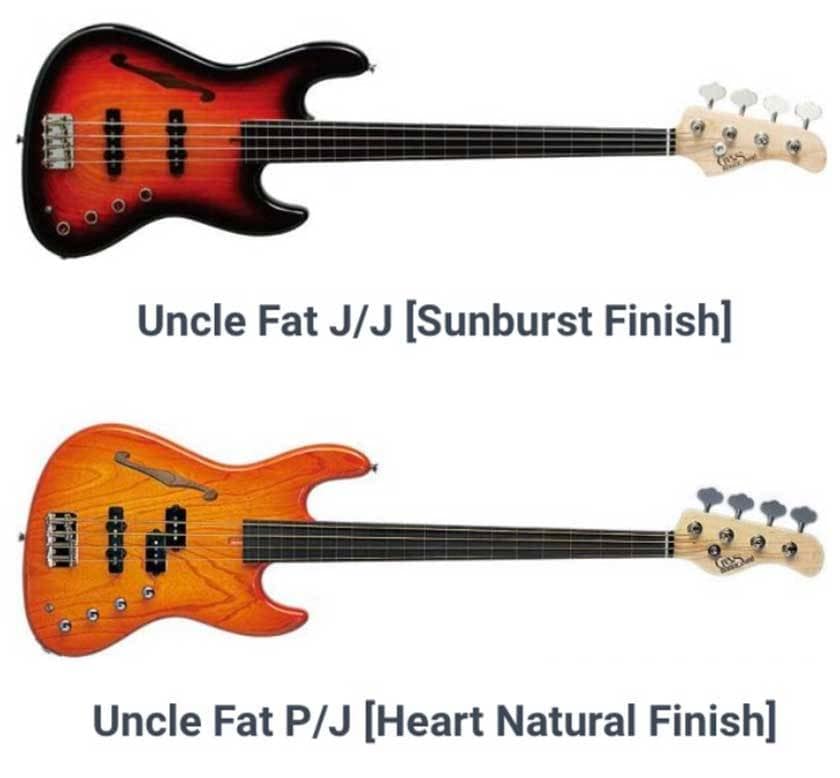
This is from Crews ( http://www.crewsguitars.co.jp/ ).
As for Fender, they released a semi-solid Precision Bass under the model name PBAC, and they also released a Thinline Precision Bass equipped with a single humbucker (both are now discontinued).
In terms of guitars, the Telecaster Thinline has become a long best-selling model.
Some people might think, "Weight reduction? Wasn't that created to achieve a specific sound?" but since it seems Leo Fender created it for the sake of weight reduction, please count it under the category of weight reduction.
Cheena: So, semi-solid equals the Thinline style, then.
LEGEND / LTE-69TL Natural
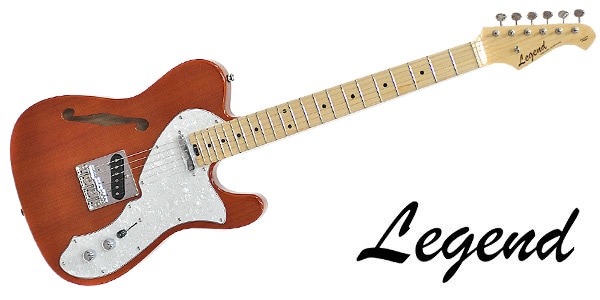
It is also one of the hollow-body guitars that is stylish yet affordable to obtain.
The Bacchus Woodline Handmade Series might also fall into this category, such as the Sakura or Snow specification models.
Nemoto: It's also great that you can switch between instruments without it feeling strange.
Models that have contouring (like a Precision Bass, for example) sometimes become slab bodies, though...
Cheena: By the way, the Stratocaster Thinline made by SX Guitar has contours. That’s powerful.
Also, for some reason, there's something strange going on where it has disappeared from the official website but is still handled by major mail-order retailers. Therefore, please forgive me for providing a search link for the image...
View Google search results
This manufacturer has many interesting instruments, but if I start talking about them, I won't be able to stop, so I'll stop here. Like a 3S Stratocaster equipped with a Tune-O-Matic, or completely black instruments that seem dedicated to metal.
Nemoto: That's strong (lol).
Let's move on to a simple one next. That is, making it thinner.
The standard Fender body thickness is 45mm.
Instruments marketed as lightweight are usually 40mm.
By simple calculation, this alone makes the body 10% lighter, resulting in a weight reduction of several hundred grams.
There are an astonishing amount of people who don't notice the thickness often.
Cheena: The Ibanez SR30 series is a good example of that. Also, something that is often forgotten is the Rickenbacker solid-body series; that is also quite thin at 1-1/2 inches.
Nemoto: About 38mm, right? That’s really thin. There were also Les Pauls that were unusually thin. I was surprised when I saw one for the first time.
Cheena: Les Pauls often use chambered or hollow structures in pursuit of weight reduction and sound quality, but I wonder if balancing the sound of a full solid body with weight reduction results in a thin design like the Les Paul Special? If it’s too thin, the neck is prone to breaking when it falls, so I really don't want that...
Nemoto: I totally get that. I've broken a Thunderbird once, and I thought that if only the body had been thicker...
Well then, next.
This is something everyone understands: "making the body smaller." Note that this doesn't mean "making it with a small body from the start."
Because that wouldn't really be "weight reduction"...
It's the so-called "dinky" shape. It originated from Jackson guitars.
It's also often adopted for Jazz Basses, which have large bodies. It's interesting because the shape differs subtly from manufacturer to manufacturer.
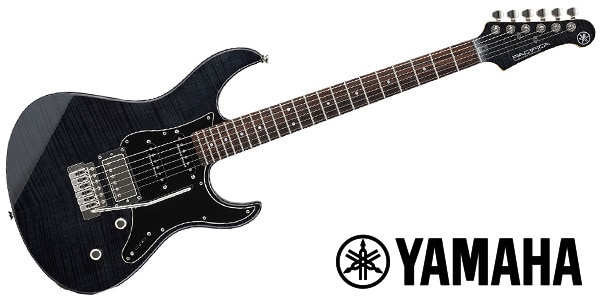
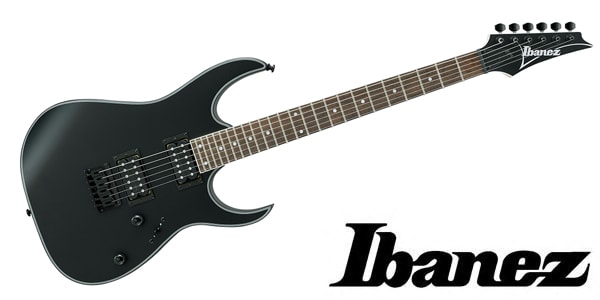
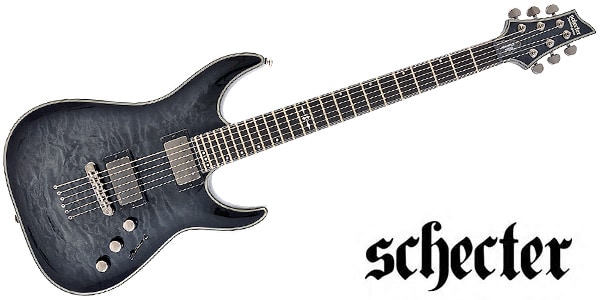
Cheena: If you compare the body shapes of dinky Stratocasters, it's fun to look at the Yamaha Pacifica, Ibanez RG, and the Schecter C-1. You have the idiosyncratic, the orthodox, and the luxury-oriented.
YAMAHA / PAC612VIIFM TBL Electric Guitar PACIFICA
Ibanez / RG421EX Black Flat Electric Guitar
SCHECTER / HELLRAISER HYBRID C-1 TBB
By the way, I wonder if there’s a reason why Jazzmaster-style offset bodies and Telecaster-style bodies don't really have anything you could call "dinky," or why they are at least very rare?
Nemoto: I think it’s a matter of demand. Manufacturers are merchants, after all.
I could stop here, but that would be a bit sad, so I’ll elaborate.
One thing we shouldn't forget in the evolution of the guitar is the HR/HM (Hard Rock/Heavy Metal) boom.
Among the standard models (Telecaster, Stratocaster, Les Paul), the Telecaster couldn't ride that boom.
It’s only natural, really; people who want a thick sound choose a Les Paul, and those who want intense arming choose a Stratocaster (or rather, a locking nut + Floyd Rose). The Telecaster couldn't satisfy these demands. Even if you put a humbucker in it, it can't beat a Les Paul, and if you try to install a locking nut and Floyd Rose, it requires major surgery, unlike with a Strat. Of course, some people did use Telecasters, but most of the guitar heroes of that time used those two.
And there was another demand: weight reduction. Rock stars who moved around a lot on stage hated heavy guitars. Back then, they often played in environments where they’d do five stages in a single night and be completely exhausted (this might still be the case for house bands even now).
In other words, the "dinky" shape, which achieved both good sound and performance, became popular and standard in the HR/HM scene.
The Telecaster was left behind by that trend and, conversely, made simplicity its selling point.
As time passed, Telecasters appeared with various specifications, but there’s still no demand for a "dinky" Telecaster. There are many "slab-body purists" around me who say that a Telecaster doesn't need a dinky shape, or even contours. For them, the moment you call it "dinky," they won't buy it, so the demand stays low. But those slab-body purists tend to be of a certain age or older. I think dinky shapes, which are light and easy to handle, will gradually expand their support among beginners and those without those biases. The Jazzmaster is the same. About 15 years ago, there were hardly any compared to now.
Cheena: So, the Telecaster evolved in the direction of tweaking parts rather than the shape.
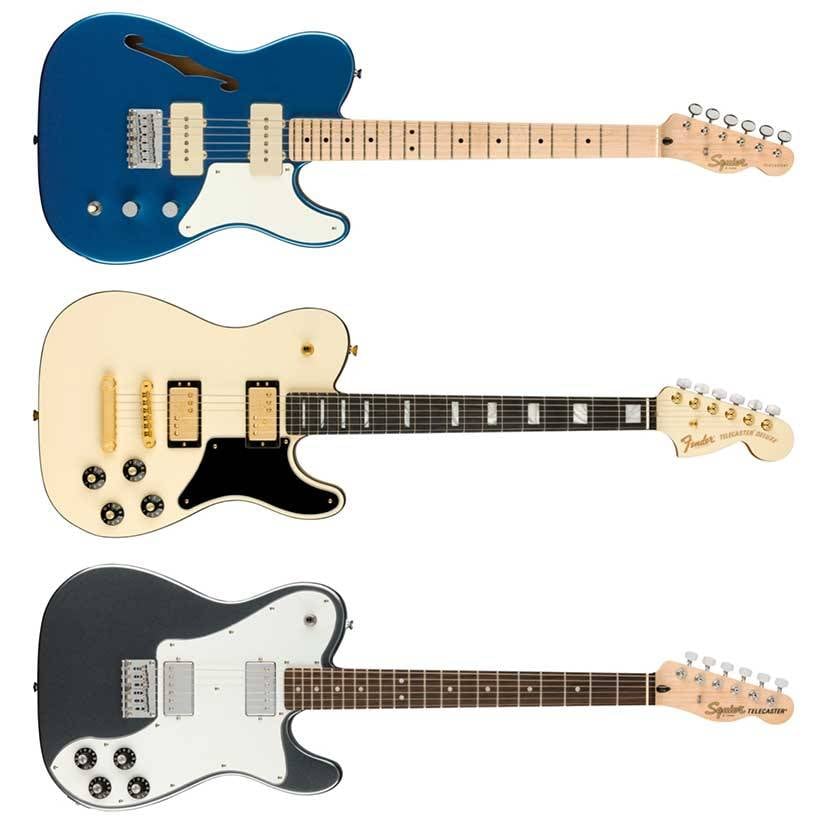
Indeed, whether it's the La Cabronita, the Troublemaker, or the Telecaster Deluxe (in order from top to bottom), the body shape is basically the same, and only the hardware is changed.
However, this is a topic that feels like it might summon the "Telecaster Police."
Nemoto: That's scary... The factor that makes people the most extreme is justice.
In the old Fender USA days (back when the Professional was called Standard, the Ultra was called Deluxe, and the Original was called Vintage), the body size of the Jazz Bass was slightly different.
I used to think the Standard and Deluxe were the same size. I haven't compared the current series, and I don't know if they are the same across all eras, so please keep that in mind. It's just a story about how there was a time like that.
Cheena: You could technically check the drawings for each era on a site like this (https://www.electricherald.com/guitar-templates/), but it's a lot of work.
Oh, and one thing I'm curious about here is Klein Guitars' ergonomic headless. For some reason, the drawings have leaked.
https://kleinsbench.com/
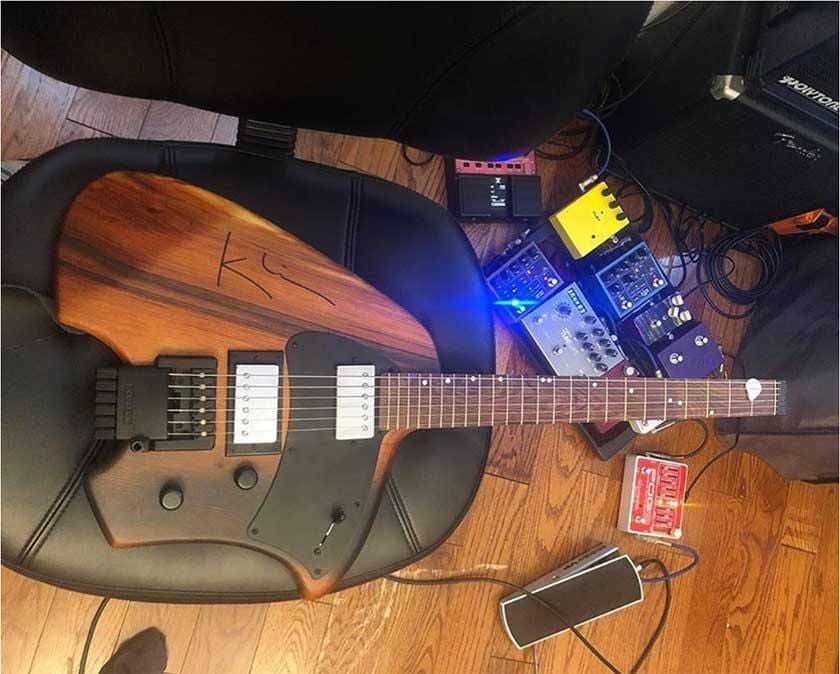
It’s lovely, and it looks light.
Nemoto: Oh, interesting. It sounds like it might have a pretty good tone, too.
If you were to make this guitar symmetrical by using the shape of the bass side, it would become heart-shaped.
Cheena: Then it probably wouldn't be an ergonomic shape anymore... though it might be cute, it looks like it would be hard to hold...
Nemoto: That's true...
Let's move on to the next topic.
The next one is also simple: "making it with lightweight materials."
Among the woods primarily used for bodies, the lighter ones are alder, swamp ash, basswood, agathis, and poplar (cottonwood).
The heavy ones are white ash, walnut, and mahogany.
These have considerable weight, and it's not rare for them to exceed 5 kilograms.
My 8-string fretless (alder body) weighs 4.9 kilograms, so if you can imagine that, you’ll understand that 5 kilograms for a 4-string bass is quite significant.
Cheena: While it's not a process intended for weight reduction, some budget Explorers, Flying Vs, and Random Stars are made by creating the protruding parts out of balsa or SPF and gluing them on. This is effective when the shape accounts for a large proportion of the guitar. It ends up lighter than all-mahogany or korina, too.
Nemoto: I see. You build the parts solidly that require strength, and use light, cheap materials for the parts that don't need to be strong—that's rational.
Cheena: Also, speaking of using light materials, there’s hardware. It’s well-known that aluminum Sperzel tuners are effective for countering headstock dive.
Nemoto: Hipshot Ultralites are a standard choice, too. They’re 43 grams each.
Cheena: Even a difference of a few grams has a significant effect on the perceived weight when it’s on the headstock. That’s important.
Nemoto: Dear readers, please keep in mind that changing to lighter tuners will also change the sound. There are many light and heavy bridges out there, but they change the tone significantly and you barely notice the weight difference, so I wouldn't recommend introducing them for the purpose of weight reduction.
Cheena: There is, conversely, a sort of "weight-reverence" when it comes to bridges, isn't there? That said, moderation is best in all things considered.
Nemoto: Come to think of it, I wrote an article about bridges before, so please check it out (plug): "I want to talk about the bass bridge."
Cheena: I think we’ve covered the main weight reduction processes in terms of structure and material selection... but what do you think? There are a few options if we look in the direction of distributing the load during performance rather than suppressing the weight of the instrument itself.
Nemoto: You mean things like ergonomic straps? Shall we do that?
Cheena: Naturally, the first thing that comes up is strap modifications.
Gruv Gear / DuoStrap Signature Black
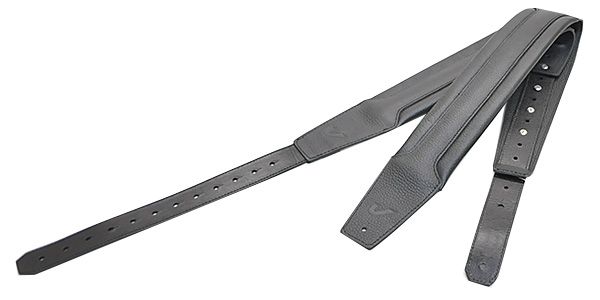
They’re so easy to make yourself, so feel free to try it for yourself (plug 2):
"Let’s Play with Playtech ~Ergonomic Strap Edition~"
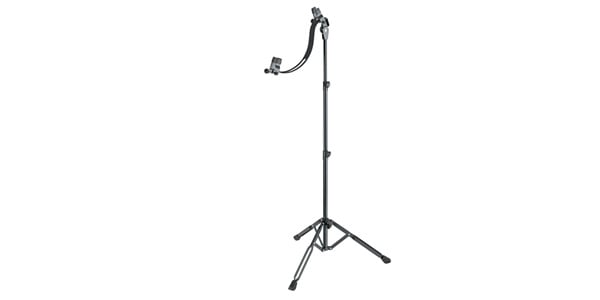
There are also stands for playing while standing.
K&M / 147601
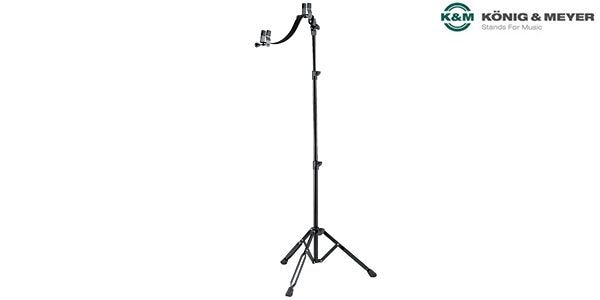
Nemoto: I also want a stand for playing while standing that's meant for bass. It makes it easier to move non-pedal equipment while playing...
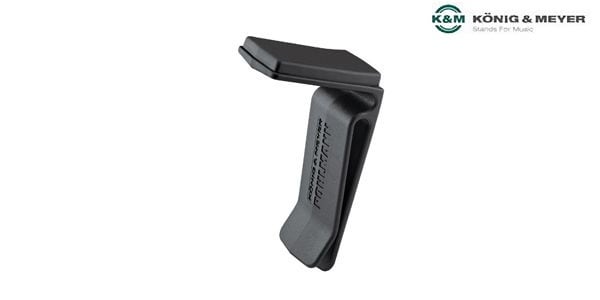
I wonder if belt clips would also fit into that category.
K&M / 14580 Guitar Belt Clip
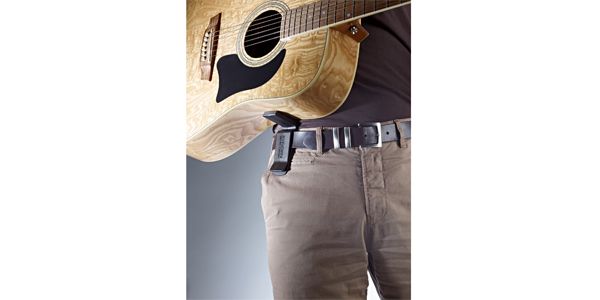
It’s originally for acoustic guitars, but it might be a countermeasure for headstock dive.
Whether it can be used depends on the height you hold the instrument, though.
Cheena: Belt clips are convenient, aren't they?
By the way, D&A released an additional shoulder pad, but the standard version has already been discontinued. Maybe I should make one.
D&A Guitar Gear / GST0100 GIG Strap Pad (Standard)
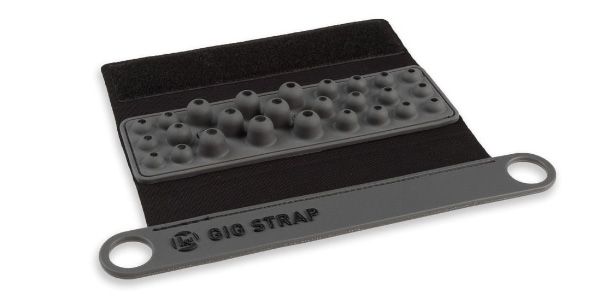
D&A Guitar Gear / GST0200 GIG Strap Pad (Wide)
Nemoto: This looks convenient. It might eliminate the need to put a towel on your shoulder.
Cheena: I wonder if I can use it when playing the sousaphone, too. Adding it to my consideration list.
*Sousa/Sousaphone... A low-pitched brass instrument. Used for standing performances or marching, worn over the left shoulder.
Aside from this, are there any other weight-reduction-related accessories?
Nemoto: I can only think of things like "satin clothing is slippery" or "a wider strap has better holding power," but those aren't accessories, right? Shall we wrap it up here?
Cheena: I thought it might be a little short, but we’ve reached 4500 characters. My usual stuff is too long...
So, this concludes our weight reduction theme. Thank you very much.
Nemoto: Thank you very much. (Since my articles usually reach 10,000 characters...)
The “sound & person” column is made up of contributions from you.
For details about contributing, click here.











 お化けを倒してサウンドGET!
 DIY ギターメンテナンス
 K&M 便利アイテム特集
 ストラップの選び方
 最新コラム&動画をCheck!! OTOYA通信
 サウンドハウス虎の巻 !
 Discount Sale
 Outlet
 New Arrivals
 Podcast (streaming)
 Headphones / Earphones
 Microphones
 Wireless Equipment
 Speakers
 Power Amps
 Mixers
 Processors
 Portable PA Systems
 Recorders
 Karaoke
 Guitars
 Basses
 Ukuleles
 Drums & Percussion
 Pianos / Synthesizers
 Wind Instruments
 Stringed Instruments
 Japanese Instruments
 Harmonicas, Other
 Software
 DJ & VJ
 Stands
 Cables & Connectors
 Racks & Cases
 Lighting
 Stage & Truss
 Video Equipment
 PC PERIPHERALS
 Power Supplies
 Studio Furniture
 Household Items, Other
 Alcoholic Beverages