Contents
- What Is AIM Audio?
- Shared Strengths of the INSPIRE + Pack and ESSENCE
- First Impressions from Real-World Recording Tests
- INSPIRE + Pack Review
- ESSENCE Review
- AIM Audio’s Signature Feature: Transformer vs. Electronic (FET)
- Which Should You Choose: INSPIRE + Pack or ESSENCE?
- Conclusion
1. What Is AIM Audio?
In recent years, condenser microphones have reached a point where it’s difficult to find a truly bad product. Advances in technology have made it possible to achieve excellent sound quality across a wide range of models. As a result, manufacturers have increasingly focused on differentiating themselves through capsule design, circuitry, and acoustic engineering, each pursuing its own unique sonic character.
Berlin-based AIM Audio, however, has taken a somewhat different approach.
Their philosophy is “Choose your sound before you hit Record.”
Traditionally, engineers shape their sound after recording using EQs, compressors, saturators, and other processing tools. AIM Audio turns that idea on its head by incorporating two distinct output stages directly into the microphone itself, allowing users to select different sonic characteristics before the recording process even begins.
For this review, I tested two models: the flagship model, INSPIRE + Pack with five selectable polar patterns and a cardioid-focused model, ESSENCE.
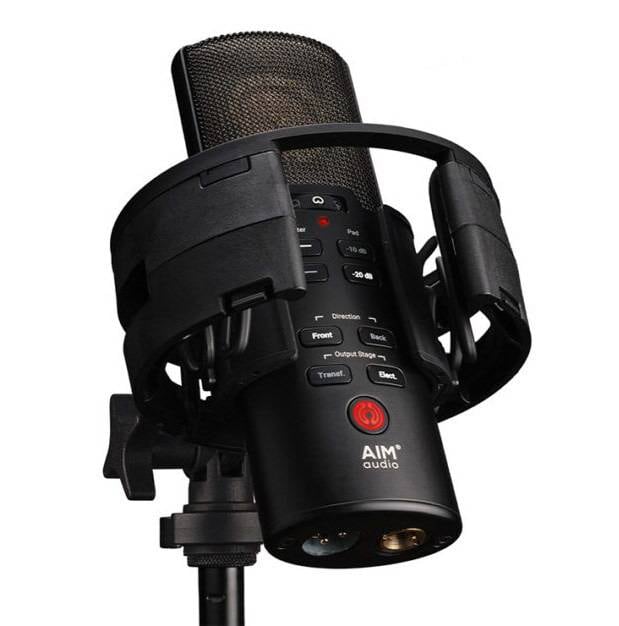
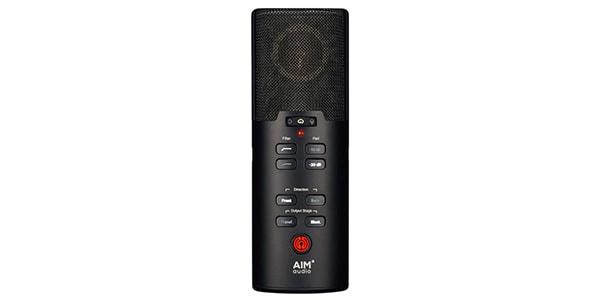
The INSPIRE + Pack allows you to switch instantly between omnidirectional, wide cardioid, cardioid, supercardioid, and figure-8 polar patterns using the control wheel on the microphone body. It also includes a comprehensive set of features designed for real-world recording applications, including an 80 Hz low-cut filter, 115 Hz roll-off, -10 dB / -20 dB pad, front/back orientation switching, and a peak level LED indicator. In addition, the package includes the dedicated ORBIT shock mount and SENTRY magnetic pop filter, making it a complete recording system right out of the box.
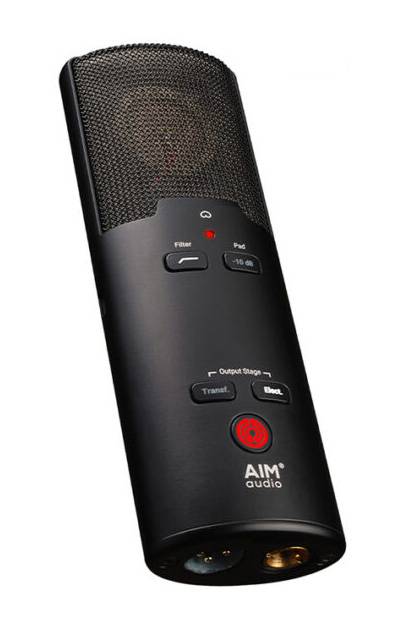
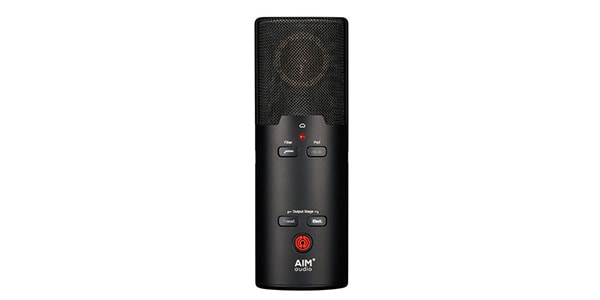
By contrast, the ESSENCE is a model focused on the cardioid polar pattern, which is the most commonly used pattern for vocals, voice-over, podcasting, and streaming. While the feature set is streamlined to cover the essentials, it still includes practical functions such as Transformer/FET switching, an 80 Hz low-cut filter, a -10 dB pad, and a peak level LED indicator. The result is a microphone that combines simple operation with high-quality sound performance.
The first thing I noticed when I started recording was that these microphones are not designed to add an exaggerated sonic color of their own. Instead, they capture the source with remarkable clarity and a natural sense of detail, while allowing you to choose the character that best suits the recording application.
The standout feature of AIM Audio microphones is the ability to switch between Transformer and Electronic (FET) modes. This is more than a simple tonal variation—it’s a genuinely practical feature that lets you tailor the microphone to the session. Whether you want a warmer, more vintage-style vocal sound or a faster, more articulate response for an acoustic guitar, you can choose the mode that best fits the recording goal.
In this review, I’ll take a close look at both models, comparing their sonic character, features, and the types of users and recording situations for which each microphone is best suited.
2. Shared Strengths of the INSPIRE + Pack and ESSENCE
Although the INSPIRE + Pack and ESSENCE differ in polar pattern options and included accessories, they clearly share the same core ‘AIM Audio’ character once you start using them.
The defining quality of both microphones is that they avoid excessive coloration and instead reveal the natural nuance of the source with clarity and balance.
Many modern condenser microphones are designed to make a strong first impression by adding extra low-end weight or a brighter, more polished top end. The AIM Audio models take a different approach. They are not microphones that immediately sound flashy or exaggerated. Instead, they offer tight, controlled low frequencies and smooth, natural upper mids and highs, resulting in a presentation that feels well balanced from the outset.
In practice, both microphones worked comfortably across a wide range of sources—not only vocals, but also acoustic guitar, voice-over, podcasting, and streaming. They consistently captured the character of the source itself rather than imposing a strong personality of their own. I also found that the recordings required surprisingly little corrective EQ afterward, making them feel very close to a ‘record-ready’ sound straight out of the microphone.
Another characteristic that stood out was the relatively focused pickup pattern.
They still have the sensitivity you would expect from high-quality condenser microphones, but compared with many large-diaphragm condensers, they seemed to capture the intended source with greater precision. This means that changes in microphone distance and angle are quite noticeable, but it also makes it easier to reduce unwanted room reflections and ambient noise.
For home recording, streaming, or voice-over work—where air conditioners, computer fans, and room ambience can become distracting—that sense of focus can be a real advantage. Of course, this should not be interpreted as a microphone that simply “doesn’t pick up noise.” The result is likely a combination of the capsule design, acoustic tuning, and overall circuit architecture. Still, in practical use, that was very much the impression these microphones gave me.
The feature that truly defines both models, however, is the Transformer / Electronic (FET) switching system.
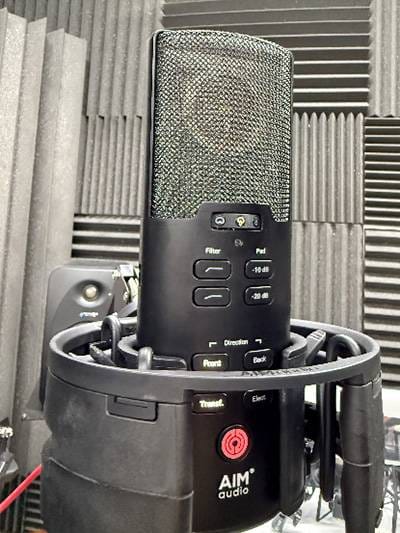
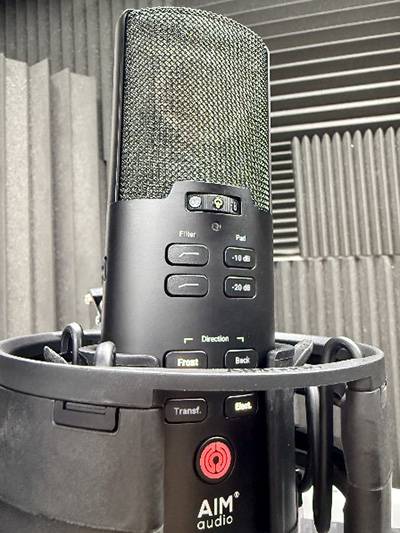
At first glance it might appear to be a simple tonal switch, but it actually changes the microphone’s internal output circuitry, which is an unusually sophisticated approach. Even more impressively, the design changes the electrical characteristics without altering the output level, allowing the two modes to be compared directly under identical recording conditions. The use of electronic relays and a charge-pump circuit to achieve this using only 48V phantom power is a particularly thoughtful piece of engineering and reflects the level of attention AIM Audio has put into the design.
This feature deserves a deeper discussion than simply saying that “the sound changes.”
Why does Transformer mode produce a warmer, more harmonically rich character?
Why does Electronic (FET) mode offer a faster, more detailed transient response?
In the next section, I’m going to take a closer look at what is arguably AIM Audio’s most distinctive feature, including recommended settings for different recording applications.
3. First Impressions from Real-World Recording Tests
After spending time recording with both the INSPIRE + Pack and the ESSENCE, my first impression was that they sound decidedly modern.
They are not microphones that heavily color the low-mid range in the way many vintage microphones do, yet they never sound sterile or clinical. The low end is tight and controlled, while the upper mids and highs extend naturally, giving recordings a clear and well-defined sense of focus even before any processing is applied.
What stood out most was the way both microphones handle the low frequencies.
Many modern condenser microphones are voiced with an intentionally rich low end to create a strong first impression. In a mix, however, that extra warmth often becomes something that needs to be controlled with EQ.
The INSPIRE + Pack and ESSENCE take a more restrained approach. The low end never feels overly inflated, and only the frequencies that are actually needed remain prominent. Whether recording vocals or acoustic guitar, I rarely felt any unnecessary muddiness, and the recordings consistently sounded balanced right from the recording stage.
At the same time, the upper mids and highs are remarkably open and natural.
Rather than producing an aggressively bright, presence-heavy sound, the harmonics extend smoothly, so the microphones remain comfortable to listen to over long sessions. For narration, they provide excellent speech intelligibility, while on acoustic guitar they capture subtle string detail and picking dynamics with impressive realism.
■ Aim Audio Artist Sessions - Somebody’s Daughter by Kiki Annette (one take acoustic recording)
Another characteristic that caught my attention was the focus of the pickup area.
Compared with many large-diaphragm condenser microphones, these microphones seem to lock onto the sound directly in front of them with greater precision. Even a small change in angle noticeably affects the tone. At first I wondered whether they were simply more demanding to position, but the more I used them, the more I came to appreciate why.
Because the microphones have such a clearly defined area of focus, they make it easier to reduce unwanted room ambience and background noise while emphasizing the intended source. For streaming, voice-over work, podcasting, or home recording environments, that can be a significant practical advantage. Of course, room acoustics and microphone placement still play an important role, so this is not a universal rule, but in real-world use I consistently felt that these microphones made it easier to focus on the sound I actually wanted to capture.
The most fascinating aspect, however, was how dramatically the recording character changes when switching between Transformer and Electronic (FET) modes.
These days it is common to shape a recording with plugins after the fact, but AIM Audio takes a different approach by allowing you to choose the microphone’s tonal direction before the recording even begins. Whether I wanted a slightly warmer vocal sound or a faster, more articulate acoustic guitar response, I could select the microphone mode that best suited the instrument and the song.
It is certainly possible to approximate these differences later with EQ and saturation plugins, but being able to capture a sound that is already close to the final goal makes the entire recording and mixing process more efficient.
After using both microphones extensively, I came away feeling that the Transformer/FET switching system is the defining feature of AIM Audio microphones.
In the next section, I’ll explain how this switching system works, why it changes the sound so effectively, and which mode I would choose for different recording situations.
4. INSPIRE + Pack Review
● A Feature-Rich Condenser Microphone That Truly Shines in the Studio
Of the two microphones I tested, the INSPIRE + Pack was the one that most clearly conveyed what makes AIM Audio unique.
At first glance, it looks like a sleek large-diaphragm condenser microphone, but that impression changes almost immediately once you start using it.
There is no LCD menu system and no companion software. Instead, every function is designed to be controlled directly from the microphone itself. Polar patterns are selected using the front-mounted control wheel, while filters, pad settings, and the output stage can all be changed with dedicated buttons. An LED backlight system clearly displays the current settings, making it easy to confirm the microphone’s configuration at a glance, even during a recording session. The fact that everything can be operated intuitively without referring to the manual left a particularly strong impression on me.
● 5 Polar Patterns Give It the Flexibility of Several Microphones in One
One of the most impressive aspects of the INSPIRE is its five selectable polar patterns.
The available patterns are:
- Omnidirectional
- Wide Cardioid
- Cardioid
- Supercardioid
- Figure-8
Switching between them is instant—simply rotate the control wheel on the front of the microphone.
Omnidirectional works beautifully for capturing the natural ambience of a room, making it ideal for acoustic guitar and chamber music.
Wide Cardioid is particularly useful when you want a slightly more open and natural soundstage, such as for solo vocals or singer-songwriter performances where both the voice and guitar need to breathe.
Cardioid is the most versatile setting and is likely to be the one most users choose most often, whether for vocals, podcasting, streaming, or voice-over work.
Supercardioid provides even greater rejection of surrounding noise, making it especially effective for live recording situations or environments where isolation is important.
Finally, Figure-8 opens the door to more advanced recording techniques, including interviews, face-to-face dialogue recording, Mid-Side (M/S) recording, and Blumlein stereo recording.
There are surprisingly few microphones that can cover such a wide range of recording applications with a single unit.
● The Front / Back Switching Feature Is More Useful Than You Might Expect
One feature that surprised me with how useful it actually is was Front/Back switching.
Normally, changing the direction a microphone is facing means rotating the microphone in its shock mount or adjusting the position of the stand. With the INSPIRE, however, you can switch the pickup direction of the three cardioid-based patterns between Front and Back with a single button press.
This becomes incredibly practical in situations such as:
- Pointing the microphone toward the vocalist
- Placing it in front of a guitar amplifier while keeping the controls facing you
- Checking the LED status indicators from inside a recording booth
In all of these cases, you can change the recording direction without physically repositioning the microphone.
At first glance it may seem like a small feature, but in a real recording environment, these kinds of thoughtful workflow improvements can make a surprisingly big difference.
● The Peak LED Is More Useful Than It Looks
Most modern audio interfaces provide input level meters in your DAW, but it’s surprisingly easy to miss brief transient peaks during a recording session.
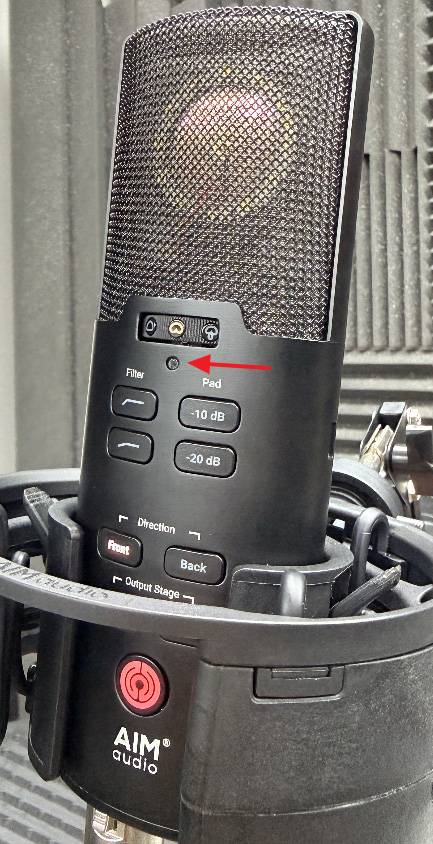
The INSPIRE includes a built-in Peak LED that provides immediate visual feedback: it lights orange as the signal approaches peak level and red when clipping is imminent. I found this to be an especially valuable feature for self-recording sessions because it also makes it much easier to decide when a PAD setting should be engaged.
● The ORBIT Shock Mount Is Surprisingly Premium for an Included Accessory
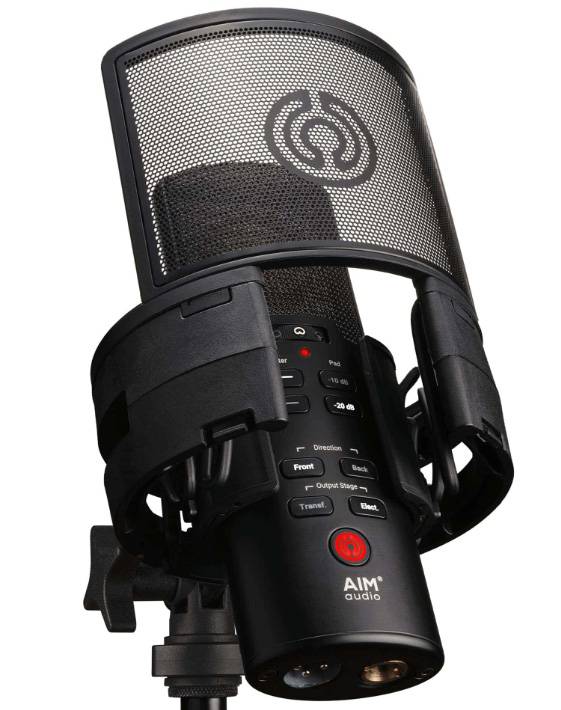
The INSPIRE + Pack includes the dedicated ORBIT shock mount and SENTRY magnetic pop filter.
To be honest, I initially assumed the shock mount would be a standard bundled accessory—something that was simply nice to have. But after using it, my impression changed completely.
Instead of the typical elastic-band suspension found on many shock mounts, the ORBIT uses a Lyre-style suspension system.
This design is less prone to wear over time and provides excellent isolation from unwanted vibrations. It also offers up to approximately 190° of angle adjustment, allowing for precise microphone positioning without having to move the entire stand. Even the integrated cable clip has been carefully designed to help reduce handling noise.
The SENTRY pop filter is equally well thought out. It attaches magnetically in a single motion, making it quick to install or remove, and its stainless-steel mesh construction minimizes the loss of high-frequency detail. What impressed me most, however, was the attention to detail. When the pop filter is not being used, a dedicated Resorber Ring can be installed instead, helping to suppress unwanted resonance within the shock mount itself.
● What I Noticed in Real-World Use
The INSPIRE is not simply a microphone that offers a lot of features.
What becomes clear after using it is that each feature is not there merely for the sake of adding specifications, but has been thoughtfully designed to make the actual recording process more comfortable and efficient.
And despite being so feature-rich, the operation remains remarkably simple.
“I want to record vocals, I want to record acoustic guitar, and in the future I’d like to try stereo recording and use it as a room microphone.” For users with those kinds of goals, the INSPIRE + Pack feels like a microphone that can stay with you for a long time.
In the next section, I’m going to take a closer look at the ESSENCE, a simpler design that still faithfully carries the distinctive AIM Audio sound.
05. ESSENCE Review
● Refined Down to Only What You Need: A Simpler Microphone That’s Easier to Use
If the INSPIRE + Pack is a versatile microphone designed to handle virtually any recording situation, the ESSENCE can be described as a model focused on everyday recording applications such as vocals, voice-over work, and streaming.
Although it shares the same overall design as the INSPIRE, the ESSENCE intentionally streamlines its feature set and is designed as a cardioid-only microphone. Even so, it does not feel like an ‘entry-level model’ in any way. AIM Audio’s design philosophy is carried over intact, and after recording with it, I never felt that any compromises had been made in terms of sound quality.
● Excellent Compatibility with Vocal Recording
When I actually recorded vocals with the ESSENCE, the first thing I noticed was how naturally it reproduced the contours of the voice. Because the low frequencies do not become overly boosted, the sound does not become excessively heavy even when recording at close range, and the upper mids and highs are reproduced without unnatural emphasis, allowing breath and subtle nuances to be captured faithfully.
It is not the kind of microphone that gives you a flashy sound the moment you record, but for that very reason it feels easy to use across a wide range of musical genres. I felt that it pairs extremely well not only with pop and acoustic music, but also with voice-over work, narration, and game streaming—applications where the goal is to deliver the voice naturally.
● Also Well Suited for Streaming and Home Recording
What stood out to me most while using the ESSENCE was how easy it is to work with in a home.
These days, more and more users are getting into streaming and home recording, but recording at home often means working in an environment that is very different from a studio, where room reflections and household noise can become part of the recording.
The ESSENCE gives the impression of having a relatively focused pickup pattern, making it easy to capture the intended sound clearly. As a result, it is not that the microphone completely blocks out surrounding sounds, but rather that it naturally helps you focus on the source itself, making it easier to isolate and capture the sound you actually want to record.
The microphone also includes an 80 Hz low-cut filter, which allows you to reduce unwanted low-frequency noise at the recording stage if vibrations transmitted through a desk or low-frequency noise from an air conditioner become a concern.
● Equipped with All the Essential Functions
ESSENCE is a simple model, but it is equipped with all the functions that are truly necessary for recording.
The unit features:
- 80Hz Low-Cut Filter
- -10dB PAD
- Peak Level LED
- Transformer/Electronic (FET) Switching
In particular, the Peak Level LED is a convenient feature that allows you to visually check momentary peaks during recording. When self-recording, you cannot keep your eyes fixed solely on the DAW screen. Being able to check the input level at a glance using the unit itself also helps prevent recording mistakes.
● A Design You Can Rely on Even Without a Shock Mount
One of the major differences from INSPIRE + Pack is that ESSENCE does not come with the ORBIT shock mount. Instead, the microphone itself incorporates a vibration-isolation structure made from a special synthetic rubber, making it less susceptible to the effects of vibration than conventional hard plastic holders.
Of course, for professional studio applications or environments with a lot of vibration, combining it with the separately sold ORBIT shock mount provides additional peace of mind. However, for home recording and streaming, I found that the microphone itself was more than easy enough to use on its own. The fact that you can expand the system as needed can also be considered an advantage when it comes to using it for many years.
● ESSENCE Is Recommended for These Users
While INSPIRE + Pack is appealing for its wide range of features, not every user needs five different polar patterns.
If your main applications are:
- Vocal recording
- Narration
- Live streaming
- Podcasts
- Acoustic guitar
and you primarily use a cardioid pattern, ESSENCE’s simplicity can actually be a major advantage.
You can focus on recording without getting distracted by unnecessary controls, while still fully enjoying AIM Audio’s defining feature: the ability to shape the sound with Transformer/Electronic (FET) switching.
After actually using it, what I felt was that ESSENCE is not simply a ‘lower-priced version of INSPIRE’, but rather a model that has achieved a higher level of refinement by focusing clearly on its intended purpose. For those who already have a defined recording style, ESSENCE is a microphone that lets you truly appreciate the benefits of its simplicity and ease of use.
6. What Are AIM Audio’s Signature Features, ‘Transformer’ and ‘Electronic (FET)’?
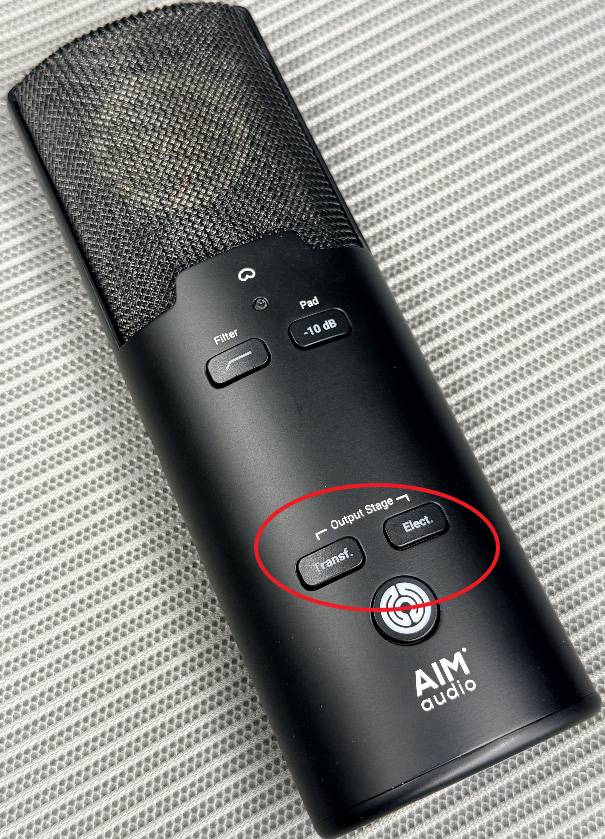
One of the most interesting things I discovered while trying out the INSPIRE + Pack and ESSENCE was the switching function between Transformer and Electronic (FET).
At first, I thought, “Maybe it’s something like an EQ preset?” But in reality, it was completely different.
This is not digital processing of the sound, nor is it a simulation using DSP. Instead, it is a highly unique mechanism that switches the output circuitry itself inside the microphone. Furthermore, because it changes only the electrical characteristics without altering the output level, it is designed to allow you to compare the sound characteristics themselves purely. The microphone features a sophisticated design, including electronic relays and even a charge-pump circuit that enables the switching to be powered solely by 48V phantom power. Simply saying that “you can choose between two different sounds with a single microphone” does not fully convey what makes this feature so interesting. The important point is that you can optimize the microphone’s character to suit the sound source you are recording.
● Transformer Mode — Adds Just a Touch of ‘Musicality’ to the Sound
In Transformer mode, the signal is output through a custom-designed toroidal transformer.
When you hear the word ‘transformer’, you might imagine a dramatic tonal change reminiscent of vintage equipment, but AIM Audio’s Transformer mode is by no means extreme. When switching between the two modes, the first thing I noticed was a very subtle increase in thickness in the low end.
With bass and male vocals, the body of the sound and the core of the voice seemed to come slightly further forward, while the high frequencies gained a natural sense of air. In addition, because the transients (the attack of the sound) become slightly smoother, the sound feels gentler to the ear, giving the overall impression of a more ‘finished’ sound.
The manufacturer recommends using it for:
- Vocals
- Electric guitar
- Brass
- Fingerpicked acoustic guitar
and after trying it myself, I can certainly understand why.
For example, with vocals, the sound gains a little more presence even without adding EQ or a saturator, and there is a sense that it blends naturally into the mix. It is a very easy-to-use character when you want “just a little more warmth.”
● Electronic (FET) Mode — Captures the Sound Source as It Is
The Electronic (FET) mode, on the other hand, is the opposite of the Transformer mode.
It responds extremely quickly to transients, clearly capturing the attack and definition of the sound.
Because the sound rises sharply, it can faithfully capture even subtle nuances such as:
- The moment a pick strikes the strings
- The moment a drumstick hits a cymbal
- The moment a piano hammer strikes the strings
The manufacturer recommends it for:
- Drum overheads
- Percussion
- Strumming-focused acoustic guitar
When I actually tried it with an acoustic guitar, the individual strokes came through clearly, and the chords and rhythm felt more distinct and articulate. Rather than giving the sound something extra, the impression is that it “accurately captures the sound as it is.”
● So, Which One Should You Choose?
After actually recording and comparing the two modes, I found that there is no definitive answer as to which one is “absolutely better.” The best choice depends on the sound source and the song.
Personally, I would use them as follows depending on the application:
| Sound Source | Recommended |
|---|---|
| Vocals | Transformer |
| Narration | Transformer |
| Electric Guitar | Transformer |
| Fingerpicking | Transformer |
| Strumming | Electronic |
| Drum OH | Electronic |
| Percussion | Electronic |
| Piano | Electronic |
Of course, this is only a general guideline. For example, if you want to record female vocals with greater clarity, Electronic may be a better choice. Likewise, even with acoustic guitar, choosing Transformer can be an interesting option if you want to emphasize warmth.
● The ‘Joy of Recording’ That Plugins Can’t Recreate
These days, with so many excellent plugins available, it has become commonplace to “shape the sound after recording.” AIM Audio, however, is the opposite—it is a microphone that reminds you of the joy of “choosing your sound before recording.”
Neither Transformer nor Electronic is inherently better than the other. You can choose the microphone’s character to match the sound source, the song, and the sound you have in mind that day. I felt that being able to experience that fundamental joy of recording with a single microphone is the greatest appeal of the INSPIRE + Pack and ESSENCE.
7. Which Should You Choose: INSPIRE + Pack or ESSENCE?
As I have explained throughout this article, while INSPIRE + Pack and ESSENCE share the same design philosophy, they differ somewhat in the direction they are designed to take. Both offer the clear, natural sound that is characteristic of AIM Audio, as well as the Transformer/Electronic (FET) switching function, but the better choice will depend on what you intend to use the microphone for.
● INSPIRE + Pack for Those Who Want to Explore a Wide Range of Recording Applications
INSPIRE + Pack is recommended for those who want a single microphone that can handle a wide variety of recording applications.
With five selectable polar patterns, it can be used flexibly depending on the application—not only for vocals, but also for acoustic guitar, piano, ambience recording, interviews, stereo recording, and more.
In addition, it comes with a complete set of features and accessories designed to make recording more convenient, including:
- Front / Back switching
- 80Hz Low-Cut Filter
- 115Hz Roll-Off
- -10dB / -20dB PAD
- Peak Level LED
- ORBIT Shock Mount
- SENTRY Pop Filter
For those looking for a main microphone that can be used for many years, from home recording to professional studio work, this is likely the ideal choice.
● ESSENCE for Vocal and Streaming-Focused Use
ESSENCE, on the other hand, is ideal for those who have a fairly specific range of applications in mind.
For example, when it comes to:
- Vocal recording
- Narration
- Podcasts
- Live streaming
- Acoustic guitar
there are many cases where a cardioid pattern alone is more than sufficient.
ESSENCE features a simple configuration with only the necessary functions carefully selected, while still offering essential features that directly contribute to recording quality, including:
- Transformer/Electronic switching
- Peak Level LED
- 80Hz Low-Cut Filter
- -10dB PAD
Rather than feeling like it has ‘fewer features’, I got the impression that “only the things you really need have been retained.”
● The Common Appeal I Felt in Both Models
What both models have in common is that they are microphones that make “the recording process itself more enjoyable.” When choosing a typical microphone, the main consideration is usually whether it sounds good.
With AIM Audio, however, there is also the enjoyment of thinking about the sound before you even start recording:
“I think I’ll try recording this with Transformer today.”
“Electronic might be a better fit for this song.”
I felt that this is more than just an added feature—it is a new experience that subtly changes the way you approach recording itself.
● Easy-to-Use Controls, Even for First-Time Users
When you hear ‘multi-functional microphone’, you might get the impression that “the settings must be complicated.”
However, after actually using it, I found that there was very little to worry about.
The functions are clearly labeled on the buttons, and the LEDs allow you to check the current settings at a glance. No dedicated software or smartphone app is required, and all operations can be completed directly on the microphone itself. I also liked how this allowed me to stay focused on recording.
● Not a Matter of Which Model Is ‘Higher-End’
After using and comparing the two models, I felt that INSPIRE + Pack and ESSENCE are not simply a matter of one being a higher-end or lower-end model.
INSPIRE + Pack is a model that expands the possibilities of recording through its wide range of features. ESSENCE, on the other hand, is a model that condenses the functions you really need into a simple package, combining ease of operation with high sound quality.
What both models have in common is AIM Audio’s design philosophy of “bringing you closer to your ideal sound from the moment you record,” rather than simply “processing the sound after recording.” Whichever you choose based on your recording style and intended application, either model should be a microphone you can enjoy using for many years.
8. Conclusion
● A New Generation of Condenser Microphones That Lets You Enjoy “Shaping the Sound Before Recording”
After actually trying AIM Audio’s INSPIRE + Pack and ESSENCE, what struck me was that they offer an appeal that cannot be summed up simply as “microphones that sound good.” Both deliver a clear sound with a tight low end and naturally extended mids and highs, making them suitable for a wide range of applications, including vocals, acoustic guitar, narration, and streaming. However, what impressed me even more was how the microphones themselves expand the enjoyment of recording.
In recent years, numerous excellent EQ, compressor, and saturation plugins have become available, making it commonplace to “shape the sound after recording.” Of course, this is an essential part of modern recording, but AIM Audio takes a slightly different approach.
That approach is the idea of choosing the direction of the sound “before recording” by switching between two different output stages: Transformer and Electronic (FET).
Even with the same microphone, the same vocals, or the same performance, Transformer produces a slightly warmer, more cohesive sound, while Electronic delivers a sound with faster transients and a clearer, more defined character. The character does not change dramatically, but I felt that these subtle differences take the enjoyment of recording to another level.
Another thing I consistently appreciated about both models was how thoughtfully their usability had been designed down to the smallest details.
Features such as the Peak Level LED for checking levels, LED-backlit controls, and a memory function that retains the selected settings are all thoughtful solutions to those little things you often find yourself thinking, “It would be convenient if it worked this way,” when recording. With INSPIRE + Pack, I was also impressed by how features such as five selectable polar patterns, Front / Back switching, the ORBIT shock mount, and the SENTRY pop filter are not simply included as accessories, but are designed as part of a system intended to enhance the recording quality itself.
ESSENCE, on the other hand, pursues simplicity by carefully selecting its features, while still retaining the distinctive AIM audio appeal of functions such as Transformer/Electronic switching and the Peak LED. Even for those who may feel unsure about whether they can make full use of a multi-functional microphone, I felt that this is a model they can start using with confidence.
● Recommended For These Users
To summarize the types of users who would benefit from each model:
- INSPIRE + Pack
- Want one microphone that can handle everything from vocals to instrument recording
- Want to expand their recording options by switching between different polar patterns
- Are considering not only home recording but also professional studio work
- Want a highly complete system that includes microphone accessories
- ESSENCE
- Primarily record vocals, narration, or streaming content
- Prioritize simple, easy-to-use controls
- Want to casually enjoy the differences between the Transformer and Electronic modes
- Are looking for a high-quality cardioid microphone
● Finally
AIM Audio is not a brand that draws attention with flashy or unconventional features.
However, after actually using its products, I found that every single feature has a clear purpose, and you can sense the developers’ intention to “make recording more comfortable and more enjoyable.”
Everyone has their own criteria when choosing a microphone, but for those who want to enjoy not only ‘great sound’ but also the recording process itself, I would definitely recommend giving this brand a try.
Both INSPIRE + Pack and ESSENCE are condenser microphones with a unique appeal—rather than relying on flashy features, they remind you of the ‘joy of recording’.



![[2026] Top 4 Recommended Condenser Microphones for Vocalists](/contents/uploads/thumbs/2/2023/6/20230622_2_23084_1.jpg)

![An Exploration of Microphones: [Condenser Microphone Edition]](/contents/uploads/thumbs/5/2021/10/20211027_5_14818_1.jpg)

 コンデンサーマイクで「合唱」を収録!
 CLASSIC PRO USBマイク特集
 スマホ用マイク特集
 コンデンサーマイクとは
 CLASSIC PRO
 ワンランク上のボーカルマイク選び
 Discount Sale
 Outlet
 New Arrivals
 Podcast (streaming)
 Headphones / Earphones
 Microphones
 Wireless Equipment
 Speakers
 Power Amps
 Mixers
 Processors
 Portable PA Systems
 Recorders
 Karaoke
 Guitars
 Basses
 Ukuleles
 Drums & Percussion
 Pianos / Synthesizers
 Wind Instruments
 Stringed Instruments
 Japanese Instruments
 Harmonicas, Other
 Software
 DJ & VJ
 Stands
 Cables & Connectors
 Racks & Cases
 Lighting
 Stage & Truss
 Video Equipment
 PC PERIPHERALS
 Power Supplies
 Studio Furniture
 Household Items, Other
 Alcoholic Beverages