Hello! I’m Sugimoto from Sound House.
Recently, I’ve had several opportunities to watch music-related films, so I’ve been going to the cinema more often for the first time in a while.
The other day, I watched films about Oasis and Michael Jackson at cinemas equipped with Dolby Atmos.
Sound House previously published a detailed column explaining how Dolby Atmos works and how content is produced for it. This time, however, rather than getting into the technical details, I’ll focus on questions such as:
“What difference does it make when you actually listen to it in a cinema?”
“How is it different from IMAX?”
And finally,
“Can you enjoy sound at home that gives you the same feeling you experienced in a cinema?”
Even with Dolby Atmos, the Experience Can Be Quite Different
What particularly stood out to me this time was the feeling of being surrounded by sound and the differences in sound localization.
In the Michael Jackson film, the audience’s cheers weren’t just coming from the direction of the screen. They spread to the sides and behind me, creating the feeling that I was right there among the audience at a live concert.
The performance itself was certainly powerful, but even more striking was the sensation of being surrounded by sound, including the audience’s cheers and the acoustics of the venue.
The Oasis film, on the other hand, gave me a somewhat different impression.
When it comes to a band performance, simply having sounds come from different directions doesn’t necessarily make it more powerful.
It’s also important to consider where each sound is localized, whether it’s the vocals, guitar, bass, or drums. In the Oasis film, rather than indiscriminately spreading the sound all around the room, I felt that the positions of the individual parts and the sense of space were carefully arranged while preserving the band’s cohesion as a whole.
Dolby Atmos is a sound technology that allows audio to be positioned in three-dimensional space, including overhead, as well as to the front, back, and sides.
However, it doesn’t mean that “because it’s Atmos, every sound comes from all directions.”
How a film sounds can vary considerably even when using the same Dolby Atmos format, depending on which sounds are placed where and which sounds are moved.
After watching these two music films, I felt that what makes Atmos interesting may not simply be the “amount of sound,” but rather how the space is used to create the world of each work.
Of course, the mixes and playback volumes of the films, among other conditions, were different, so they can’t be compared directly.
Even so, I realized that films using the same Dolby Atmos format can offer quite different experiences depending on how the sound surrounds you and how sound localization is handled.
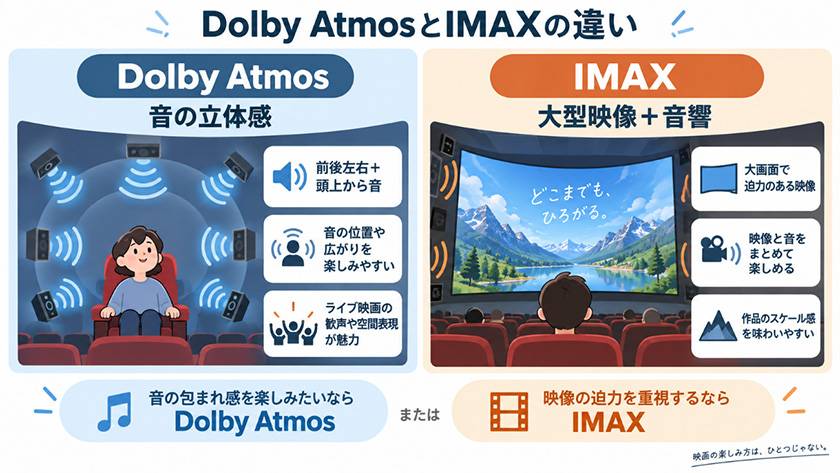
What’s the Difference Between Dolby Atmos and IMAX?
IMAX is another format frequently compared with other cinema experiences.
Some people might wonder, “So, which is better, Dolby Atmos or IMAX?” In fact, these two are somewhat different in nature.
Dolby Atmos is primarily the name of a sound format.
With conventional surround sound, audio is generally assigned to specific channels, such as “this sound goes to the right speaker” or “this sound goes to the rear speaker.”
Dolby Atmos goes a step further by treating sounds as individual ‘objects’ and assigning positional information to them. This makes it possible to do things like move a sound from overhead to behind the listener.
Cinemas equipped with Dolby Atmos have speakers installed in the ceiling, allowing sound to be reproduced in three dimensions, including height, rather than just from the front, back, and sides.
For example, Dolby Atmos makes it easier to perceive where sounds are coming from, whether it’s an airplane passing overhead, footsteps approaching from behind, or the cheers of a crowd filling a live venue. That’s one of the most interesting aspects of the format.
IMAX, on the other hand, doesn’t refer solely to a sound format.
It’s a projection system designed to create an overall IMAX experience, encompassing a large screen, visuals, projectors, sound, and even the design of the theater itself.
Current IMAX with Laser systems use 4K laser projection along with a 12-channel sound system. Since sound can also be positioned to the sides and overhead, IMAX offers immersive, three-dimensional audio as well. Dolby Atmos is a technology focused on the sound experience itself—where sounds are positioned and how they move.
IMAX, meanwhile, can be understood as a system that combines the visual impact of a large screen with dedicated audio to enhance the overall sense of scale in a film.
When choosing a cinema, I think it helps to consider what you want to get out of the experience. For example:
“I want to focus on the positioning of sounds and the sensation of being surrounded by them.”
“I want an immersive movie experience with the impact of a huge screen.”
Thinking about what you want to enjoy most about a particular film can make it easier to decide.
Can You Enjoy Dolby Atmos at Home, Too?
After experiencing Dolby Atmos in a cinema, some of you may find yourselves thinking,
“It would be great if I could enjoy this kind of sound at home, too.”
Installing as many speakers as a cinema has is obviously difficult, but these days, there are more and more soundbars that support Dolby Atmos.
The options have expanded considerably, from models that let you get started simply by placing a soundbar in front of your TV to more sophisticated systems that combine rear speakers and a subwoofer.

If you want to get started with a home theater system easily, the JBL CINEMA SB580 ALL-IN-ONE is a great option.
This is a 3.1-channel soundbar that supports Dolby Atmos and comes with a wireless subwoofer.
It’s an easy-to-install setup for those who want to upgrade from their TV’s built-in speakers but don’t have the space to place multiple speakers behind them or on the ceiling.
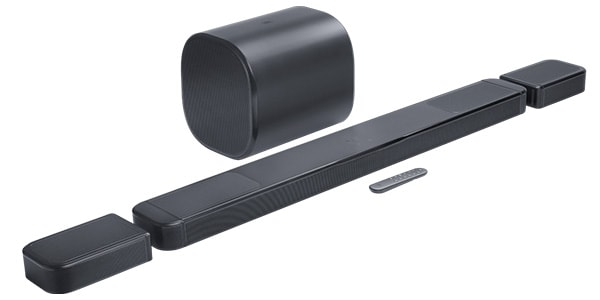
For those who want to enjoy a more immersive, three-dimensional sound experience, there’s the JBL BAR1300MK2.
This is an 11.1.4-channel surround sound system that combines the main soundbar with detachable wireless rear speakers and a wireless subwoofer.
Both the soundbar and rear speakers feature upward-firing drivers. By directing sound toward the ceiling, they can also reproduce height effects.
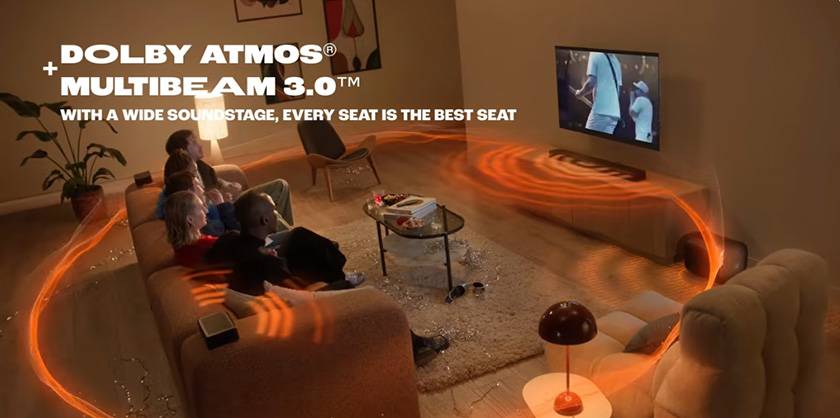
One of its biggest attractions is that you can physically place the rear speakers behind you, creating a stronger sensation of being surrounded by sound—not just from the front, but also from behind and overhead.
It seems like a great match not only for movies but also for live concert footage like the films I watched this time. Rather than hearing the audience’s cheers and the acoustics of the venue only from the front, the sound spreads around you, making it easier to feel as though you’ve stepped into a live concert venue, even at home.
In addition to Dolby Atmos, the BAR1300MK2 also supports DTS and IMAX Enhanced.
I’d recommend this model to anyone who wants to put together a home theater system and enjoy three-dimensional sound as authentically as possible, similar to what they experienced in a cinema.
Conclusion
This time, based on my experience watching music films at cinemas equipped with Dolby Atmos, I’ve introduced the appeal of Dolby Atmos, how it differs from IMAX, and ways to enjoy it at home.
What I realized from the experience is that the interesting thing about Dolby Atmos isn’t simply that “sounds come from different directions.”
Depending on the film, the sound can be used in many different ways, from spreading the audience’s cheers around the room to recreate the atmosphere of a live venue, to preserving the cohesion of a band while making the positions of individual instruments easier to perceive.
If you enjoy immersive, three-dimensional sound, it might be fun to upgrade your home movie setup with a Dolby Atmos-compatible soundbar or similar equipment.
Whether you’re at the cinema or at home...
Be sure to pay attention not only to the visuals but also to the sound when enjoying movies and live concert footage!
See you next time!!







 JBL スタジオモニター 3 SERIES MkIIシリーズ
 JBL スピーカー特集
 スピーカーの定番 Classic Proのおすすめモデル
 サブウーファーとは
 スタジオモニタースピーカーを選ぶ
 K&M スピーカーマウント対応表
 Discount Sale
 Outlet
 New Arrivals
 Podcast (streaming)
 Headphones / Earphones
 Microphones
 Wireless Equipment
 Speakers
 Power Amps
 Mixers
 Processors
 Portable PA Systems
 Recorders
 Karaoke
 Guitars
 Basses
 Ukuleles
 Drums & Percussion
 Pianos / Synthesizers
 Wind Instruments
 Stringed Instruments
 Japanese Instruments
 Harmonicas, Other
 Software
 DJ & VJ
 Stands
 Cables & Connectors
 Racks & Cases
 Lighting
 Stage & Truss
 Video Equipment
 PC PERIPHERALS
 Power Supplies
 Studio Furniture
 Household Items, Other
 Alcoholic Beverages