Hello, this is Dr. Baukoff.
The other day, news was released that Suzuki Violin Manufacturing has become part of the Sound House group. Many people may have thought it was an unexpected combination.
As for me, I’m extremely excited.
To begin with, you might wonder what kind of doctor Dr. Baukoff is. I hold a Doctor of Musical Arts (DMA) degree. It may not be a very familiar degree. In fact, whenever I mention it during introductions, I usually explain it by saying, “I’m neither that kind of doctor (MD) nor that kind of doctor (Ph.D.).”
In reality, it is a doctorate in performance and musical arts. Research is certainly involved, but performance was always at the center of my professional life. Through that career, I developed tremendous respect for instrument makers and repair craftsmen.
My primary instrument, the sackbut—a historical instrument considered the ancestor of the trombone—is not something you simply find on display in a music store. It is typically built over several months through consultations with craftsmen in specialized workshops.
Even with the modern trombones I occasionally play, I tend to favor vintage instruments, so I have relied heavily on the skills of repair technicians over the years.
Let me tell you about the most astonishing repair experience I’ve ever had.
One of my instruments had a single note that was significantly flat. Unfortunately, it was a note that could not be avoided in performance, and it occurred in a position where I could not bring the slide in any farther. As a performer, there was simply nothing I could do to correct it.
When I mentioned the problem at a repair shop, the technician replied: “In that case, we probably just need to increase the volume of tubing around this area. Want me to try it?”
When I asked what he meant, he said, “Acoustics. If we were going to test it properly, I’d have to charge you for the work. But if you’re okay with an educated guess, I can do it right now. I’m pretty sure it’s around here.”
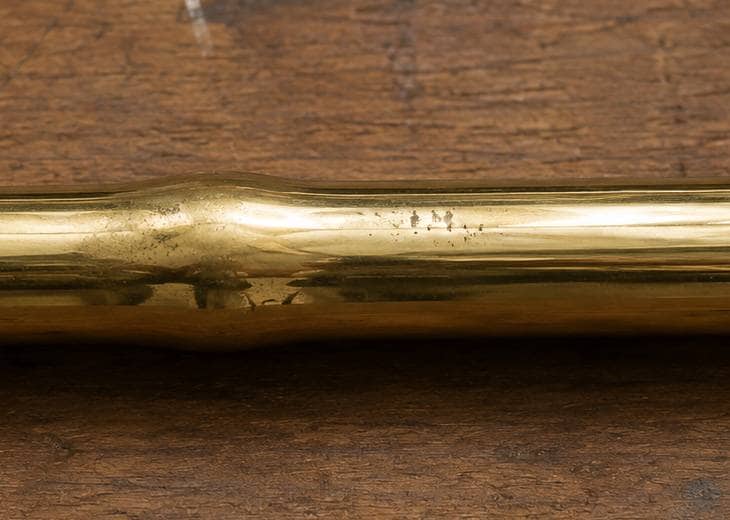
I trusted the technician, so I left the instrument with him. He began carefully expanding a section of tubing roughly halfway down the instrument—the area that rests against my neck while playing—from the inside outward. Visually, it resulted in what looked like a small bump in the tubing.
But when I got the instrument back and played that troublesome note, it was remarkable. The pitch had been corrected perfectly. The problematic note settled naturally into tune, and the instrument became much easier to play smoothly.
That experience taught me something important: instrument repair is not simply the act of restoring something that is broken.
Unlike repairing precision machinery, repairing wind or string instruments is about helping each individual instrument achieve its own best possible performance. The goal is not necessarily to return the instrument to its original factory condition. Sometimes the original design itself is altered.
Even among instruments of the same model, the optimal solution is different for each individual instrument. A skilled craftsman works with each one separately, carefully adjusting it until it performs at its best.
I have been fortunate enough to work with many such craftsmen throughout my life. When I returned to Japan, I was a little concerned, but I soon found skilled technicians here whom I could consult whenever necessary.
That is why the addition of Suzuki Violin Manufacturing to our group means so much to me. It means that a team of craftsmen dedicated not only to repairing instruments but also to building string instruments is joining us. That is truly significant.
And Suzuki Violin, no less. In fact, I once served as Artistic Director at a cultural center in a city near Obu, Aichi Prefecture, where Suzuki Violin’s current headquarters is located.
It was around the time Suzuki Violin returned to Obu and began creating regional synergy as part of the city’s identity as a ‘Violin Town’. I remember looking on with a certain amount of envy. The experience even inspired me to produce a new stage play based on that city’s traditional local industries. So, in my own way, I feel a small personal connection as well.
Musicians stand on stage and perform. But the people who support that sound are the ones who build and repair the instruments.
I have spent my career performing with the support of countless craftsmen. And now, the people of Suzuki Violin, who carry on that spirit of craftsmanship, have become our colleagues. I find that incredibly reassuring.
Sound House and Suzuki Violin—At first glance, it may seem like an unexpected partnership.
But to me, it feels as though the people who support music have become connected.
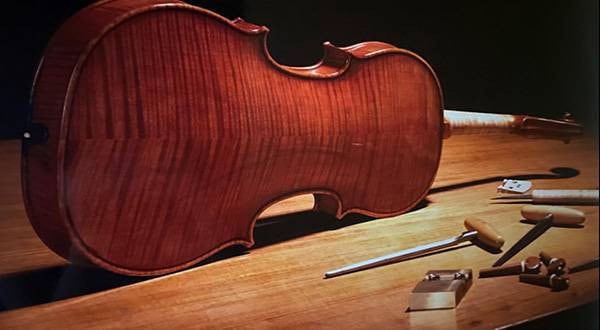
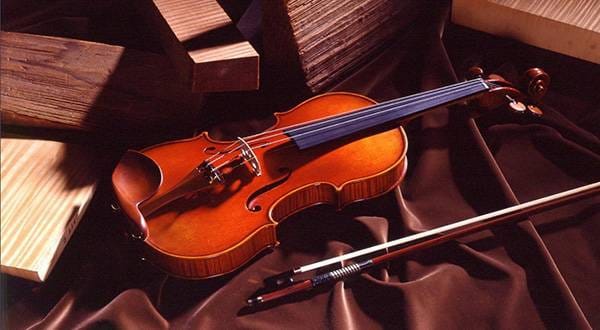
Now then, I’ve spent this entire article talking about craftsmen. Before I go, let me introduce just two of the instruments created by these remarkable people.
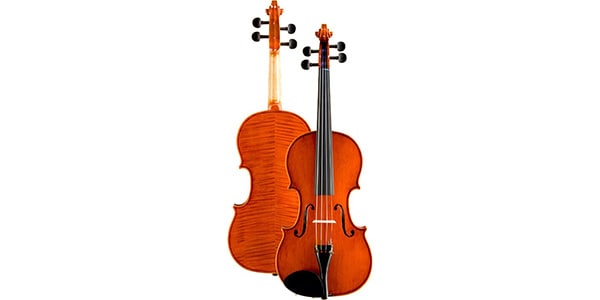
No.230 Outfit Violin Set 4/4 (The classic beginner's violin set)

Of course, I’m excited about the instruments themselves. But even more than that, I’m looking forward to meeting the craftsmen who make them.
Until next time.





![[Suzuki Violin] An Introduction on Recommended Viola & Cello Sets!](/contents/uploads/thumbs/2/2026/3/20260326_2_34768_1.jpg)
![[Suzuki Violin] Introducing Recommended Violin Sets!](/contents/uploads/thumbs/2/2025/11/20251110_2_33526_1.jpg)

 サウンドハウス管弦楽器ショールーム
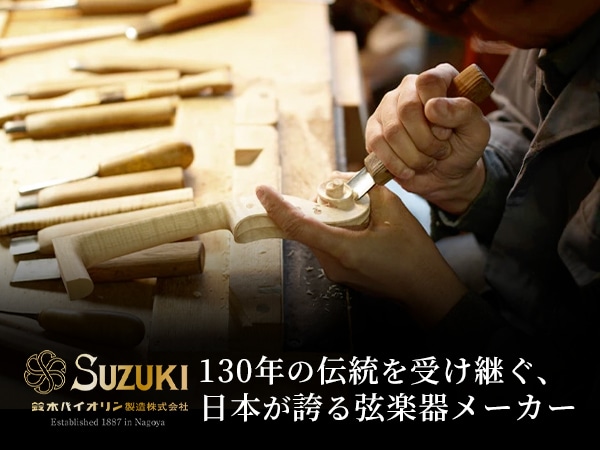 鈴木バイオリン製造
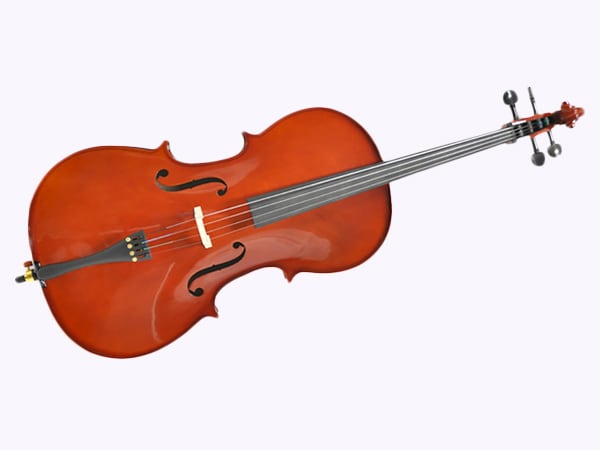 チェロ 入門ガイド
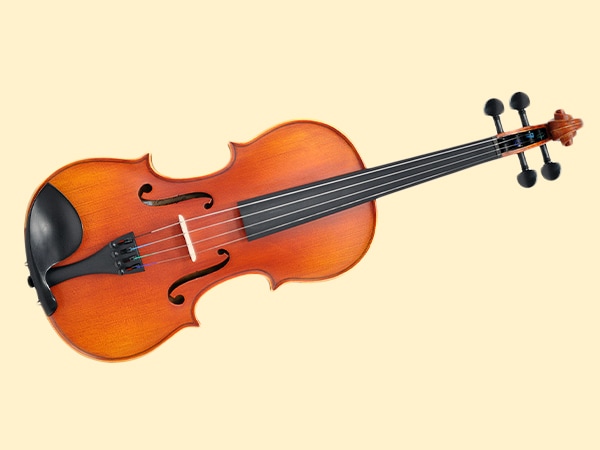 バイオリン 入門ガイド
 バイオリン弦 セレクター
 弦楽器 初心者講座
 Discount Sale
 Outlet
 New Arrivals
 Podcast (streaming)
 Headphones / Earphones
 Microphones
 Wireless Equipment
 Speakers
 Power Amps
 Mixers
 Processors
 Portable PA Systems
 Recorders
 Karaoke
 Guitars
 Basses
 Ukuleles
 Drums & Percussion
 Pianos / Synthesizers
 Wind Instruments
 Stringed Instruments
 Japanese Instruments
 Harmonicas, Other
 Software
 DJ & VJ
 Stands
 Cables & Connectors
 Racks & Cases
 Lighting
 Stage & Truss
 Video Equipment
 PC PERIPHERALS
 Power Supplies
 Studio Furniture
 Household Items, Other
 Alcoholic Beverages