The Yamaha UR Series is about to undergo a major transformation.
For years, Steinberg’s UR22mkII and its successor, the UR22C, have been trusted staples among music creators. In particular, the UR22C became synonymous with the phrase “first audio interface,” earning overwhelming recognition as an entry-level standard in the music production world. Then, in October 2025, Steinberg/Yamaha significantly reorganized the UR lineup. As part of a clearer distinction between Steinberg as a software brand and Yamaha as a hardware brand, the UR22C was renamed URX22C. At the same time, a brand-new higher-tier lineup that includes;
was introduced:
However, the URX Series is not simply a premium version of the UR. After spending time with it, it became clear that the philosophy behind the URX Series is fundamentally different from that of the traditional UR lineup.
In a nutshell, it is:
An audio interface built for the era of real-time content creation, capable of handling music production, streaming, live performance, and video production—all in a single unit.
Key features include:
- Onboard DSP mixer control
- Touchscreen LCD
- A workflow that minimizes computer dependency
- Streaming-focused functions
- Scene Recall
- Stream Deck integration
These features push it far beyond the conventional concept of an audio interface for music production.
This time, let’s take a closer look at the URX22.
Contents
1. URX Series Comparison Chart
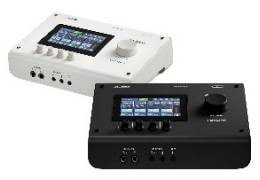
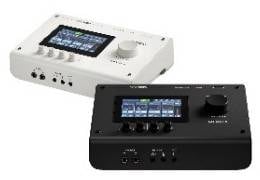
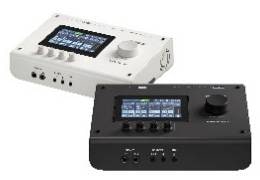
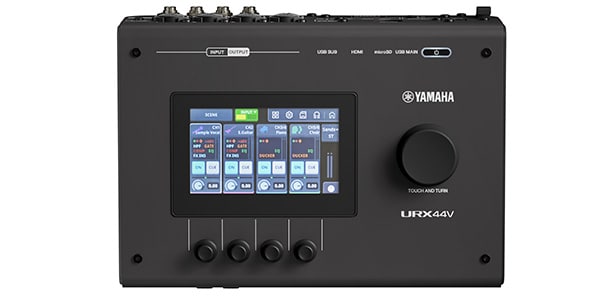
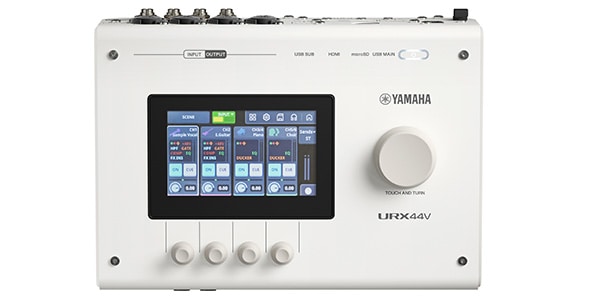
URX22 / URX44 / URX44V Comparison
| Item | URX22 | URX44 | URX44V |
|---|---|---|---|
 |
 |
 |
|
| Target User | Streaming/Music Production | Professional Production | Video/Streaming |
| Positioning | Next-Gen 2ch | Next-Gen 4ch | Flagship |
| Inputs | 2 + AUX | 4 + AUX | 4 + AUX |
| Outputs | 2 | 4 | 4 |
| USB | USB-C ×2 | USB-C ×2 | USB-C ×2 |
| DSP Mixer | Onboard Control | Onboard Control | Onboard Control |
| Touch LCD | ○ | ○ | ○ |
| Scene Recall | ○ | ○ | ○ |
| Stream Deck Integration | ○ | ○ | ○ |
| Auto Gain | ○ | ○ | ○ |
| Clip Safe | ○ | ○ | ○ |
| Ducker | ○ | ○ | ○ |
| Internal DSP Mixer | 12ch | 14ch | 14ch |
| Max Sample Rate | 192kHz | 192kHz | 192kHz |
| Mic Preamp | 新 URX PRE | 新 URX PRE | 新 URX PRE |
| Input Dynamic Range | 115dB | 115dB | 115dB |
| Output Dynamic Range | 125dB | 125dB | 125dB |
| microSD Recording | × | ○ | ○ |
| HDMI Input | × | × | ○ |
| Standalone Operation | ○ | ○ | ○ |
| Expected Competitors | MOTU M2 | Audient | RME/UAD |
Positioning of Each Model
- UR22mkII: The previous-generation model that served as a long-standing entry-level standard for music creators.
- URX22C: A modern entry-level model that carries on the traditional UR Series concept.
- URX22: A next-generation 2-channel model focused on streaming, DSP processing, and real-time content creation.
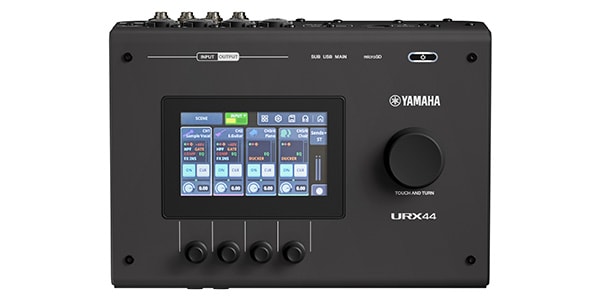
- URX44: An expanded model designed for serious production and live applications.
- URX44V: The flagship model tailored for video production and hybrid live performances.
2. Hardware Overview
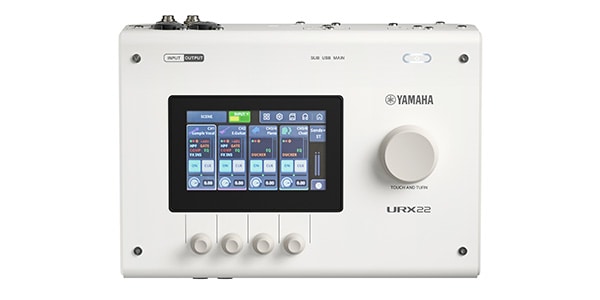
Design and Accessories
- Getting Started Guide
- Safety Guide
- Steinberg Software License Card
(Cubase AI, WaveLab Cast, Basic FX Suite, Steinberg Plus) - USB-C to USB-C Cable (USB 2.0, 1.5 m)
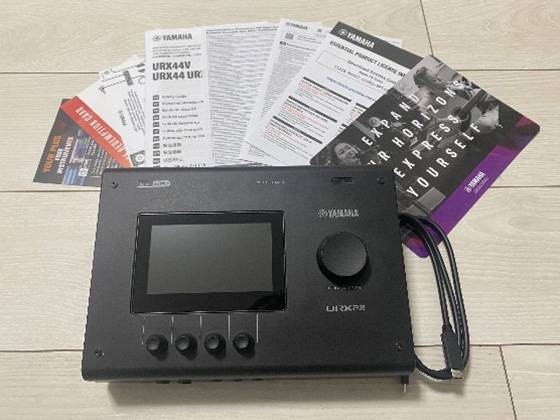
Size
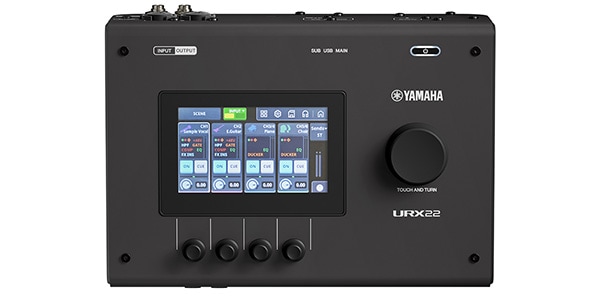
Dimensions: 245 mm (W) × 78 mm (H) × 182 mm (D)
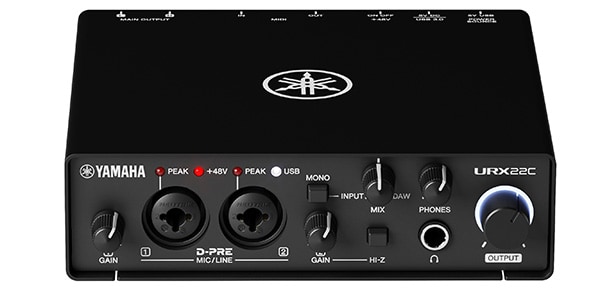
Compared to the URX22C, the difference is immediately noticeable.
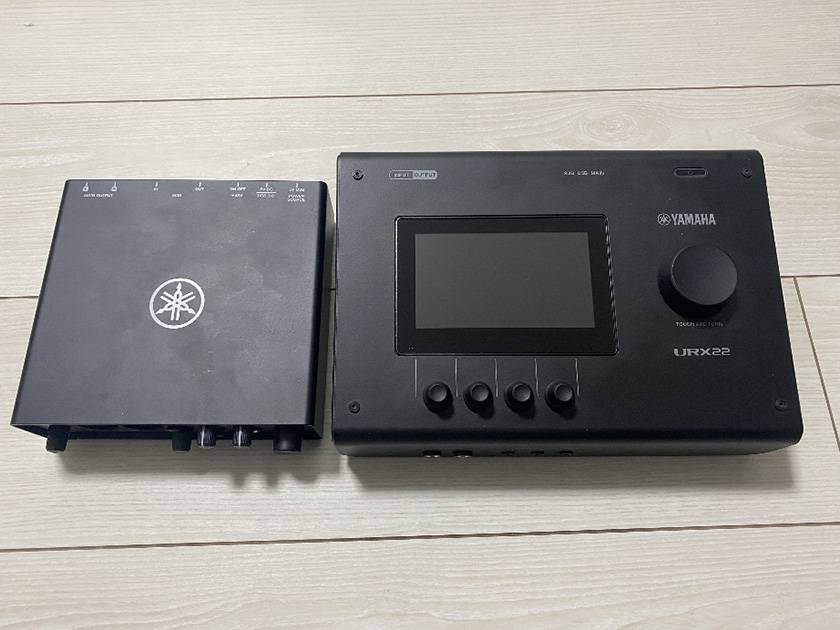
To be honest, I was already impressed by the solid build quality the moment I picked it up. Seeing the two units side by side only reinforces that sense of substance and durability! Personally, I prefer gear with a strong physical presence rather than ultra-compact designs, so I found its appearance quite appealing right from the start.
3. How the Positioning of the UR Series Has Changed
The traditional UR Series was designed around:
- PC-focused workflows
- DAW-focused operation
- Primarily Music Production-focused applications
On the other hand, the new URX Series takes a significantly different approach:
- Hardware-focused operation
- DSP-focused workflows
- Support for streaming, live performance, and video production
In other words, the URX22 is not simply a higher-end version of the UR22C.
Rather, it has been introduced as:
“A product designed to transform the production environment itself.”
4. Feature Overview
The Biggest Evolution: A DSP Mixer That Works Entirely on the Hardware
This is the URX22’s standout feature.
With a conventional audio interface, a typical microphone recording workflow looks something like this:
Microphone → Audio Interface → PC → DAW → Software Control
As a result, many tasks—such as input gain adjustment, effect settings, and monitoring—must be handled on the computer. The URX22 takes a different approach:
Microphone → URX22 → DSP Processing → Recording / Streaming / Monitoring
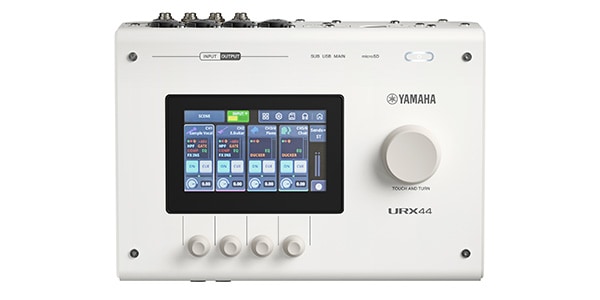
- 4.3-inch touchscreen LCD on the front panel
- Four SCREEN knobs
- TOUCH AND TURN knob
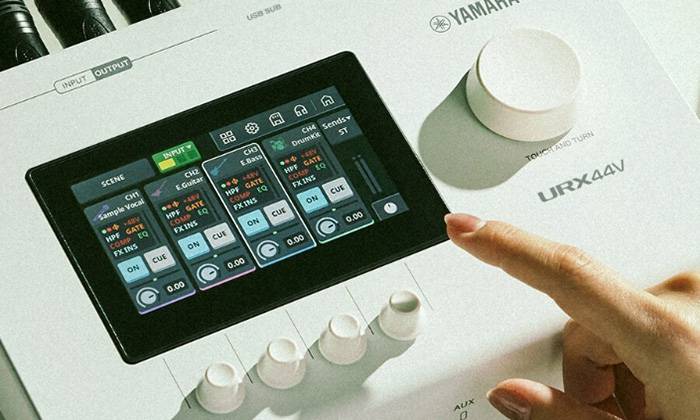
By combining these controls, you can operate the DSP mixer and adjust effects directly from the unit itself, without ever opening your computer. The TOUCH AND TURN knob is particularly impressive. Simply tap a parameter on the touchscreen and turn the knob to make adjustments, allowing for both intuitive and precise control. Rather than relying solely on a touchscreen interface, the URX22 retains a satisfying level of tactile, hands-on operation.
It’s Not Really Just a 2in/2out Interface
If you think of the URX22 as simply a 2-in/2-out audio interface, you’re missing the bigger picture. Looking only at the physical I/O, it appears to be a fairly straightforward device featuring:
- 2 Mic/Line inputs
- AUX input
- 2 headphone outputs
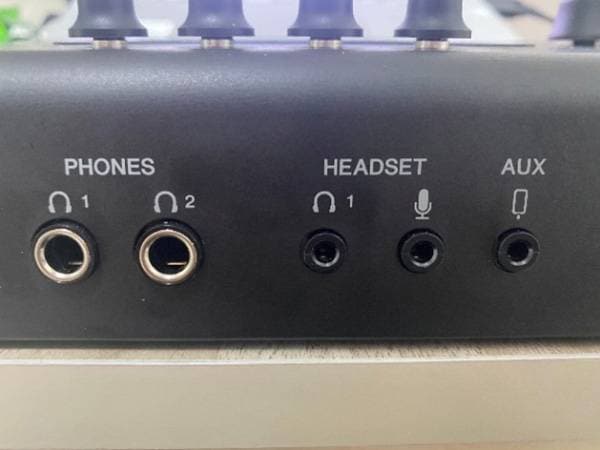
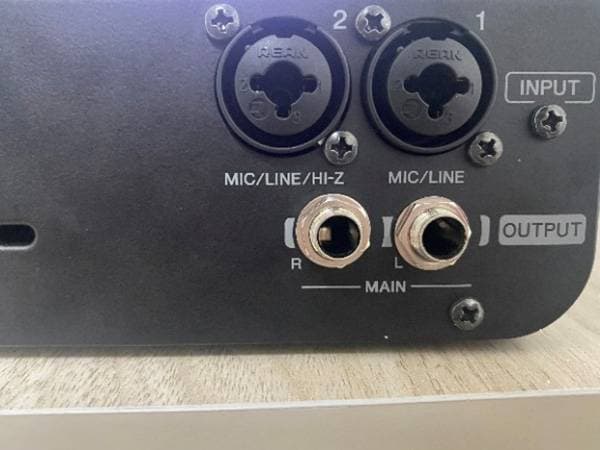
However, internally, the URX22 functions as a 12-channel DSP mixer. A simplified signal flow looks like this:
Mic 1
Mic 2
AUX
PC Audio
FX Return
↓
内部DSP Mixer (12ch)
↓
MAIN / STREAM / PHONES
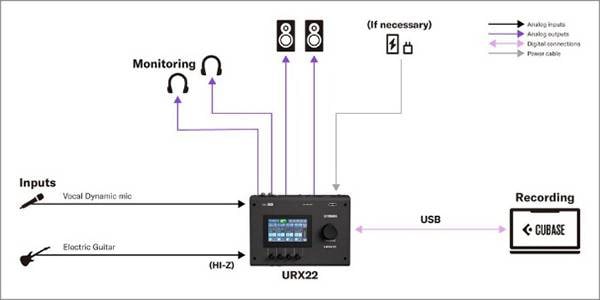
In other words, the unit can flexibly mix sources such as:
- DAW Audio
- Microphones
- Streaming Audio
- Reference Playback Sources
- AUX Inputs
all within the hardware itself.
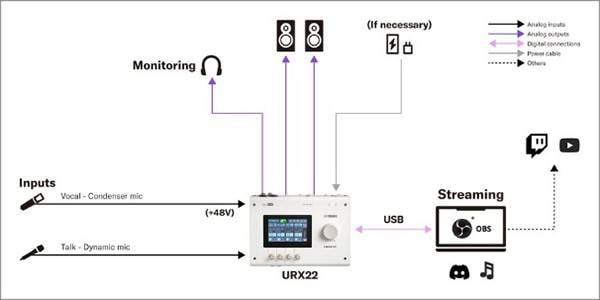
For example, it can easily handle a complex workflow where you are:
- Producing Music in a DAW
- Playing Reference Tracks from a Second Computer
- Participating in a Discord Call
- Speaking through a Microphone
- Live Streaming
all at the same time.
This makes the URX22 feel less like a traditional audio interface for music production and more like
‘a compact digital mixer and audio hub’.
Convenient Standard Mode/Simple Mode Switching
Another feature I found particularly useful on the URX22 is the ability to switch between Standard Mode and Simple Mode depending on your needs. Standard Mode provides detailed audio controls and flexible routing options, making it suitable for more advanced music production and streaming setups. In contrast, Simple Mode offers a streamlined, intuitive interface that allows even beginners to start recording or streaming right away with minimal setup. The flexibility to choose the mode that best matches your workflow and skill level makes the URX22 a device that can remain useful as your needs evolve over time.
■ URX Series Tutorial Video #1: Standard Mode
■ URX Series Tutorial Video #2: Simple Mode
Excellent for Streaming, VTubers, and Live Performance
The URX22 is not only well suited for music production, but also excels in applications that require real-time performance.
- ■ Auto Gain
- Automatically optimizes microphone input gain levels.
- ■ Clip Safe
- Prevents audio clipping caused by sudden loud sounds.
These features are especially useful for streaming and podcasting. - ■ Ducking
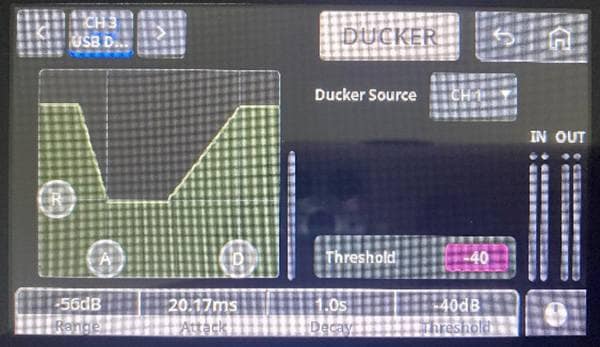
One particularly interesting feature for streamers is the Ducking. For example, it can automatically lower the volume of background music whenever you speak into the microphone. This makes it an excellent tool for live streaming and gaming content.- ■ Scene Recall
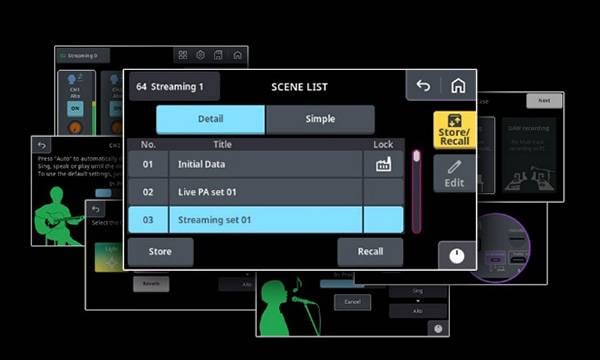
The URX22 also allows DSP settings to be saved as scenes.
This means you can instantly switch between presets such as:
- Streaming
- Music Production
- Live Performance
- Vocal Recording
and more. Being able to recall complete setups directly from the hardware is extremely convenient, especially when working on location or moving between different production environments.
Completely Next-Level Mic Preamps
The URX22 also represents a major step forward in microphone preamp performance.
< Key Specifications >
- Gain Range: 78dB
- Equivalent Input Noise (EIN): -128dBu
- Input Dynamic Range: 115dB
- Main Output Dynamic Range: 125dB
The 125 dB output dynamic range is particularly impressive and clearly places the URX22 in a higher class than previous UR Series models.
Dynamic Range Comparison
| Input | Output | |
|---|---|---|
| URX | 115dB | 125dB |
| URX-C | 102dB | 106dB |
| UR-MK3 | 106dB | 107dB |
In practice, the improvements are readily audible. High frequencies sound more extended, spatial detail is better preserved, and subtle nuances feel more refined compared to previous generations.
32-bit/192 kHz AD/DA Conversion
All models in the URX Series support 32-bit / 192 kHz AD/DA conversion. While 48 kHz or 96 kHz is more than sufficient for most music production tasks, this operation can be valuable for more demanding applications, including:
- High-Resolution Audio Production
- Field Recording
- Video Production
This expanded capability provides welcome peace of mind and room for future growth.
Surprisingly Powerful DSP Effects
The built-in DSP offers a comprehensive range of effects, including:
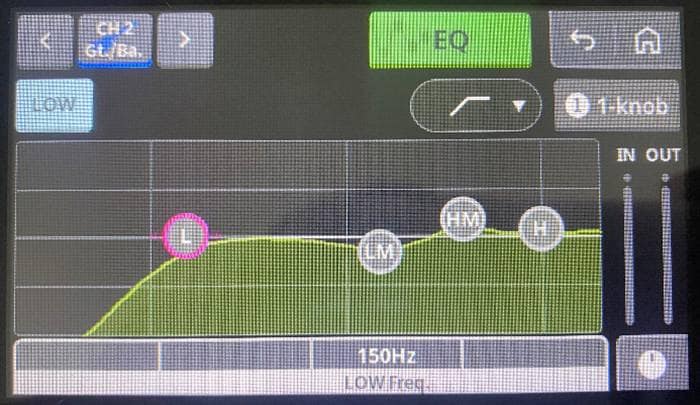
- 4-Band Parametric EQ
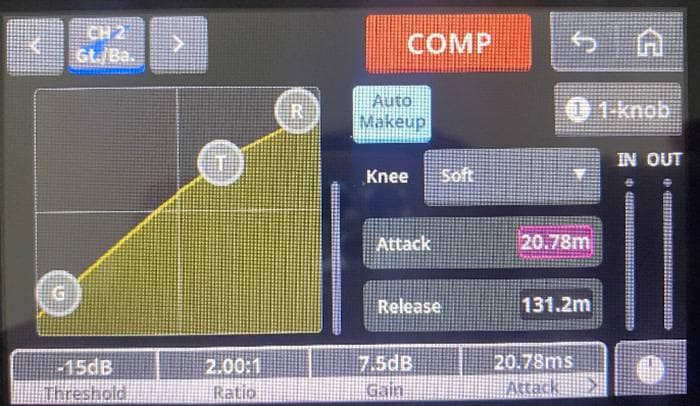
- Compressor
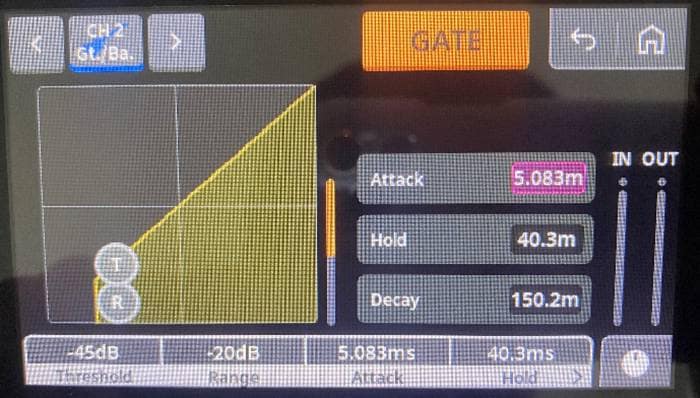
- Gate
- Reverb and Delay
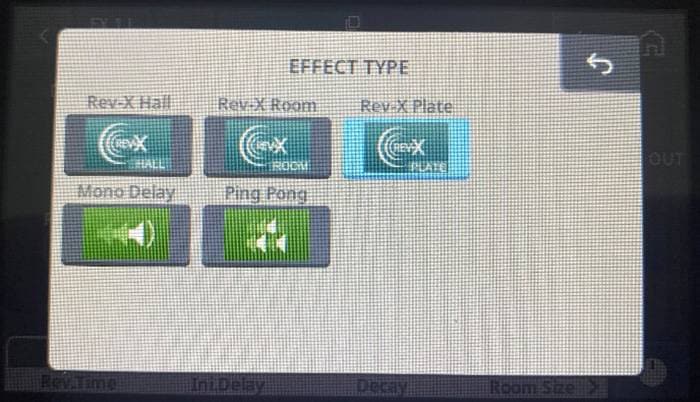
- Amp Simulation and Pitch Correction
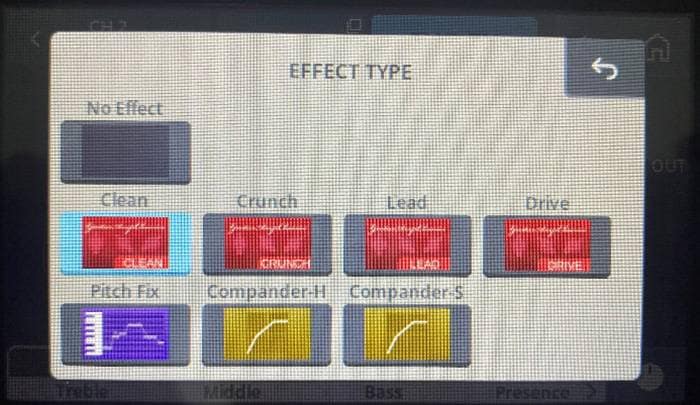
What’s more, all of these effects are processed directly by the onboard DSP, meaning they place no additional load on your computer’s CPU. This allows you to record and stream with a low-latency workflow, making the URX22 a particularly powerful solution.
5. No Computer Mixer Software by Design
One of the more interesting aspects of the URX Series is the absence of dedicated PC mixer software. Previous UR Series included dspMixFx, but at the time of writing, no equivalent PC-based mixer application is available for the URX Series. At first glance, this may seem like a limitation. In practice, however, it appears to reflect a deliberate design philosophy:
“Adjust your audio instantly from the hardware, without having to open a software mixer on your computer.”
This is likely to be a matter of personal preference.
6. Stream Deck Integration
The URX Series also supports integration with the Elgato Stream Deck through Device Center.
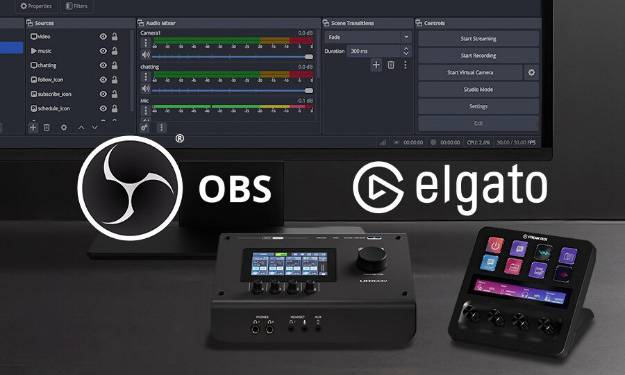
This allows you to control functions such as:
- Scene Recall
- Mute
- DSP Parameters
directly from your Stream Deck. The URX Series offers excellent compatibility with streaming environments.
7. Performance Measurements (Bonus Section)
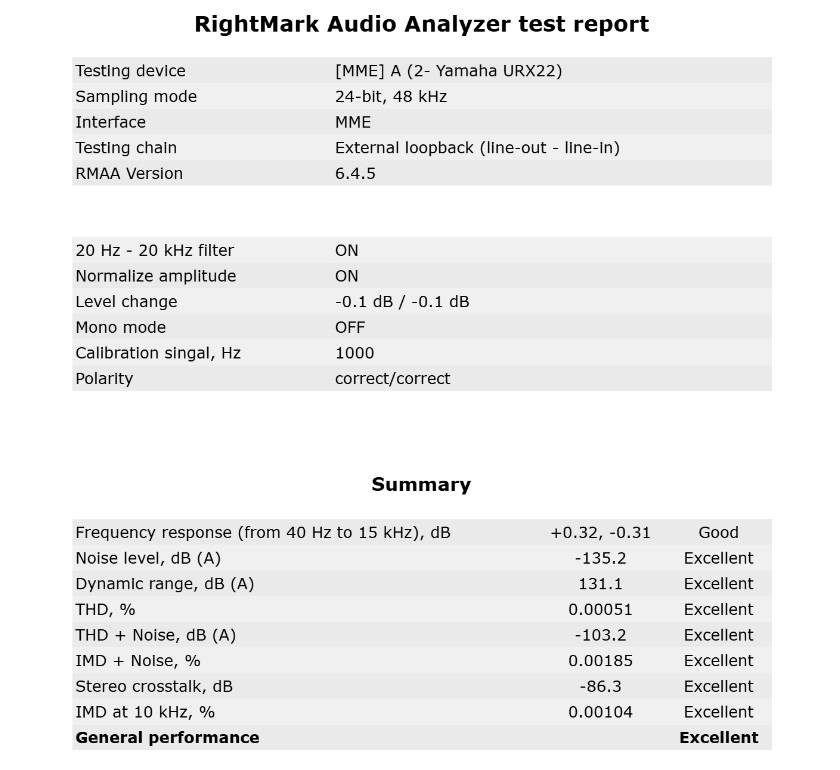
To evaluate the URX22’s audio performance, I conducted a series of tests using RightMark Audio Analyzer (RMAA).
Please note that measurement results may vary depending on factors such as the computer system, connection method, driver configuration, and overall test environment.
*RMAA is an audio measurement application that evaluates parameters such as noise, distortion, and frequency response, providing objective data on overall audio performance.
Noise Level (This level indicates how much background hiss or self-noise is generated by the device itself)
The lower the value (the more negative the number), the quieter and higher-performing the audio interface is.
Benefits
- Less white noise in microphone recordings
- Clearer voice reproduction for streaming
- Better capture of subtle details, such as soft vocals and acoustic guitar performances
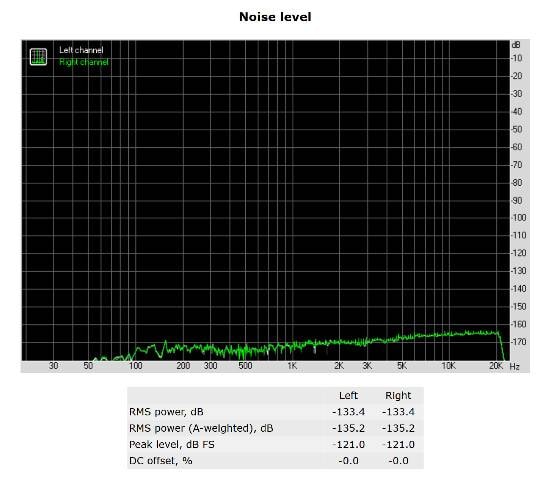
In this test, the URX22 achieved an excellent result of -135.2 dB. This aligns well with my real-world experience and the interface exhibits very little audible noise, maintaining a clean sound even at higher gain settings. This is particularly beneficial when using condenser microphones or recording quieter sources such as narration, voiceovers, and acoustic performances, where a low noise floor can make a noticeable difference. Another advantage became apparent during post-production. Even after applying EQ and compression, unwanted noise remained well controlled, making recordings easier to process and mix. As a result, the URX22 appears to be well suited for applications that rely heavily on microphone input, including streaming, music production, podcasting, and other long-form recording tasks.
Dynamic Range (This range measures how effectively an audio device can reproduce sounds from the quietest details to the loudest peaks)
Benefits
- Preserves subtle low-level details
- Reduces the likelihood of clipping and distortion
- Captures performance dynamics more naturally
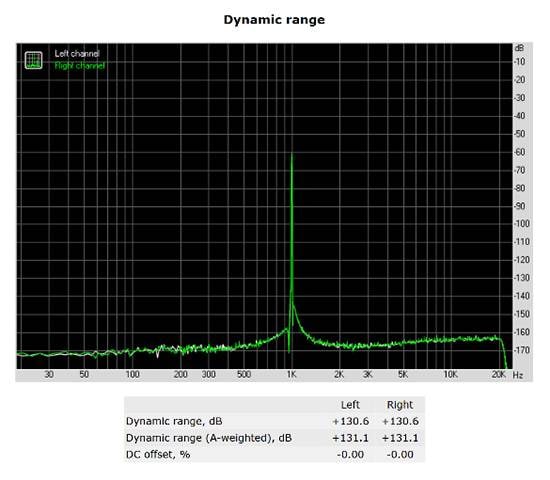
In this test, the URX22 achieved an impressive 131.1 dB of dynamic range. In practice, this translates into a greater sense of openness and depth in the sound. Fine details and spatial cues are reproduced with remarkable clarity, particularly when recording acoustic instruments such as guitar and piano. For example, subtle transitions from delicate picking to powerful strumming and breath and expression in vocals are reproduced naturally, giving the sound a more open and less constrained character. The URX22 can also be suitable for applications such as video production and background music creation, where preserving subtle details and a realistic sense of space is especially important.
Total Harmonic Distortion (A measurement that indicates how accurately audio is reproduced without introducing distortion)
The lower the Total Harmonic Distortion (THD) value, the more accurate and transparent the sound reproduction.
Benefits
- Reduced sonic coloration and muddiness
- Clearer vocal reproduction
- Less listening fatigue during extended sessions
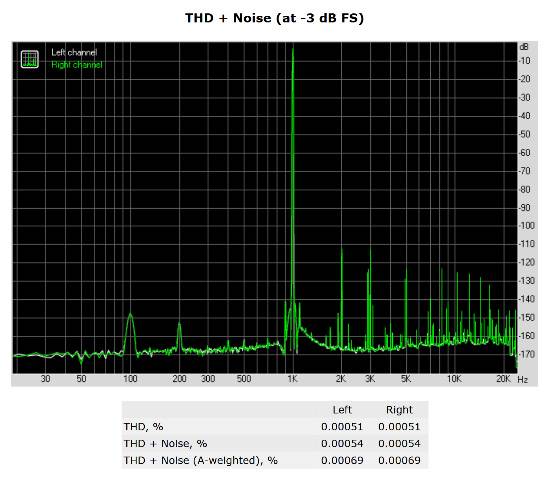
The measured THD was an impressively low 0.00051%. While the number itself may not mean much to everyone, the practical takeaway is straightforward: the sound remains clean, transparent, and largely free from unwanted coloration. In listening tests, vocals, piano, and other high-frequency-rich sources sounded particularly clear and transparent. Subtle reverb tails and spatial details were reproduced beautifully, contributing to a convincing sense of depth and ambience. Even during extended editing and mixing sessions, the sound remained comfortable to listen to, making the interface well suited for critical monitoring applications.
Intermodulation Distortion (A measurement that indicates how much unwanted distortion is generated when multiple audio signals are reproduced simultaneously)
The lower Intermodulation Distortion (IMD) values indicate better separation and clarity between individual sounds.
Benefits
- Complex mixes remain clear and less congested
- Vocals are less likely to get buried in the mix
- Easier identification of instrument placement during mixing and monitoring
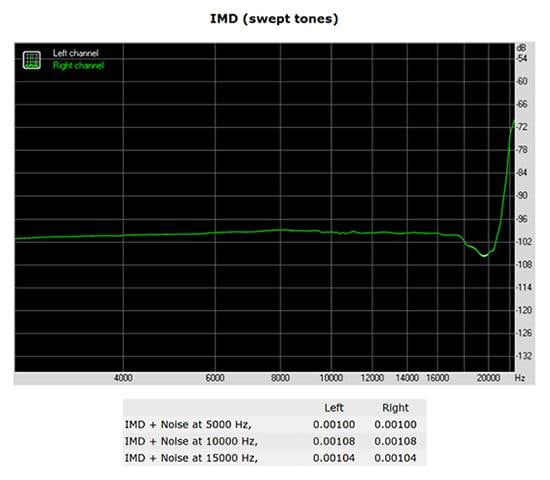
In this test, the URX22 achieved an excellent IMD result of 0.00185%. In practice, even when playing densely layered music, individual elements remained well separated, making it easy to perceive both stereo imaging and depth. This was particularly noticeable with modern pop productions and orchestral or cinematic soundtracks, where large numbers of tracks often compete for space in the mix. Even when guitars, synthesizers, vocals, and other elements overlapped, the overall presentation remained relatively open and easy to follow. As a result, the interface felt well suited not only for casual listening but also for mix monitoring tasks. This strong sense of separation should also prove beneficial in streaming, where background music and microphone audio need to coexist clearly.
More broadly, my experience with the URX22 suggests that it is far more than just an audio interface packed with features for streaming. It feels like a thoughtfully engineered audio interface in its own right, with solid core audio performance to match its extensive feature set. Whether used for streaming, music production, vocal recording, or live applications, it delivers a level of performance that makes it easy to recommend across a wide range of scenarios.
8. How It Compares to the Competition
One of the most interesting aspects of the URX22 is that it doesn’t feel like a simple extension of the entry-level UR Series. Instead, it appears to be reaching into territory traditionally occupied by higher-end brands such as RME, Universal Audio, MOTU, and Audient. That said, its approach is quite different from any of them. This comparison may be open to debate, but my personal impression is roughly as follows:
- Beginners: UR22C
- Intermediate Users: MOTU M Series/Audient Interfaces
- Advanced Users: RME/Universal Audio
- Streaming, DSP, and Live Performance Focus: URX Series
The URX22 is not trying to compete directly with RME’s ultra-low-latency philosophy, nor does it follow Universal Audio’s plugin-centric ecosystem.
Instead, the URX Series seems to be focused on something different:
‘The real-time production workflow itself’
Final Thoughts
The URX22 is not simply the next step in the evolution of the traditional UR Series. Instead, it feels more like a new type of production tool that combines the functionality of:
- DSP Mixer
- Streaming Interface
- Compact Digital Mixer
- Audio Interface
into a single, integrated platform. It is particularly well suited for users whose work spans multiple disciplines, including:
- Live Streaming
- VTubing
- Podcasting
- Hybrid Live Performances
- Video Production
- Music Production
Content creation continues to move from ‘traditional PC-based production’ to ‘real-time workflows’.
The URX22 may well be one of the interfaces that defines this transition.






![[DTM] Become a Budget DTM-er!](/contents/uploads/thumbs/5/2025/10/20251006_5_33197_1.jpg)

![YAMAHA AG03 Volume Setting Guide [Speaking & Performing]](/contents/uploads/thumbs/5/2021/9/20210929_5_14285_1.jpg)

 YAMAHA スタジオモニター HS5SG
 厳選!人気のおすすめオーディオインターフェイス特集
 DTMセール情報まとめ
 機能で選ぶ オーディオインターフェイス
 DTMに必要な機材
 DTM・DAW購入ガイド
 Discount Sale
 Outlet
 New Arrivals
 Podcast (streaming)
 Headphones / Earphones
 Microphones
 Wireless Equipment
 Speakers
 Power Amps
 Mixers
 Processors
 Portable PA Systems
 Recorders
 Karaoke
 Guitars
 Basses
 Ukuleles
 Drums & Percussion
 Pianos / Synthesizers
 Wind Instruments
 Stringed Instruments
 Japanese Instruments
 Harmonicas, Other
 Software
 DJ & VJ
 Stands
 Cables & Connectors
 Racks & Cases
 Lighting
 Stage & Truss
 Video Equipment
 PC PERIPHERALS
 Power Supplies
 Studio Furniture
 Household Items, Other
 Alcoholic Beverages