Hey everyone, it’s Saku again, posting a bit more frequently lately. I got a little tired of talking about effects pedals for now, so this time I’m going to introduce what I bought during the BF sale.
Black Friday sales are happening everywhere, right? Well, for me, Black Friday is the once-a-year golden opportunity to stock up on DTM plugins, so I honestly couldn’t care less about other fields.
2025 was hectic as well, with free giveaways, massive loss-leader sales, and all sorts of chaos. Things start before you even realize it, and before you know it, they’re already over. I think there are probably some licenses I rushed to register but never even downloaded. As I write this, I’m remembering them—but they’ll probably never get used anyway……
That said, when it comes to the plugins I actually purchased, I put serious thought into every choice, so they’re all going to be core tools for me going forward. I’ve only had time to try them out briefly so far, but since I have the chance, I figured I’d introduce them here. Feel free to use this as reference for the 2026 sale.
If that’s the case, though, this article really should be published before the 2026 BF sale……
Anyway, let me say something very real from the start: I spent about 20,000 yen. Just that much. And the number of plugins I got? Eight. Seriously, I got that many.
I expanded my collection with 2 Waves products and 6 UAD products. I have no regrets about these choices.
This time, Waves was running an unbelievable sale where individual plugins were priced at just 3,300 yen, and even newly released products right after launch were included. So I went ahead and picked up some of the new releases.
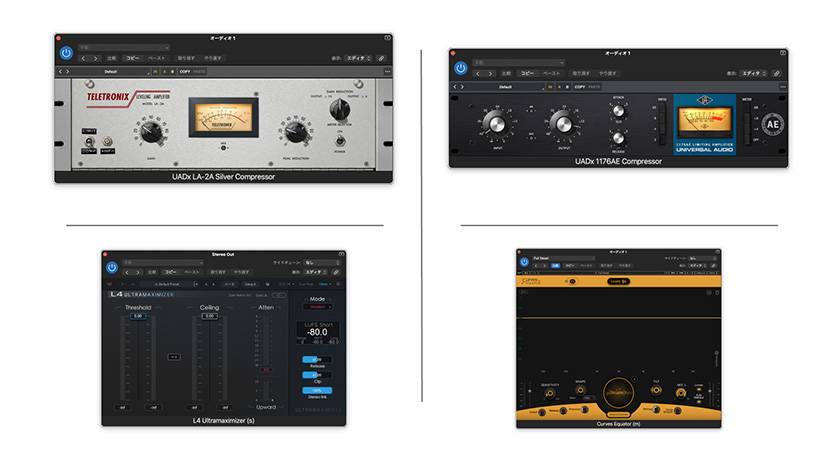
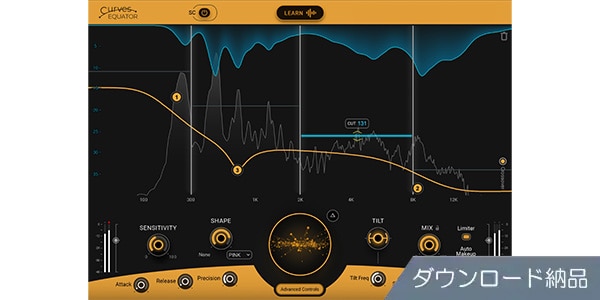
First up: Waves - Curves Equator
WAVES / Curves Equator Download Version
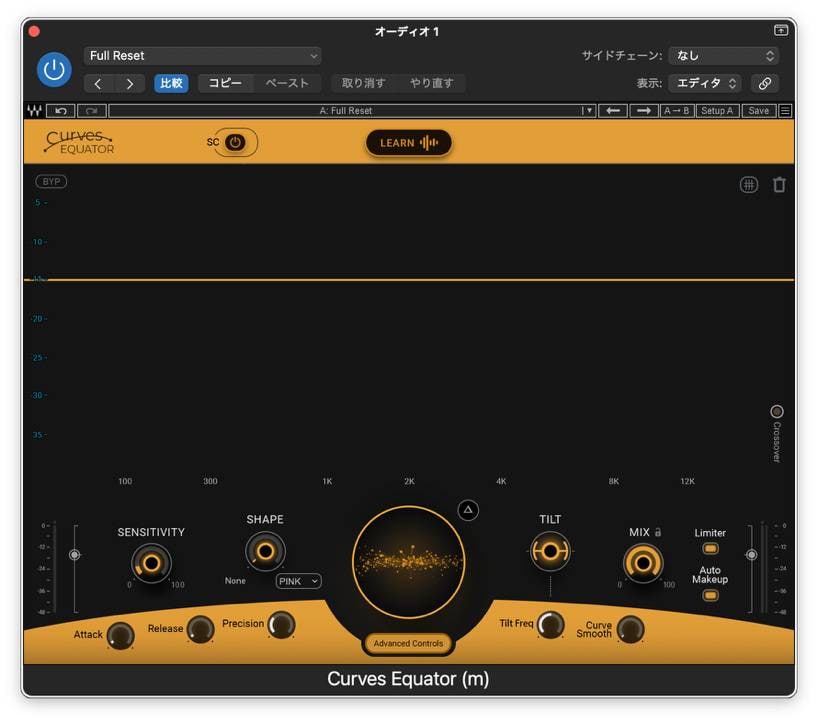
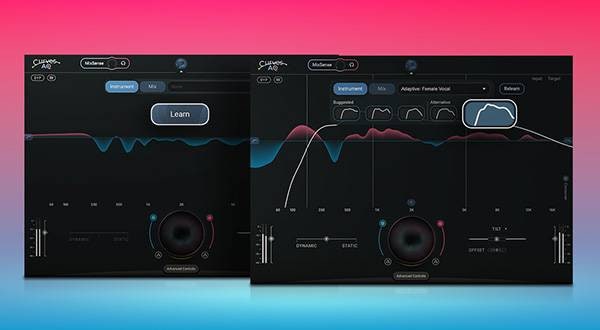
It’s a semi-automatic EQ. I don’t fully understand it yet, but compared to AQ from the same series, I felt this one suited my needs better, so I went with this one.
AQ feels like addition, while Equator feels like subtraction. Apparently, that’s actually how it works.
The concept is that by combining both, you can fill in what needs to be filled without them interfering with each other, creating a well-balanced and pleasant-sounding track. Hmm, that’s smart.
However, when it comes to sound shaping, I want to be particular, and for additive processing I prefer the character of analog modeling, so I held back on AQ. I’ll probably end up buying it in the next sale anyway.
Equator mainly focuses on organizing the air and resolving frequency clashes:
- Suppressing overly prominent frequency bands
- Yielding frequency ranges that collide with other tracks
- Cutting out “boomy” room resonance and reflections
- Reducing harsh or ear-piercing areas
In other words, it doesn’t shape the sound itself so much as it tidies up the foundation. ChatGPT explained this to me based on Waves’ official wording. In practice, using Learn and Side Chain actually creates that give-and-take behavior. Not having to think about frequency relationships between instruments every single time is such a relief. It’s a hassle since things subtly change depending on key, phrasing, and instrument type. For quickly making provisional decisions, it’s more than sufficient—and honestly, it does even more than that. I think I’ll be inserting it on everything except parts I always want to stand out, like vocals or lead guitar. Ah, I’m taking the easy way out again.
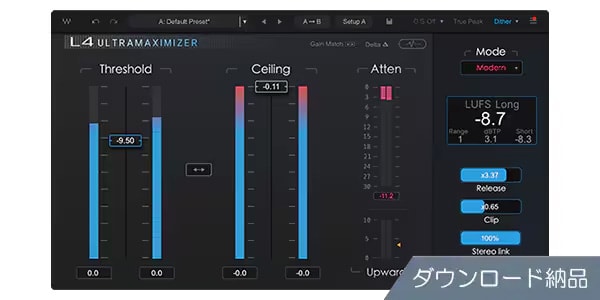
Second up: Waves – L4 Ultra Maximizer
WAVES / L4 Ultramaximizer Download Version
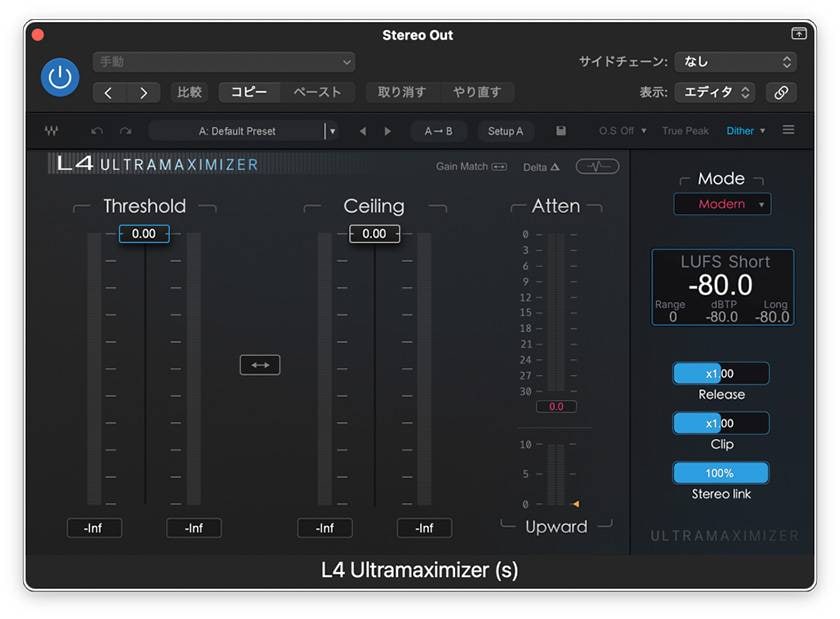
Everyone loves the L series. Needless to say, it cranks tracks way up. It feels great, honestly.
Until now, I’d been using L316, Ozone, or Logic Pro’s Mastering Assistant as a temporary solution at the final stage, but in terms of character, this one leans closer to Ozone. For better or worse, it lacks that classic “L-series” vibe and feels very modern.
That’s because the distortion—or rather, the roughness—that’s characteristic of the L series has been dialed way down, and it boosts things very cleanly.
Of course, if you push the Threshold too far down it starts to distort, but even then it’s still clearer compared to older versions. It feels like the density is lighter somehow. But it’s not lacking. It gives me a really strange feeling.
That said, depending on the five character settings, you can push it toward a more traditional L sound, or even get that aggressive, choppy EDM-style sound. I like the Modern setting, for now, at least.
It’s also nice that the LUFS meter is built right into the plugin. In recent times, where the loudness war is basically over and regulations are actually in place, how well you dial this in determines the quality across platforms. Having -14 and -16 ready usually gets the job done, and being able to wrap it all up just by tweaking L4 a bit is incredibly convenient.
In short, it’s really, really good. I tried throwing it on a 2-mix that barely had any plugins on it, and it turned into a solid master track with very editing. It made me think, “Yeah, I kind of like this as it is.” Maybe I could even differentiate by using only the mastering chain for MV or something like that… it could be a business opportunity. Maybe.
From here on out, it’s all about UAD plugins. When it comes to UAD, my image of them has always been that they model real hardware with insane accuracy, and that the sound changes are natural yet extremely easy to notice.
Up until this sale, I’d only really been using the plugins that had been given away over time, plus the 6176, but I liked them well enough. For demo production, I’d boldly slap the 6176 on every track, leave the master to Logic, and even before getting into a serious mix, I’d often leave it inserted as a preamp with the EQ and comp sections bypassed.
So this time, I finally made up my mind to replace the Waves analog compressors I’d been using and to expand my lineup with some new additions.
At the point when I first finished writing this article, I hadn’t spent that much time with them, but I realized that wasn’t good enough, so I went back, used them to death, and rewrote everything from here on.
Conclusion: they’re amaaaaaaaaaaazing.
First Item: UAD – 1176 Classic Limiter Collection
UNIVERSAL AUDIO / 1176 Classic Limiter Collection Download Version
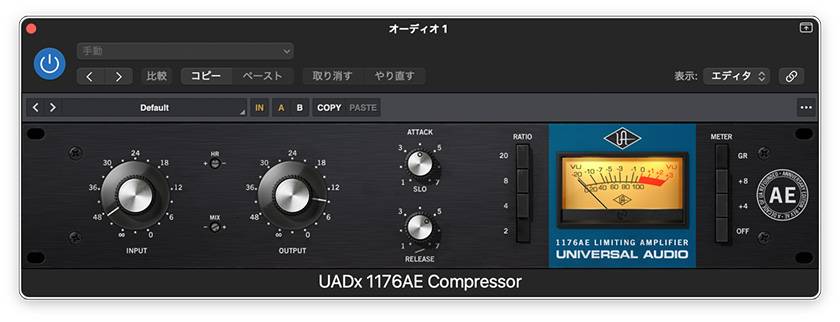
This is the one guys love. If I want a dynamic, aggressive sound, this is it.
If I want things to hit hard and pop with energy, this is it.
Yes—1176. Wait, that interpretation is right, isn’t it?
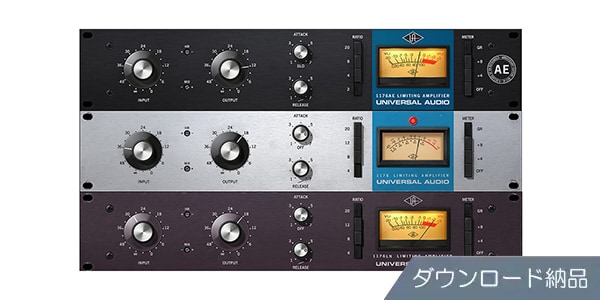
Since it’s a collection, it includes three versions. The Rev A with the strongest punch, the Rev E that’s natural and usable anywhere, and the 40th Anniversary AE model with custom modifications. Even though they’re all 1176s, each one has a distinct character, so just these three already give me a huge range of tonal options. I’m happy. It’s fun. It’s the best.
On top of that, there are two lightweight Legacy models included as well. These might be great for demo production or adding character while recording. And of course… when pairing with an APOLLO.
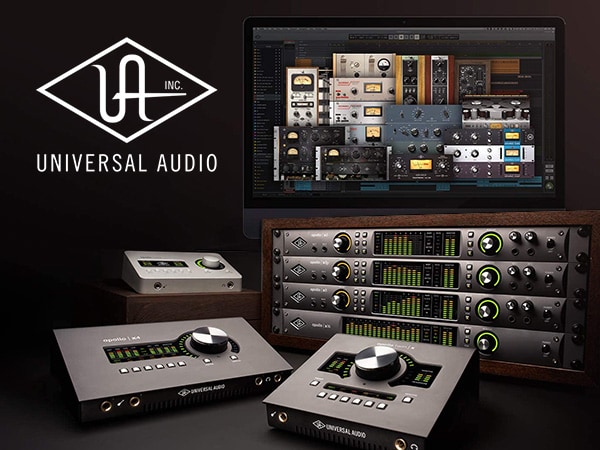
I wasn’t that interested at first, but as my UAD plugin lineup grows like this, I can’t help but start wanting an APOLLO. Maybe I’ll make that a goal for next year.
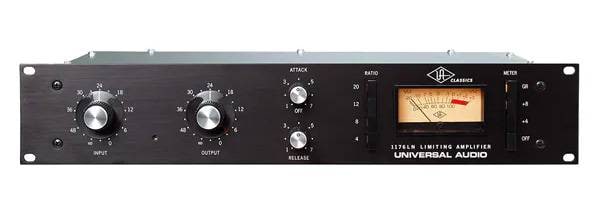
By the way, the real hardware costs around 500,000 yen.
Wait… that number feels wrong.
Second Item: UAD - Teletronix LA-2A Leveler Collection
UNIVERSAL AUDIO / Teletronix LA-2A Classic Leveler Collection Download Version
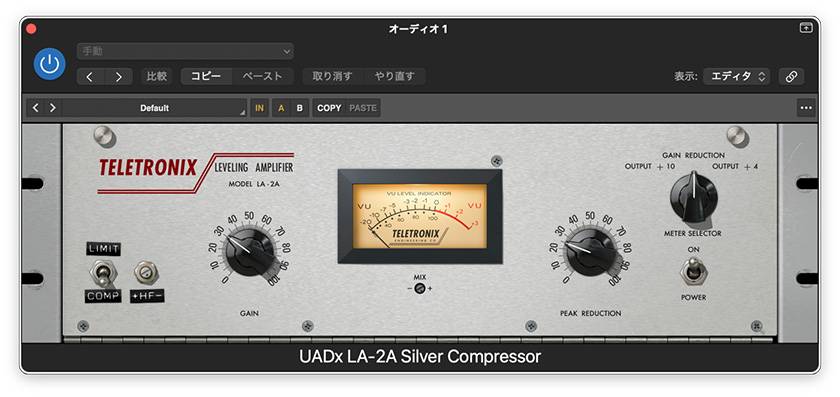
This is another one you see everywhere. There are probably very few people who’ve never used either an 1176 or an LA-2A. If you haven’t used one, you really should.
I also used to wonder, “It’s Universal Audio, so why Teletronix?”
When I looked it up, it turns out it was simply an acquisition. However, out of respect for Teletronix, the name has been retained, and it’s even engraved on the actual hardware units that UA now manufactures and sells.
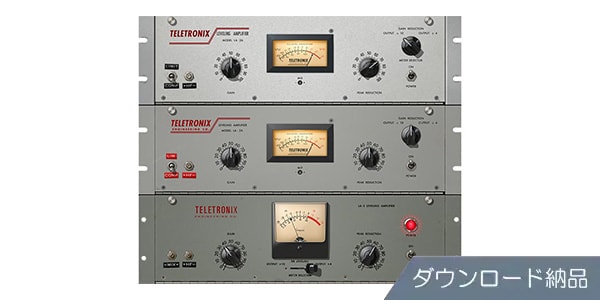
This is also a collection, so it includes three versions. The Silver, which is ideal for drums and percussion, the Gray with a slightly stronger compression character, and the mellow, even more transparent LA-2. I think the Silver is the one most people are familiar with.
Together with the 1176, it’s basically like I’ve gained six compressors (not counting the Legacy versions).
And the real hardware version of this one is… wait, 800,000 yen…?
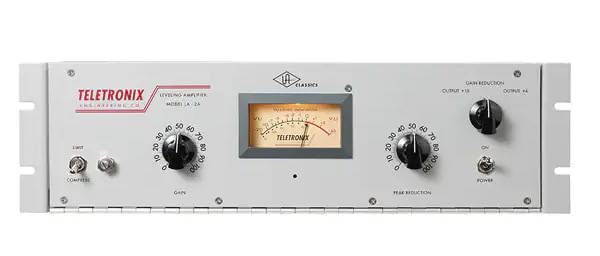
Up until now, I had been using the Waves versions of both of these models. Of course, they sound good, but somehow there was a certain muddiness, or a bit of a stuck feeling. The sound comes through, but it just didn’t feel quite complete. Maybe it lacked clarity. It could have been my mixing, but after switching to UAD, the improvement was remarkable. I think anyone with the same issue can switch without hesitation.
I skipped over the SSL 4000 G Bus Compressor and the Fairchild 670 this time, but they’re on my list too. If I ever get the chance, I’d love to replace those as well. UAD’s analog-modeled plugins are truly outstanding…
This article has gotten long, so I’ll pause here and save the rest of the UAD plugins for Part 2. The two I’ve introduced here are replacements, while the remaining four are entirely new additions. I’ve played around with them a bit, but not fully, so there might be a long gap before the next part—or it might never come.
If that happens, so be it. Until next time.
The “sound & person” column is made up of contributions from you.
For details about contributing, click here.


![[2026 Latest Edition] 10 Recommended Plugins for Voice Covers!](/contents/uploads/thumbs/2/2025/9/20250930_2_33029_1.jpg)

 厳選!人気のおすすめオーディオインターフェイス特集
 WAVES バンドル・アドバイザー
 スタジオモニタースピーカーを選ぶ
 DTMに必要な機材
 UNIVERSAL AUDIO
 DTM・DAW購入ガイド
 Discount Sale
 Outlet
 New Arrivals
 Podcast (streaming)
 Headphones / Earphones
 Microphones
 Wireless Equipment
 Speakers
 Power Amps
 Mixers
 Processors
 Portable PA Systems
 Recorders
 Karaoke
 Guitars
 Basses
 Ukuleles
 Drums & Percussion
 Pianos / Synthesizers
 Wind Instruments
 Stringed Instruments
 Japanese Instruments
 Harmonicas, Other
 Software
 DJ & VJ
 Stands
 Cables & Connectors
 Racks & Cases
 Lighting
 Stage & Truss
 Video Equipment
 PC PERIPHERALS
 Power Supplies
 Studio Furniture
 Household Items, Other
 Alcoholic Beverages