=====Aiming for Practice That Minimizes Fatigue====
Nice to meet you! I’m a middle-aged man who is about to turn 50.
People of our generation were exposed to bands like Rebecca, The Blue Hearts, and the Ikaten boom during our student days in the mid-1980s, and many of us probably started playing instruments because of that, right? From the late ’80s to the early ’90s, you probably played covers of bands like X Japan, Metallica, and Nirvana.
After that, we became working adults, got married, and somehow drifted away from our instruments, didn’t we? I’m one of those people too.
About six years ago, although work and raising children had settled down a bit, my youngest daughter was still only two years old. Around that time, I felt like I was going through the motions of daily life in a kind of burnout state, when a friend happened to invite me to a festival. There, I saw Megadeth and Akira Takasaki of Loudness perform, and I was deeply moved. It brought back memories of my youth, and I started playing guitar again about five years ago. Haha.
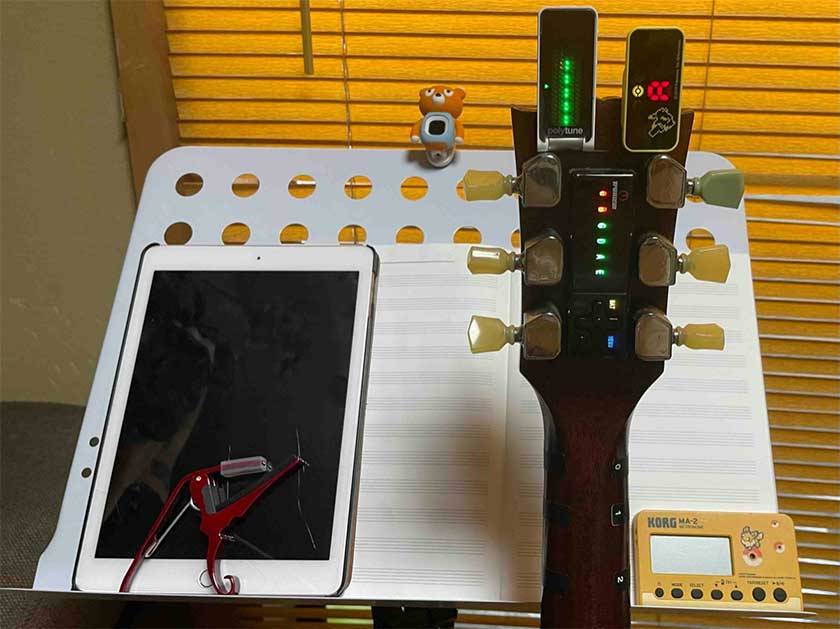
That said, when I went to a music store for the first time in over a decade, there were so many things I didn’t understand. Clip-on tuners might have existed back then, but I had never used one. When I asked the store clerk for a tuner, they handed me several types of clip-on tuners without any explanation. I was completely confused—what is this?
Strangely enough, in any era, music store clerks tend to be unfriendly to first-time customers. I still remember it clearly. It was an employee at a major music store often found in large shopping complexes. They’re helpful when you’re buying expensive instruments, though. (Apparently, they get incentives for selling high-end or original instruments.)
I was more than surprised by the accuracy of the KORG pitch clip I bought at that time. I mean, it cost just over a thousand yen. Back in the ’90s or earlier, the standard was a tuner you plugged into your cable, and they usually cost around 4,000 to 10,000 yen. They were expensive, and I remember working part-time jobs desperately as a broke student to buy one.
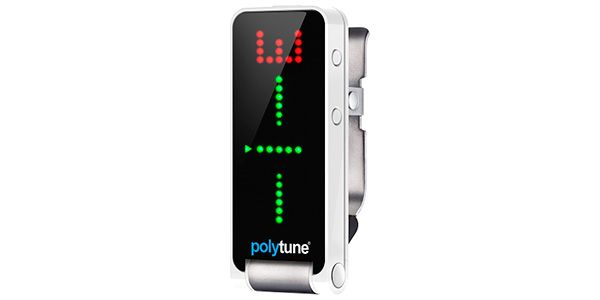
Currently, I’ve added a TC Electronic PolyTune Clip to my gear and use it as well. It’s a regular clip-on tuner, but it lets you see the tuning status of all the strings at once, which makes things very easy. It’s a bit expensive, so I use the PolyTune indoors. For outdoor practice, like on the riverbank, I use the KORG Pitchclip.
Clip-on tuners are small, right? They tend to get lost or handled roughly and break. So while accuracy is important, affordability matters too. If they’re too cheap, they can have accuracy issues and become frustrating. I’ve bought two types from Asian manufacturers for around 700 yen, and while you can tune with them, their sensitivity is poor, so it takes longer and gets irritating.
In that regard, the KORG Pitchclip is slightly unstable compared to higher-end models, but I think it’s acceptable for amateur use. KORG is a long-established Japanese manufacturer, so I feel it’s reliable.
I also play acoustic guitar, but given urban housing conditions, it’s hard to play at home. On top of that, I have a daughter preparing for entrance exams, which makes it even more difficult. By the way, she’s also a guitarist. She tells me, “Dad, it’s distracting, so don’t play acoustic!” So reluctantly, I walk to the riverbank and play under a bridge. But even in the city, during this COVID-19 situation, shops are closed at night and the riverbank is pitch black. I end up losing clip-on tuners. I’ve lost two just this year. So for outdoor use, cheaper ones are better. Also, there were a lot of mosquitoes this year, so mosquito coils and insect repellent spray were essential (lol).
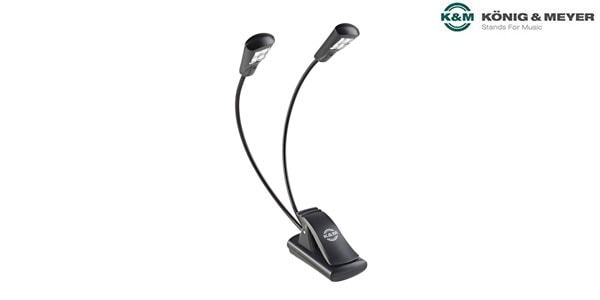
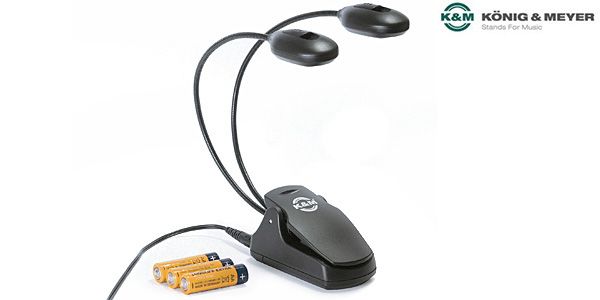
When playing on the riverbank, even though I can substitute audio sources and a metronome with my smartphone, it’s tough to read sheet music on it. Especially at an age when my near-sighted vision is getting worse, a smartphone just doesn’t cut it. A tablet around 9 inches could work, but I want to place it on a music stand and play at a comfortable viewing angle. However, there’s a risk that the stand could fall over in the wind and break the tablet. In the end, sheet music is the only option. But the riverbank is dark. That’s where a clip-on, battery-powered sheet music light from K&M comes in. It costs around 1,000–2,000 yen. It’s lightweight and very useful. I also use the clip to hold and secure the sheet music.
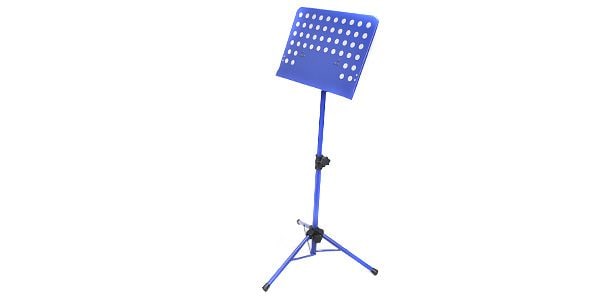
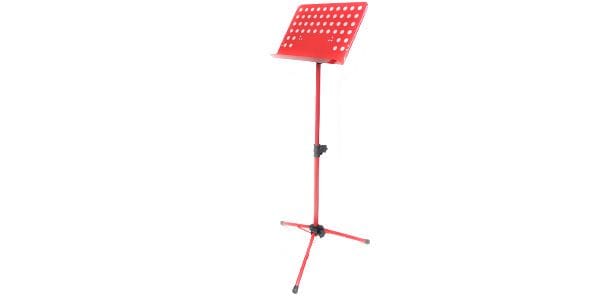
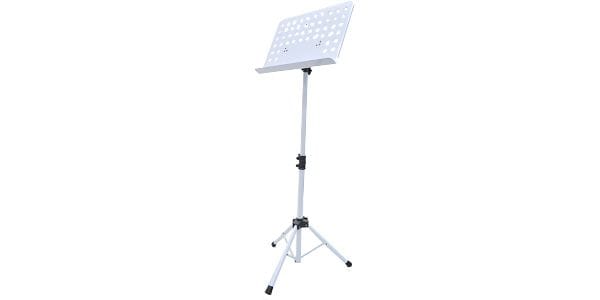
As I mentioned earlier, music stands can fall over in the wind and break. So it’s best if they’re lightweight and inexpensive. If they’re heavy, they’re a hassle to carry. There’s a music stand called the MS20 from PLAYTECH. It’s light, cheap, and durable. Of course, if you have the budget, you can buy high-end gear, but for things like stands and lights that aren’t directly related to playing, it feels like anything is fine as long as it’s cheap and sturdy.
These days, I practice guitar almost every day, but when I first started again, it was only about 15 minutes once a week. The reason is simple: I got tired quickly. The muscles used for playing guitar are ones you don’t normally use. My hearing has also declined, and I couldn’t concentrate on the sound of a metronome or rhythm machine. On top of that, after coming home tired from work, I didn’t feel like playing a tiring instrument like the guitar. Around that time, I came across a guitar equipped with Gibson’s auto-tuning system. For me, it was a perfect fit. I started practicing for just five minutes a day, and gradually increased the time, eventually reaching about an hour without getting tired. Currently, Gibson no longer sells auto-tuning guitars, but the auto-tuning system is still available from Tronical. However, since compatibility with instruments matters, it’s necessary to consult a trustworthy music store. Including labor, it probably costs just under 50,000 yen. Spending 50,000 yen might get me killed by my wife—that financial decision will risk my life. So instead, I recommend an auto-tuning device called Roadie. It costs around 15,000 to 20,000 yen. That might be manageable with some personal savings.
When you come home tired from work, tuning a guitar feels like a hassle, and you end up not playing at all. If even a small amount of that hassle can be reduced, you’ll probably spend more time with your guitar.
If you’re the kind of person who enjoys simply holding a guitar like in your student days, then tuning might also be fun—but for middle-aged people, it’s not that simple (lol).
There are other items that are useful for middle-aged guitarists returning to the instrument, but this is getting long, so I’ll stop here for now.
The column “sound & person” is made possible by contributions from our readers.
For more details on how to submit, click here.











![[ Audio tip] How to use the SHURE SM58 standard microphone efficiently.](/contents/uploads/thumbs/5/2019/10/20191002_5_7930_1.jpg)


 PLAYTECH 譜面台
 UPDATETC ELECTRONIC ブランドページ
 K&M タブレットホルダー比較表
 K&M 便利アイテム特集
 ベースの選び方
 サウンドハウス虎の巻 !
 Discount Sale
 Outlet
 New Arrivals
 Podcast (streaming)
 Headphones / Earphones
 Microphones
 Wireless Equipment
 Speakers
 Power Amps
 Mixers
 Processors
 Portable PA Systems
 Recorders
 Karaoke
 Guitars
 Basses
 Ukuleles
 Drums & Percussion
 Pianos / Synthesizers
 Wind Instruments
 Stringed Instruments
 Japanese Instruments
 Harmonicas, Other
 Software
 DJ & VJ
 Stands
 Cables & Connectors
 Racks & Cases
 Lighting
 Stage & Truss
 Video Equipment
 PC PERIPHERALS
 Power Supplies
 Studio Furniture
 Household Items, Other
 Alcoholic Beverages