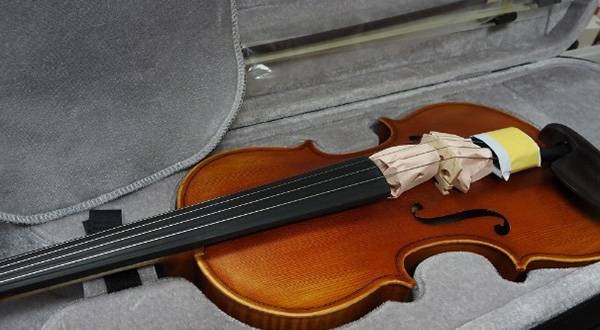
It’s been a month since the previous article was published, but let’s get started with the second part of the series where I fix a mysterious violin.
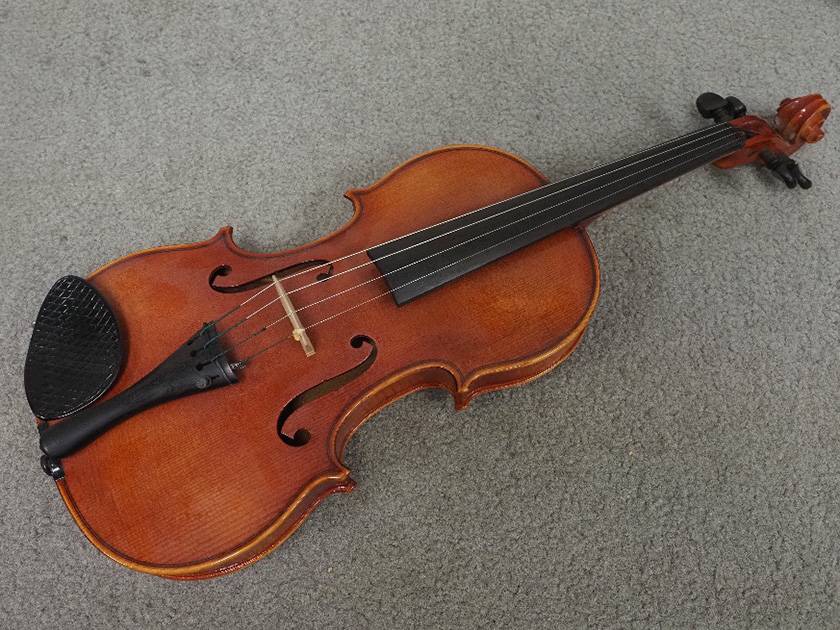
To recap the first installment of this blog, the ‘mysterious violin’ was:
- Found in the junk section of a major Japanese secondhand shop at a low price.
- Identified as a K. Shimora Nr. 70, made in Germany in 1986 (so it’s not all that mysterious).
- Apparently free of any major damage at first glance, but I planned to inspect it closely and try to repair it.
Here’s the first installment of the blog:
⇒ The Mysterious Violin from a Secondhand Shop: Let’s Try Fixing It - Part 1
Now, let’s get started with the inspection to find out what needs fixing!
First, let’s list the areas of the instrument that need attention.
I’ll rate each one using ◎, 〇, △, and ✖.
| - Condition of the pegs | △ |
| - Upper nut | ✖ |
| - Fingerboard condition | ✖ |
| - Neck angle | ✖ |
| - Bridge | △ |
| - Soundpost | △ |
Uh-oh! Nothing looks good? Is that why it’s a junk instrument?
That’s probably what you’re thinking. The evaluation may vary depending on who’s looking at it, but this time, I’m being quite critical.
For example, I described the condition of the back plate as ‘good’ in the previous blog post, but that’s not really what readers are interested in, is it? The real question is: what exactly should we be looking at? Let’s explore the points that interest readers of this blog.
First, let’s focus on one of the six items listed above: Neck angle ✖. This is the most extensive repair of the lot. Let’s check the neck angle.
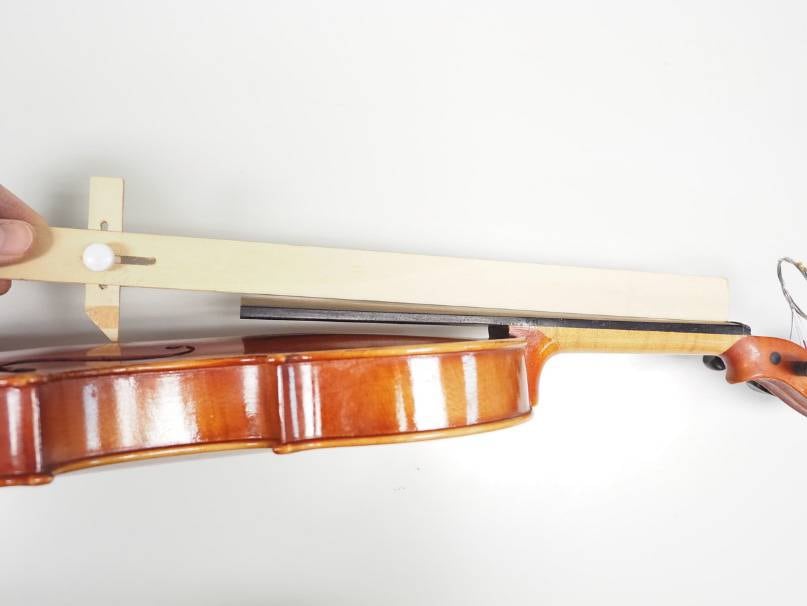
This instrument has a slightly low neck (*), so this time I’ve decided to try resetting the neck. As the name suggests, this involves removing the neck, fitting it back in, and correcting its angle. This is not an unusual repair in the world of string instruments.
*What Does It Mean for the Neck to Be Low? Why Is the Neck Angle Rated ✖?
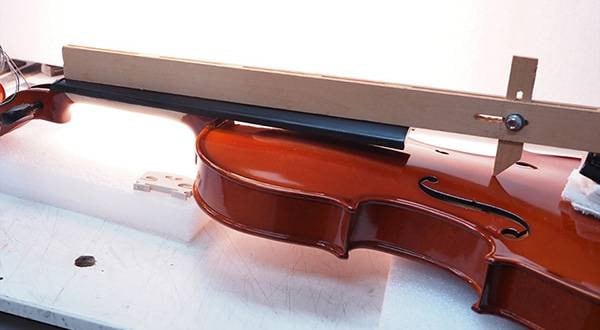
The tension of the strings pulls the neck upward, so at first glance, it may appear that there’s no problem. However, the neck angle is too low relative to the bridge height, resulting in slightly high string action.
In the image, there’s a gap between the fingerboard and the measuring jig. This gap is what I mean by ‘low’. The jig is positioned at the bridge location, where the height is 28 mm, but with this neck angle, the height will be 2-3 mm lower. In other words, the bridge is relatively higher, and the string action is higher as well.
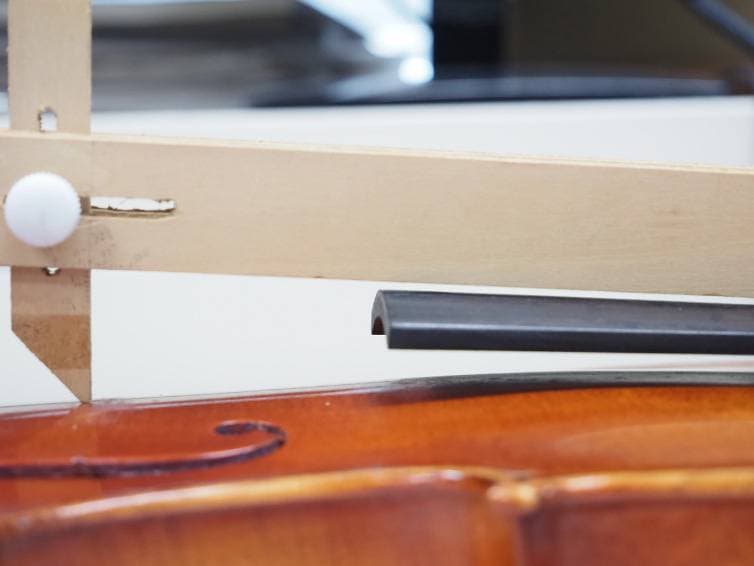
In general, this is the kind of issue for which I’d recommend repair and adjustment. However, string action height depends on the player’s preference, and the setup will vary depending on the strings they use and how high they like the action.
In other words, if the player decides that the setup is fine as it is, there’s no need to make any adjustments.
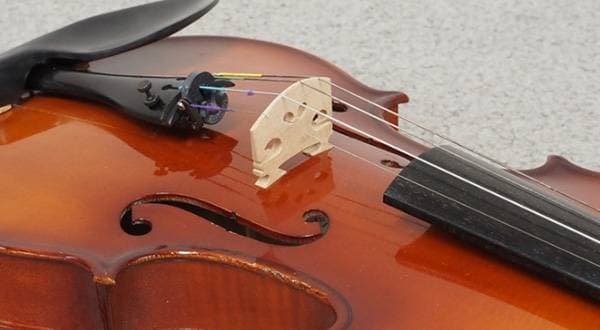
This time, though, I’m going to work on this poor junk violin. It’s strung with Pirastro Cromcor strings. They certainly give it the look of a violin intended for practice.
I’ve also explained neck angles in previous blog posts, so please take a look.
Starting next time, I’ll begin the neck-resetting process, but before that, I’ll briefly explain the other items on the checklist.
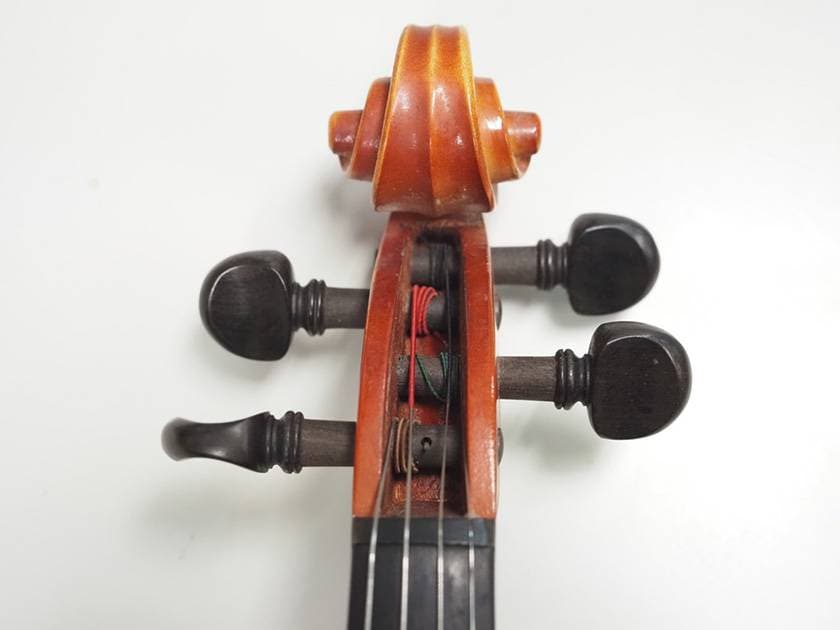
Pegs
They can still be used as they are, but they're slightly too short. The tips protrude from the peg holes.
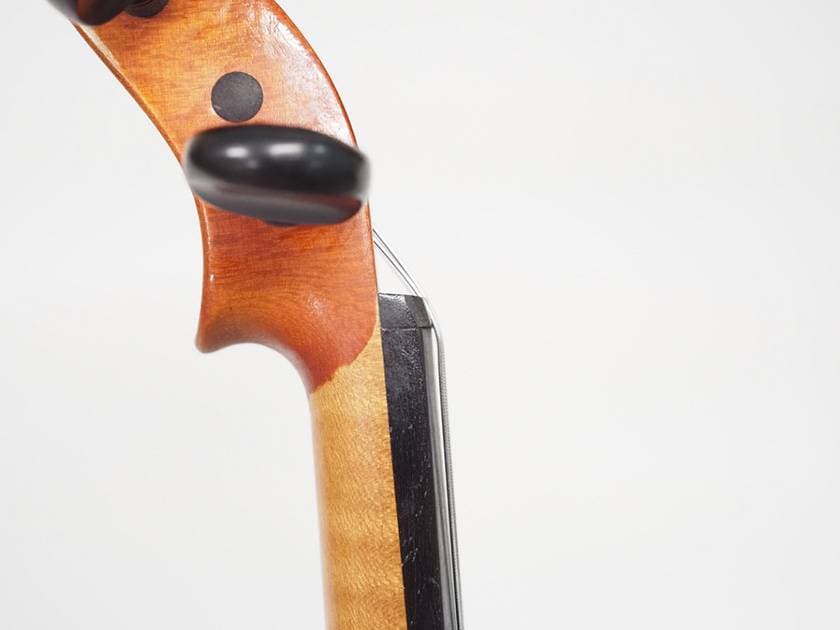
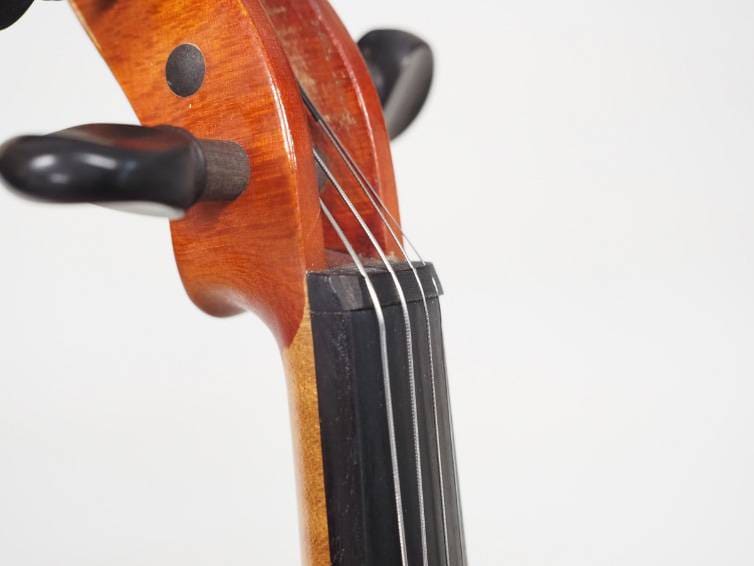
Nut
This shape won’t do. It needs to be modified or replaced.
Fingerboard Condition
Some minor reshaping is necessary.
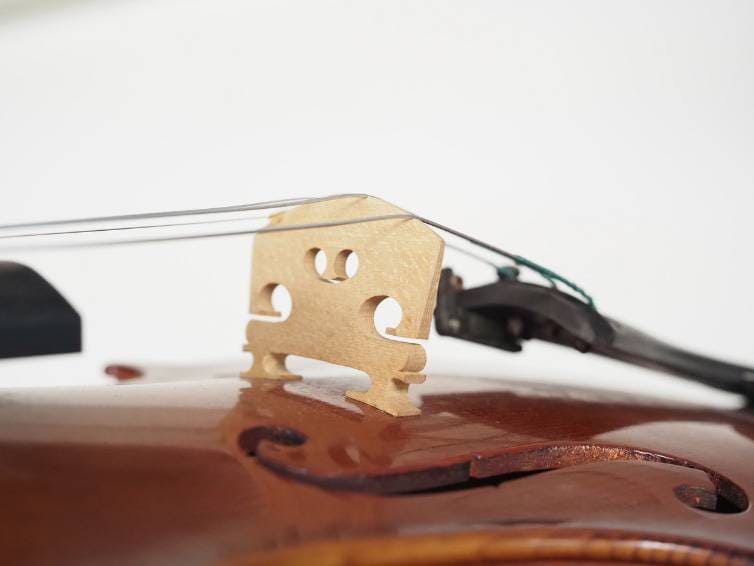
Bridge
This one could work, but it’s tilted slightly forward, and the top edge has developed a slight warp.
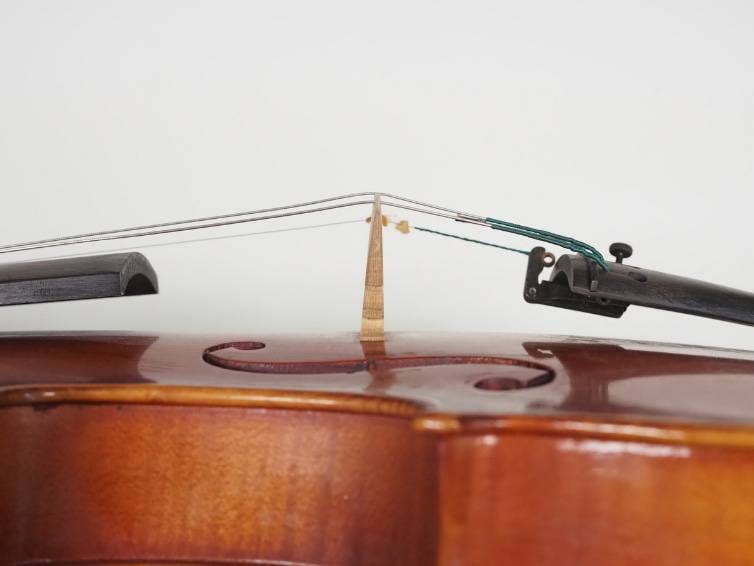
Soundpost
It’s not clearly visible in the image, but it's tilted and needs to be adjusted or replaced.
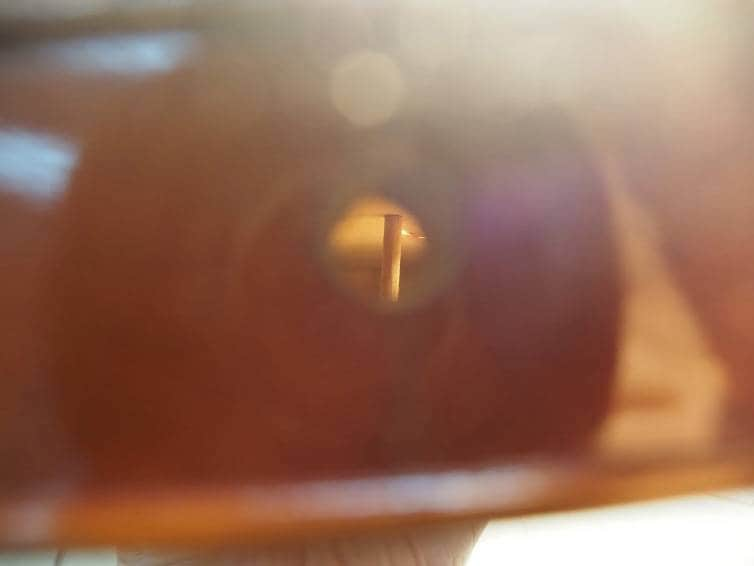
I also recorded a video. The slight tilt is a little easier to see with the naked eye in this video.
Even a quick inspection reveals several minor issues with this instrument, as you can see. If I started commenting on each one individually, things would get complicated, so I’ll leave it here for today.
Repairing it = making it look better ≒ improving the sound = making it more enjoyable to play.
That’s the one goal I’m aiming for. See you next time. I’m going to remove the violin’s neck!

 サウンドハウス管弦楽器ショールーム
 鈴木バイオリン製造
 バイオリン 入門ガイド
 バイオリン弦 セレクター
 バイオリンスタートガイド
 バイオリンの手入れ
 Discount Sale
 Outlet
 New Arrivals
 Podcast (streaming)
 Headphones / Earphones
 Microphones
 Wireless Equipment
 Speakers
 Power Amps
 Mixers
 Processors
 Portable PA Systems
 Recorders
 Karaoke
 Guitars
 Basses
 Ukuleles
 Drums & Percussion
 Pianos / Synthesizers
 Wind Instruments
 Stringed Instruments
 Japanese Instruments
 Harmonicas, Other
 Software
 DJ & VJ
 Stands
 Cables & Connectors
 Racks & Cases
 Lighting
 Stage & Truss
 Video Equipment
 PC PERIPHERALS
 Power Supplies
 Studio Furniture
 Household Items, Other
 Alcoholic Beverages