When choosing a mixer these days, many people first struggle with the question: “analog mixer or digital mixer?”
In recent years, compact digital mixers have become more common, but in live houses, events, rehearsal studios, and similar settings, analog mixers are still widely used.
The reasons are quite simple:
- Easy and intuitive operation
- Easy to understand controls
- Relatively affordable price
For these reasons, especially for beginners or in small-scale live environments, analog mixers can be considered the most user-friendly option.
This time, based on the market in 2026, I will explain what points to focus on depending on different price ranges.
Advantages of Analog Mixers
First, let’s organize the characteristics of analog mixers.
① Easy to understand operation
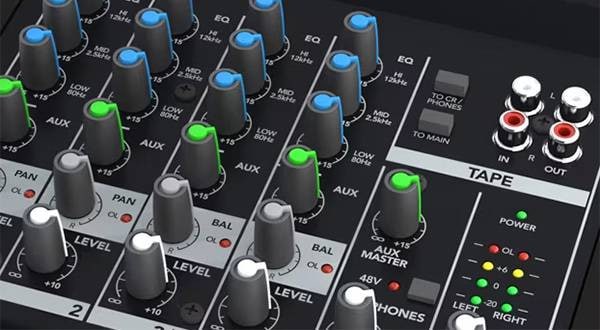
The biggest appeal is that all controls—faders, EQ, AUX, etc.—are visible at a glance.
Unlike digital mixers, there is no need to learn menu-based operations.
For this reason, they are still widely used in live venues, rehearsal studios, and events.
② Less prone to trouble
Analog mixers have a simple structure because the signal flow is visible as-is.
They do not suffer from digital-specific issues such as freezing, software glitches, or network problems.
③ Relatively affordable price
Even with the same number of channels, analog mixers tend to be cheaper, while digital mixers are more expensive.
As a result, they are often introduced for beginners, small bands, and school equipment.
④ Who analog mixers are suitable for
Analog mixers are recommended for those who want intuitive operation or prefer a simple environment with fewer technical issues.
Especially for those using a mixer for the first time, starting with an analog mixer—where the signal flow is visually clear—makes it easier to understand the basics of sound engineering.
Up to 20,000 yen: Entry-level models to start with
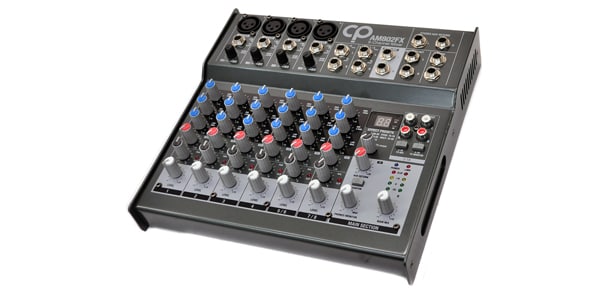
CLASSIC PRO / AM802FX

An analog mixer equipped with 8-channel input (4 mic inputs) and digital effects, supporting 3-band EQ and 48V phantom power.
This model offers excellent value, with a compact size and affordable price. It is recommended for those using a mixer for the first time or for those who want a simple setup.
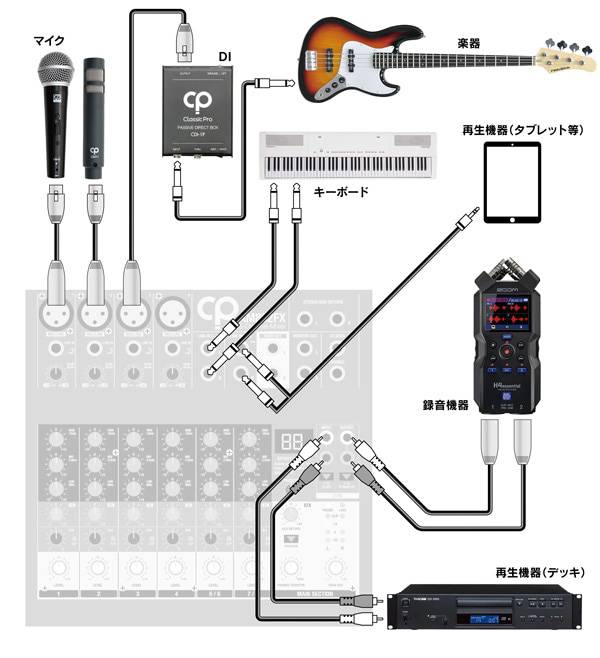
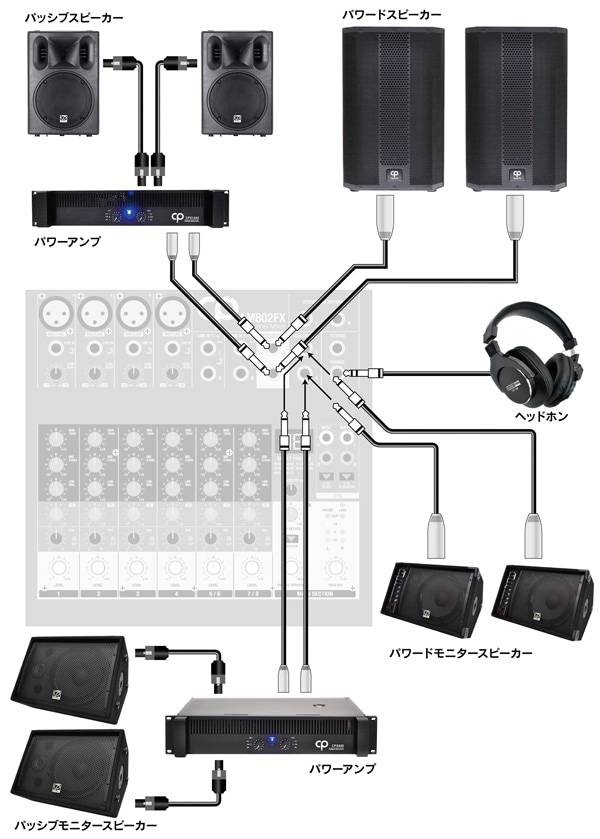
As shown in the diagram above, by inputting microphones, instruments, and playback devices such as tablets and sending the signal to speakers, it can be used for acoustic live performances, small-scale events, and simple streaming setups. Adding effects such as reverb can also give vocals a natural sense of space.
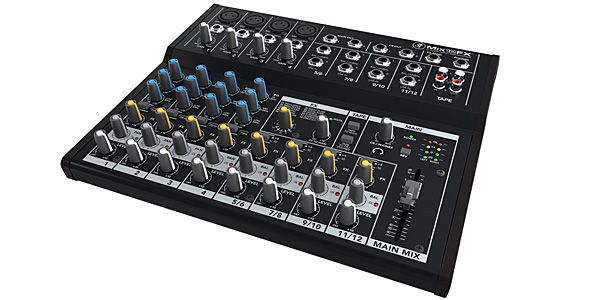
MACKIE / MIX12FX
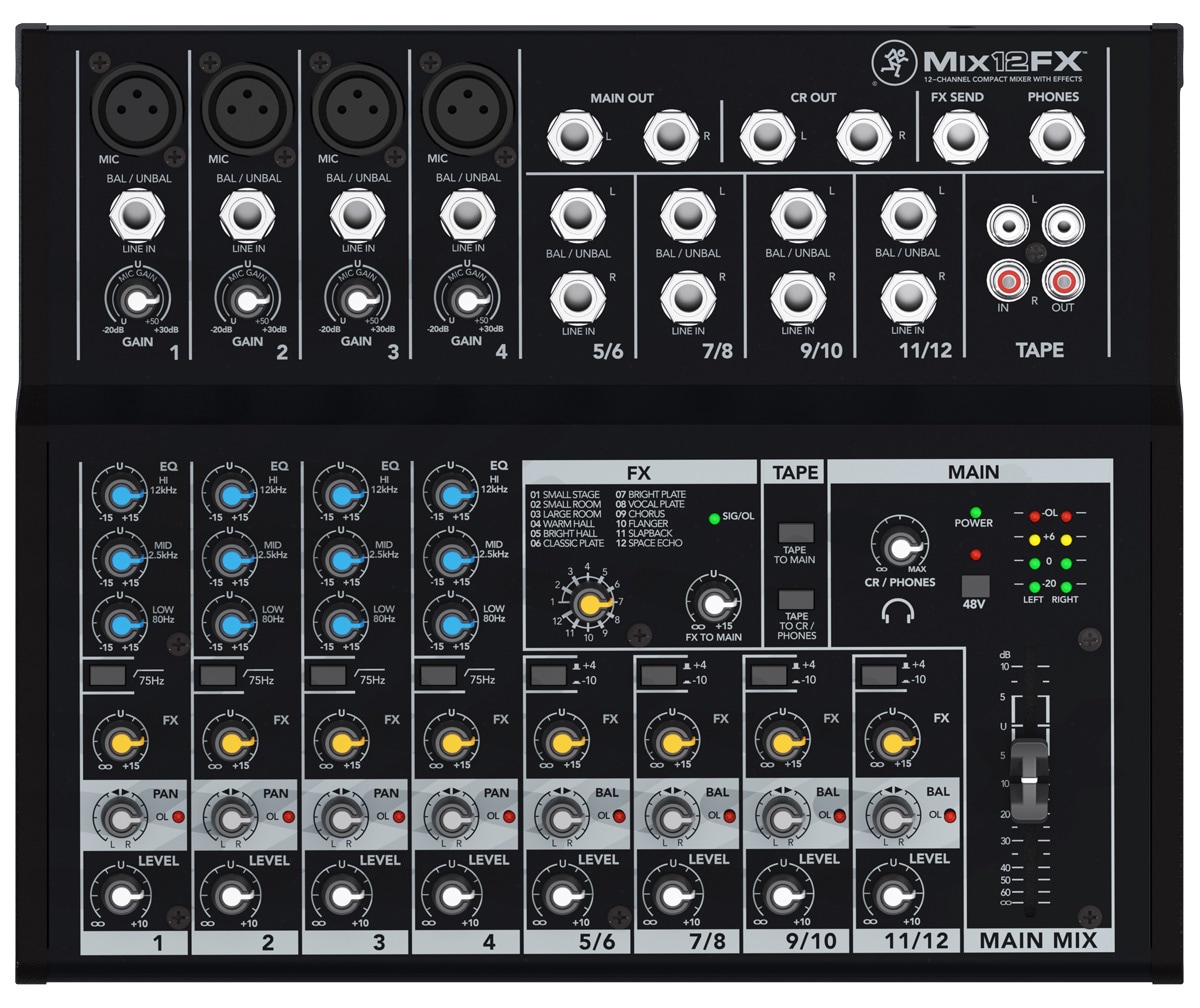
The MIX12FX is a compact analog mixer with 12 channels.
It features 4 mic inputs, 3-band EQ, and supports phantom power, making it suitable for a wide range of uses such as acoustic performances, small events, and simple band rehearsals.
It also includes built-in effects such as reverb and delay, allowing you to add light spatial effects to vocals, making it a popular choice as a beginner-friendly analog mixer.
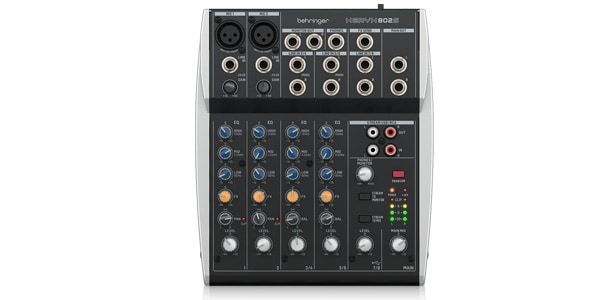
BEHRINGER / XENYX 802S
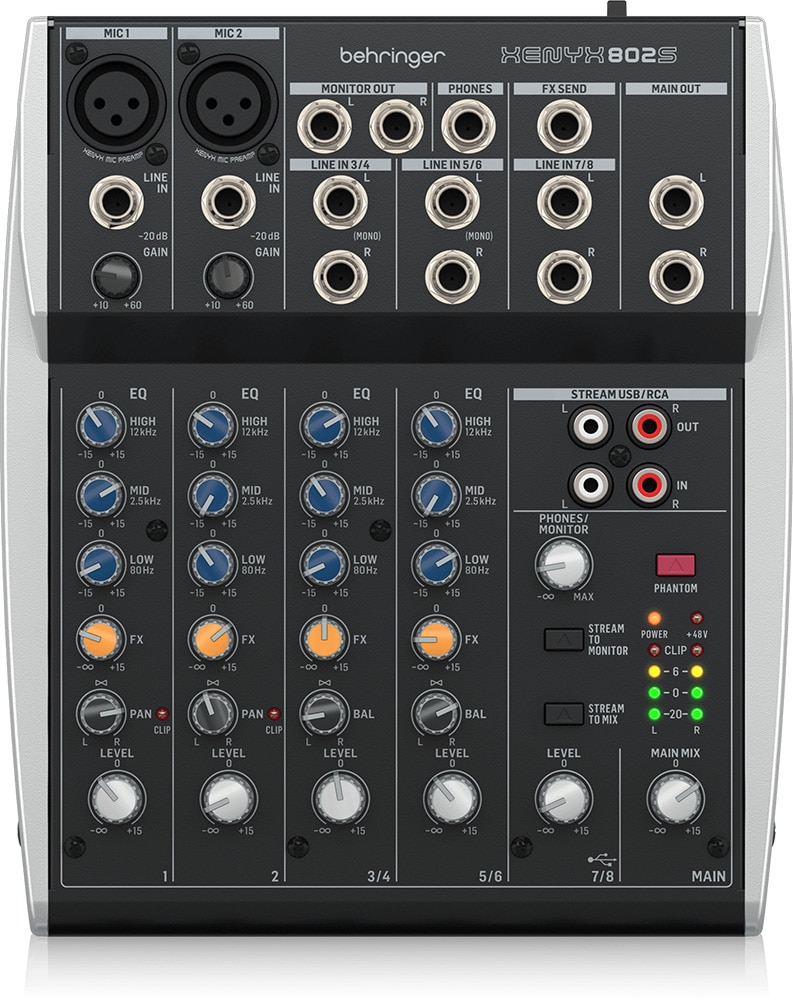
A compact analog mixer with 8-channel input, featuring low-noise XENYX mic preamps and a 3-band EQ. It also includes a built-in USB audio interface function, allowing connection to PCs and mobile devices for streaming and recording.
While maintaining the simplicity of analog operation, it is a highly user-friendly model that also supports recording and streaming via USB connection.
The models introduced so far are compact and easy-to-handle entry-level analog mixers.
They are more than capable for acoustic performances, small-scale events, and streaming.
However, if you plan to use them with a full band setup or want more detailed sound control, I recommend choosing a model with more available channels.
¥50,000 Range: Standard Models Suitable for Small-Scale Live Shows and Streaming
In the price range above ¥30,000, mixers generally offer more channels, higher sound quality, and greater expandability, making them capable of handling live events, band performances, and streaming.
At this class, models often include more practical features such as:
- Sending signals to monitors via AUX outputs
- Enhanced built-in effects
- USB audio interface functionality
I recommend these mixers if you plan not only solo acoustic performances but also band setups or event PA.
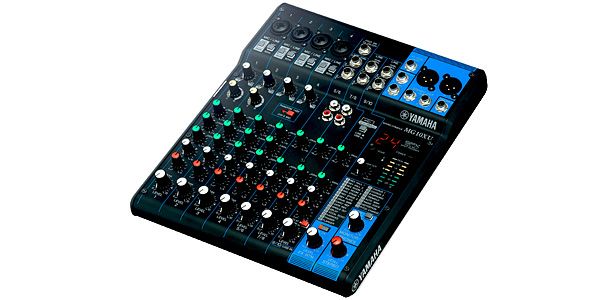
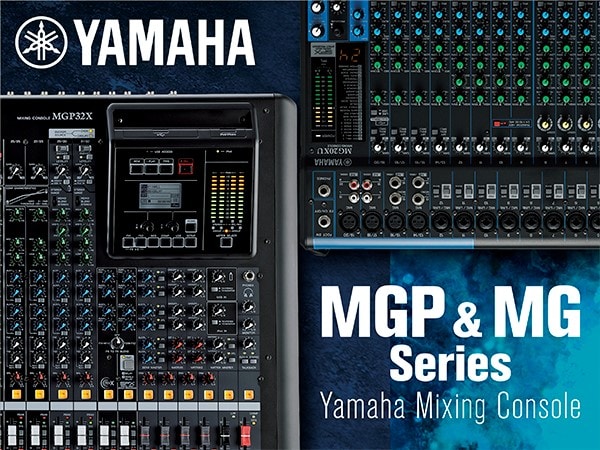
YAMAHA / MG10XU Analog Mixer
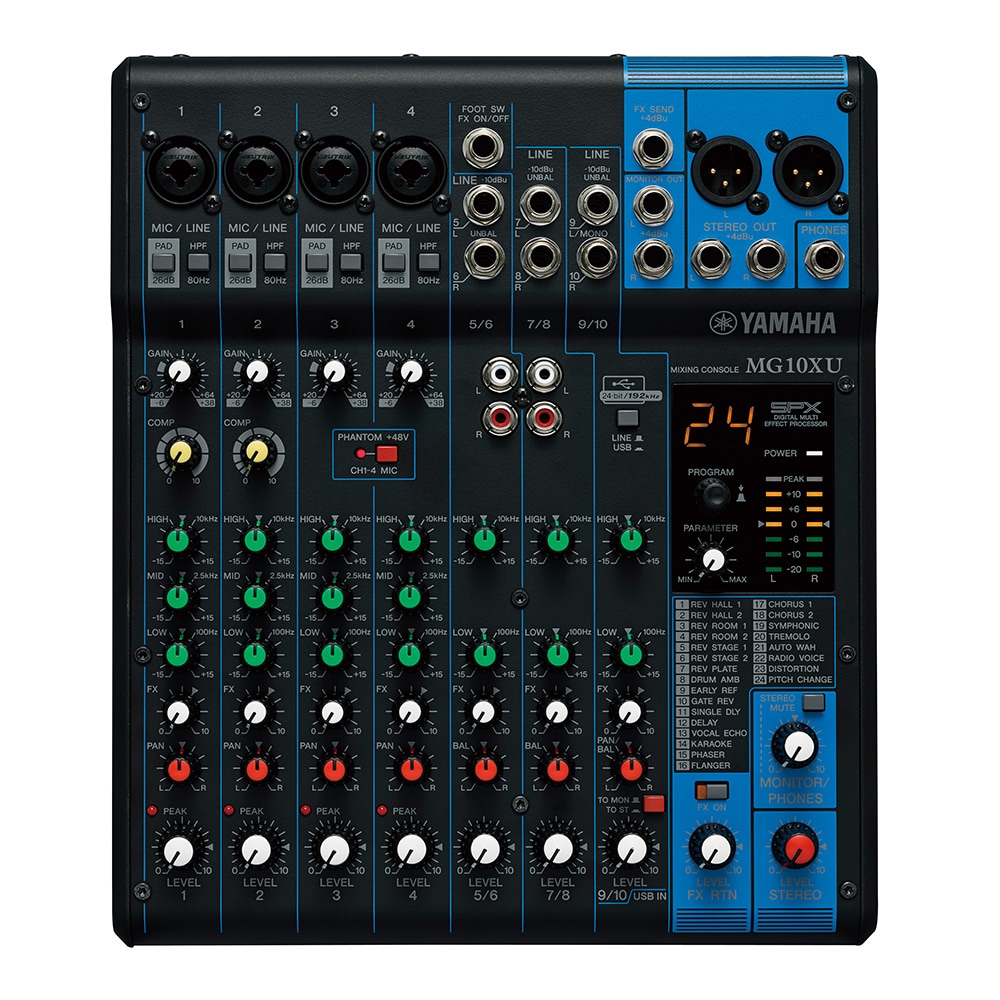
A long-standing, popular standard among analog mixers.
It features 10 input channels and high-quality D-PRE mic preamps, delivering clear and natural sound.
Additionally, it comes with Yamaha’s proprietary SPX effects (24 types), allowing easy addition of reverb, delay, and other spatial effects. With its USB audio interface function, recording and streaming to a PC is also possible.
This mixer is widely used for live events, solo performances, band rehearsals, and streaming, earning its reputation as a “reliable standard model” in many settings.
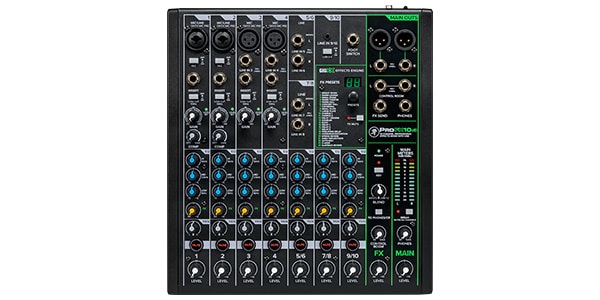
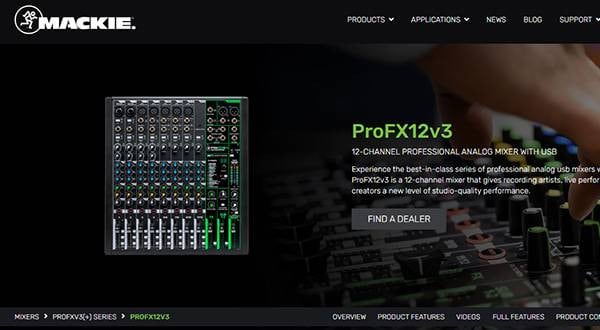
MACKIE / ProFX10v3

A highly popular analog mixer for live PA and streaming setups.
It features Mackie’s proprietary Onyx mic preamps, delivering low-noise sound with ample headroom.
The built-in GigFX effects engine includes 24 effects such as reverb and delay, making it fully capable for live performances.
With USB connectivity for PC recording, it is a versatile mixer suitable for:
- Live PA
- Home studios
- Streaming
BEHRINGER / XENYX QX1222USB
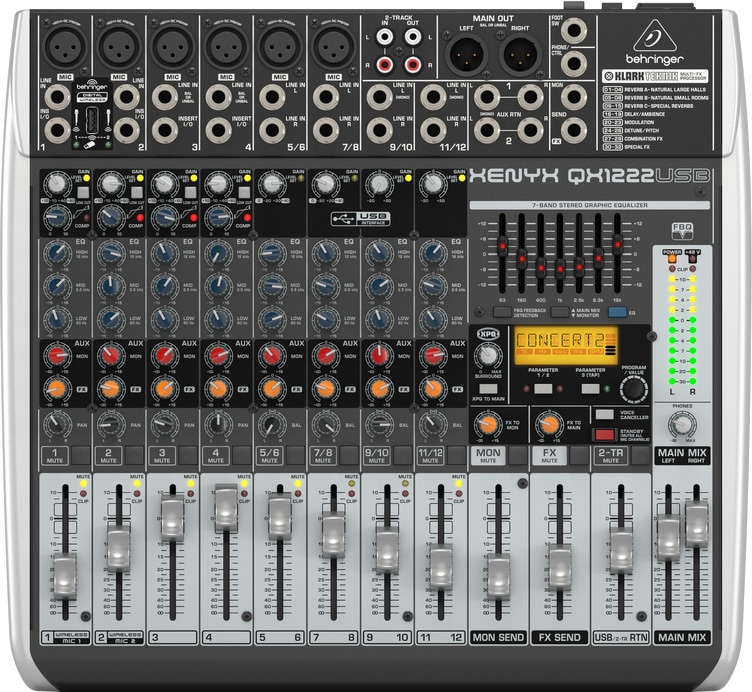
An analog mixer with 12 input channels offering excellent value.
It can connect multiple microphones and instruments, making it ideal for band setups and event PA.
It also includes built-in effects and a USB audio interface, making it suitable for:
- Live events
- Small-scale PA
- Streaming/recording
With its high channel count in this price range, it is recommended for those who want a professional setup while keeping costs under control.
Over ¥50,000: Full-Fledged Models for Band and Event PA
Mixers priced over ¥50,000 generally offer even more channels, superior sound quality, and greater expandability, making them suitable for live events, band performances, and permanent installations.
Mixers in this class often include:
- Increased number of mic inputs
- More AUX outputs for monitor feeds
- Sound-shaping features like compressors
- Channel compressors
- Enhanced built-in effects
These practical features allow for building a professional PA environment.
If you are performing with a band, running an event PA, or managing school or facility setups, choosing a mixer in this class provides peace of mind.
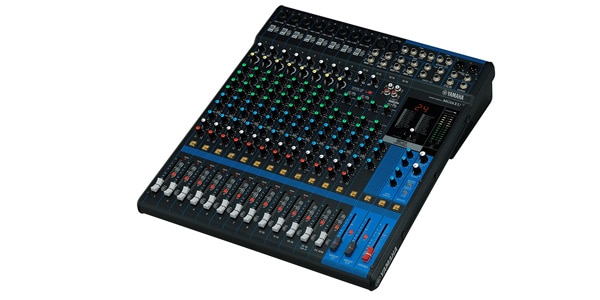
YAMAHA / MG16XU Analog Mixer

A classic analog mixer with 16 input channels.
It supports up to 10 mic inputs and features Yamaha’s proprietary D-PRE mic preamps, delivering clear sound quality.
Additionally, it includes 24 types of SPX digital effects, allowing easy addition of reverb, delay, and more.
With a built-in USB audio interface, it can be used for recording and streaming to a PC. With its 16-channel configuration, this mixer is widely used in live performances, events, and permanent installations as a standard, versatile model.
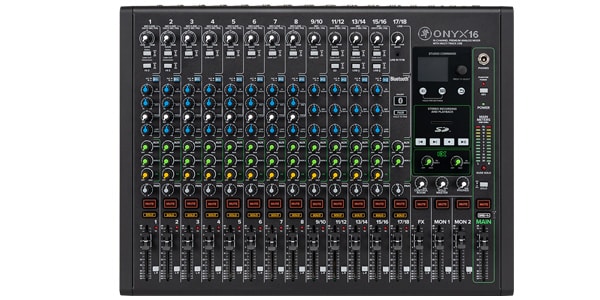
MACKIE / Onyx16 Analog Mixer
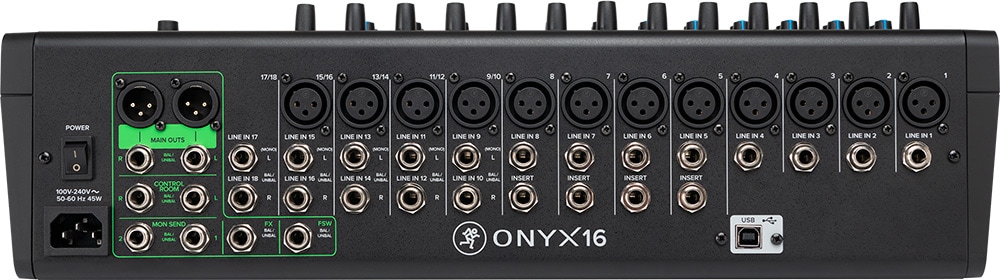
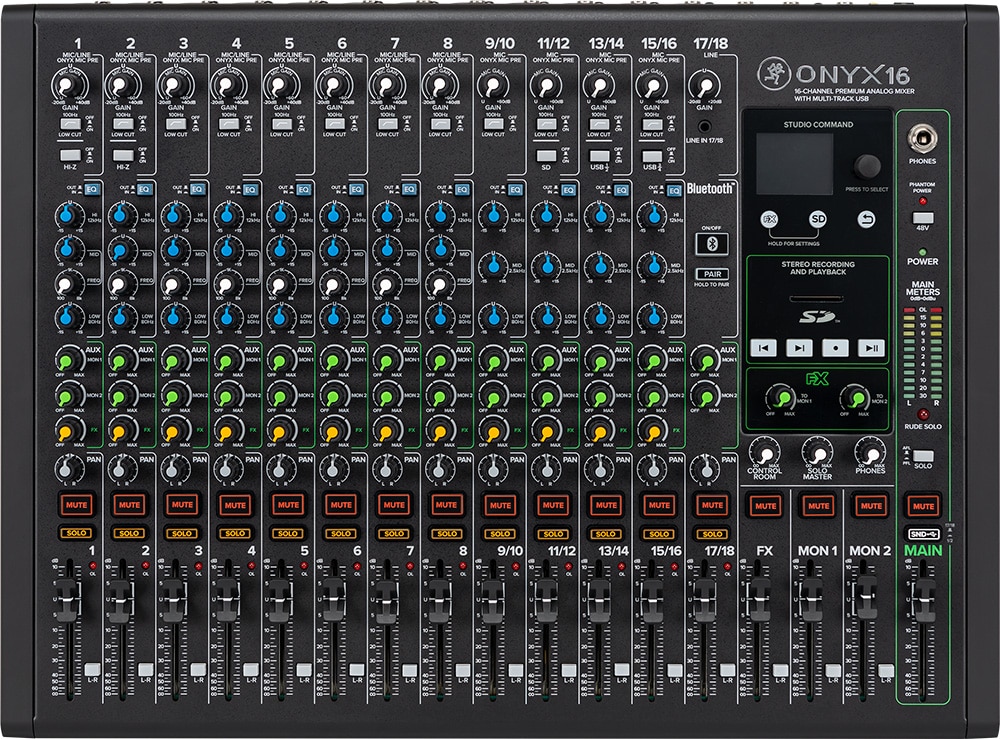
A high-performance analog mixer with 16 input channels, suitable not only for live use but also for recording.
It features Mackie’s proprietary Onyx mic preamps, providing low-noise and spacious, clear sound.
It also includes the “Perkins EQ,” allowing musical and natural analog-style EQ adjustments to shape vocals and instrument tones naturally.
Supports multi-track recording via USB, SD card recording, and Bluetooth input, making it suitable for:
- Live PA
- Streaming
- Band recording
- Home studio
Highly popular as a hybrid analog mixer, it’s ideal not only for live applications but also for recording and streaming purposes.
BEHRINGER / XENYX QX2442USB
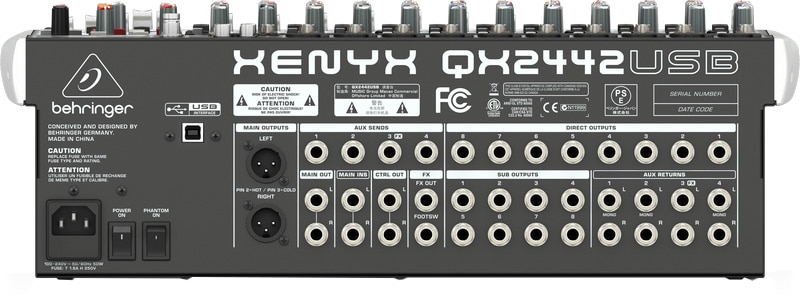
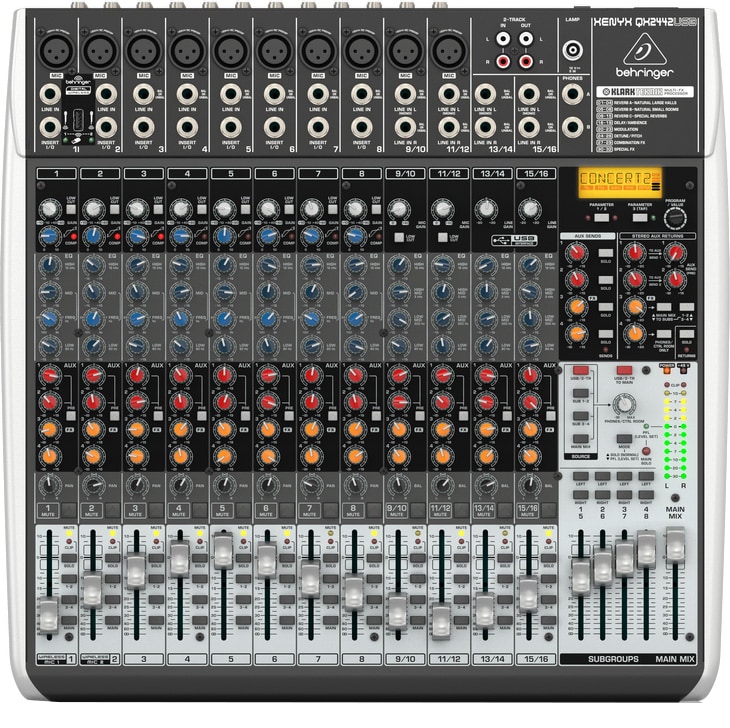
An analog mixer with a large-scale 24-input channel configuration.
It can connect numerous microphones and instruments, making it suitable for band performances and event PA with ample headroom.
It also features compressors, built-in effects, and a USB audio interface, offering high cost performance by allowing a professional PA setup at a reasonable price.
For events and presentations, it is also recommended to pair it with BEHRINGER’s wireless microphone system:
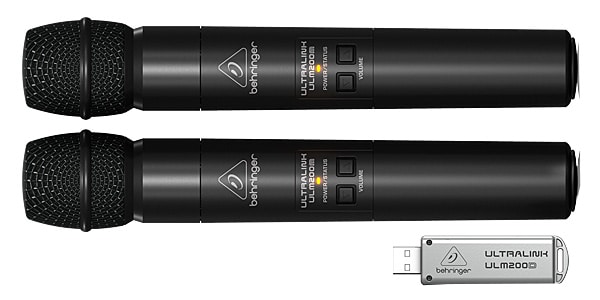
This combination allows a cable-free setup, creating a more comfortable and efficient PA environment.
To summarize
Analog mixers continue to be widely used in 1live venues and events due to their intuitive operation and simple structure.
A guideline for choosing based on intended use:
| Price range | Main use |
|---|---|
| ¥20,000 range | Solo performances, small-scale streaming |
| ¥50,000 range | Band practice, small events |
| Over ¥50,000 | Live PA, events, permanent installations |
When selecting a mixer, consider the number of channels, functions, and the equipment you will use to choose a model that suits your needs.
Refer to the models in this article to select a mixer that best fits your planned usage and environment.





![[2024 Edition] How to Choose a Mixer & Recommended Analog and Digital Mixers](/contents/uploads/thumbs/2/2024/10/20241026_2_29156_1.jpg)
![[Is No One Doing This??] Recorded the Sound Differences Between Mixers!!](/contents/uploads/thumbs/2/2024/8/20240827_2_28387_1.jpg)


 YAMAHA MGP&MG シリーズ
 MACKIE GOシリーズ特集
 MACKIE ブランドページ
 CLASSIC PRO
 Behringer パワードミキサー比較表
 Mackie ミキサー比較
 Discount Sale
 Outlet
 New Arrivals
 Podcast (streaming)
 Headphones / Earphones
 Microphones
 Wireless Equipment
 Speakers
 Power Amps
 Mixers
 Processors
 Portable PA Systems
 Recorders
 Karaoke
 Guitars
 Basses
 Ukuleles
 Drums & Percussion
 Pianos / Synthesizers
 Wind Instruments
 Stringed Instruments
 Japanese Instruments
 Harmonicas, Other
 Software
 DJ & VJ
 Stands
 Cables & Connectors
 Racks & Cases
 Lighting
 Stage & Truss
 Video Equipment
 PC PERIPHERALS
 Power Supplies
 Studio Furniture
 Household Items, Other
 Alcoholic Beverages