Hello!
It’s Kaoru the composer here!
Effects pedals are an essential item for guitarists.
Today, I would like to talk about distortion-type pedals, which are especially in high demand.
I’ve seen countless pedalboards from both professionals and amateurs, and almost everyone uses some form of distortion.
Because of that, many manufacturers offer a wide range of products, but something I hear often is, “There are so many types that I don’t know which one to choose!”
Even if we simply call it “distortion effects”, there’s also:
- Overdrive
- Distortion
- Fuzz
as the main categories, but for beginners, it’s easy to get confused…
So, based on my experience, I’ll introduce some recommended products.
(Please note that I’m talking from my own personal experiences and opinions, so use this article as a form of reference only!!)
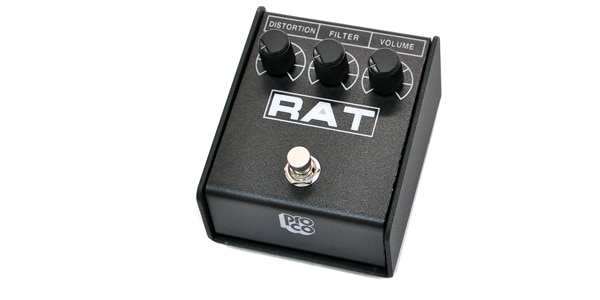
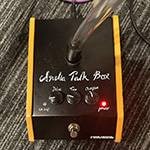
This is my favorite distortion pedal.
It’s pronounced “Rat”
It even appears in the lyrics of Tokyo Jihen’s “Marunouchi Sadistic”!
It became known worldwide when the legendary guitarist Jeff Beck used it during the global rock boom of the 1980s.
It has the presence unique to distortion and the potential to bring out the guitar’s natural sound.
The control panel is a simple setup with distortion, filter, and volume, so beginners can operate it intuitively.
A point I personally like is that the INPUT/OUTPUT and 9V power cables can all be connected from the top.
It’s also nice that you can buy it for under 10,000 yen!
SUHR / Riot Distortion
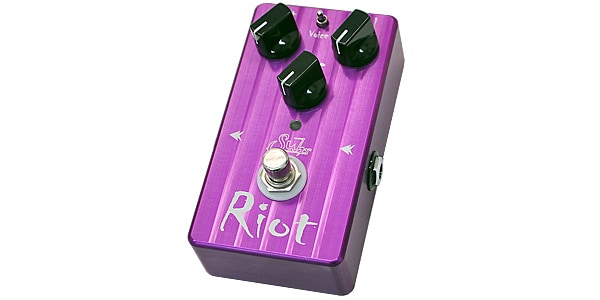
A distortion pedal with a sleek and shiny purple body.
Even with heavy distortion, the sound doesn’t collapse and it accurately expresses picking nuances.
Perfect for expressive techniques like bending or vibrato, and for aggressive power-chord riffing.
You can control the tone from crunch to modern high-gain depending on picking strength.
Personally, it feels like it pairs well with humbuckers on guitars like a Les Paul.
It’s relatively expensive compared to other pedals, but considering its versatility, I think the price is fairly reasonable.
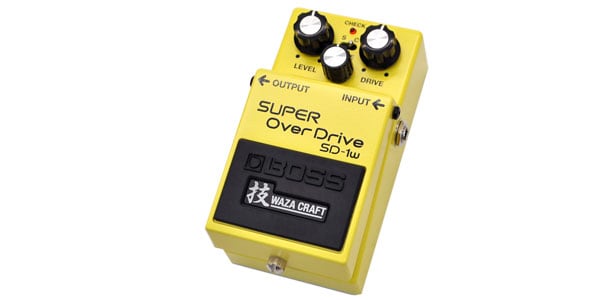
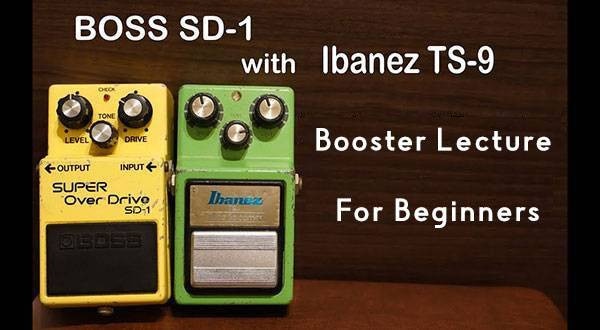
A specially customized version of the popular overdrive pedal, the SD-1.
It’s filled with carefully selected high-quality parts and BOSS’s advanced engineering.
Its analog circuitry reflects the meticulous design characteristic of Made-in-Japan gear.
When playing chords, each string rings clearly, making it very satisfying to play.
A key feature of this SD-1 is the newly added mode switch, which allows you to toggle between Standard and Custom modes. Finding your preferred sound by switching between these modes is part of the fun.
One of my favorite features is BOSS’s traditional footswitch.
You won’t misstep, and it doesn’t hurt even when stepped on barefoot, making practice smoother.
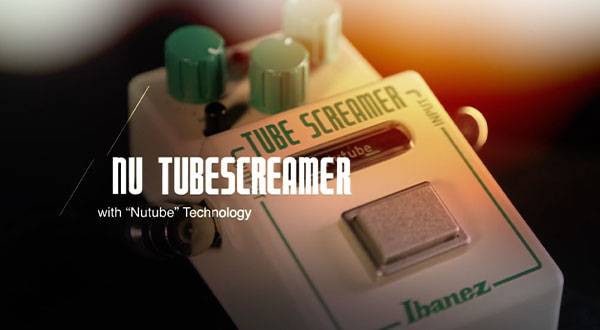
Ibanez / NTS NU TUBESCREAMER
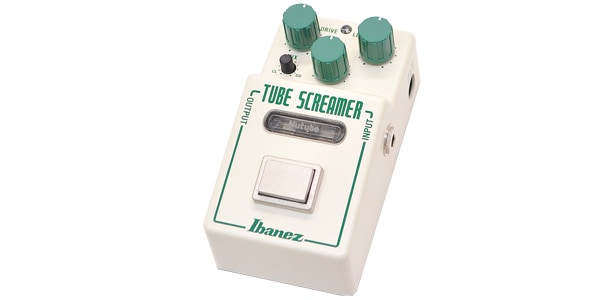
A new overdrive pedal born from a collaboration between the Ibanez Tube Screamer and KORG’s Nutube! The Nutube is visible on the front panel and it looks incredibly cool!
The unique vacuum-tube sound characteristic of Nutube produces a very warm tone—it’s got natural tube-style compression, a classy and mild overdrive.
It also achieves a wide dynamic range that captures delicate picking nuances with precision. Nutube overcomes the traditional weakness of vacuum tubes (their short lifespan), so it’s reliable even for long periods of use.
ELECTRO-HARMONIX / Big Muff Pi Original
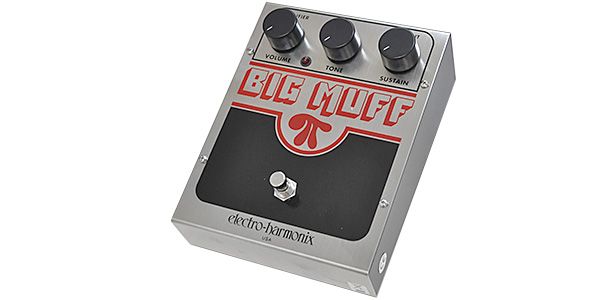
A fuzz pedal shaped almost like a bentobox.
This classic is beloved by world-renowned musicians such as Jimi Hendrix and Santana.
Even as countless new effects pedals are released each year, the FFM2 is one that remains a long-running hit.
It can cover a wide range—from aggressive, buzzing fuzz tones to modern and refined sounds.
Because it’s significantly larger than most other pedals, you’re unlikely to misstep on it, but it does take up a lot of space on a pedalboard, so opinions tend to differ.
However, because it’s a “fun-to-play” pedal, I highly recommend trying it for yourself!
JIM DUNLOP / FFM1 Fuzz Face Mini Silicon
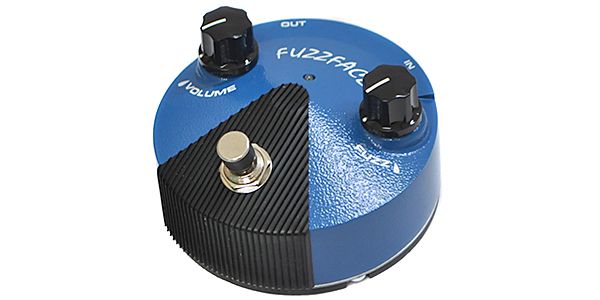
A compact, circular fuzz pedal.
This pedal also has a long history and has maintained unwavering popularity since its debut in the 1970s.
JIM DUNLOP / FFM2 Fuzz Face Mini Germanium
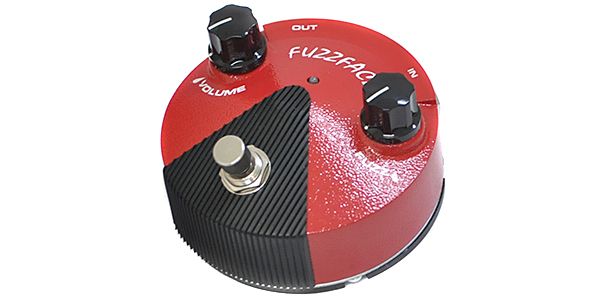
This fuzz pedal uses germanium transistors, something rarely seen in modern times.
Its uniquely solid, germanium-driven sound is truly one of a kind!
However, there is one important point to keep in mind:
It is highly affected by temperature changes.
To put it simply, the sound in summer and winter can be completely different!
Since Japan experiences four distinct seasons, the tone will inevitably shift throughout the year.
If you like this characteristic, it can be incredibly fascinating—but if you value stability,I don’t recommend it.
This fuzz pedal feels almost alive, as it’s filled with a sense of romance and character!
That concludes this introduction to several types of distortion-based effects: overdrives, distortions, and fuzzes.
I hope you find the gear that fits you best and will help you to enjoy music even more!
Please use this article as a reference!!
The “sound & person” column is made up of contributions from you.
For details about contributing, click here.











![[BOSS / BD-2] Standard distortion that can be used widely from beginners to advanced players](/contents/uploads/thumbs/5/2019/10/20191018_5_8160_1.jpg)
![[Beginner-Friendly] Part 2 - Pedalboard Gems: A Slightly Nerdy Effects Pedal Guide: Distortion Pedals](/contents/uploads/thumbs/2/2020/11/20201106_2_11518_1.jpg)
![[Beginner-Friendly] Part 1 - Pedalboard Gems: A Slightly Nerdy Effects Pedal Guide: Overdrive Pedals](/contents/uploads/thumbs/2/2016/9/20160909_2_282_1.jpg)
 はじめてのエフェクターは GT-1 にしよう
 第2弾 あなたのエフェクターボード見せてください
 【初心者向け】エフェクター講座
 BOSS「技-WAZA CRAFT-」
 あなたのエフェクターボード見せてください
 エフェクターのつなぎ方
 Discount Sale
 Outlet
 New Arrivals
 Podcast (streaming)
 Headphones / Earphones
 Microphones
 Wireless Equipment
 Speakers
 Power Amps
 Mixers
 Processors
 Portable PA Systems
 Recorders
 Karaoke
 Guitars
 Basses
 Ukuleles
 Drums & Percussion
 Pianos / Synthesizers
 Wind Instruments
 Stringed Instruments
 Japanese Instruments
 Harmonicas, Other
 Software
 DJ & VJ
 Stands
 Cables & Connectors
 Racks & Cases
 Lighting
 Stage & Truss
 Video Equipment
 PC PERIPHERALS
 Power Supplies
 Studio Furniture
 Household Items, Other
 Alcoholic Beverages