Hello!
I’m Takuto Fujioka, a chiropractor specializing in guitarists!
Hope you're doing well today.
Today's topic isn't about your body, but rather about guitar DIY (^ω^)
Have you ever replaced any parts on your guitar?
Changing guitar parts can seem like an intimidating high hurdle to cross. You might feel anxious about whether the upgrades will have the desired effect or what you’ll do if they don't. After all, even though they're called "parts," guitar components can be surprisingly expensive. Additionally, there are pitfalls like differences in size based on inches or millimeters, and variations in size between manufacturers. You wouldn’t want to regret buying something only to fail at installing it, right?
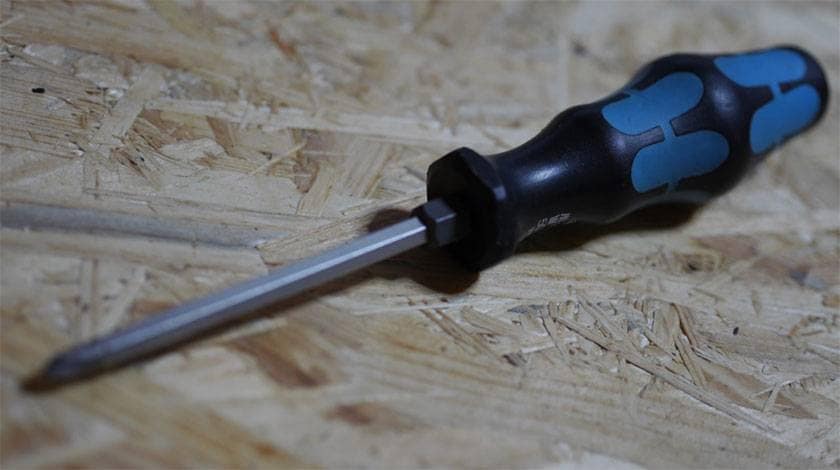
So today, I want to introduce some guitar parts that are simple to swap with just one screwdriver, and ones that I personally feel offer great prices! These parts can be swapped by simply loosening screws, replacing the part, and tightening the screws — no need to drill new holes!
Plus, since they can be easily reverted with just one screwdriver, restoring everything back to normal is a breeze.
Try it out as your first step in guitar DIY (^O^)
1. Bridge & Tremolo
FENDER / Standard Strat Big Block Chrome Tremolo Bridge Assembly
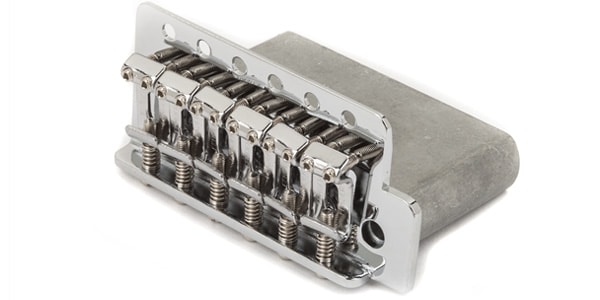
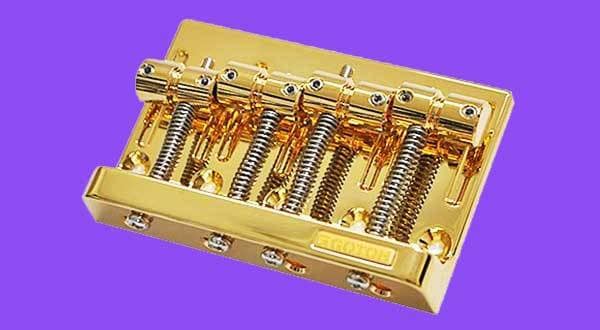
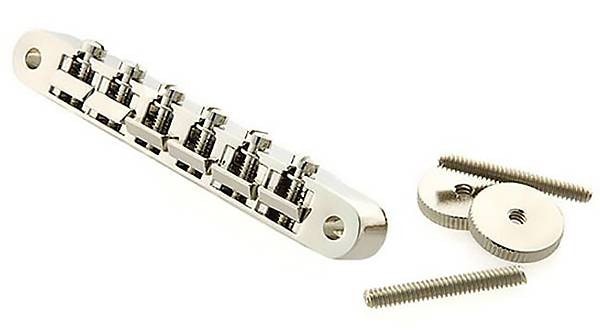
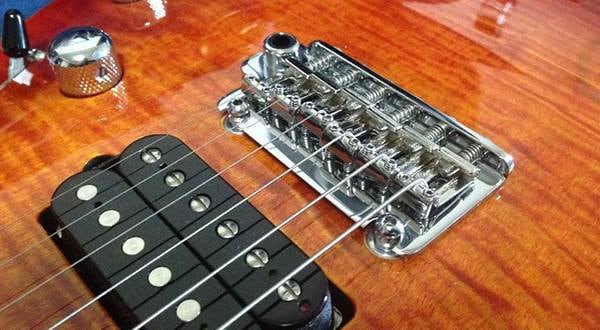
Bridges and tremolos are typically secured with screws, so they can easily be swapped with just one screwdriver. Despite being easy to replace, these parts can make a significant difference in the sound.
When replacing guitar parts, it’s often best to start with parts that the strings come into contact with, as these parts can drastically alter the guitar’s tone, making it easier to notice the change. Replacing parts like the bridge or tremolo, which directly support the strings, will lead to noticeable tonal changes.
The material of the parts affects the sound. Harder materials tend to emphasize the high frequencies, while softer materials bring out the midrange to low frequencies and harmonics. Differences in weight also have a major impact on sound. Heavier parts produce a fuller, more solid tone, while lighter parts tend to create a brighter, sparkling sound.
To put it simply, heavier materials lean more toward a modern sound, while lighter materials are closer to vintage tones.
Bridge and tremolo parts differ slightly in mounting pitch, size, and string spacing depending on the guitar, manufacturer, and model. When purchasing, it’s important to measure the dimensions of the part currently installed on your guitar. If you're unsure of the size, you can always contact Sound House for detailed specifications.
2. Strap Pins
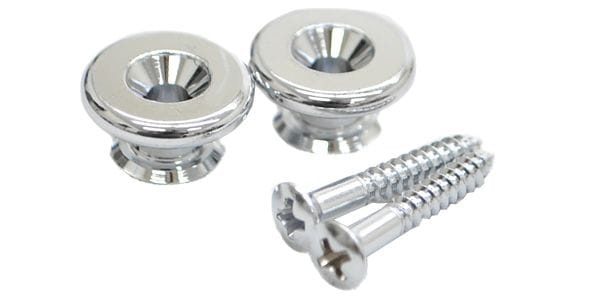
Most guitars come with default strap pins. However, the strap pins that come pre-installed are often small with a short protruding head, which makes it easy for the strap to come off when standing and playing.
It's a bit of a mystery as to why the design allows for the strap to easily slip off, but if you perform live or play standing up even occasionally, I highly recommend replacing the strap pins.
While these parts don't directly affect the tone, replacing them frees you from the fear of the strap coming off while playing. In terms of providing peace of mind, it's a must-have part.
3. String Retainer
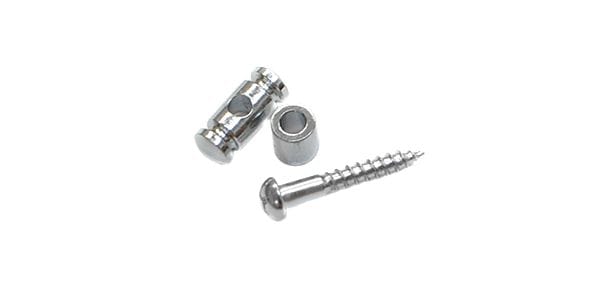
As mentioned with the bridge and tremolo, when you replace parts that come into contact with the strings, the effect on the sound is usually quite noticeable.
The parts of the guitar that directly contact the strings are: 1) Bridge, 2) Nut, 3) String Retainer, 4) Peg, and 5) Frets.
The string retainer is a part found only on Fender-style guitars with single-side 6-in-line tuners. This part primarily holds the high-pitched strings in place to help maintain their tension. Although it's a seemingly insignificant part, it quietly touches and presses down on the strings. It does affect the tone to some extent and, for guitars with a tremolo unit, it can also impact tuning stability during arm action. It's said that the fewer contact points between the string retainer and the strings, the better the tuning stability.
Similar to the bridge, the material and shape of the string retainer will also affect the sound.
4. Neck Plate
Freedom Custom Guitar / Tone Shift Plate SP-JP-03
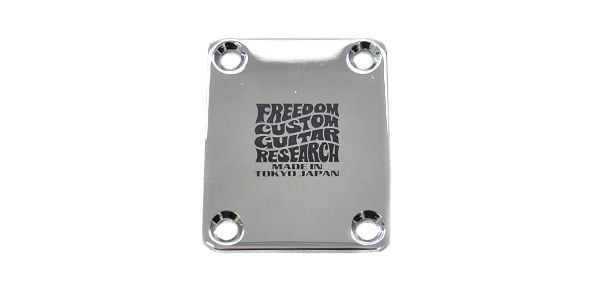
The neck plate is the part that fastens the neck and the body of the guitar together with screws.
This part can also influence the guitar's sound by changing its mass. The general tendency is that the thicker the plate, the more it suppresses unnecessary resonance from the body, resulting in a tighter sound. While this is quite a niche part, it is easy to replace, making it an accessible upgrade for those looking to refine their sound.
Bonus Edition: Volume and Tone Knobs
Replacing the knobs is also a great way to easily upgrade the look of your guitar.
One thing to be careful of is that, even though the appearance may be the same, the specifications (in millimeters or inches) can vary depending on the knob. The pot size, whether in millimeters or inches, can be tricky to determine just by looking at it.
That's why I recommend knobs that are secured with screws. With this type, you can attach them regardless of whether the specification is in millimeters or inches. Knobs that are screwed in may have a limited design selection, but on the flip side, they give your guitar a more unique look, which is perfect for those who want something different from the crowd.
In addition to the parts I've introduced, there are many other guitar parts that can be easily replaced. Customizing your guitar little by little to match your personal taste is a fun way to make it your own!
See you next time!
The “sound & person” column is made up of contributions from you.
For details about contributing, click here.









![[Repair] Making This YAMAHA Pacifica PAC312 Playable](/contents/uploads/thumbs/5/2021/10/20211025_5_14730_1.jpg)
 GOTOH(ゴトー)ギター用ペグ よくある質問まとめ!
 DIY ギターメンテナンス
 ブリッジの種類
 ネックの調整方法
 弦の張り替え(エレキギター)
 ギターのお手入れ
 Discount Sale
 Outlet
 New Arrivals
 Podcast (streaming)
 Headphones / Earphones
 Microphones
 Wireless Equipment
 Speakers
 Power Amps
 Mixers
 Processors
 Portable PA Systems
 Recorders
 Karaoke
 Guitars
 Basses
 Ukuleles
 Drums & Percussion
 Pianos / Synthesizers
 Wind Instruments
 Stringed Instruments
 Japanese Instruments
 Harmonicas, Other
 Software
 DJ & VJ
 Stands
 Cables & Connectors
 Racks & Cases
 Lighting
 Stage & Truss
 Video Equipment
 PC PERIPHERALS
 Power Supplies
 Studio Furniture
 Household Items, Other
 Alcoholic Beverages