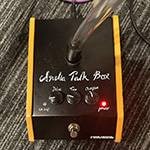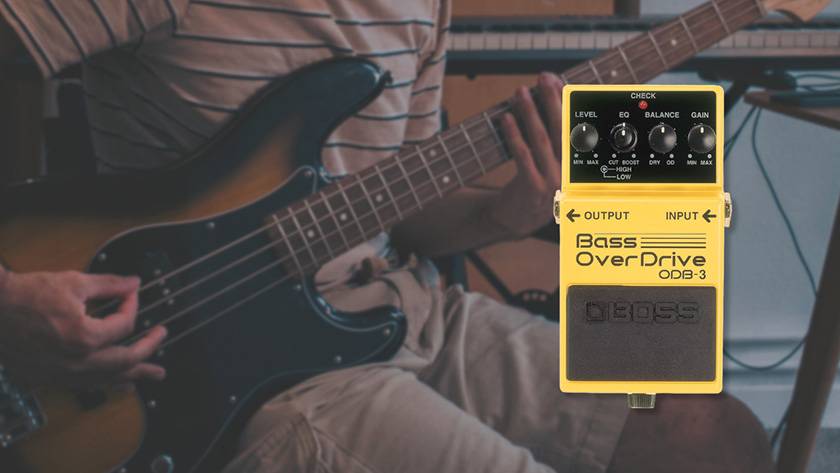
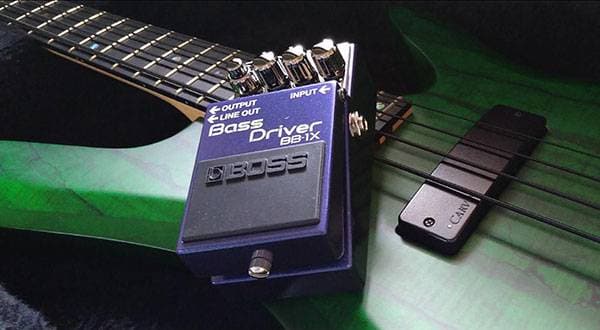
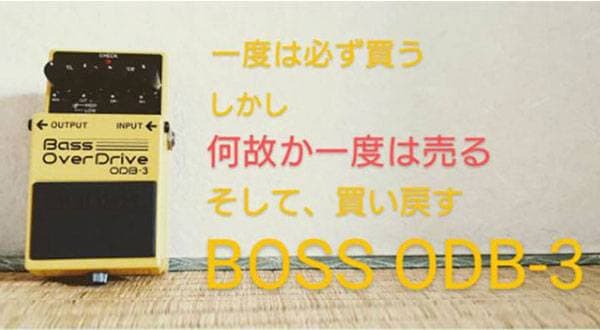
This time, we introduce one of the most representative bass distortion effects: the BOSS Bass OverDrive ODB-3.
Released by the classic Japanese effects brand “BOSS,” the ODB-3 came out at a time when bass distortion pedals were still relatively rare, and it went on to become a standard model among rock musicians.
It’s often said, “Everyone buys it at least once, then sells it, and ends up buying it again.” It may be straightforward, but it’s actually quite deep. That’s the kind of pedal it is.
What Kind of Pedal Is It?
This unit was released in 1994.
Until then, bassists often created overdrive sounds using distortion effects, but in most cases they repurposed pedals made for guitar.
However, distortion pedals tuned for guitar emphasize guitar-oriented frequency ranges, which caused the low end that supports the band to become weak—this was a common concern.
The release of this unit addressed that issue by offering distortion optimized for bass. By mixing the distorted signal with the dry signal, it allows the bass to be distorted without losing low frequencies, while retaining the dry sound preserves clarity and pitch definition. As a result, it quickly became a popular effect among bassists.
In terms of tonal characteristics, it delivers a scooped sound with powerful distortion so intense that it hardly feels like a typical overdrive, leading to its widespread use as a kind of special-effect pedal.
Controls
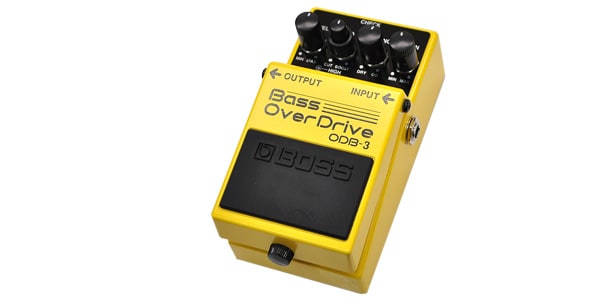
The controls consist of five knobs:
GAIN, BALANCE, EQ (LOW/HIGH), and LEVEL.
The most distinctive control is the Balance knob. This sets the blend between the dry signal and the distorted signal.
Since a bass must support the low end of the ensemble even while being distorted, this knob is extremely important.
Next is the EQ section.
This is a two-band EQ with low and high controls.
Interestingly, it also affects the dry signal, so by reducing the distortion, it can be used almost like a tone-shaping tool.
In addition, distortion tends to be more noticeable in the high frequencies, so if the distortion feels too strong, you can cut the highs with the EQ—this is another useful way to use it.
And then there is the key control: Gain.
As often mentioned in many places, it produces extremely strong distortion.
From around the 9 o’clock position, it’s already at a level where you might think it’s no longer just overdrive but full distortion.
For pop music, it’s best used sparingly, while in louder styles where the guitars are heavily distorted, turning it up to some extent will help it blend in better.
Usage Examples and Setting Tips
■ “Around the World” / Red Hot Chili Peppers
When it comes to the ODB-3, this intro immediately comes to mind.
It also became the reason many bassists decided to buy the ODB-3.
Since it is used almost exclusively as a bass solo, there is no need to worry about how it blends in.
Set the blend with a strong emphasis on the distortion, and the distortion character itself is quite aggressive, but with the ODB-3, even around the 12 o’clock position delivers plenty of distortion.
Then there’s the attack with emphasized highs. The ODB-3 already has a naturally scooped character with very strong high frequencies even on its own, so even if you boost them, just a little—or slightly cutting the lows—will get you close.
Of course, the characteristics will vary depending on the bass and amp, so try adjusting the settings to suit your own instrument.
■ “Killer Tune” / Strainer
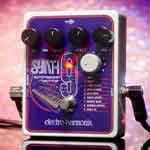
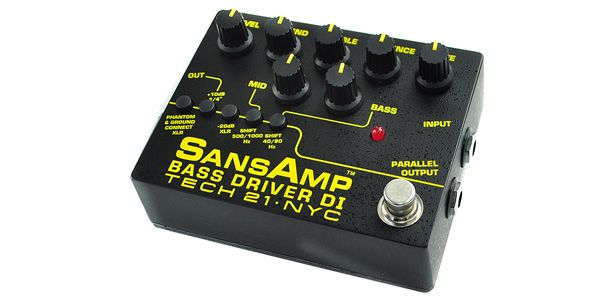
A classic combination for bassists at the time was the SansAmp + ODB-3.
The SansAmp is likely left on all the time, with the ODB-3 engaged during the chorus.
Since the SansAmp itself already has distortion and a scooped tonal character, it’s better not to emphasize the ODB-3 too much. Instead, focusing on boosting the lows to add sound pressure will help it blend better with the overall band sound.
Summary
This time, I explained the ODB-3.
It felt like such a standard effect that there was almost nothing new to say about it, but taking another look made me realize that there’s a reason it has remained a standard for over 20 years.
These days, bass distortion pedals are commonplace, and there are many high-quality options often referred to as boutique pedals. Still, the rough character unique to the ODB-3, along with the solidity and reliability that are unmistakably BOSS, truly stand out here.
Above all, the price is very reasonable. Even in today’s market, where pedal prices are rising significantly, it’s still around ¥13,000. Being a popular model, there are also plenty of used units available.
This makes it perfect not only as a first distortion pedal, but also as a pedal that even those who have tried many others will want to revisit.
The “sound & person” column is made up of contributions from you.
For details about contributing, click here.




![[Latest for 2026] Recommended for Beginners! Bass Effects Pedals](/contents/uploads/thumbs/2/2023/6/20230606_2_22909_1.jpg)
 BOSSの最新ベース機材特集
 BOSS GXシリーズ 特集
 BOSS ワイヤレス特集
 BOSS Xシリーズ
 基礎から学ぶベースレッスン
 ベース用エフェクターの種類
 Discount Sale
 Outlet
 New Arrivals
 Podcast (streaming)
 Headphones / Earphones
 Microphones
 Wireless Equipment
 Speakers
 Power Amps
 Mixers
 Processors
 Portable PA Systems
 Recorders
 Karaoke
 Guitars
 Basses
 Ukuleles
 Drums & Percussion
 Pianos / Synthesizers
 Wind Instruments
 Stringed Instruments
 Japanese Instruments
 Harmonicas, Other
 Software
 DJ & VJ
 Stands
 Cables & Connectors
 Racks & Cases
 Lighting
 Stage & Truss
 Video Equipment
 PC PERIPHERALS
 Power Supplies
 Studio Furniture
 Household Items, Other
 Alcoholic Beverages