In recent years, we often hear that cameras are making a comeback. Digital cameras, which once seemed to be declining due to the spread of smartphones, are now seeing renewed interest—especially among Generation Z—driven by a desire for more expressive photos, a greater sense of ownership, and designs that smartphones cannot offer. There have even been news reports that domestic shipment numbers are on the rise. When you want to create higher-quality videos of nature, landscapes, or live events with a camera, it’s also recommended to have a camera tripod! In this Camera Tripod Beginner’s Guide, I will support you in choosing your ideal tripod and show you popular camera tripods categorized by usage.
Why Use a Tripod?

1. Completely Eliminate Camera Shake

Be sure to use a tripod especially for the following types of shooting:
- Long-exposure shots such as night scenes, starry skies, and fireworks
- Shooting with telephoto lenses (even slight movement is magnified)
- Video recording in low-light conditions
When shooting handheld, tiny movements inevitably occur, resulting in reduced resolution and sharpness.
2. Stabilize Composition
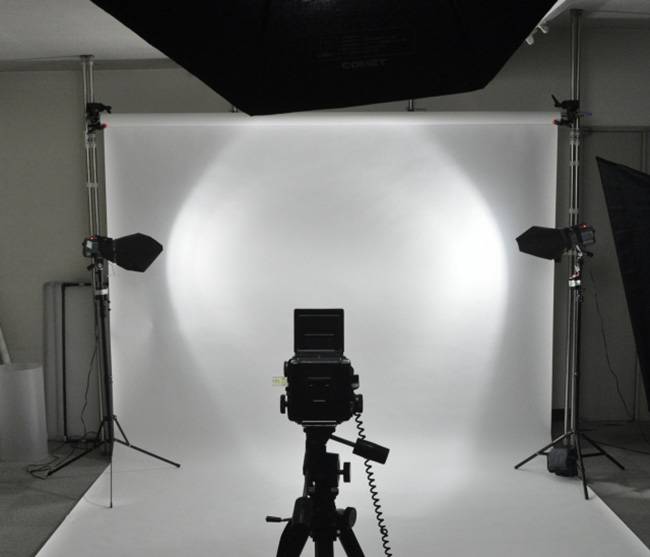
Once you set your composition, you can continue shooting with the exact same framing. This is ideal for product photography, time-lapse shooting, and comparison photos. Since your body does not sway or shift due to breathing, the accuracy of the composition improves dramatically.
3. Improve Yield (Reduce Failed Footage)
Especially for work or event documentation, there are situations where you absolutely cannot deliver footage with noticeable shaking. So, a tripod is a tool that reliably reduces mistakes.
4. Improve Shooting Reproducibility
For studio shoots, interview videos, and fixed-point shooting of shops or real estate, a tripod makes it possible to accurately reproduce the same position, same height, and same angle.
5. Stabilize Video Streaming
Even in live streaming, camera shake is a major enemy! A tripod can be described as a tool that eliminates camera shake and achieves the intended shot with high precision.
Guide by Usage: Which Tripod Suits Which Type of Shooting?
1. When You Travel or Move Around Frequently
Lightweight carbon fiber tripods
Choose one that is light, easy to carry, and relatively short when folded! Considering the amount of time you’ll be carrying it, lightness becomes especially important. If the load capacity is not a major concern, a lightweight model is ideal! A mid-spreader type with a good balance between leg rigidity and ease of handling is also recommended.
As a concrete example, here are some great recommended tripods among popular models.
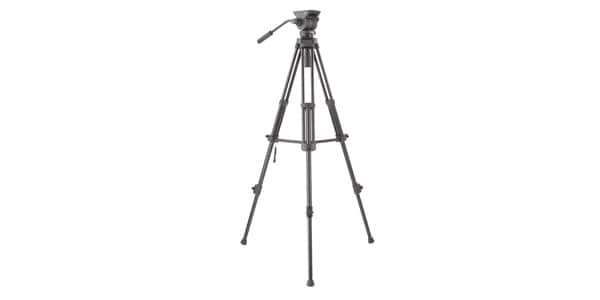
A super-standard model! It’s highly popular as an entry-level model, and since the camera plate can be attached to and detached from the head with a single touch from the side, quick setup during shooting is possible. It weighs 3.1 kg and has a load capacity of 4 kg.

The classic 650EX tripod has undergone a full model change for the first time in over 30 years! It is designed for users who shoot both photos and videos with small cameras. A carrying handle, which the 650EX did not have, comes standard, making quick movements easy! With a weight of just 2.7 kg, it is a very lightweight model. The load capacity is 3 kg.
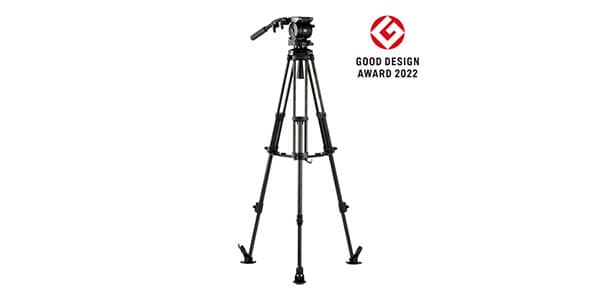
Since it’s made of carbon material, it’s lightweight! This is also part of the HS series tripod systems equipped with a perfect balance mechanism, and with a weight of 4.7 kg, it is a relatively lightweight model. The tripod body uses a quick-lock type. It is especially well regarded for becoming compact when folded!
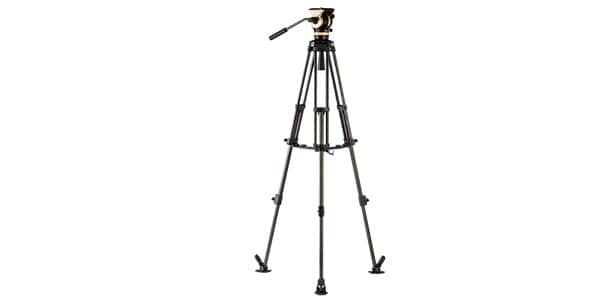
An ultra-lightweight mid-spreader type tripod. It is a slightly higher end model, but with carbon legs and a mid-spreader, it weighs only 3.8 kg while supporting a load of up to 4 kg, making it very useful when using large lenses.
2. When You Want to Shoot for Long Periods
Ground-spreader type tripods have thick legs and high rigidity, making them suitable for shooting where stability is prioritized. They are especially recommended for night photography, windy days, or when using heavy cameras and large-aperture lenses. In environments such as nighttime or mountainous areas where wind is a factor, prioritize rigidity and stability over lightness.
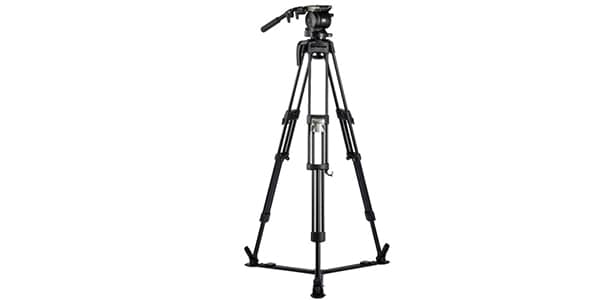
With a stepless “perfect balance” function, this design ensures the camera stays firmly in place at any angle tilt. It is a highly reliable model that allows you to maintain a once-set angle with confidence. Since the camera plate can be attached to and detached from the head with a single touch from the side, quick setup on set is possible! The maximum load capacity is 8 kg.
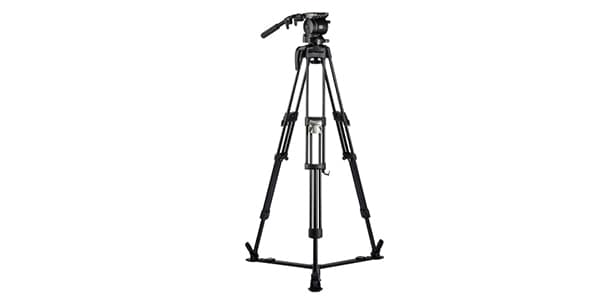
This model supports a load capacity of 12 kg, making it perfectly suitable for heavy lenses!!
It also allows the camera plate to be attached to and detached from the head with a single touch from the side. Featuring a stepless counterbalance system and a built-in LED-lit bubble level, it makes it easy to check level even in dark environments. This is an ideal model for those seeking even greater stability during long shooting sessions! Height adjustment can be done with a single flip-lock located on the upper section, allowing for simple and speedy height adjustments.

This is lightweight for a ground-spreader type tripod and offers sufficient performance with a load capacity of 10 kg. Although it is equipped with a high-performance head, this model also allows the camera plate to be attached to and detached from the head with a single touch from the side. In addition, it is designed with safety in mind to prevent fingers from being pinched even if the legs suddenly slide down!
I Just Want the Best Budget Camera Tripod!

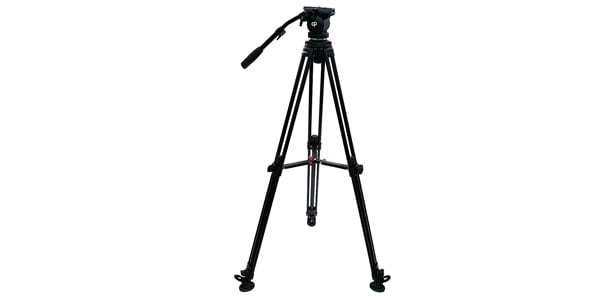
I have introduced a range of recommended tripods up to this point. I sincerely hope that a tripod will enrich your camera life!












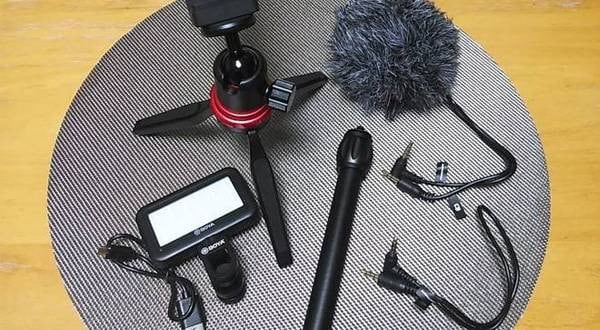
 ライブ配信に必要な機材を徹底解説 オンラインライブの創り方
 Roland ビデオ・スイッチャーの選び方
 Panasonic BOXカメラについて
 Panasonic LUMIXルミックスとは
 ミュージックビデオ撮影テクニック!
 配信・ポッドキャスト特集!(ライブ/動画/ゲーム実況)
 Discount Sale
 Outlet
 New Arrivals
 Podcast (streaming)
 Headphones / Earphones
 Microphones
 Wireless Equipment
 Speakers
 Power Amps
 Mixers
 Processors
 Portable PA Systems
 Recorders
 Karaoke
 Guitars
 Basses
 Ukuleles
 Drums & Percussion
 Pianos / Synthesizers
 Wind Instruments
 Stringed Instruments
 Japanese Instruments
 Harmonicas, Other
 Software
 DJ & VJ
 Stands
 Cables & Connectors
 Racks & Cases
 Lighting
 Stage & Truss
 Video Equipment
 PC PERIPHERALS
 Power Supplies
 Studio Furniture
 Household Items, Other
 Alcoholic Beverages