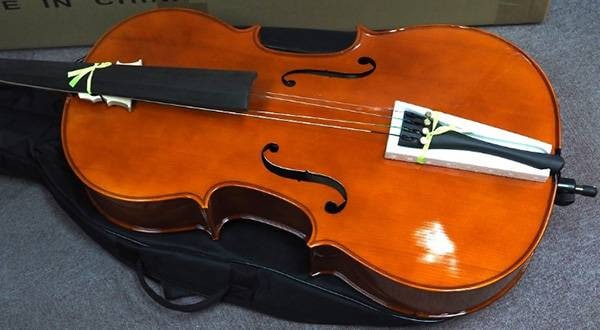
You bought a cello and were enjoying playing it when, suddenly one day, the bridge fell over!
“My precious cello is broken. What should I do?”
We received an inquiry from a customer who was practically in tears.
Yes, it seems this customer had been under the impression that “a cello bridge is something that doesn’t move or come off.”
For those of us who work with string instruments, a bridge coming off is so commonplace that we don’t give it a second thought. However, the reality is that some people only learn this fact for the first time after purchasing an instrument.
So, this time, I am writing this blog as an emergency guide for everyone who finds themselves in this situation.
You often see videos with thumbnails designed to attract clicks by taking advantage of disasters or incidents, saying things like, “Emergency! We’re filming this video right now.” Some of you may have been drawn in by the word ‘emergency’ as well. I believe this is useful information that you will not regret reading, so please take a look.
How to Stand a Cello Bridge
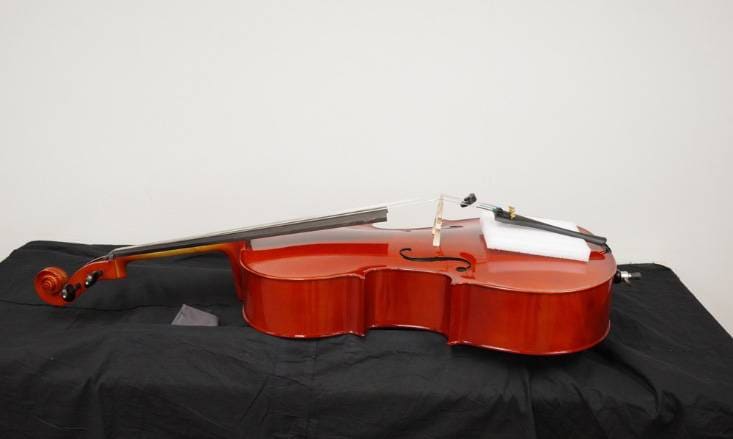
Place the instrument somewhere stable and work in a safe position. For example, fold a futon or blanket on a table and lay the instrument flat on top of it.
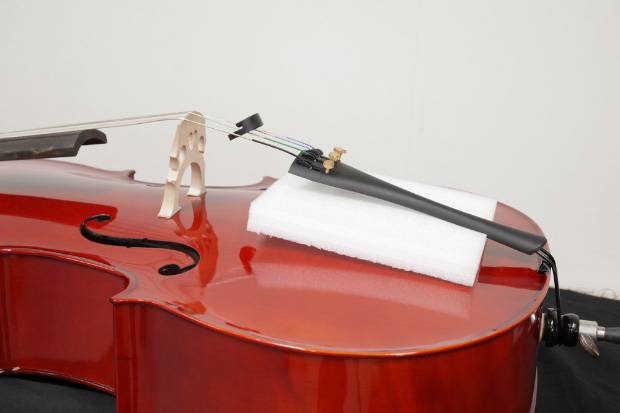
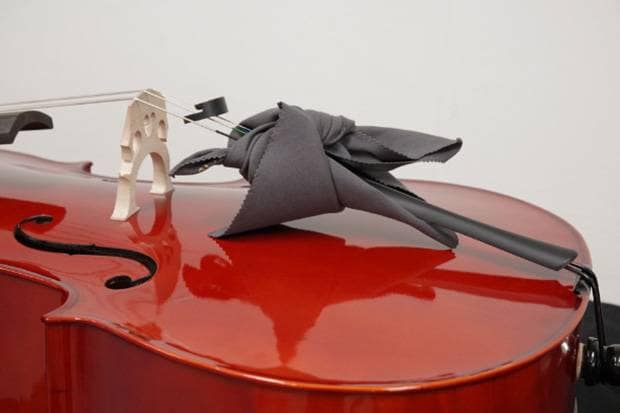
Wrap the tailpiece in a cloth, or place a sponge or something similar between the tailpiece and the body. This will help prevent scratches to the body.
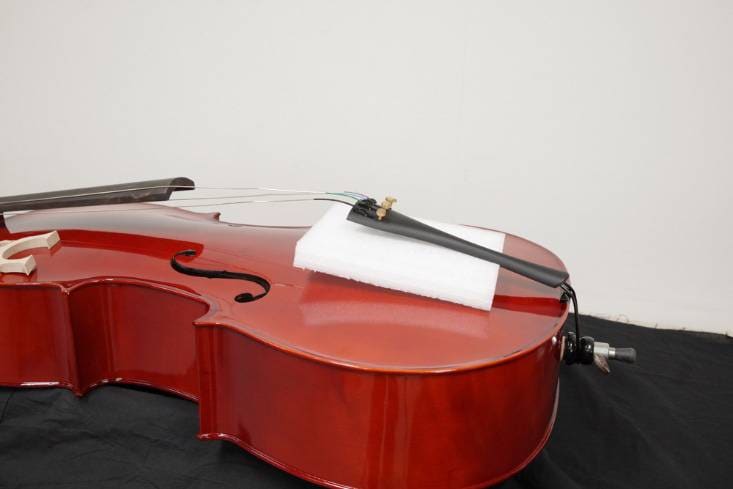
The strings should be loosened enough to allow you to stand the bridge, but if they are completely slack, the bridge will not be stable when you temporarily set it up, so some degree of tension is necessary. Adjust the tension as needed while working.
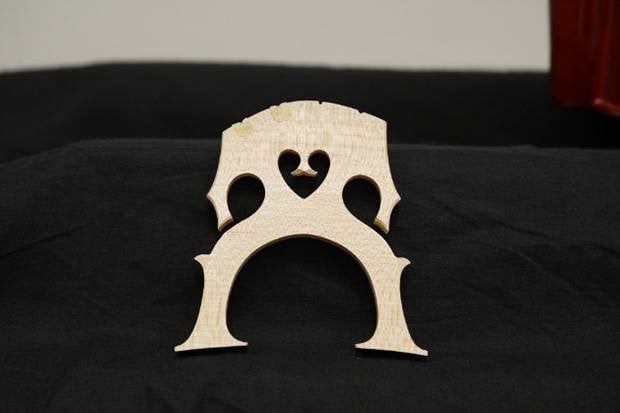
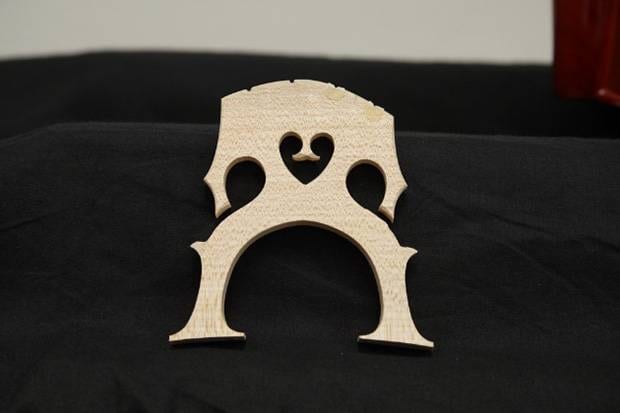
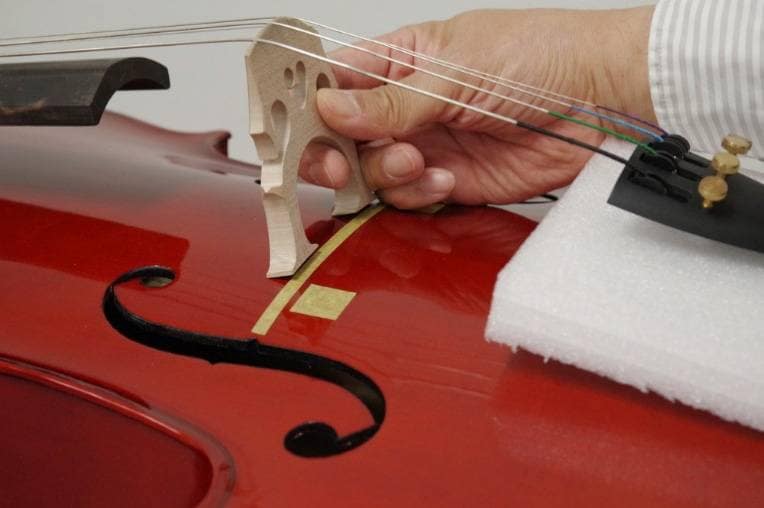
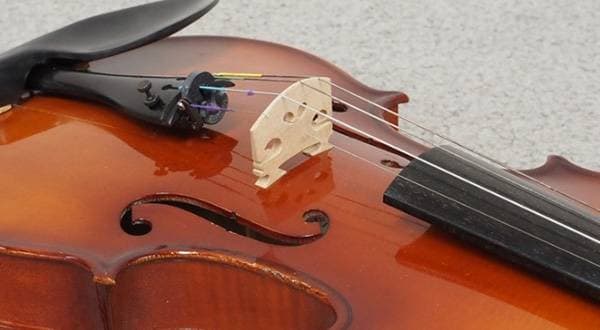
Determine and check the front and back of the bridge (the bass side or treble side). You should be able to tell by the width of the string grooves. The narrow string groove is for the A string, on the treble side. In the image, the left is the front of the bridge, and the right is the back. The lower side is for the A string.
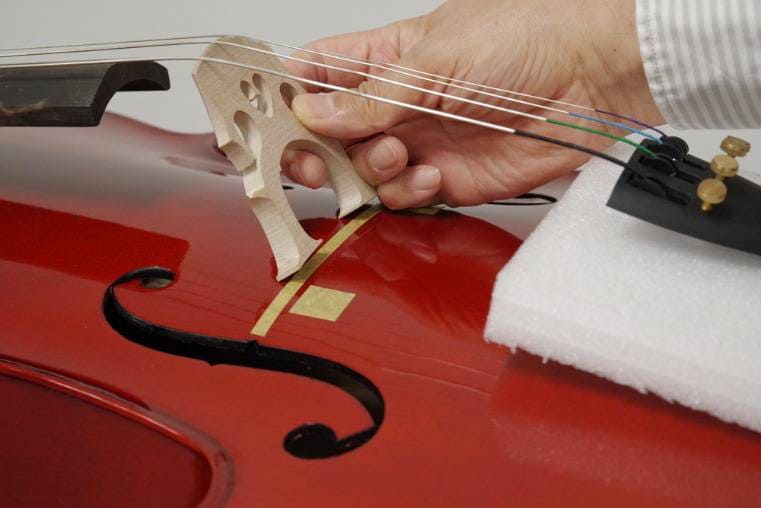
When standing the bridge, place the back side facing upward and raise it starting from the neck side. The image only shows one hand for explanation purposes, but in practice, please use both hands.
Positioning the Bridge
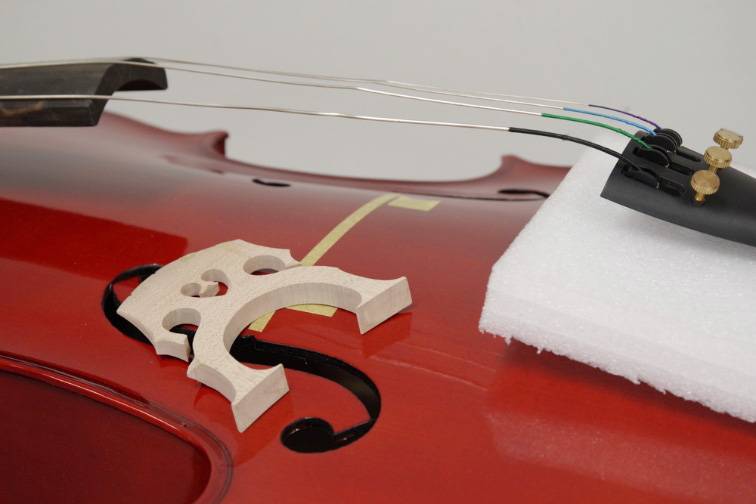
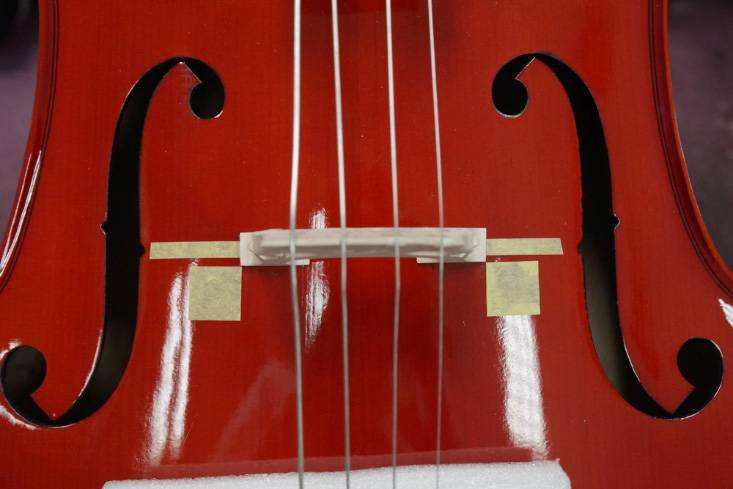
Temporarily place the bridge so that the centers of its feet are aligned on an imaginary line connecting the inner notches (the triangular indentations) of the F-holes on the left and right sides of the instrument’s body. For explanatory purposes, thin masking tape has been used to connect the two sides.
At this point, mark the position of the standing bridge with a small square piece of masking tape (a sticker is also fine).
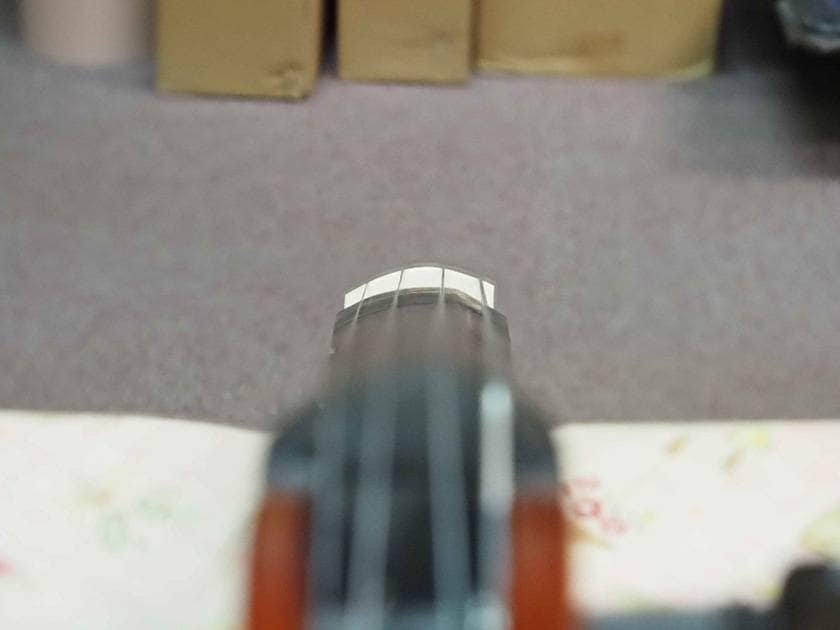
Looking at the bridge from the neck side, check whether it is aligned with the center of the neck. If it is off-center, correct its position. At this time, move the mark you initially placed along with it.
Checking the Bridge Position
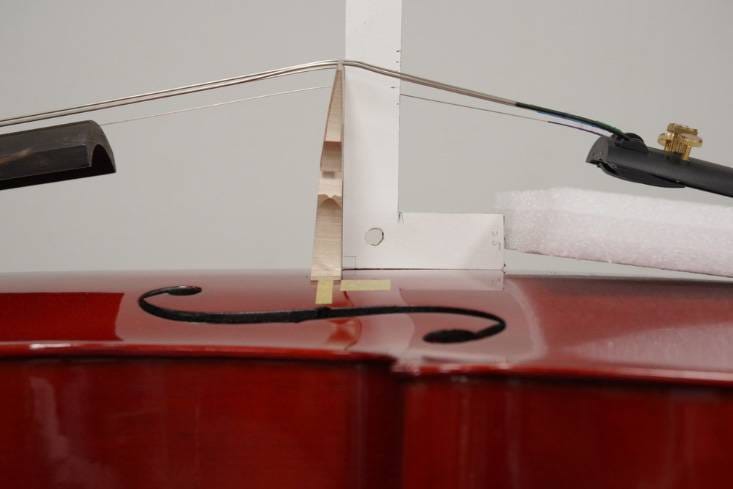
You need to keep the back of the bridge approximately perpendicular to the body of the instrument. This is not something that can be completed in a single step; make a habit of checking it every time you tune the instrument.
This is also summarized in the Sound House Beginner’s Guide.
⇒ Sound House Beginner’s Guide! Cello String Replacement
Once the bridge is standing in the correct position, begin tuning.
Please refer to the Beginner’s Guide on tuning.
⇒ Sound House Beginner’s Guide! Cello Tuning
At this point, check how the strings are wound around the pegs.
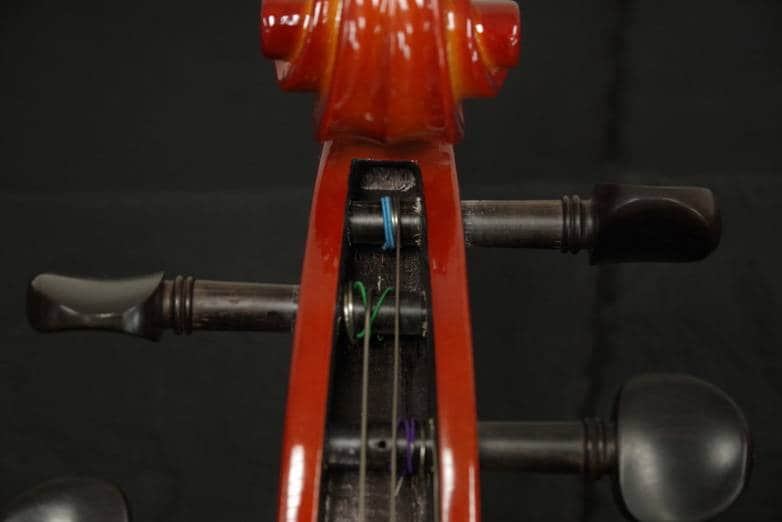
The strings should be wound from the string hole in the peg toward the side wall of the pegbox—in other words, from the inside toward the outside.
The more evenly the strings are wound around the pegs, the more stable the tuning is likely to be.
The D string in the picture above is OK, but the G string has overlapping windings, making it more likely for the pitch to shift.
Tune the instrument while paying attention to the position of the bridge, and finish the process. Finally, remove the masking tape that was marking the positions of the bridge feet, and you are done.
Summary
So, what did you think?
The most common cause of a bridge falling over is that it has gradually tilted—mainly accumulating a forward tilt toward the neck—and eventually falls from that slanted position.
This can be prevented by making it a habit to check the bridge’s position during everyday use.
If you simply skim through the instructions, they may seem like nothing more than a simple procedure. However, a cello is a large instrument, and even checking the bridge requires you to raise the instrument to eye level or bend down yourself, which can be physically demanding in various ways.
This kind of excessive effort can easily lead to the feeling of, “Ugh, that’s a hassle. Well, it’s probably fine.”
However, if you leave things as they are, you may fail to notice instrument problems sooner than you might expect. So, by taking the time to work carefully with the great string instruments handed down to us by those who came before us—though one could also describe their mechanisms as old-fashioned and inconvenient—you may find even greater enjoyment in playing.
We hope you all enjoy playing the cello!
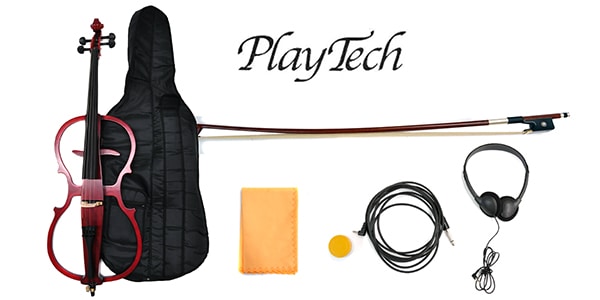
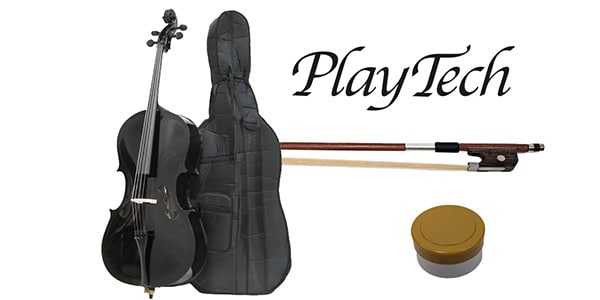
You can find affordable PLAYTECH cellos for everyone from adults to children here.



![[Cello] Comparing Cellos from the PLAYTECH Cello Series](/contents/uploads/thumbs/2/2026/1/20260123_2_34318_1.jpg)
![How to Get the Best Sound Out of a Cheap Violin [Part 6] Final Edition: A Talk on Bridges](/contents/uploads/thumbs/2/2025/8/20250825_2_32598_1.jpg)


 サウンドハウス管弦楽器ショールーム
 チェロの弦交換
 エレクトリックチェロ 入門ガイド
 チェロ 入門ガイド
 PLAYTECH 弦楽器
 弦楽器 初心者講座
 Discount Sale
 Outlet
 New Arrivals
 Podcast (streaming)
 Headphones / Earphones
 Microphones
 Wireless Equipment
 Speakers
 Power Amps
 Mixers
 Processors
 Portable PA Systems
 Recorders
 Karaoke
 Guitars
 Basses
 Ukuleles
 Drums & Percussion
 Pianos / Synthesizers
 Wind Instruments
 Stringed Instruments
 Japanese Instruments
 Harmonicas, Other
 Software
 DJ & VJ
 Stands
 Cables & Connectors
 Racks & Cases
 Lighting
 Stage & Truss
 Video Equipment
 PC PERIPHERALS
 Power Supplies
 Studio Furniture
 Household Items, Other
 Alcoholic Beverages