The latest version of iZotope’s mastering tool Ozone, which is now a go-to for many composers and DTMers, was released in September 2025. As someone who previously reviewed the older version, “Ozone 11”, my impression is that iZotope has brought in some absolutely insane new features again! In this article, I’ll be introducing the new features while trying them out.
iZotope / Ozone 12 Advanced Download Delivery
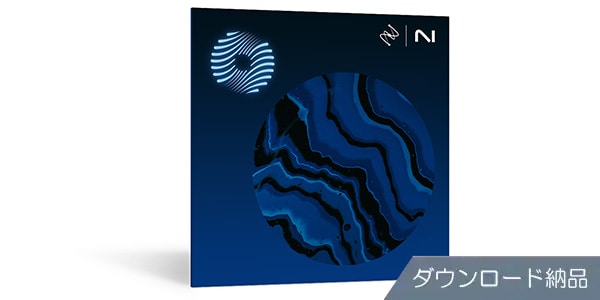
To give a rough overview, Ozone 12 comes with five major new features:
- “Unlimiter,” a function that restores dynamics in overly compressed audio
- “Bass Control” allows for intuitive visualization and perfect adjustment of low-end
- “Stem EQ” enables fine-tuning for individual parts like vocals, bass, and drums
- A new algorithm added to the Maximizer: “IRC 5 Mode”
- A further-evolved AI assistant: “Custom Assistant flow”
Just reading through these new features already makes it sound pretty amazing.
Let’s take a closer look at each of them one by one.
01. “Unlimiter” – A Function to Restore Dynamics
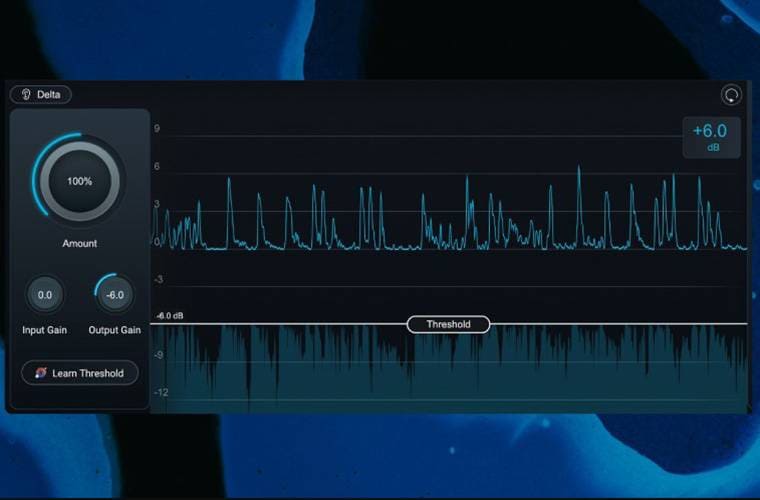
To explain this a bit more clearly, this is a feature that can restore dynamics and transients that have been lost due to excessive limiter processing. You might be thinking, “What kind of sorcery is this…?”—but yes, it actually works. And, it’s the first of its kind in the industry. That’s right, Ozone 12 is the only one.
By the way, it’s also incredibly easy to use. Just insert Unlimiter onto your audio (waveform), click “Learn Threshold” and play the track. Once the analysis is complete, lower the Threshold to the peak level, then gradually turn up the Amount knob, and voilà! Transients that were removed have come back to life! Honestly, you have to try it yourself to believe it. Depending on the track, it can be quite shocking. We are truly living in incredible times…
As for when to use it, it could be especially useful when creating remastered versions of older tracks.
02. “Bass Control” – Intuitive Low-End Adjustment
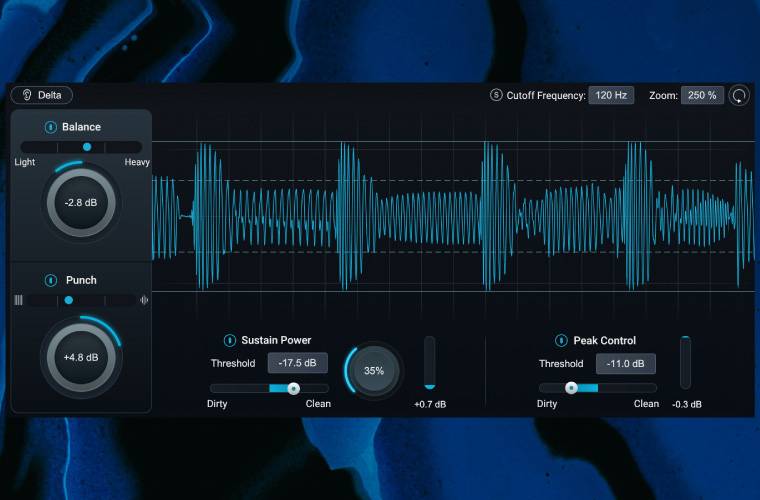
This is a feature specialized in low-end adjustment, but it’s not just about simply increasing or decreasing the bass. It allows you to emphasize or suppress the low-end while maintaining balance with punch. As a result, instead of just muddy bass boosting, you can achieve more detailed and well-defined low-end control.
This one is also easy to use. With the Balance parameter, you can increase or decrease the overall low-end level, and with the Punch parameter, you can control the gain of the low-end transients. Then, Sustain Power lets you lift parts that fall below the threshold, and Peak Control allows you to suppress low-end peaks using a limiter.
From just a brief hands-on test, it already feels like this will become an essential tool, especially in bass-heavy music!
03. “Stem EQ” – Fine-Tuning for Each Part
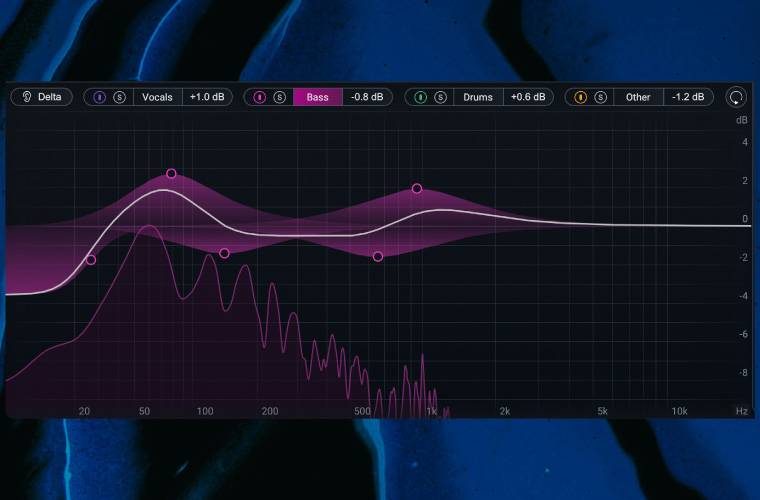
Stem EQ is a feature that allows you to apply EQ processing individually to vocals, bass, and drums, even on fully mixed tracks. It’s also very easy to operate: just click on the instrument you want to adjust, then tweak the respective parameters.
You should definitely try this out on a variety of tracks. The accuracy in how each part is isolated is seriously impressive. If you use this during production, it can make the mixing process much smoother. If you’re someone who works on vocal tracks, this is a must-try.
04. New Maximizer Algorithm: “IRC 5 Mode”
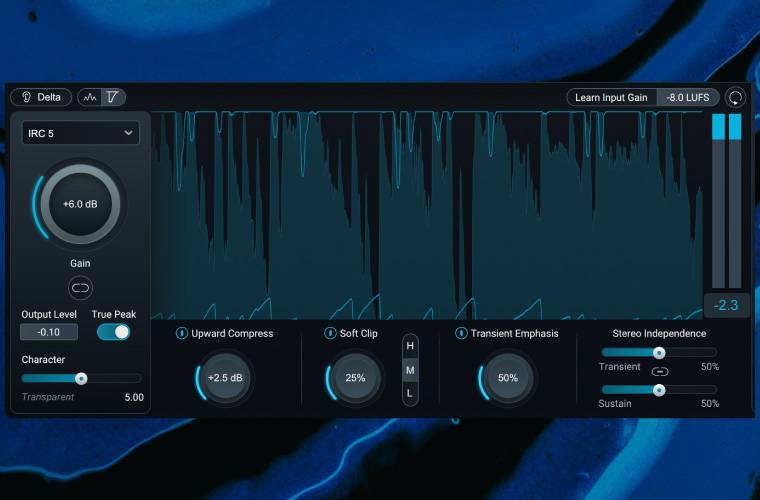
The new IRC (Intelligent Release Control) mode, IRC 5, has been added to the Maximizer feature. Thanks to this, even when applying heavier Maximizer processing, distortion and pumping are much less likely to occur.
You might not fully grasp this until you try it, but the level of precision is noticeably different—this is definitely one of the new features you’ll want to try. To dive into a bit of the technical side: up until now, Ozone only used a single-band design, but with IRC 5, a multiband design has been introduced. This allows operation across four frequency bands and enables attack/release time settings that simply weren’t possible with the single-band approach.
As a result, the Maximizer has become much clearer and more full of character.
If all of that went over your head, just remember this: the quality of the Maximizer has gotten insanely better!
05. Evolved AI Processing: “Custom Assistant Flow”
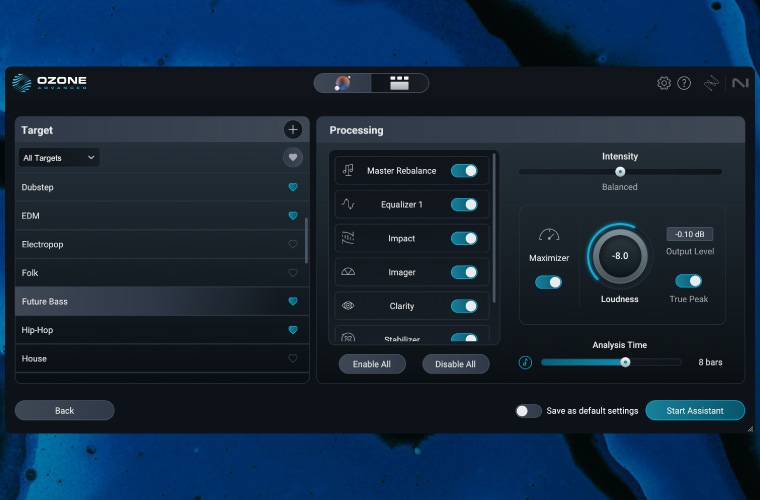
When it comes to Ozone, the AI assistant function that’s famous for analyzing your track and automatically making it sound great, is one of its signature features. In Ozone 12, that AI assistant has evolved significantly. Specifically, by adding a wide variety of genres and targets, it now enables much higher-quality mastering tailored to the source material.
To use it, just click the Assistant button at the top center, select “Custom”, and a screen will appear where you can choose a target. From there, just select the target that best matches your track and hit start.
Additionally, in the Processing section in the middle, you can choose which modules to include or exclude in the processing. The parameters on the right offer even more control—Intensity lets you adjust how strongly each module is applied, Loudness allows you to set a rough target loudness for the final master, and Analysis Time sets how long Ozone will listen to your track during analysis. Setting a longer time here allows Ozone to better learn the character and style of the track.
So, what do you think?
These five features are the major new additions in Ozone 12, but on top of that, improvements in the precision and functionality of the existing modules have also made it possible to achieve even higher-quality audio processing overall.
Still, the recent leaps in AI technology in the music industry are truly incredible... just how convenient can things get? I’ll definitely want to keep an eye on how Ozone continues to evolve!




![[Add More Brilliance to Your Vocal Sound] In-Depth Review of the iZotope Nectar4](/contents/uploads/thumbs/2/2023/12/20231208_2_24887_1.jpg)
![[The Ultimate Next-Generation Mastering Tool] iZotope Ozone 11 is Absolutely Amazing!!](/contents/uploads/thumbs/2/2023/10/20231004_2_24113_1.jpg)
![[New RX 10 / Ozone 10] How to Choose the Right iZotope Products](/contents/uploads/thumbs/2/2022/9/20220928_2_19524_1.jpg)
![[Effortlessly improve the sound quality!] Mastering the Plug-in iZotope](/contents/uploads/thumbs/2/2021/4/20210426_2_12730_1.jpg)

 iZotope特集
 iZotope Ozone 8特集
 iZotopeが手がけるオールインワンDAW “Spire”
 iZotope RX6特集
 DTMセール情報まとめ
 DTMに必要な機材
 Discount Sale
 Outlet
 New Arrivals
 Podcast (streaming)
 Headphones / Earphones
 Microphones
 Wireless Equipment
 Speakers
 Power Amps
 Mixers
 Processors
 Portable PA Systems
 Recorders
 Karaoke
 Guitars
 Basses
 Ukuleles
 Drums & Percussion
 Pianos / Synthesizers
 Wind Instruments
 Stringed Instruments
 Japanese Instruments
 Harmonicas, Other
 Software
 DJ & VJ
 Stands
 Cables & Connectors
 Racks & Cases
 Lighting
 Stage & Truss
 Video Equipment
 PC PERIPHERALS
 Power Supplies
 Studio Furniture
 Household Items, Other
 Alcoholic Beverages