Whenever a band performs, it is extremely important for each member to share the same sense of pitch. Even small tuning discrepancies can affect the overall sound.
When I first started doing music, a senior advised me, “The accuracy of tuners differs by manufacturer, so when playing in a band, it’s better for all members to use the same tuner.” At the time, I didn’t think much of it and just thought, “I can see that, that makes sense.” However, I became curious about how much difference there actually is, so I decided to test it properly this time.
This article focuses on how much the needle movement differs when measuring with clip-on tuners from multiple manufacturers.
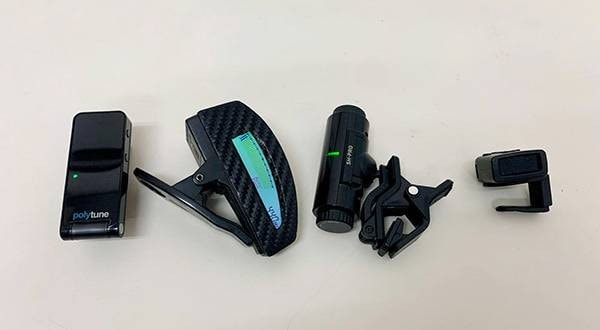
The tuners that are most used are the following four models, which I introduced in a previous column.
Models Used
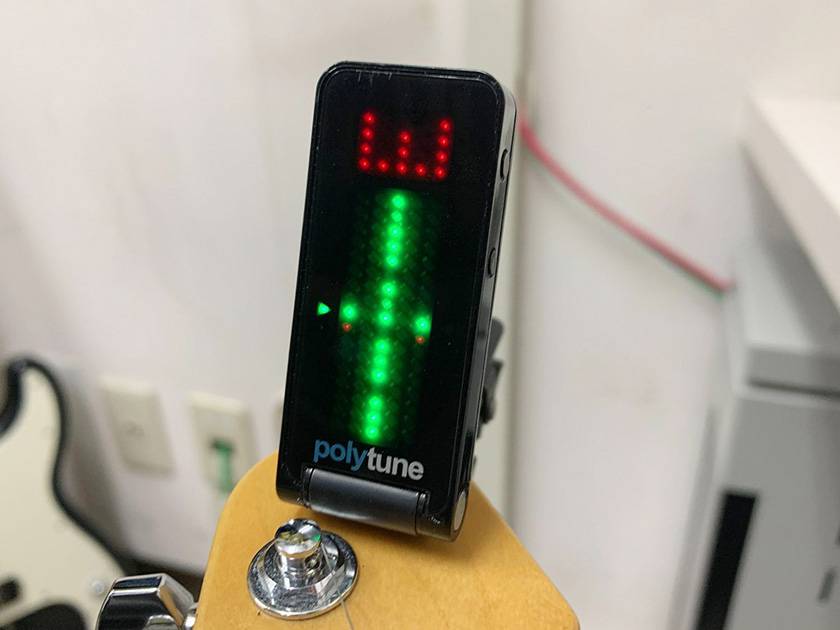
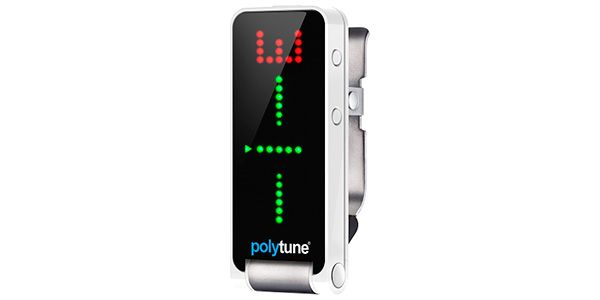
TC ELECTRONIC PolyTune Clip
A popular model known for its overwhelming accuracy and easy-to-read display.
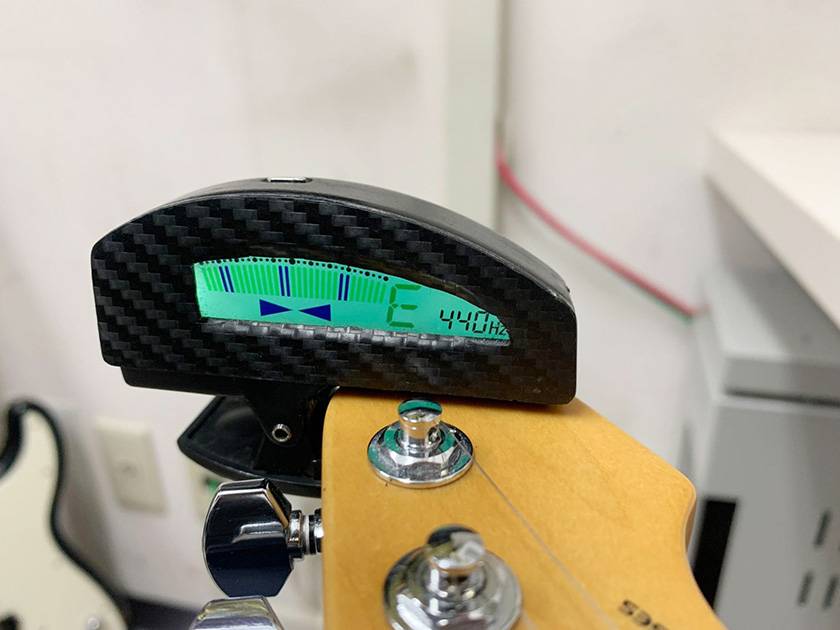
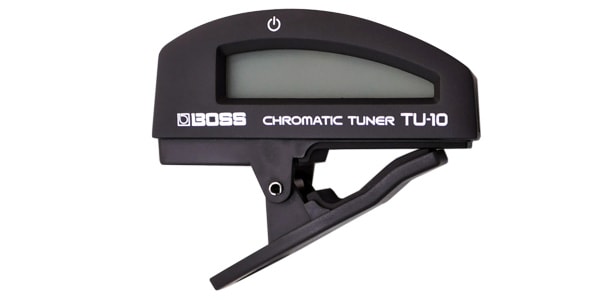
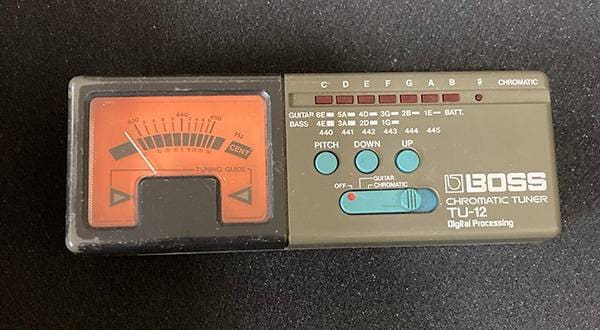
BOSS TU-10
A classic model with excellent reliability and visibility.
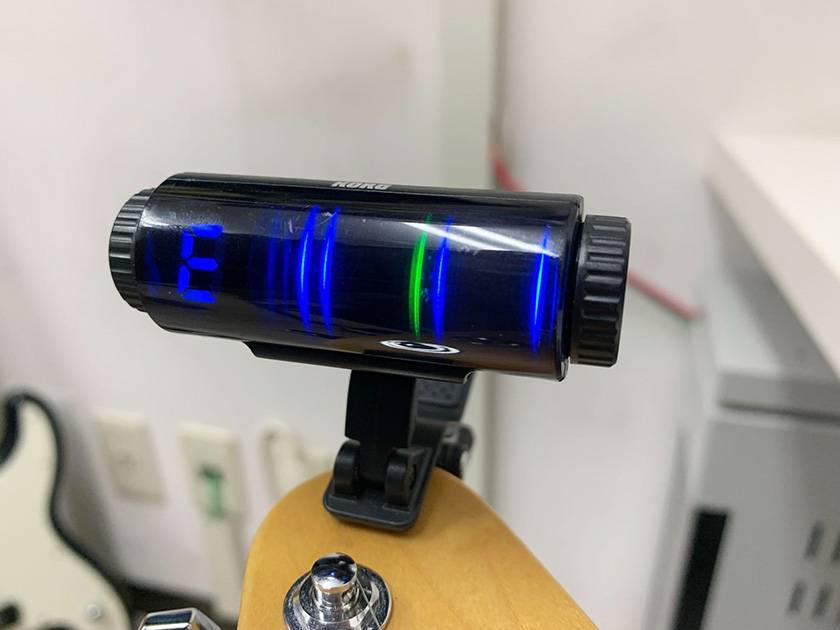
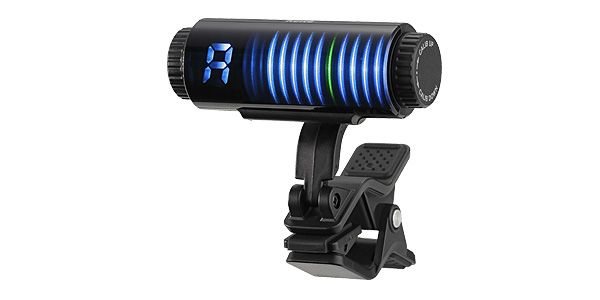
KORG Sledgehammer Pro
Features a unique shape and display style. Equipped with both normal mode and high-precision strobe mode.
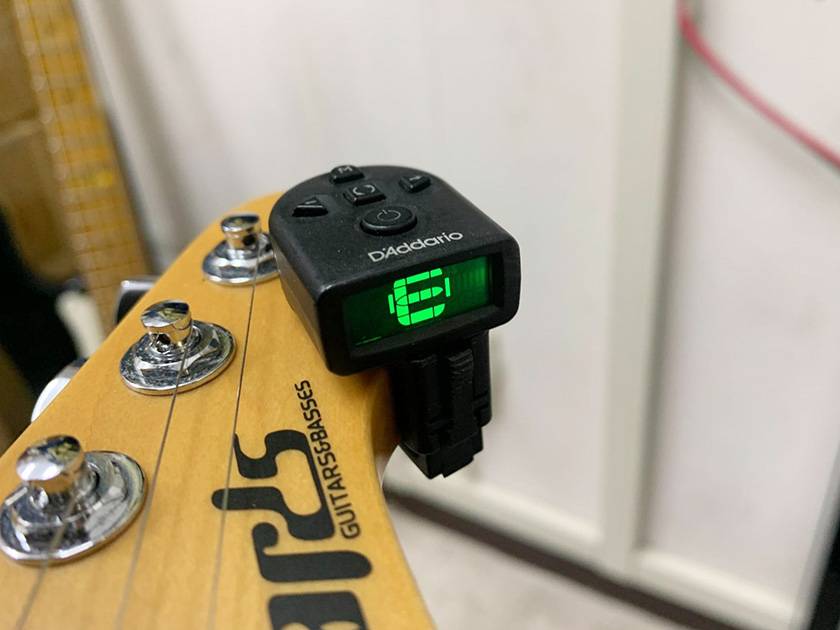
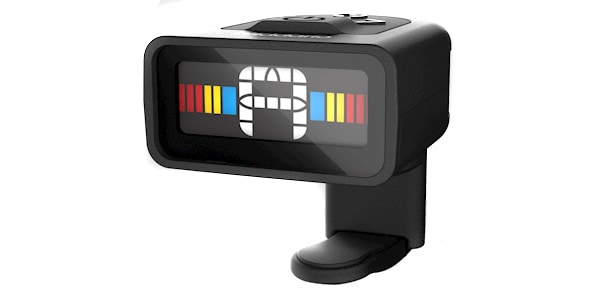
Daddario PW-CT-12
A compact model that doesn’t interfere with the appearance of the headstock.
Experiment 1: Using PolyTune as the Reference
First, we tuned using the PolyTune Clip, which has the highest accuracy among the four models (±0.02 cents) in strobe mode, and then tested how the other three models displayed the same tuning.
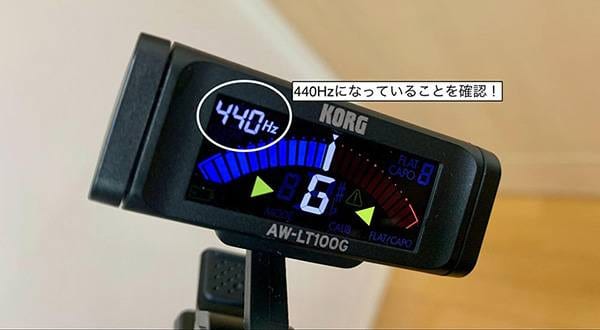
The method was to standardize at A=440Hz and switch to each device immediately after tuning with PolyTune.
BOSS TU-10
Immediately after tuning with PolyTune, when playing the same string on the BOSS, the needle tended to lean slightly flat a little earlier.
However, this seems to be more due to the needle’s response speed and movement characteristics rather than an actual “tuning discrepancy.”
KORG Sledgehammer Pro
We compared KORG in both strobe mode and normal mode.
- ● Strobe Mode
- A consistent tendency to lean flat was observed across all strings.
The strobe movement is very sensitive, and the needle stays at the center for a short time. Because of this high precision, even a tiny deviation appears as movement. - ● Normal Mode
- In normal mode, there was almost no difference.
Since it is less sensitive than strobe mode, it matched well for general use.
Daddario PW-CT-12
The D’Addario showed almost the same behavior as the PolyTune.
The needle converged near the center naturally, with a natural response timing, and there were no significant differences.
Experiment 2: Using BOSS as the Reference
Next, I tested the reverse scenario: tuning with the BOSS TU-10, which has a measurement accuracy of ±1 cent, and then measuring with the other tuners.
PolyTune Clip
Both strobe mode and normal mode showed almost no deviation.
KORG Sledgehammer Pro
Again, we compared strobe mode and normal mode.
- Strobe Mode: Tended to lean flat again.
- Normal Mode: No significant difference.
As before, the high precision of strobe mode made small differences appear larger.
Daddario PW-CT-12
Again, there was almost no deviation compared to the BOSS.
Tuner Characteristics Observed from the Results
Looking at the overall results, the only clear tendency observed was that KORG’s strobe mode tended to lean flat.
However, this does not mean that KORG’s accuracy is low.
On the contrary, it is so precise that the moment the needle “perfectly” stops is very short.
PolyTune, BOSS, and D’Addario have a relatively wide acceptable range where the needle remains near the center, making it easier for the user to judge that the tuning is correct.
Meanwhile, KORG’s strobe mode reflects even slight fluctuations in the display, often giving the impression that you want to tighten it just a little more.
To Summarize
From this test, I confirmed once again that none of the tuners deviated drastically, and all have sufficient accuracy for live performances and studio use.
However, due to differences in display style and response speed, the time the needle appears to stay at the center varies by manufacturer. This means that if band members use different tuners, individual interpretations of pitch may differ slightly.
In particular, KORG’s strobe mode, due to its high precision, shows more sensitive behavior, making even slight pitch fluctuations visible. This was the only mode that tended to lean flat when compared with other manufacturers.
Understanding these characteristics, I personally think that unifying tuners across the band is effective for aligning overall pitch perception.
Tuning is the foundation of performance and the bedrock of a band’s sound.
I encourage you to reconsider tuner choices in your own band to aim for a more precise ensemble.
The “sound & person” column is made up of contributions from you.
For details about contributing, click here.




![[Guitar Guide] Little Nuggets of Guitar Tidbits that Aren’t Well Known](/contents/uploads/thumbs/5/2022/4/20220419_5_17562_1.jpg)
![[Guitar Mastery Guide] Essential Tools for Playing Electric Guitar](/contents/uploads/thumbs/5/2022/2/20220228_5_16889_1.jpg)
 はじめてのギター
 初心者必見!PLAYTECH 激スゴの理由!
 ギター初心者ゼミ
 超オススメのフレーズ道場 ギター
 ギター演奏に必要なものは?
 ギタースタートガイド
 Discount Sale
 Outlet
 New Arrivals
 Podcast (streaming)
 Headphones / Earphones
 Microphones
 Wireless Equipment
 Speakers
 Power Amps
 Mixers
 Processors
 Portable PA Systems
 Recorders
 Karaoke
 Guitars
 Basses
 Ukuleles
 Drums & Percussion
 Pianos / Synthesizers
 Wind Instruments
 Stringed Instruments
 Japanese Instruments
 Harmonicas, Other
 Software
 DJ & VJ
 Stands
 Cables & Connectors
 Racks & Cases
 Lighting
 Stage & Truss
 Video Equipment
 PC PERIPHERALS
 Power Supplies
 Studio Furniture
 Household Items, Other
 Alcoholic Beverages