Hello everyone. I’m “Ken @ Bass Player” playing bass in the Kansai area.
Today, I would like to talk about Yamaha’s current BB series, which I personally use and love.
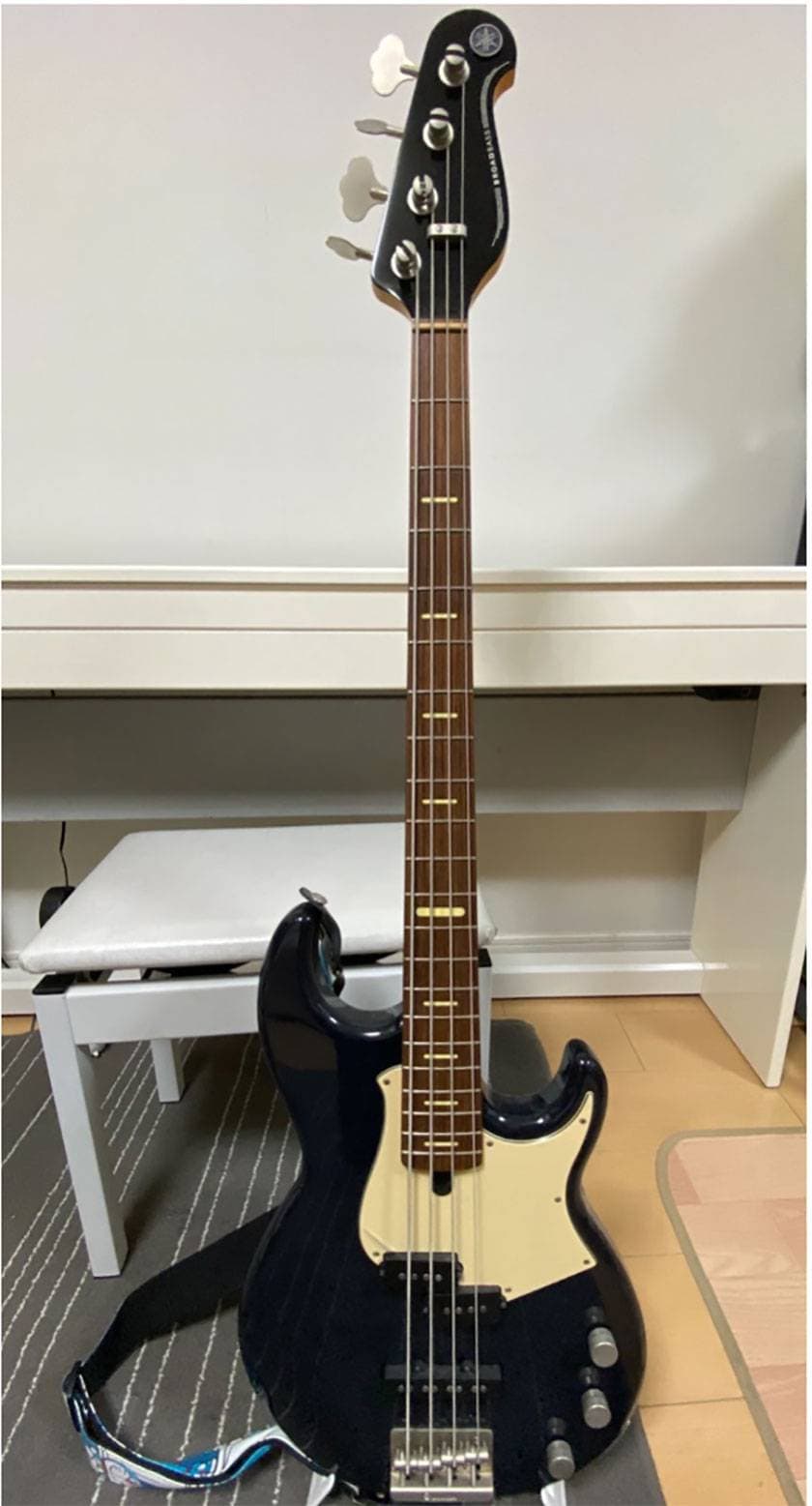
■ Speaking of Yamaha BB
First of all, when it comes to the BB series, it is one of Yamaha’s proud bass lines that has been loved domestically for more than 40 years. In the bass market where Fender-style basses dominate, it is noteworthy that Yamaha has been able to propose a solid domestic manufacturer option.
There are many well-known bassists who use these instruments. For example, Seiji Kameda, the bassist who’s active with Tokyo Jihen, uses a bass based on the top-grade model from the previous Yamaha BB series on stage, the BB2024, arranged to his specifications. (It was also sold in limited quantities as the BB2024SK.)
In addition, at the recent Tokyo Paralympics, the young female bassist Ayakono appeared alongside Tomoyasu Hotei. Videos of her joyfully playing bass spread on Twitter and became the catalyst for her breakout, and the bass she showcased there was the Yamaha BB434. Her praise of it as being “easy to play” left a particularly strong impression.
■ Current Yamaha BB Lineup
The Yamaha BB series currently available as of October 2021 consists of four main tiers. From the top down, these are the BBPRO, BB700, BB400, and BB200 series. Each series is available in both 4-string models (with “34” in the model number) and 5-string models (with “35” in the model number).
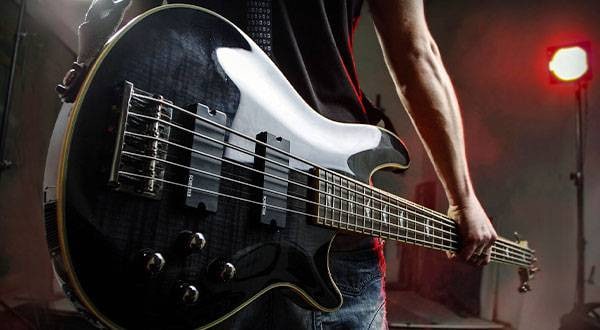
Across all grades, the basic configuration is the same: a so-called PJ pickup layout and a control setup of two volumes and one tone. Turning down the rear volume yields a Precision Bass–like sound, while gradually raising it adds a bright, edgy high-frequency character, allowing you to retain the P-bass feeling while producing a punchier sound. This is said to be the fundamental tonal character that runs throughout the BB series.
On the other hand, there are subtle differences in detailed specifications, and these differences give each grade its own character. Let’s take a look at the characteristics of each model below.
■ BB200 Series
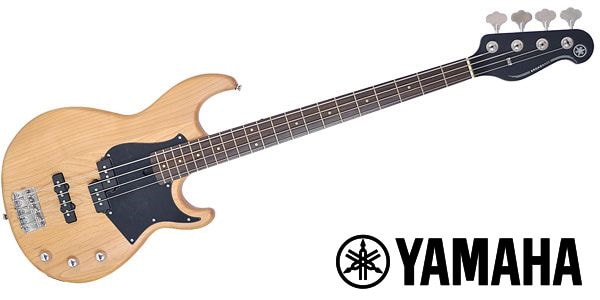
First, the entry-level BB200 series. In terms of features, there isn’t anything particularly distinctive here, but instead, its greatest appeal lies in its thoroughly affordable price. With the BB200 series—for example, if you purchase the 4-string BB234 from Sound House—you can get that classic BB sound in the ¥30,000 range. As a first bass for beginners, this is an extremely reassuring option.
→ YAMAHA BB200 Series List
■ BB400 Series
Next up is the next tier, the BB400 series. The 4-string model is the BB434 and the 5-string model is the BB435. This series adds the following features to what was offered in the BB200 series. With these added features, the price starts at around the ¥50,000 range for the 4-string BB434, which still feels like a great deal.
→ YAMAHA BB400 Series List
<Miter Bolting>
With a standard bolt-on neck, the neck is secured to the body with four screws. With miter bolting, in addition to this, the neck end is also fixed from the back of the body at a 45-degree angle. This allows for a more lossless joint, resulting in a sound with richer sustain. In the past, higher-end BB series models used a neck-through construction, but presumably this drove prices up too high. To keep costs down while creating characteristics close to a neck-through design, Yamaha likely adopted this approach—My guess is that this is the idea behind it.
<Convertible-Type Bridge>
This bridge supports not only standard top-through stringing from the bridge on the body surface but also back-through stringing. Moreover, the back-through design isn’t the usual “straight from behind”; instead, the strings pass through the body at a 45-degree angle, reducing vibration loss at the saddle and other contact points.
<5-Piece Neck>
In BB400 and higher grades, the neck is made as a 5-piece construction combining maple and mahogany. This helps prevent warping and twisting of the neck, while also allowing players to feel the warm sound characteristic of mahogany.
<Maple Fretboard Models Available>
This is a feature unique to the BB400 series. Only this grade offers models with maple fretboards (other grades use rosewood only). In addition to giving a more vivid visual appearance, the bright tonal quality characteristic of maple fretboards is an attractive feature. This specification may be especially appealing to bassists who frequently use slap techniques.
■ BB700 Series
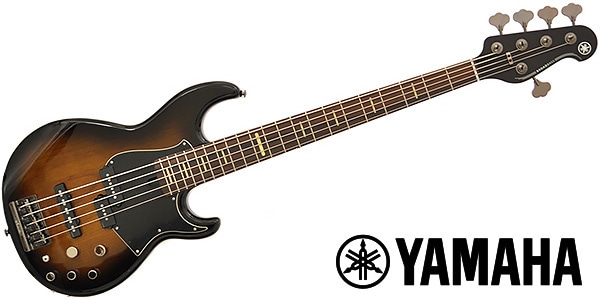
And then, the higher grade, the BB700 series. The 4-string model is BB734, and the 5-string is BB735. Prices approach just under 100,000 yen, but the enhanced features are more professional.
→ YAMAHA BB700 Series List
<3-Ply Alder-Maple-Alder Body>
In BB700 and higher grades, the body is constructed with a 3-ply Alder-Maple-Alder structure. Incorporating maple into the body strengthens the midrange and allows a sense of unity with the maple neck.
<Active Circuit Exclusive to This Grade>
This is a feature unique to the BB700 series that’s not found in the top-tier BB PRO models. Only this grade comes equipped with an active circuit. By utilizing the preamp and 3-band equalizer, players can achieve both a powerful sound and more detailed tone shaping directly from the instrument. Passive mode switching is also possible, allowing flexible sound adjustment depending on the performance situation or genre. This multifunctionality is a key selling point unique to the BB700 series.
■ BBPRO Series
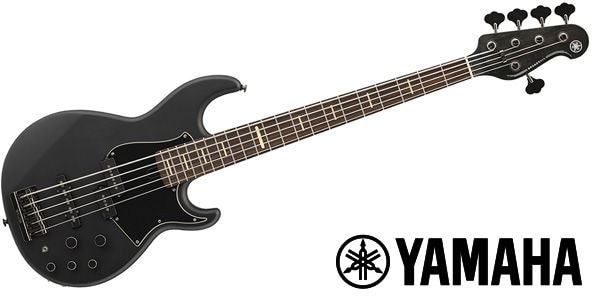
Finally, the top-tier grade, the BBPRO. The 4-string model is BBP34, and the 5-string model is BBP35, with prices around 200,000 yen, which represents a significant jump. The features of the BBPRO series are as follows:
→ YAMAHA BBPRO Series List
<The Only Fully Japanese-Made Series>
Although Yamaha is a Japanese manufacturer, only this top-grade series is entirely produced in Japan. The meticulous finishing of this top-tier model is highly appealing both as a musical instrument and as an industrial product. On the back of the headstock, the “Made in Japan” logo is included, and official documentation signed by the maker is also provided.
<I.R.A>
The BBPRO series exclusively incorporates a technology called “I.R.A.” According to the official website, this involves applying appropriate vibrations to a freshly completed instrument, reducing stress from coatings and adhesives, while also promoting instrument vibration. In short, it artificially gives the instrument the resonance it would achieve after extensive playing.
<Use of a Hard Case>
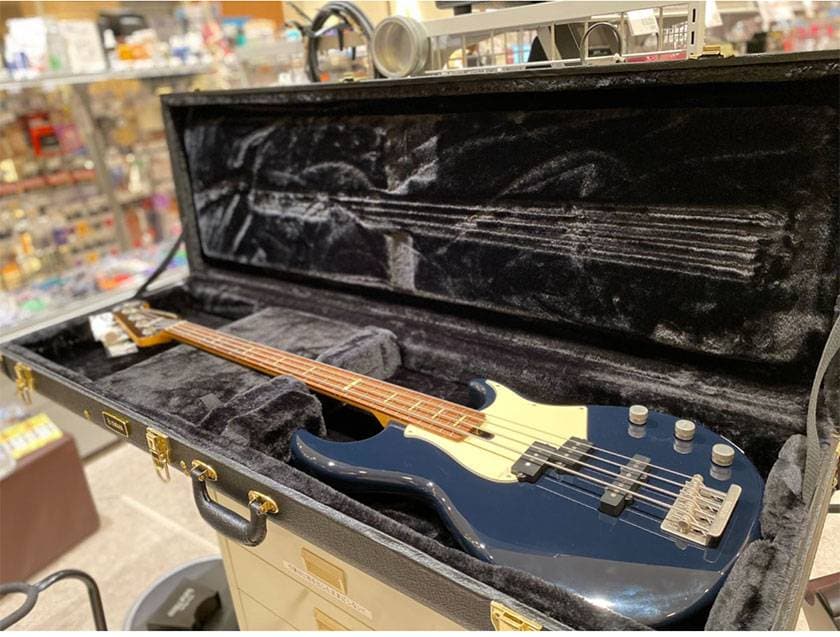
The BBPRO series comes with a hard case. As expected of a top-tier model, this enhances the sense of ownership. However, for practical use when taking it to live performances, I would recommend having another gig bag.
■ Recommended Grade!
…So far, we’ve looked at the features of the four current Yamaha BB series grades, but this brings up the tricky question: “Which grade is the best?” With Yamaha BB, some features exist only in the lower grades, so it’s not as simple as saying, “Just get the highest grade within your budget.” This makes it both interesting and somewhat challenging.
Personally, if you prefer a vintage-oriented, natural sound and enjoy mellow music, I would recommend choosing either the top-tier BBPRO or the BB400, depending on your budget. For those who prefer a modern sound and play harder music, the BB700 series—with its unique active electronics—might be your best choice.
For beginners picking their first bass, the BB200 series is overwhelmingly attractive due to its low price. However, if possible, I think it’s worth stretching your wallet a little for the BB400 series. The extra features you get for the price difference are significant, and it’s a model you can continue to use and cherish for years to come.
■ Summary
The current Yamaha BB series is an excellent line of basses that offer very high performance at a generally affordable price. I sincerely hope that many people get their hands on one and fully enjoy the sound of a domestically made bass.
By the way, I also personally use the Yamaha BBP34. As a top-tier domestically made bass, it offers a reasonable price, a wide variety of sounds, including Precision Bass–style tones, and great playability. Alongside the Sago Ove, it has become one of my indispensable basses.
I hope that the appeal of this instrument reaches as many people as possible… Thank you very much for reading to the end.





 ベーススタートガイド
 ベースキャビネットの選び方
 ベース用エフェクターの種類
 ベースのクリーニング方法
 ベースの木材について
 ベースケースの選び方
 Discount Sale
 Outlet
 New Arrivals
 Podcast (streaming)
 Headphones / Earphones
 Microphones
 Wireless Equipment
 Speakers
 Power Amps
 Mixers
 Processors
 Portable PA Systems
 Recorders
 Karaoke
 Guitars
 Basses
 Ukuleles
 Drums & Percussion
 Pianos / Synthesizers
 Wind Instruments
 Stringed Instruments
 Japanese Instruments
 Harmonicas, Other
 Software
 DJ & VJ
 Stands
 Cables & Connectors
 Racks & Cases
 Lighting
 Stage & Truss
 Video Equipment
 PC PERIPHERALS
 Power Supplies
 Studio Furniture
 Household Items, Other
 Alcoholic Beverages