Many of you may be thinking, “I want to start playing a keyboard! But even if I buy an expensive piano, I am not sure if I can even play it.” In such cases, I recommend electronic keyboards. The price is relatively lower than that of an electronic piano, and there are many models with enhanced functions. Many models are light in both body and touch, making them easy to play even for beginners. In this issue, I will introduce how to select such an electronic keyboard and show you some of my recommended models.
■ What Should Beginners Prioritize When Choosing an Electronic Keyboard?
For beginners choosing an electronic keyboard, a 61-key model with touch response is a good place to start.
With 61 keys, it is easier to practice playing with both hands, and touch response allows you to practice varying the volume depending on how hard you play.
For children or those who simply want to enjoy making music, 32-44 keys may be sufficient. However, if you plan to use the keyboard for a long time, choosing a model with 61 keys or more is a safer bet.
If you are purchasing a keyboard for piano practice, I recommend choosing a model with 76 or 88 keys.
■ How to Choose an Electronic Keyboard
There are five key points to check when choosing an electronic keyboard: ①number of keys, ②power supply options, ③size and weight, ④features unique to electronic keyboards, and ⑤whether it has touch response and its maximum polyphony.
① Number of Keys
Unlike digital pianos, which generally come with a fixed 88-key configuration, electronic keyboards are available with a variety of key counts to suit different purposes! The 61-key model is the most widely available option among portable keyboards from various manufacturers. For young children and beginners who want to play a little more easily, models with smaller ‘mini keys’ or fewer keys, such as 44-key models, are also recommended.
② Power Supply Options
In addition to AC power adapters that plug into a wall outlet, some electronic keyboards can also be powered by dry-cell batteries or USB cables. Some models are even rechargeable, so if you want to play outdoors where there are no power outlets, be sure to check this feature.
③ Size and Weight
Size and weight are also important factors when choosing a keyboard that you can carry around and play or set up at home without taking up too much space. Lightweight, compact models are recommended because they can be transported anywhere without hassle! It is a good idea to check the dimensions and weight while considering where you plan to set it up.
④ Features Unique to Electronic Keyboards
Some electronic keyboards feature illuminated keys. By pressing the keys as they light up, even beginners who cannot read sheet music and young children can play easily. Other models are ideal for singing while playing, with features such as a microphone input and Bluetooth audio input. There are also models that help you learn fundamental playing techniques efficiently by identifying chords and checking harmony and balance. It is important to check in advance that the keyboard has the features you need for your intended use.
⑤ Touch Response and Maximum Polyphony
If you want to play more seriously, be sure to check whether the keyboard has touch response and its maximum polyphony.
Touch response is a feature that varies the volume of a note according to how hard you press a key. A keyboard with touch response allows you to play expressively, much like an acoustic piano.
Maximum polyphony refers to the maximum number of notes that can sound simultaneously. Once this limit is exceeded, notes begin to drop out in the order in which they were played, starting with the earliest note. Most electronic keyboards currently on the market have a maximum polyphony of around 64-128 notes. However, if you want to play complex classical pieces, it is best to choose a model with around 256-note polyphony.
Now that I have covered the five key points to consider when choosing an electronic keyboard, let’s move on to some recommended models for different purposes!
■ Key Points for Choosing an Electronic Keyboard That Beginners Are Less Likely to Regret
| Intended Use | Recommended Number of Keys | Key Features to Prioritize | Approximate Price |
|---|---|---|---|
| Complete beginners | 61 keys | Touch response, variety of tones | ¥15,000-¥30,000 |
| For children | 32-44 keys | Lightweight, illuminated keys, note-guessing function | ¥5,000-¥10,000 |
| Piano practice | 76-88 keys | Touch response, pedal support | ¥20,000-¥50,000 |
| Singing while playing | 61 keys or more | Microphone input, Bluetooth | ¥20,000-¥50,000 |
| Portability | 37-61 keys | Battery-powered operation, lightweight design | ¥10,000-¥40,000 |
■ Recommended as Your First Keyboard! Standard 61-Key Models
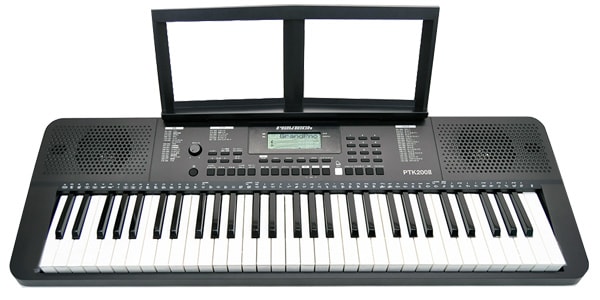
A great-value 61-key model that we recommend as a first keyboard. It supports touch response, allowing you to vary the volume depending on how hard you press the keys. It features 480 built-in tones, along with a range of beginner-friendly features such as auto accompaniment, a chord dictionary, and lesson functions. It is ideal for anyone who wants to get started with the keyboard in a relaxed, easygoing way.

A standard 61-key portable keyboard from Yamaha. It features 650 tones and supports touch response. With a comprehensive range of lesson functions, it is also recommended for those who want to learn to play the keyboard from scratch. It supports USB connectivity, making it a versatile instrument that you can continue using for everything from practice to performance.

A slim 61-key keyboard measuring approximately 20 cm in depth and weighing around 2.6 kg. It supports Bluetooth Audio/MIDI and USB connectivity, allowing you to enjoy playing in combination with a smartphone or other devices. The keys light up with LED illumination when pressed, making the keyboard easy to understand and use even for first-time players. This model combines a compact design with versatile functionality.
■ Recommended Keyboards for a Child’s First Instrument!

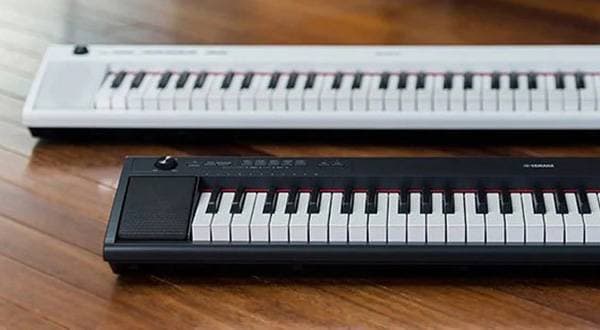
A 32-key mini keyboard that is easy to play even with small hands. It features a compact, rounded body and a simple button layout. It supports USB power, making it convenient for casual use at home. It is also recommended as a first keyboard for children who are just beginning to explore musical instruments.

A 44-key mini keyboard recommended for those who find 32 keys a little limiting. It features 128 tones and 200 rhythms, allowing you to enjoy a variety of playing styles despite its compact size. It is ideal not only for children but also for adults who want to enjoy playing the keyboard casually without taking up much space.
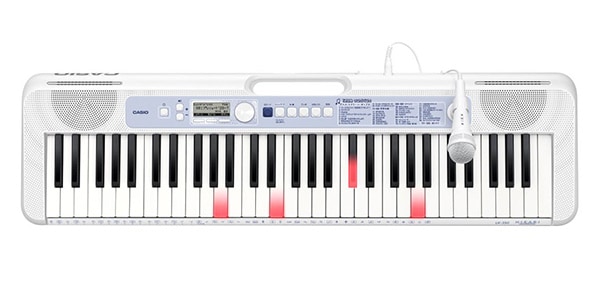
A light-up keyboard released in September 2026. The keys to be played next light up, allowing even those who have difficulty reading sheet music to enjoy playing. It features 61 touch-responsive keys, 400 tones, and 120 built-in songs. In addition to step-up lessons and Easy Mode, it also comes with a microphone, making it fun not only to play but also to sing along.
■ Recommended for Those Who Prioritize Portability and Space-Saving Design!

A 61-key keyboard that folds in half. It is easy to store at home and convenient to carry around. It also features essential functions such as 128 tones and rhythms, auto accompaniment, and a metronome. With a rechargeable battery and a dedicated soft case included, you can enjoy playing it wherever you go.

A 61-key roll-up piano with a thin, flexible body that can be rolled up for storage. Although its playing feel differs from that of a conventional keyboard, it is recommended for those who prioritize compact storage and portability above all else. It also supports Bluetooth, allowing you to play along with music from a smartphone or other device.

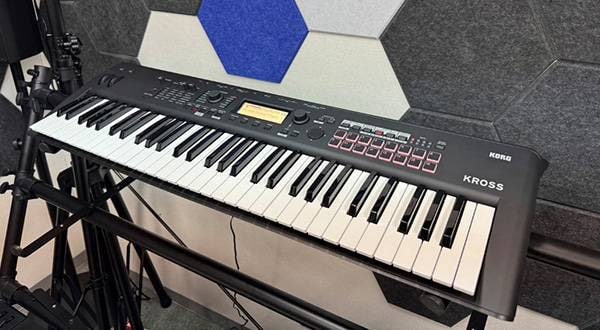
A 61-key keyboard that combines professional-quality sounds with portability. It features 1,154 tones powered by the ZEN-Core sound engine and 203 auto-accompaniment styles. It also supports Bluetooth Audio/MIDI and battery-powered operation. It is recommended not only for practicing at home but also for those who want to take their keyboard to studios, live performances, and other locations.
■ Recommended for Those Who Want to Enjoy Playing and Arranging Music Even More!
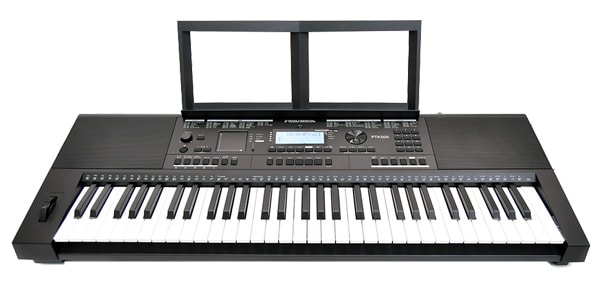
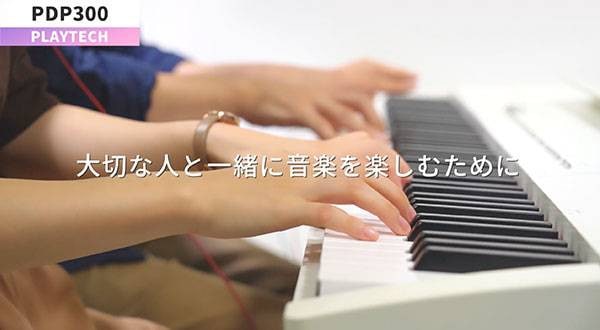
PLAYTECH’s high-end 61-key model. It features 580 tones and 180 rhythm patterns, and lets you change sounds in real time using the touchpad and pitch bend wheel. It also offers a wide range of functions, including sampling, auto accompaniment, layer, split, and recording/playback. It is recommended for those who want to take their playing beyond the beginner level and explore even more possibilities.

A 61-key performance model from Yamaha, introduced in 2026. It features 860 voices and 345 styles, making it suitable for a wide range of musical genres. You can also modify sounds while playing using the Live Control knobs and pitch bend. It is recommended for those who want to enjoy playing seriously, from practicing at home to performing live.

A higher-end model in the GO Series. In addition to more than 1,000 high-quality tones and extensive auto-accompaniment functions, it offers a wide range of connection options, including a microphone input and audio outputs. Special attention has also been paid to the built-in speakers, making it ideal for those who want to enjoy playing and singing along with their keyboard using a single instrument.
■ Recommended for Those Who Need More Than 61 Keys!

A Casiotone keyboard featuring 76 keys, giving it approximately one octave more than a typical 61-key keyboard. This makes it easier to play pieces that require a wider range, such as classical music and piano pieces. Despite its 76 keys, it has a compact design, and its simple operation is another appealing feature. It is recommended for those who find 61 keys insufficient but do not need a full 88-key keyboard.
■ Recommended for Those Who Want to Keep Playing with the Help of Light-Up Keys!
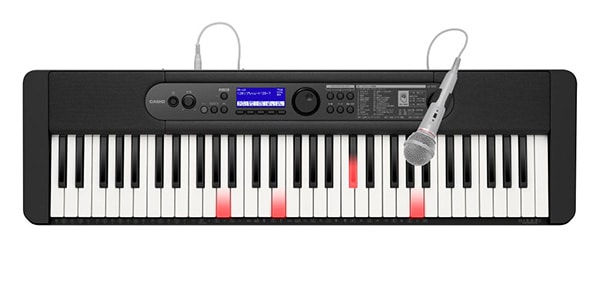
A 61-key light-up keyboard introduced in September 2026. The keys light up to guide you as you play, making it easier for beginners to try playing songs. It features 600 tones powered by the AiX sound source, 180 rhythms, and 230 built-in songs. It offers more than just playing the keyboard, supporting other ways to enjoy music, such as listening and singing. It is also worth considering as a hobby keyboard for adults.
■ Bonus: A Unique Model to Watch in 2026
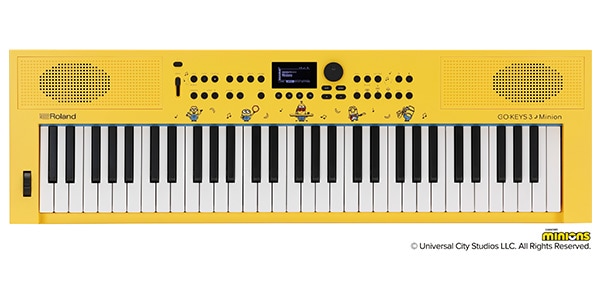
A special model released in September 2026, bringing together the popular GO 3 and the Minions. It features a vibrant yellow body decorated with original illustrations, along with 32 exclusive tones featuring Minion character voices. Of course, it offers more than just eye-catching looks, retaining the GO 3’s professional features, including the ZEN-Core sound engine, auto accompaniment, and Bluetooth connectivity. It is recommended for those who want to have fun getting started with the keyboard or are looking for a truly distinctive instrument.
■ Afterword
Electronic keyboards are available in a wide range of models, from simple options designed for children to feature-rich models equipped with professional-quality sounds and auto accompaniment.
If you are buying your first keyboard, I recommend checking the number of keys and whether it has touch response first. If you plan to practice for a long time, consider a model with 61 keys or more. If you want to play piano pieces in earnest, you may also want to consider a model with 76 keys or more.
Rather than focusing solely on price and design, think about how you actually want to use the keyboard, whether for practicing, carrying it around, or singing while playing. This will make it easier to choose a model that suits your needs.
Find the perfect keyboard for you and enjoy playing!














 自分にあったピアノを選ぼう!役立つピアノ用語集
 各メーカーの鍵盤比較
 用途で選ぶ!鍵盤楽器の種類
 ピアノ・キーボードの各部名称
 キーボードスタートガイド
 キーボード・ピアノ講座
 Discount Sale
 Outlet
 New Arrivals
 Podcast (streaming)
 Headphones / Earphones
 Microphones
 Wireless Equipment
 Speakers
 Power Amps
 Mixers
 Processors
 Portable PA Systems
 Recorders
 Karaoke
 Guitars
 Basses
 Ukuleles
 Drums & Percussion
 Pianos / Synthesizers
 Wind Instruments
 Stringed Instruments
 Japanese Instruments
 Harmonicas, Other
 Software
 DJ & VJ
 Stands
 Cables & Connectors
 Racks & Cases
 Lighting
 Stage & Truss
 Video Equipment
 PC PERIPHERALS
 Power Supplies
 Studio Furniture
 Household Items, Other
 Alcoholic Beverages