There are professional players who say about popular jazz mouthpieces like the Yanagisawa Metal (commonly known as "Yanameta"),
"Beginners should just use this from the start!"
But there are also professionals who say,
"Don't bother, because a beginner won't be able to get the sound they're expecting (a jazzy sound) anyway!"
(Well, which is it?)
So, as a "total" beginner who has never even touched an alto saxophone before, I decided to verify whether or not I could actually produce a proper sound using a few different mouthpieces.
I will be verifying the following three types:
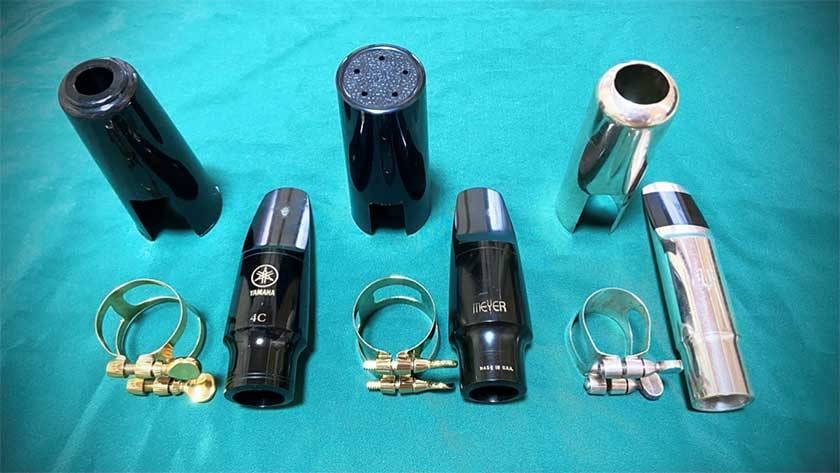
From left to right:
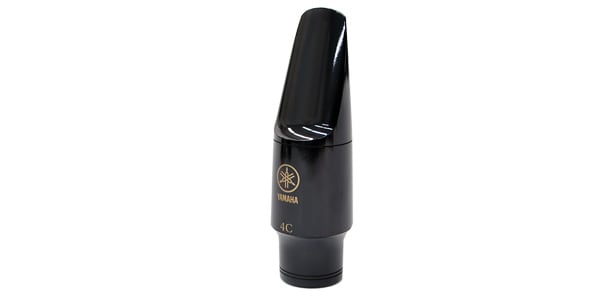
① Yamaha 4C (the so-called "standard" that came with the saxophone I bought)
② Meyer 5MM
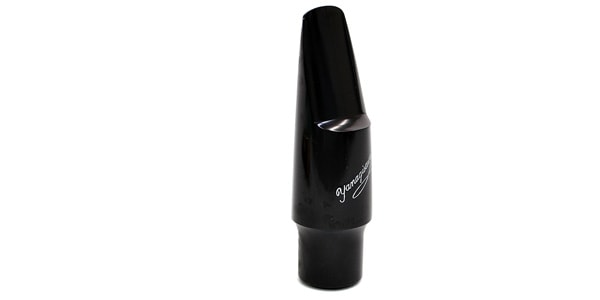
③ Yanagisawa Metal #6
By the way, although I am a music teacher, I am a complete novice with the saxophone, having bought it less than a month ago (the only knowledge I have is from watching videos on YouTube). If I can easily produce a jazz sound with these, it would mean that they are very beginner-friendly mouthpieces.
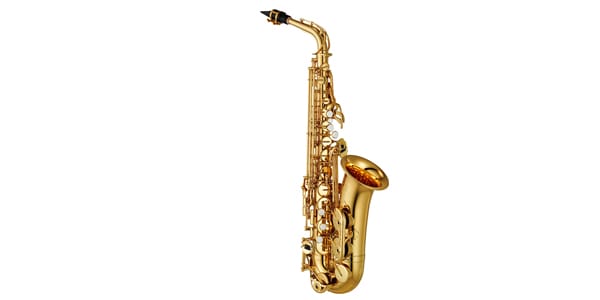
(*The instrument I purchased is an alto saxophone, the YAMAHA YAS-380.)
This time, I will compare these three based on two points: "Is it easy for a beginner to blow?" and "Was I able to produce the jazzy sound I expected?"
For each mouthpiece, I tested them using a "Legere American Cut 2.25" reed.
① YAMAHA 4C
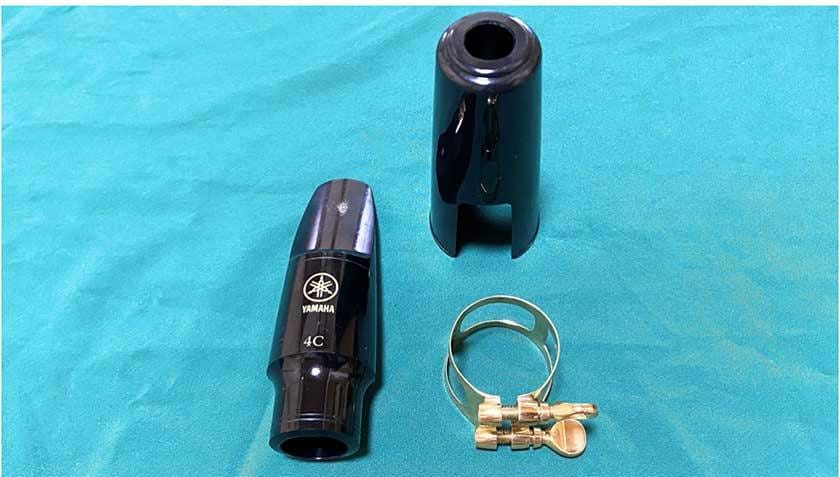
Result
・Ease of playing: Compared to the others, I had the impression that the low register was difficult to produce. The high register comes out cleanly and easily, but it doesn't have much volume. For some reason, the intonation was more unsteady than the other two, and it was difficult to stabilize.
・Jazzy sound: Not impossible, but difficult. It sounds more comfortable when played with a so-called "classical" embouchure.
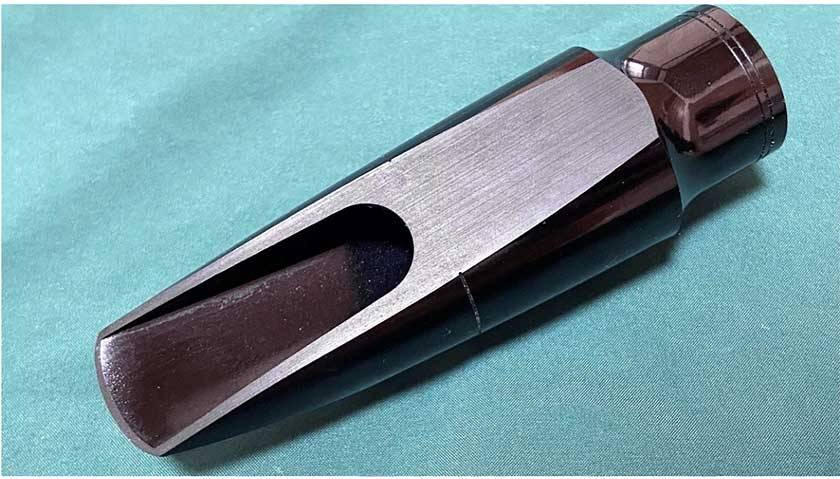
The 4C is known as a "beginner-friendly" mouthpiece, but I got the impression that it is only called that because it’s cheap but maintains reasonable quality. However, as a beginner, I found the other, more expensive mouthpieces easier to play.
It was a result that stands to reason:
"Expensive items are indeed easier to play, even for beginners."
(Of course, considering the price, I think it is a very good mouthpiece.)
Some might argue that "you can only become good by learning to play well even with cheap equipment!" (which is a bit of a "guts over brains" approach). However, since this is a hobby, if you have a little extra money, I think it's better to buy something that sounds good from the start so you'll stick with it longer.
② Meyer 5MM
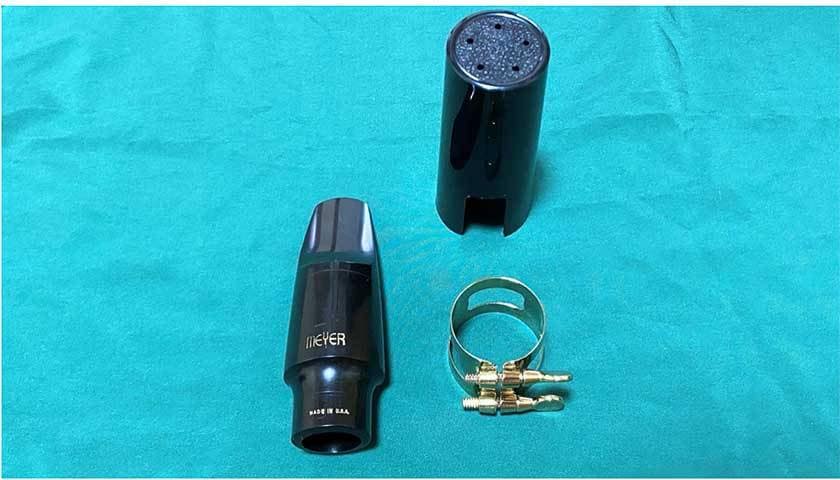
・Ease of playing: It produces a large volume of sound. The low register, in particular, feels great to play. The high register is slightly difficult, but overall, there is a sense of stability.
・Jazzy sound: It’s easy to produce (perhaps too easy).
This mouthpiece produces a lot of volume, even for a beginner like me, and it truly feels wonderful to play.
(I couldn't get a sound out on my first breath, but as soon as I blew steadily from my diaphragm, it suddenly started to ring.)
And yet, it doesn't feel like it requires an excessive amount of stamina.
The jazzy sound I was expecting came out with surprising ease—almost anticlimactically so.
I now understand why so many professional players recommend it.
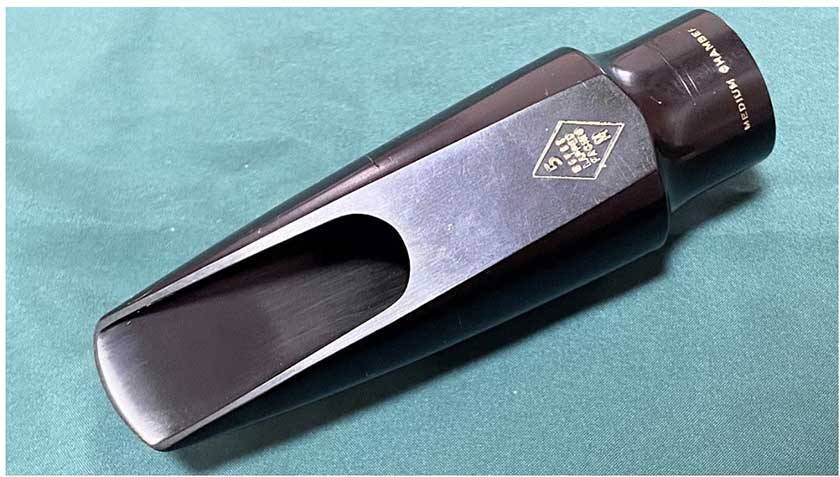
However, if I just play it straight, I feel like it produces too much of a jazzy sound. It might be nice if it were a bit more mellow... I’m sure it can be adjusted depending on how you play, but as a beginner, I’m only able to blow it straight for now.
It’s the kind of mouthpiece I’d want to use on a day when I’m feeling energetic.
It also rings properly even when playing with a so-called "classical" embouchure.
One thing to note, however, is that the included ligature for this mouthpiece has quite a poor reputation. My own ligature had a strange protrusion on the inside part that touches the reed, which led to an incident where the reed got shredded every time I attached it.
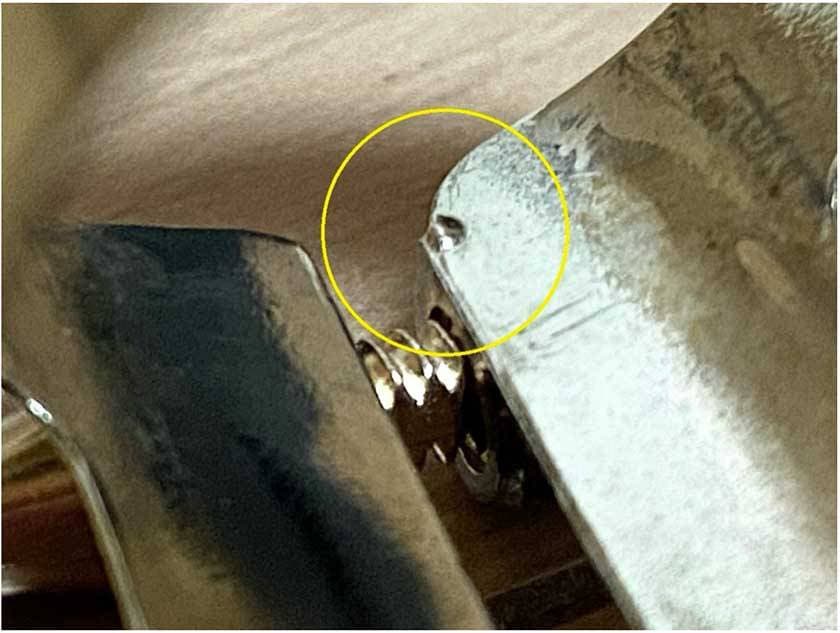
(The mysterious protrusion)
It feels as though it was plated from above without the burr being removed.
There is also uneven plating, and the screw barely makes a sound and it doesn't turn smoothly, so I am somehow managing to use the Yamaha 4C's ligature as a substitute.
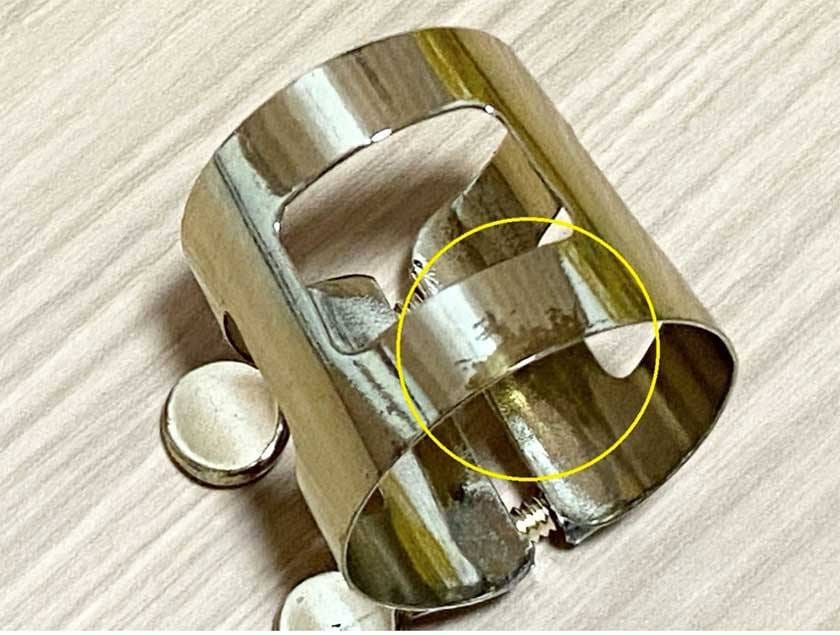
(Uneven plating)
It’s possible that I just happened to get a lemon, but it might be better to buy a ligature separately.
Also, the inner diameter of the mouthpiece is narrower than the Yamaha 4C, so it is tight when trying to insert this mouthpiece directly into the YAS-380. You need to ask a music store to adjust the neck cork.
③ Yanagisawa Metal #6
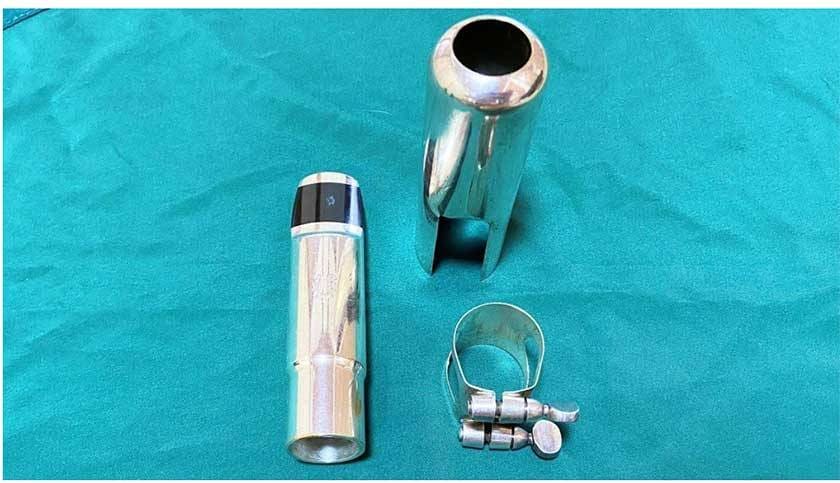
・Ease of playing: It is overwhelmingly easy to play. There is a sense of stability overall, and it feels composed.I suddenly felt like I had become better at the saxophone.
・Jazzy sound: Easy to produce. My impression is that it isn't as heavily biased toward jazz as the Meyer 5MM, but since it is easy to create a difference between bright and dark tones, it is easy to control. It also has plenty of volume.
It can express both gentleness and intensity.
It was a mouthpiece that let me produce the sound I wanted instantly and fit my body naturally. It is pleasantly mellow. It also responds when I want a harsh sound, and even playing it straight feels good. I was even able to produce sub-tone-like sounds (though not in all registers yet).
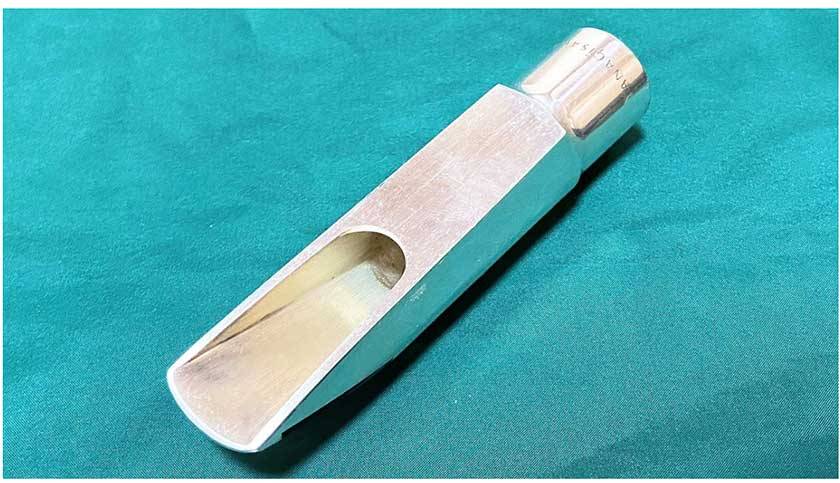
Furthermore, because the diameter of the mouthpiece is thinner than the others, I felt that the operation was very easy (tonguing felt agile). However, it seems that people who are already used to thicker mouthpieces might conversely feel that they have to close their mouths more than usual, so I end up putting too much effort into it.
It produces a beautiful sound with a classical embouchure as well, but I got the impression that it isn't very well-suited for it.
Summary
[Verification] What happens if a total saxophone beginner suddenly uses a Yanagisawa Metal or Meyer 5MM mouthpiece?
[Answer] It is very good (everyone, go buy one soon).
Just as everyone says, I thought there wouldn't be any change just because I changed the mouthpiece, but contrary to my expectations, there were significant positive changes. Perhaps it was precisely because I am a beginner whose playing technique hasn't solidified yet.
I hope this article is helpful to everyone.
The “sound & person” column is made up of contributions from you.
For details about contributing, click here.




![Can a Saxophone Beginner Tell the Difference Just By Using a Légère American Cut [Synthetic Reed]?](/contents/uploads/thumbs/5/2021/9/20210929_5_14292_1.jpg)


 サックスリード特集
 デジタル管楽器とは
 PLAYTECH 管楽器特集
 サウンドハウス虎の巻 管楽器入門ガイド
 最新コラム&動画をCheck!! OTOYA通信
 サウンドハウス虎の巻 !
 Discount Sale
 Outlet
 New Arrivals
 Podcast (streaming)
 Headphones / Earphones
 Microphones
 Wireless Equipment
 Speakers
 Power Amps
 Mixers
 Processors
 Portable PA Systems
 Recorders
 Karaoke
 Guitars
 Basses
 Ukuleles
 Drums & Percussion
 Pianos / Synthesizers
 Wind Instruments
 Stringed Instruments
 Japanese Instruments
 Harmonicas, Other
 Software
 DJ & VJ
 Stands
 Cables & Connectors
 Racks & Cases
 Lighting
 Stage & Truss
 Video Equipment
 PC PERIPHERALS
 Power Supplies
 Studio Furniture
 Household Items, Other
 Alcoholic Beverages