"Beginners shouldn't take the easy way out with plastic reeds (synthetic reeds)!"
I hear that opinion a lot, but...
"Wait... that must mean they’re incredibly easy to play, right?"
With that thought in mind, I immediately bought a synthetic reed and gave it a try. I’m going to verify whether it actually makes the alto saxophone easier to blow for a beginner.
(Since I’m just playing saxophone as a hobby, the easier it is to play from the start, the better.)
Table of Contents
〇 What I bought
〇 What I compared it with
〇 Pros that even a beginner could notice
〇 Cons that even a beginner felt
〇 Other opinions found online
〇 Summary
〇 What I bought
Legère American Cut 2.25
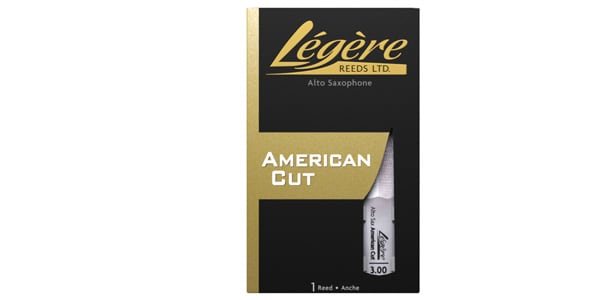
This is the "American Cut" from Legère, a brand with a very solid reputation among synthetic reeds. It is reportedly the latest model, perfected after six years of research following the release of their other models.
(Furthermore, it seems that plastic reeds last much longer now compared to the old days. As someone who is short on cash, this makes me very happy.)
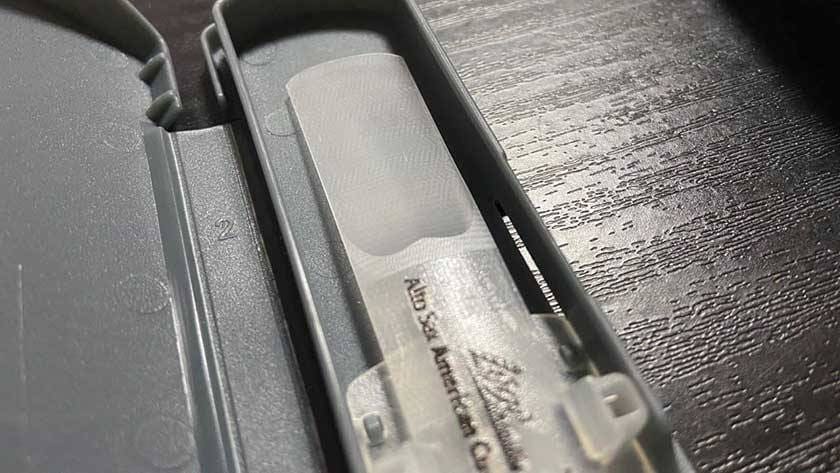
(A characteristic feature is the "mountain" or hump in the center of the reed.)
Usually, "American Cut" refers to an unfiled cut, but in the case of Legère, it seems to refer to this unique cut. After years of research, they have apparently made it possible to achieve a very honest response to the player's breath.
〇 What I compared it with
The cane reed used for comparison is the Vandoren Traditional (Blue Box) 2 1/2. It’s the ultimate standard.
( Vandoren Saxophone Reed List )
I selected the best one after properly testing them.
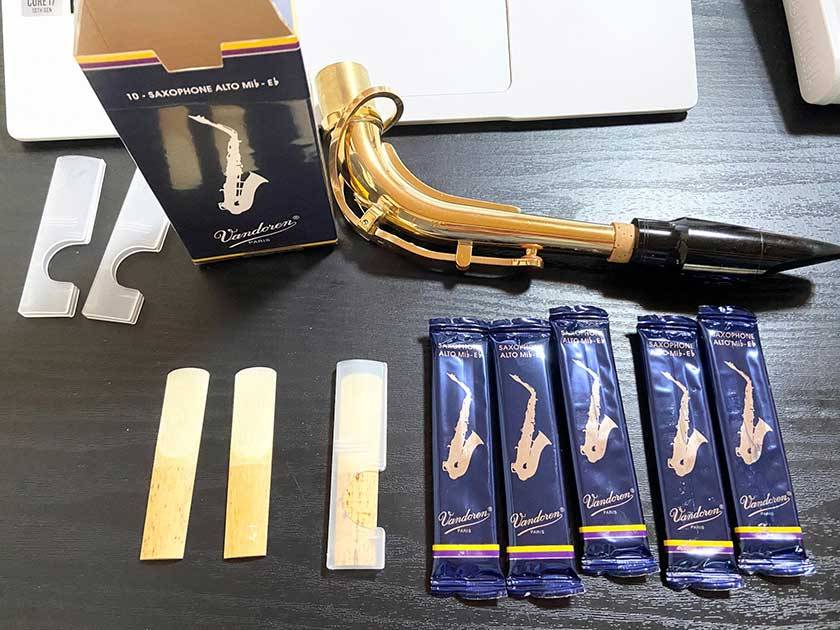
(Selection scene. It feels like opening snacks.)
〇 Pros that even a beginner could notice
① Instant Response
The Légère American Cut doesn't need to be moistened, so you can play it immediately. It’s a "grab it and blow" kind of feeling. No selection process is required either. It’s so easy.
Also, while normal reed hardness usually comes in increments of 1/2, Légère sells them in increments of 1/4.
Because of this, I’ve been told you don't need to do things like "buy a 3 and shave it down a bit to make it feel like something between a 2 1/2 and a 3."
The less time spent preparing gear, the more time available for practice, which I think is a very good thing.
Being able to jump into practice anytime is great.
② Great Resonance
Both high and low notes are clearly easier to produce. Even a beginner can definitely tell the difference (I'm glad I bought it).
To be fair, the Vandoren was fresh out of the box and would likely improve later, but being able to open a box and have it resonate perfectly right away is truly revolutionary.
At this point, it was resonating better than even the best Vandoren I had selected.
Online, various experts have shared their opinions comparing the Légère "Signature" model with cane reeds.
In most cases, they say, "It falls slightly short of a cane reed that has been perfectly broken in and is in peak condition, but it's incredible that it plays at about 80–90% of that quality right from the start."
This "American Cut," improved over the six years since then, should be at an even higher standard.
③ Easy Care & Good Value
Légère doesn't seem to chip or break easily. It also comes with its own dedicated reed case, which is convenient.
There's no need to worry about dryness or humidity either.
While it supposedly has a lifespan, some people say it can be revived by cleaning out fine dirt trapped in the crevices (this needs verification).
It costs about the same as a single box of cane reeds, but in any case, the total lifespan seems to be a whole lot longer.
(Cane reeds can also be revived by trimming the tip with a reed cutter or scraping them with a ReedGeek, but considering the time and the cost of tools, synthetic reeds still seem friendlier to the wallet.)
I'm looking forward to seeing how long this single reed will actually last.
*Of course, I don't think an era will come where synthetic reeds will need to completely replace cane reeds, but given that it plays instantly, plays at about 90% of a top-tier reed, is easy to maintain, and is easy on the wallet, it feels like it's full of nothing but benefits for beginners.
〇 Cons that even a beginner felt
① Doesn't absorb water
Unlike cane reeds, it doesn't absorb any moisture. It feels like all the moisture just flows straight into the instrument.
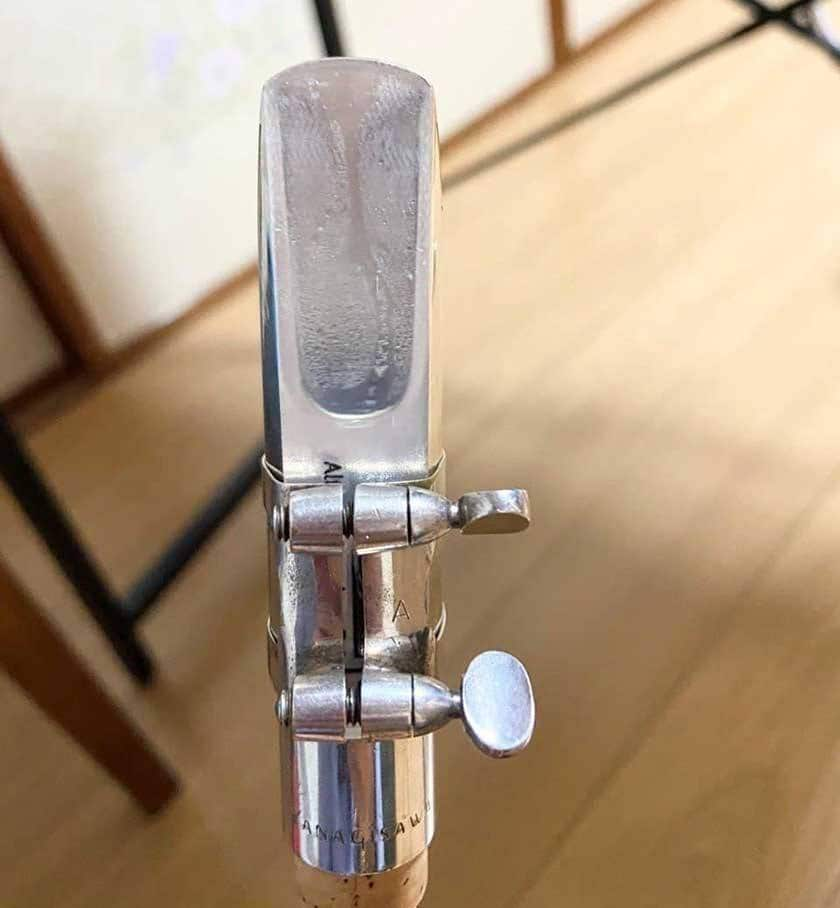
(Légère creates condensation quickly because it doesn't absorb water)
When I first started, I often heard a "gurgling" sound—like water was getting caught—while playing, but I think that was probably an issue with my technique. It hardly happens now.
Because of this moisture issue, I think you need to run a swab through the instrument a bit more frequently than you would with a cane reed.
② It's so easy that you don't gain knowledge about cane reeds (not necessarily a bad thing)
If you intend to be active as a professional saxophonist, you should probably know about breaking in reeds, how to select reeds, and how to fix reeds, but with synthetic reeds, that knowledge becomes unnecessary.
While being easy is a good thing, it might cause some people to lose interest in playing with cane reeds altogether.
For now, I've also acquired some cane reeds and am studying them.
I’d like to reach a point where I can use both... I think.
〇 Other opinions found online
Since producing sound is easier (or rather, a different kind of effort), it takes a long time to adjust when you want to switch back to cane reeds.
Even though they are synthetic, there are actually individual differences between units.
〇 Summary
The ease and cost-effectiveness of synthetic reeds are truly a blessing for beginners. However, I can also understand the perspective of teachers who say, "Please learn how to use cane reeds first."
That said, I have also seen opinions from professionals who say you can absolutely work with synthetic reeds and that they actually prefer them because they are easier.
If you have the money, I think it’s best to buy both and try them out.
For those who play the saxophone purely as a hobby or for someone who just pulls it out of the closet once in a while to play, a cost-effective synthetic reed might be the best path.
The “sound & person” column is made up of contributions from you.
For details about contributing, click here.








 サックスリード特集
 デジタル管楽器とは
 PLAYTECH 管楽器特集
 サウンドハウス虎の巻 管楽器入門ガイド
 最新コラム&動画をCheck!! OTOYA通信
 サウンドハウス虎の巻 !
 Discount Sale
 Outlet
 New Arrivals
 Podcast (streaming)
 Headphones / Earphones
 Microphones
 Wireless Equipment
 Speakers
 Power Amps
 Mixers
 Processors
 Portable PA Systems
 Recorders
 Karaoke
 Guitars
 Basses
 Ukuleles
 Drums & Percussion
 Pianos / Synthesizers
 Wind Instruments
 Stringed Instruments
 Japanese Instruments
 Harmonicas, Other
 Software
 DJ & VJ
 Stands
 Cables & Connectors
 Racks & Cases
 Lighting
 Stage & Truss
 Video Equipment
 PC PERIPHERALS
 Power Supplies
 Studio Furniture
 Household Items, Other
 Alcoholic Beverages