① Testing the WA-1B on Drum Recordings
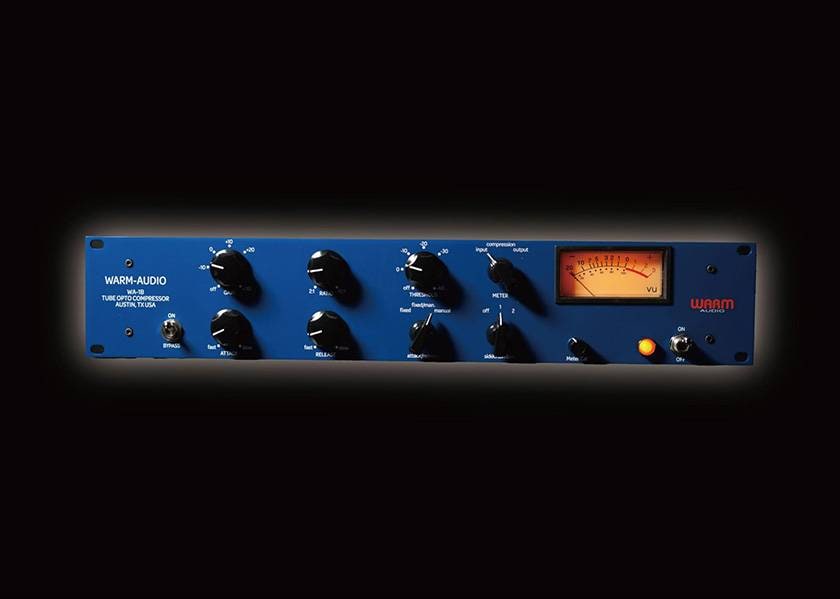
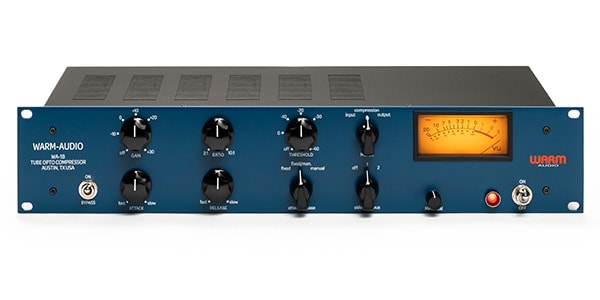
This time, I had the opportunity to use the Warm Audio WA-1B in an actual drum recording session.
My first impression was how beautifully it glued everything together. Rather than aggressively pushing the drums forward, it felt like it elevated the entire kit to a more polished and luxurious level.
It gently controlled the peaks of the kick and snare while allowing the cymbals to spread naturally. Personally, I’m not a fan of hi-hats becoming overly aggressive or crashes sounding harsh, and the WA-1B handled those areas remarkably smoothly.
If you’re looking for a compressor that clamps down hard on fast transients, this may not be exactly what you're after. However, for a larger, smoother sound, it works exceptionally well.
Personally,
- R&B
- Neo Soul
- J-Pop
- Vocals
are genres where the drum tones recorded with the WA-1B compressor would shine.
After using it on drums, my impression was that this is not a compressor that makes things wild and aggressive. Instead, it’s a compressor that organizes the sound and makes it feel bigger. Personally, I really liked that approach.
② Testing the WA-2A on Drum Recordings
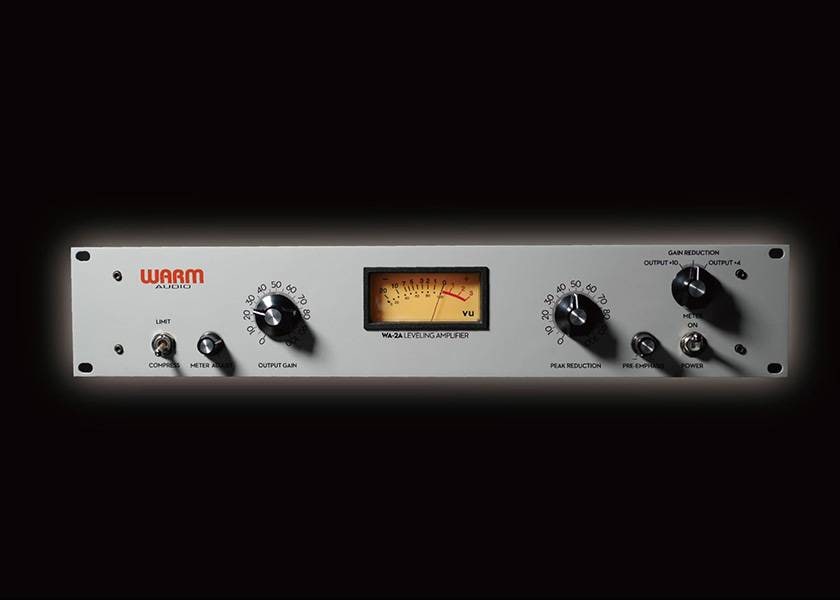
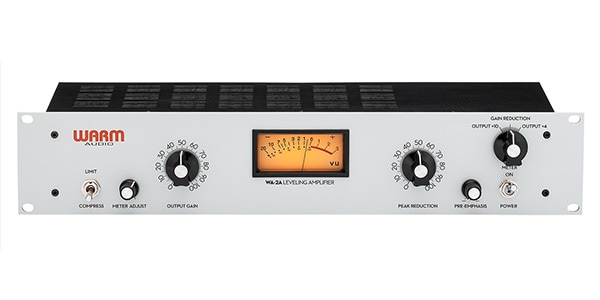
Next, I tried the WA-2A on drums.
Simply put, the sense of air and space felt fantastic.
Rather than delivering a sharp, punchy attack, it seemed to wrap around the entire drum kit from behind. The snare, in particular, gained a thicker and more pleasing sustain.
The ambience after rimshots and the extension of the cymbals sounded extremely musical.
One thing that surprised me was how substantial the low end felt.
The body resonance of the kick drum came forward very naturally.
It’s not necessarily the ultra-tight modern drum sound that’s popular today, but it adds a unique sense of movement and character to acoustic drums that feels very satisfying.
That said, applying too much compression can cause the low frequencies to become overly prominent.
I found myself thinking it would work especially well on room microphones and overheads.
After using it on a real drum kit, my conclusion was that the WA-2A is not an aggressive compressor. It’s a compressor that simply makes things sound better.
Rather than creating sheer loudness, it seems designed to make performances sound more musical.
③ Testing the WA76-A on Drum Recordings
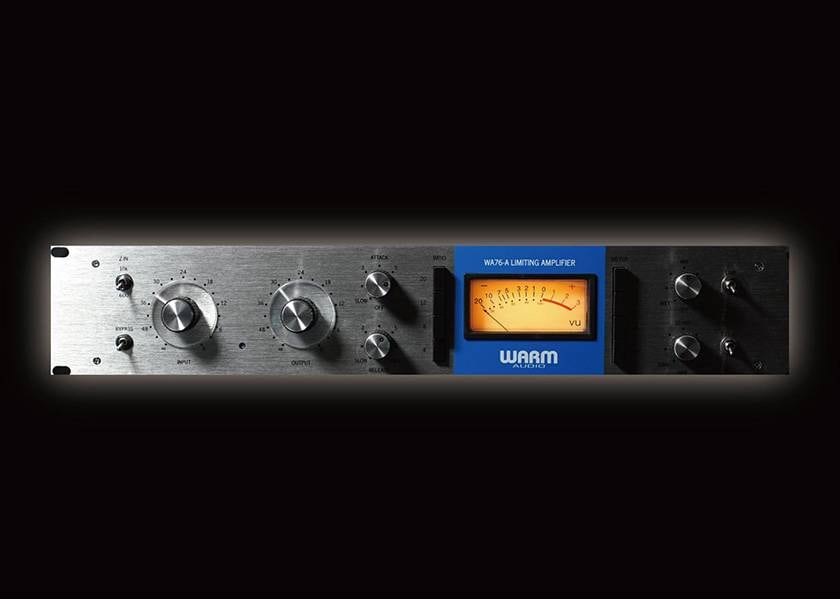
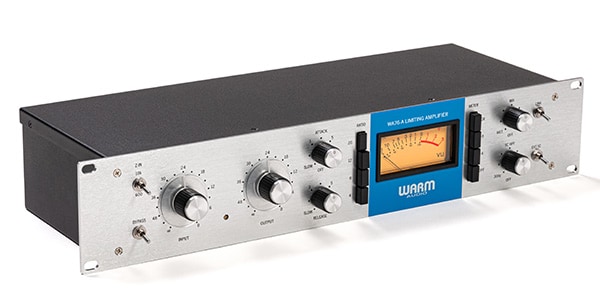
To be honest, this one is very much my taste.
The attack jumps forward nicely, while ghost notes retain their detail and character without being crushed.
The WA76-A has a strong sense of forward projection that really helps the drums come to life.
Depending on the music, there are situations where presence is more important than naturalism, and in those cases this compressor feels extremely useful.
When pushed harder, it develops a very noticeable character, which I actually see as part of its appeal.
Considering the price point, it’s easy to justify bringing into a recording setup, making it a realistic option for anyone purchasing their first hardware compressor.
Of course, there are differences compared to the original units and vintage models.
However, if the question is whether it can perform reliably in professional recording situations, my answer is absolutely yes.
My takeaway was that the WA76-A is less about refining a sound and more about making a performance feel exciting and larger than life. Anyone looking to bring drums to the front of a mix will likely appreciate what it does.
④ Testing the WA76-D on Drum Recordings
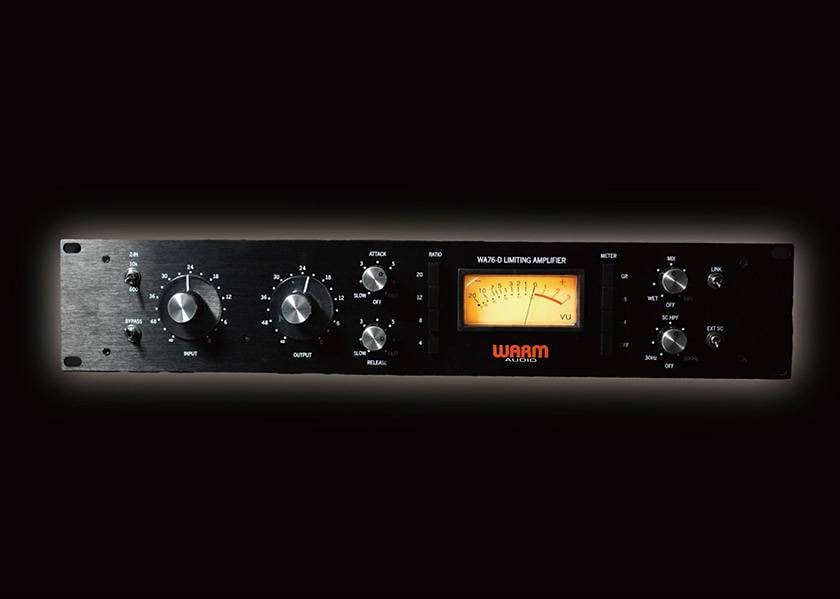
After using it, I found the WA76-D to be quite different from the WA76-A.
In a nutshell, the WA76-A feels flashy, while the WA76-D feels tighter and more controlled.
Unnecessary resonance is cleaned up, leaving the core of the drum sound to cut through clearly. That makes it particularly practical in real-world recording situations.
Many modern productions feature densely packed arrangements where the drums need to maintain clarity and presence. In those situations, the WA76-D feels incredibly easy to use.
With a slightly slower attack and a faster release, it can create a snare that pops forward while keeping the decay clean and controlled.
Toms also benefit from improved definition rather than excessive low-end buildup.
As a result, it works extremely well for pop music, productions involving programmed elements, and contemporary mixes in general.
If you’re aiming for a more raw and aggressive rock sound, many people may still prefer the WA76-A.
From an engineering perspective, however, the WA76-D feels like the safer choice.
It has character, but never feels excessive.
My overall impression was that the WA76-D serves as an organizer that helps drums sit forward in the mix.
It may not be the flashiest option, but its effectiveness in a mix is extremely high.
⑤ Testing the WA-8000 and TB12 on Drums
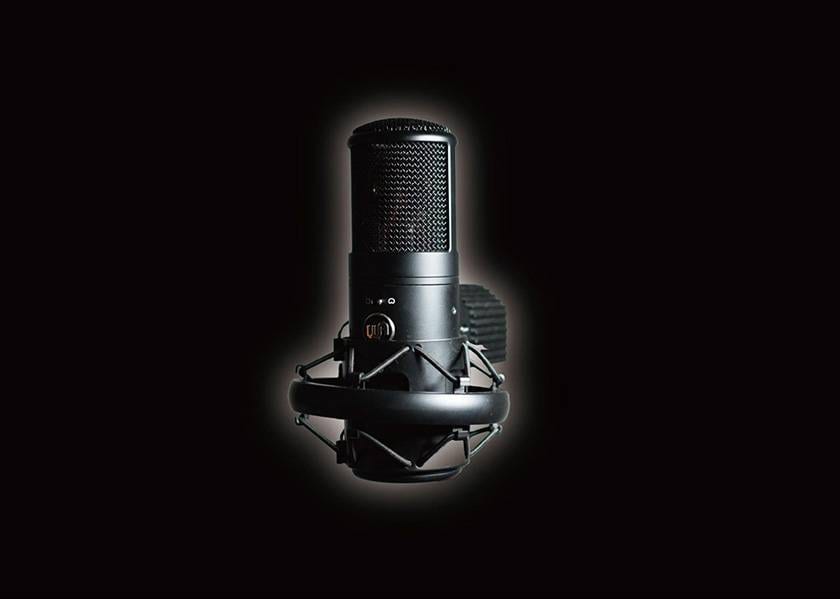
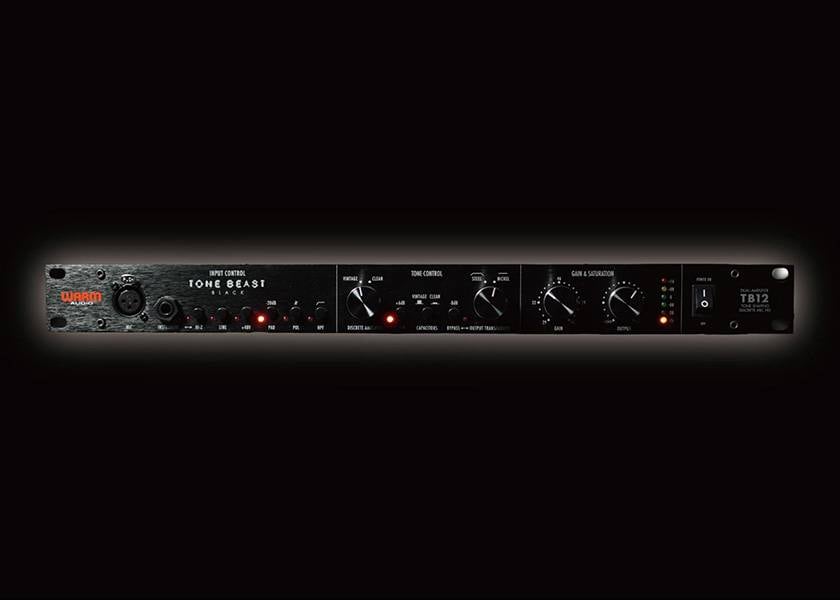
This time, I used the WA-8000 together with the TB12 during a drum recording session.
The WA-8000 is generally associated with vocals, so using it on drums isn’t the first thing most people would think of.
That’s exactly why I wanted to try it.
The results were surprisingly interesting.
I positioned it in an overhead-style placement and routed it through the TB12.
The first thing I noticed was how detailed it sounded.
The cymbals had excellent definition, and the natural ambience of the drum kit came through beautifully.
It felt like the sound of a truly premium overhead microphone.
Another pleasant surprise was how smooth the cymbals remained.
Some microphones can make high frequencies feel harsh, but the WA-8000 stayed remarkably controlled.
Because of that, I think
- R&B
- Ballads
are genres where this drum sound would work for.
For aggressive rock recordings, however, a rougher-sounding microphone may be a better fit.
As for the TB12, my experience was:
- It adds weight and body to the sound
→ The drums sit more confidently at the front of the mix. - It allows you to shape the character
→ The Steel/Nickel control lets you alter the overall tone and add varying degrees of punch and coloration.
After using both units together, what stood out to me was how the WA-8000 captures delicate nuances and fine detail, while the TB12 adds the weight and presence needed to make those details feel powerful and impactful. The result is a sound that is both refined and authoritative.
Overall, I think this combination works exceptionally well.
⑥ Testing the WA-8000 (Overhead) and WA-47F (Kick)
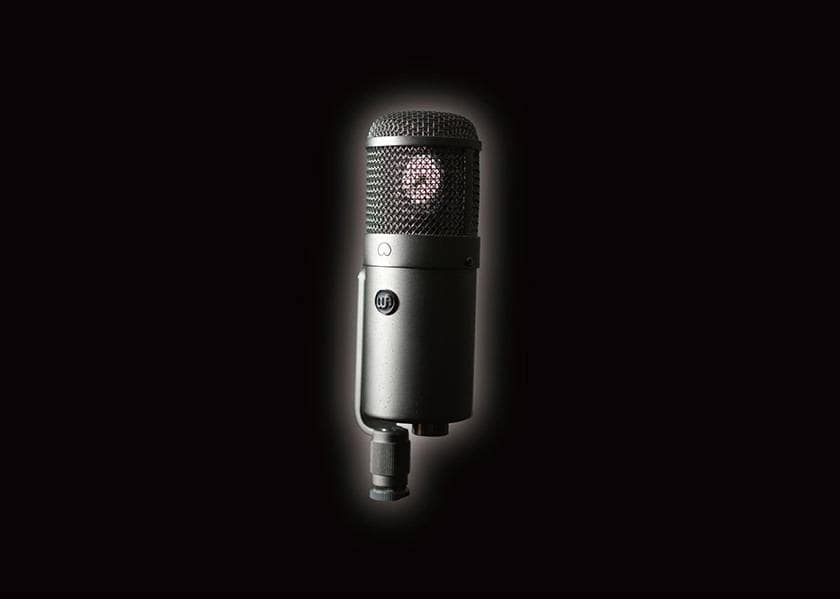
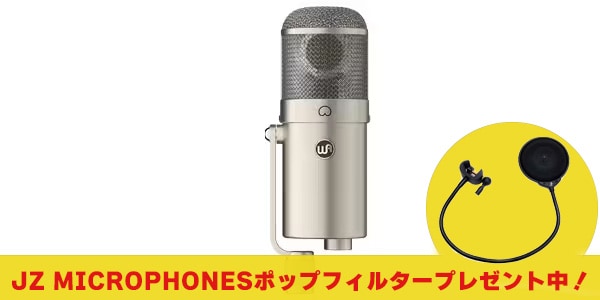
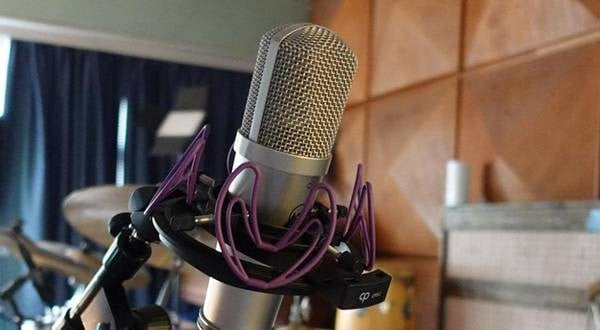
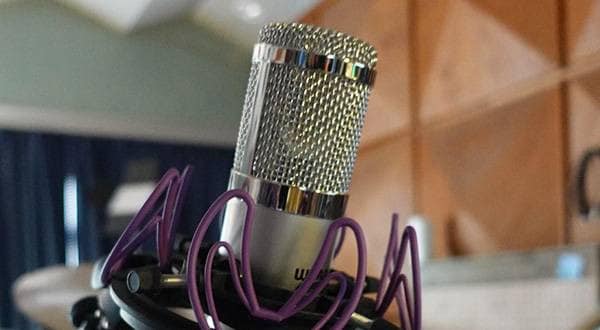
I used the WA-8000 as an overhead microphone and the WA-47F on kick drum.
My conclusion is simple: it's an extremely balanced combination.
The WA-8000 captures an impressive amount of detail, preserving the extension of the cymbals, room ambience, and subtle nuances.
Meanwhile, the WA-47F delivers fast transient response and a strong attack while maintaining a thick low end.
It captures not only the impact of the kick, but also the air movement and body behind it.
The biggest strength of this pairing is how naturally the frequency balance comes together.
Despite the detail of the overhead microphone, the kick never feels overshadowed.
Of course, more microphones would be needed for a fully elaborate setup, but it’s impressive how complete this sounds with such a simple approach.
For anyone looking to simplify their drum recording process, I highly recommend this combination.
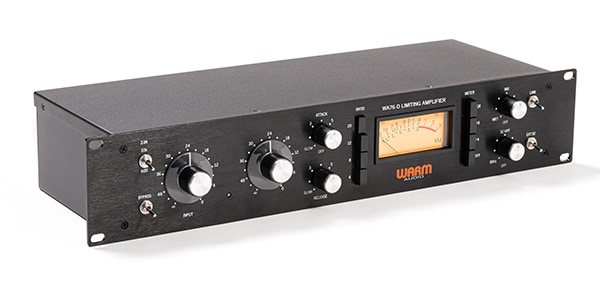
⑦ Comparing the WA-1B, WA-2A, WA76-A, and WA76-D
To wrap things up, I compared all four compressors using the same drum recording.
The results were fascinating.
The character of each unit came through very clearly.
- WA-1B
- → This was the most cohesive-sounding of the four.
It naturally smoothed everything out and added a sense of richness and polish to the drums. - WA-2A
- → This felt the most musical.
It added a pleasing sense of movement and atmosphere, giving the drums an airy and organic quality. - WA76-A
- → This was easily the most aggressive and exciting sounding.
It pushed the drums forward and made them feel larger and more energetic. - WA76-D
- → This was the tightest and most controlled of the group.
It delivered a clean, focused sound with excellent clarity, making it feel particularly well suited to modern productions.
Conclusion
After putting the Warm Audio WA-1B, WA-2A, WA76-A, WA76-D, WA-8000, WA-47F, and TB12 through real-world drum recording sessions, my overall impression is that these are highly practical tools that deliver excellent value and are more than capable of being used in professional recording environments.
Compressor Takeaways
- WA-1B → Smooth, cohesive, and polished with a premium feel.
- WA-2A → Musical, atmospheric, and full of natural movement.
- WA76-A → Bold, energetic, and great for bringing drums forward in a mix.
- WA76-D → Tight, focused, and particularly well suited to modern productions.
If I had to choose only one, it would be a difficult decision. However, from a practical studio perspective, I would probably lean toward either the WA76-D or the WA-1B for their consistency and versatility.
Microphone & Preamp Takeaways
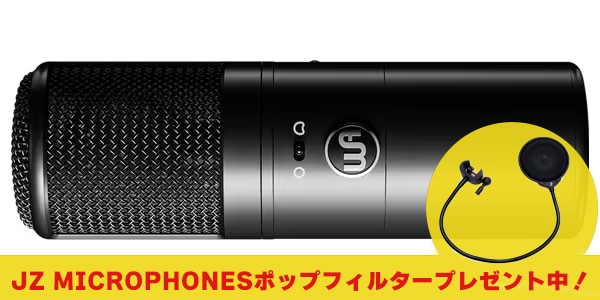
- WA-8000 → Detailed, refined, and highly articulate.
- WA-47F → Full-bodied, punchy, and fast.
- TB12 → Excellent for shaping and enhancing sounds into something immediately usable in a mix.
One combination that particularly impressed me was the WA-8000 as an overhead microphone paired with the WA-47F on kick drum.
Another major advantage is that this setup delivers convincing results even with a minimal miking approach.
What Mattered Most to Me as a Drummer
The most important thing I took away from this experience was whether the nuances of my playing could actually be heard in the recording.More than anything else, I wanted to know if the dynamics, touch, and subtle details of a performance would translate accurately into the final sound.
My impression of Warm Audio’s gear is that it doesn’t hide much—for better or worse. It won’t magically cover up inconsistencies in your playing. However, when you do play well, it faithfully captures and reproduces those nuances, which I found extremely rewarding as a drummer.
Honest Evaluation: Strengths and Considerations
The strengths are fairly straightforward:
- Excellent sound quality for the price
- Each model has a clearly defined character
- More than capable of handling real-world recording situations
There are a couple of points worth mentioning:
- They are not exact replicas of the original vintage units
- Some models have a strong personality, which may not suit every taste or application
That said, I actually see this as a positive. Rather than feeling like generic substitutes, these units have their own identities and sonic characteristics.
Final Thoughts
After spending time with all of these units, one thing that really stood out to me is that Warm Audio offers a lineup that remains realistically attainable even if you decide to own multiple pieces of gear.
Because of that, I think there’s genuine value in having several models on hand and choosing between them based on the character you’re looking for.
My honest takeaway after using all of them is that Warm Audio products are not simply ‘budget alternatives’—they are ‘legitimate tools that deserve consideration in their own right’.
Of course, there are differences when compared to the original vintage equipment that inspired them. However, when it comes to whether they can perform reliably in real recording situations, my answer is absolutely yes.
From a drummer’s perspective, what impressed me most was that these pieces of gear accurately reflected the way I played.
That’s an incredibly important quality for any performer.
I would have no hesitation using these units in a professional recording environment. In fact, their pricing makes it practical to own multiple options and choose the right tool for each session, which is a significant advantage.
One Last Thought
From a drummer’s perspective, I don’t believe great gear alone can make everything sound better.
The way a drum is played—and the way that performance is recorded—can have a huge impact on how convincing and engaging the final result feels.
These gears allowed the nuances of the performance to come through clearly, which ultimately made the recordings feel more compelling.
If you have the opportunity, I highly recommend giving them a try for yourself!
The “sound & person” column is made up of contributions from you.
For details about contributing, click here.






![[Product Review] Warm Audio Mic & Processor by Kenji Nakai - Part 2](/contents/uploads/thumbs/5/2025/12/20251215_5_33881_1.jpg)
![[Product Review] Warm Audio Condenser Microphones by Rento Kimura](/contents/uploads/thumbs/5/2025/12/20251208_5_33804_1.jpg)
![[Product Review] Warm Audio WA-44+WARM LIFTER by Haruki Ishida](/contents/uploads/thumbs/5/2025/9/20250909_5_32803_1.jpg)
![[Product Review] Warm Audio WA-8000, WA73-EQ, and WA-2A by aimi](/contents/uploads/thumbs/5/2025/7/20250725_5_32095_1.jpg)
![[Product Review] Warm Audio WA76 by soki kimura](/contents/uploads/thumbs/5/2025/1/20250111_5_30145_1.jpg)
 WARM AUDIOとは
 ドラム用マイク AUDIX Dシリーズ
 Tossy先生直伝!ゼロから始めるドラム徹底攻略
 コンデンサーマイクとは
 K&M マイクスタンド比較表
 虎の巻 スタンド初心者講座
 Discount Sale
 Outlet
 New Arrivals
 Podcast (streaming)
 Headphones / Earphones
 Microphones
 Wireless Equipment
 Speakers
 Power Amps
 Mixers
 Processors
 Portable PA Systems
 Recorders
 Karaoke
 Guitars
 Basses
 Ukuleles
 Drums & Percussion
 Pianos / Synthesizers
 Wind Instruments
 Stringed Instruments
 Japanese Instruments
 Harmonicas, Other
 Software
 DJ & VJ
 Stands
 Cables & Connectors
 Racks & Cases
 Lighting
 Stage & Truss
 Video Equipment
 PC PERIPHERALS
 Power Supplies
 Studio Furniture
 Household Items, Other
 Alcoholic Beverages