In a special small-group–only workshop titled “Recording & Mixing Workshop 2025 [Hybrid] by KENJI NAKAI”, participants were able to directly experience learn the non-public processes of music production from recording to mixing under the guidance of mixer / recording engineer / producer KENJI NAKAI, who has been based in Los Angeles and active at the forefront of the global music scene for over 30 years. During this workshop, we used WARM AUDIO microphones and processors.
Please share your impressions of the microphones and processors used this time.
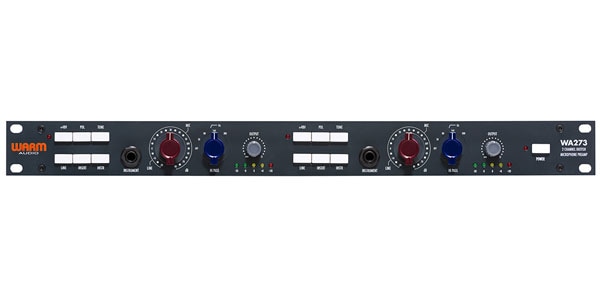
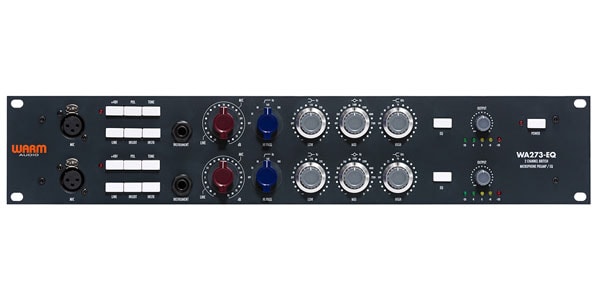
About the microphone preamps WA273 and WA273-EQ
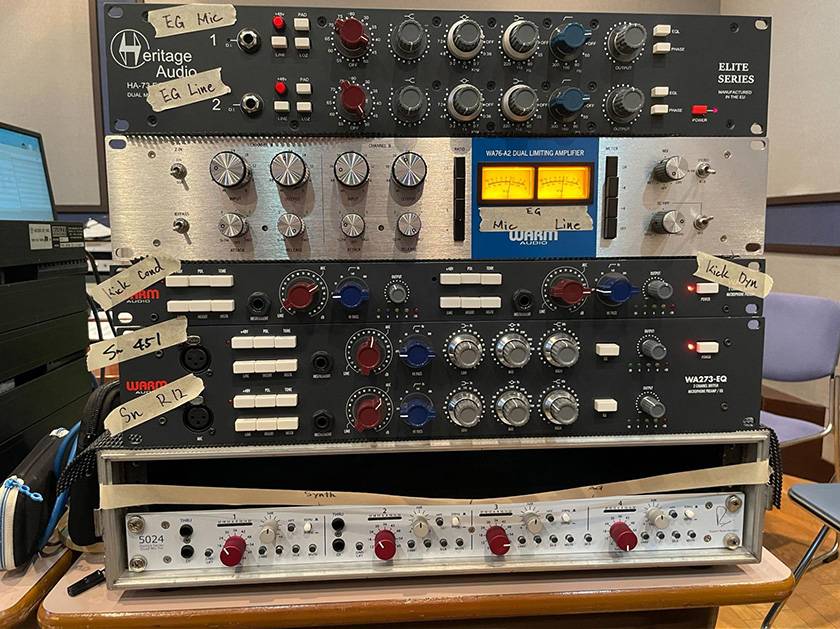
Q. If you want to create a sound like this, which should you choose: WA273 or 273-EQ?
They can be used for a wide range of applications, but their strengths are most evident when you want a slightly more edgy sound quality.
Q. This time they were used on snare and kick—what was the purpose behind this choice?
They were used to increase the gain and achieve a slightly more “flashy” EQ effect.
Q. What sets these apart from other standard microphone preamps (such as Rupert Neve, API, AMS Neve, Focusrite, etc.)?
The WA preamps offer more frequency selection options and input impedance switching that the original NEVE1073 does not have, making them suitable for a wider range of applications.
Q. What vocal types are they suitable for?
They can be used on vocals with little presence as well as on singers with strong vocal projection.
Q. What instruments are they suitable for?
A classic use is with guitar cabinets when combined with a ribbon microphone.
Q. What were the settings used this time (knob positions, button ON/OFF)?
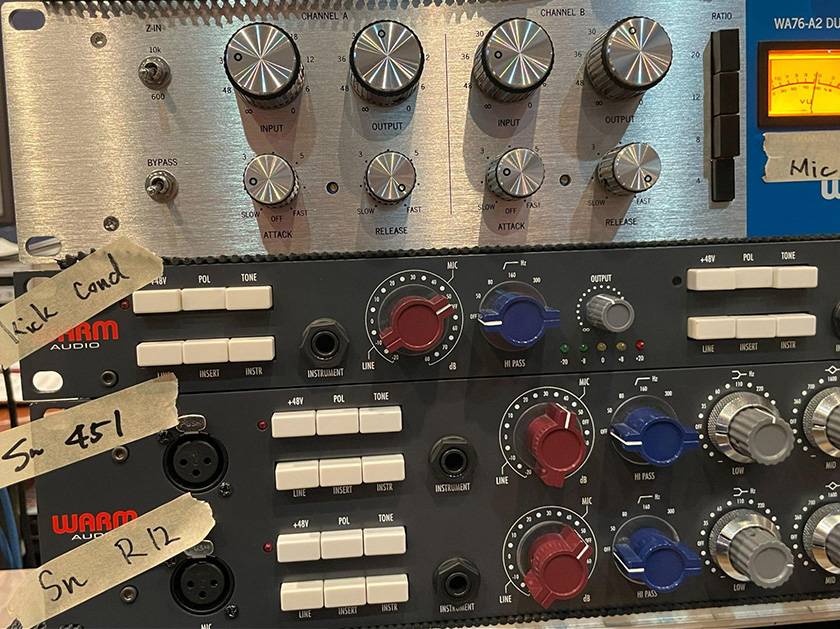
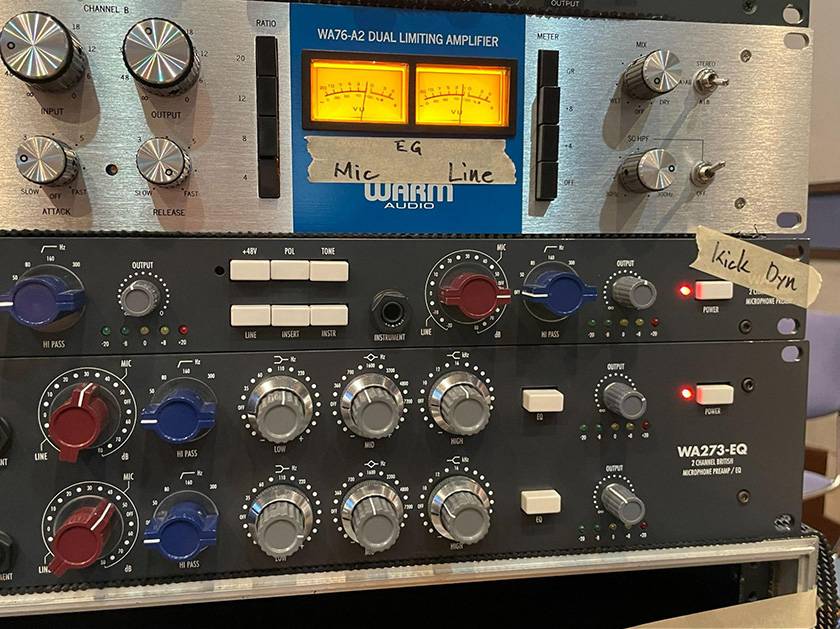
Q. How should the GAIN and OUTPUT knobs be set as a reference?
First, set the OUTPUT to 12 o’clock, then determine the gain. From there, adjust the GAIN and OUTPUT in opposite directions while paying attention to changes in sound quality to find the best balance.
Q. What is the recommended balance for the GAIN and OUTPUT knobs?
Use the gain between 35–55 dB. Set the output to around 80% of the DAW’s full scale.
Q. For the 3-band EQ on the WA273-EQ, what points should be considered when adjusting each band?
Even EQ bands that are not actively used can change the sound when toggled ON/OFF, so carefully determine the combination that produces the best result.
Q. What are your impressions of the sound when the TONE switch is ON or OFF?
Depending on the condenser microphone, the effect may not be very noticeable, but with dynamic microphones, it can dramatically change the sound, for better or worse.
Q. What type of user (in terms of level or sound expectations) would you recommend WARM AUDIO microphone preamps to?
They are ideal for users looking to step up from the built-in preamps of inexpensive interfaces.
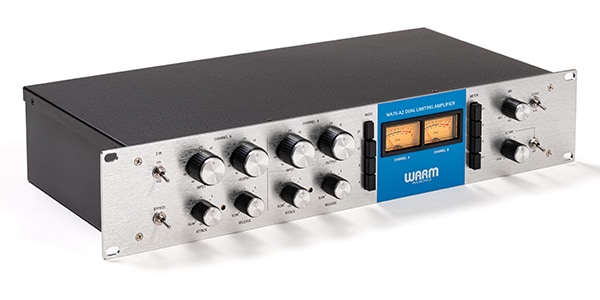
About the Compressor WA76-A2
Q. If you want to create a sound like this, should you choose the WA76-A2?
It is recommended when you want a sound that is even more forward and prominent than the Blackface version.
Q. What do you feel is the advantage of WARM AUDIO compressors compared to other brands?
The ability to use parallel compression is a major advantage, allowing for much broader application.
Q. WARM AUDIO compressors also come in a D type—why did you choose the A type this time?
The Silverface version produces a more striking, prominent sound, so I thought it would be suitable for a guitar cabinet.
Q. In this workshop, what was the purpose of using it?
It was used on a guitar cabinet, and the results were very close to what I had anticipated.
Q. With INPUT, OUTPUT, ATTACK, and RELEASE controls, what points do you pay attention to when setting them?
Since the attack time on this unit is inherently quite fast, I start with a relatively slower attack time while keeping that in mind.
Q. Is there a unique sound character or quirk that’s specific to the WA76-A2?
Simply passing a signal through it imparts the characteristic of a 1176 Silverface–style compressor.
Q. For vocals, what type of voice is it suitable for? For instruments, which instruments are recommended?
It is suitable for vocals or instruments where a flashy, prominent sound is desired, such as guitars and drums.
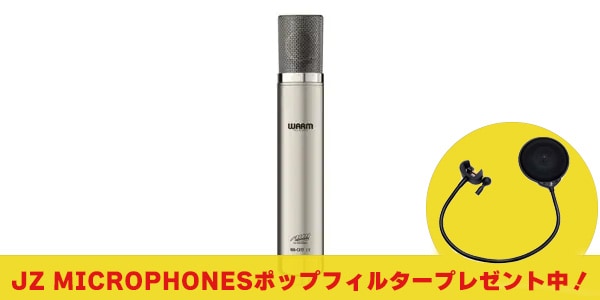
About the Microphones WA-CX12 and WA-CX24
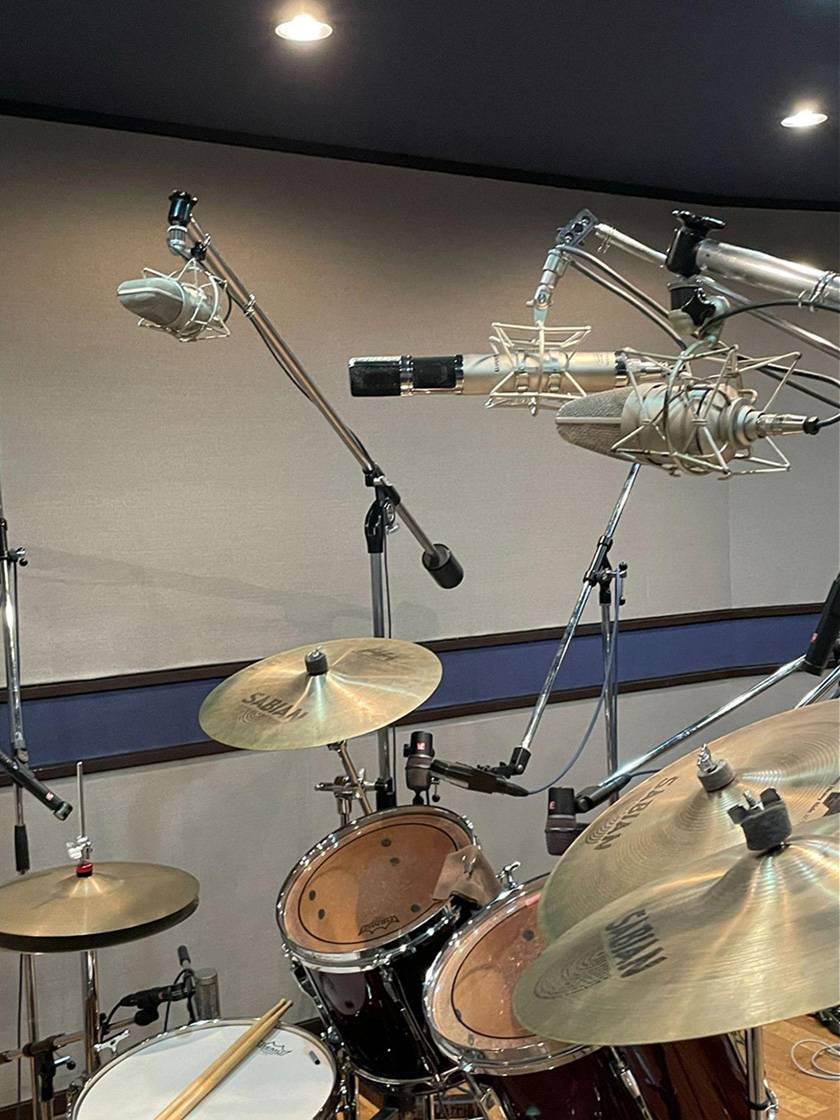
Q. What was your first impression of the recorded sound?
The CX12 had a very bright tone. Since the CX24 is a stereo model, it gave a similar impression.
Q. What characteristics did you notice in the balance and texture of high, mid, and low frequencies?
When used on female vocals, the mid-low richness felt somewhat lacking, but the mid-high frequencies stood out, producing a sound that doesn’t get buried in the mix.
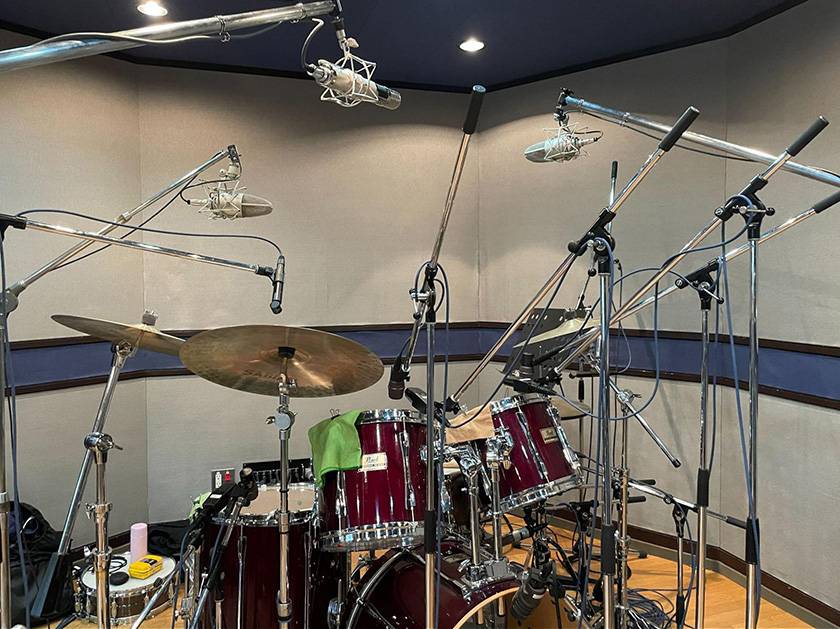
Q. How did you feel about the texture of vocals/instruments (warmth, clarity, presence, etc.)?
When used on acoustic guitar, it produced a very aggressive sound, so I cut 3–5 kHz quite a bit with EQ, which I wouldn’t normally do.
Q. Compared to other microphones, were there any points you felt were particularly excellent?
I think the standout feature is the forward, projecting quality of the sound.
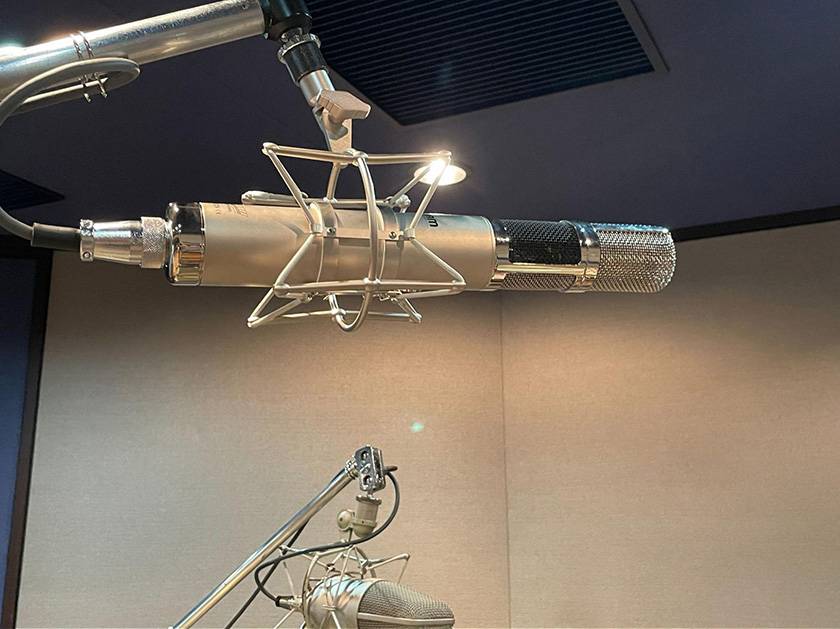
Q. How was the ease of use during mixing and adjustability with EQ?
While maintaining a forward, projecting sound, peaks in the mid-high range—which can often be harsh—were not particularly noticeable.
Q. Are there particular scenarios or instruments for which you especially recommend the WA-CX12 / WA-CX24?
Of course, it depends on the situation, but vocals are my first recommendation. They are effective when a clear, prominent tone is desired.
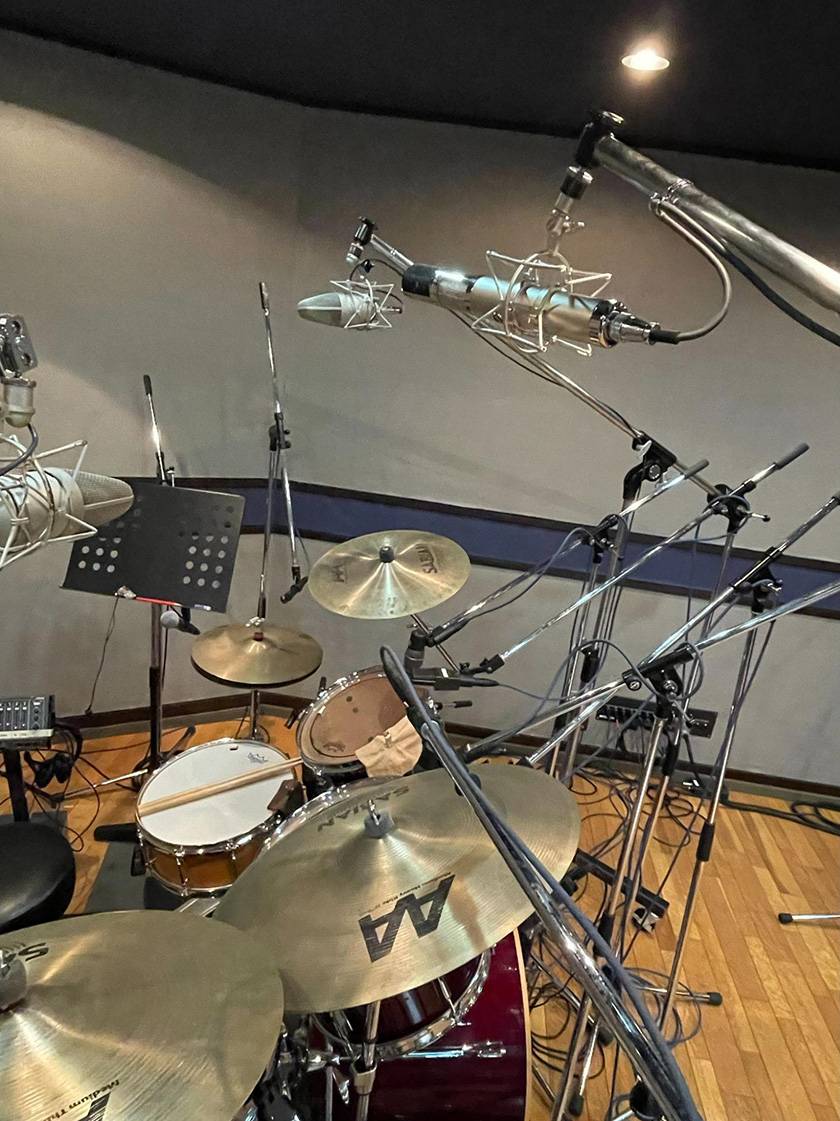
Q. How did the seminar participants react?
Although not commenting on individual pieces of equipment, participants evaluated all the sounds as excellent and unlike anything they had heard before.
Message for those considering WARM AUDIO products:
The foundation of recording is microphone technique.
To learn proper miking, purchasing a pair (2 units) is more effective. If you have the budget to buy one expensive, studio-standard microphone, it is better to start with two WARM AUDIO multi-pattern microphones and pair them with a stereo preamp (and a compressor if budget allows). This setup allows you to learn a wider range of recording techniques.
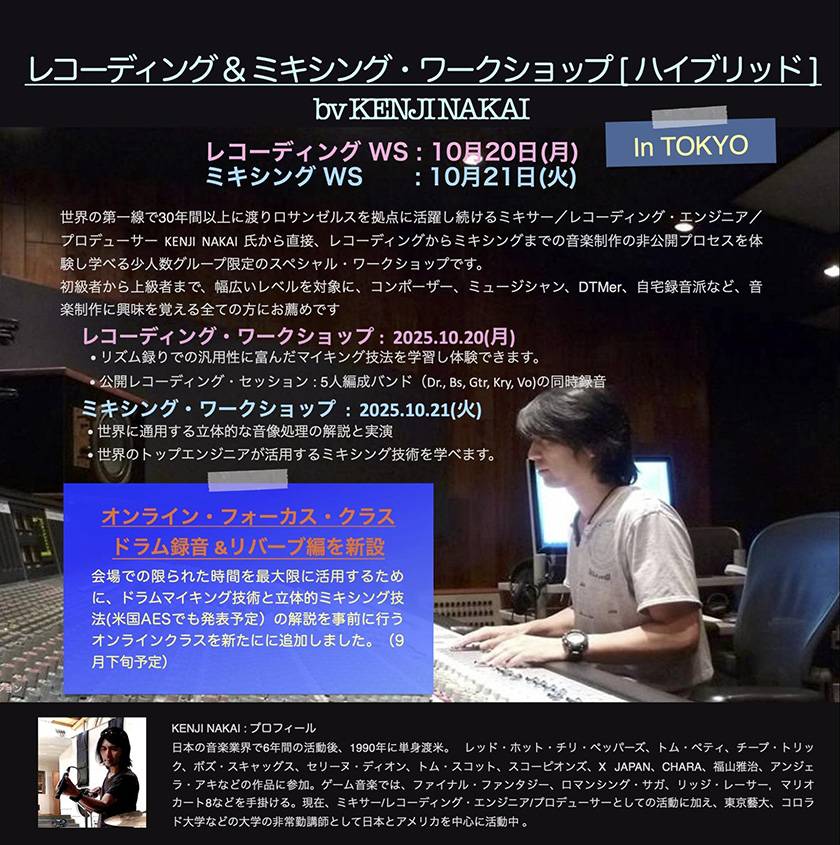
■ Event Details
The “sound & person” column is made up of contributions from you.
For details about contributing, click here.



![[Product Review] Warm Audio WA-19 by Haruki Ishida](/contents/uploads/thumbs/5/2025/9/20250909_5_32796_1.jpg)
![[Product Review] Warm Audio WA-8000, WA73-EQ, and WA-2A by aimi](/contents/uploads/thumbs/5/2025/7/20250725_5_32095_1.jpg)
![[Product Review] Warm Audio Mic & Processor by Kenji Nakai](/contents/uploads/thumbs/5/2025/1/20250108_5_30085_1.jpg)
![[Product Review] Warm Audio WA273-EQ by soki kimura](/contents/uploads/thumbs/5/2023/10/20231013_5_24212_1.jpg)
![[Product Review] Warm Audio WA-67 by Daisuke Ishimoto](/contents/uploads/thumbs/5/2023/10/20231004_5_24102_1.jpg)
![[Product Review] “I tried out products by Warm Audio!” by Hiro-a-key a.k.a. Nenashi](/contents/uploads/thumbs/5/2023/8/20230821_5_23673_1.jpg)
 WARM AUDIOとは
 コンデンサーマイクで「合唱」を収録!
 コンデンサーマイクとは
 マイクケーブルの作り方
 ワンランク上のボーカルマイク選び
 学校向け機材特設ページ
 Discount Sale
 Outlet
 New Arrivals
 Podcast (streaming)
 Headphones / Earphones
 Microphones
 Wireless Equipment
 Speakers
 Power Amps
 Mixers
 Processors
 Portable PA Systems
 Recorders
 Karaoke
 Guitars
 Basses
 Ukuleles
 Drums & Percussion
 Pianos / Synthesizers
 Wind Instruments
 Stringed Instruments
 Japanese Instruments
 Harmonicas, Other
 Software
 DJ & VJ
 Stands
 Cables & Connectors
 Racks & Cases
 Lighting
 Stage & Truss
 Video Equipment
 PC PERIPHERALS
 Power Supplies
 Studio Furniture
 Household Items, Other
 Alcoholic Beverages