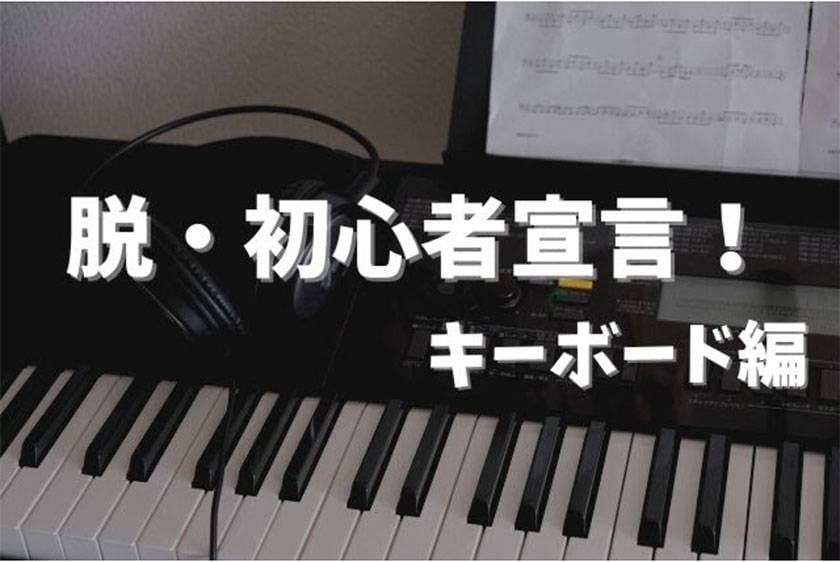
The keyboardist is the handy utility player within a band.
There must be many people who were invited to join a band simply because they used to take piano lessons, or they decided to give it a try on their own.
However, the reality is that even if you are skilled enough to win awards at piano competitions, when it comes to playing keyboards in a rock or pop band, it is a very common story to have no idea what to do.
Therefore, in this column, I will talk about how someone who has taken piano lessons can become a keyboardist (primarily in charge of the synthesizer) in a band.
■ Do Not Buy Equipment on the Same Standards as a Piano
When you finally decide to start a band, the first thing you will do is purchase the keyboard to use in the band.
You can't carry an acoustic piano around with you, and live venues or studios don't always have an acoustic piano available.
First, they tend to be lumped together as "keyboards," but even when called a keyboard, the piano, clavinet, and organ are all completely different instruments.
Choose your first instrument by thinking about what kind of sound you want to produce. If the piano is your main focus, choose one with 88 keys and a touch close to an acoustic piano.
Since it will be close to the instrument you have been playing up to now, you will feel less discomfort.
⇒ Sound House Digital Piano List
However, in most cases, bands require someone who can produce various sounds rather than just the piano.
In that case, what you need to purchase is a synthesizer.
Considering portability and other conveniences, something around 61 to 76 keys would be good.
People with piano experience tend to pick an 88-key model without thinking, but unless you own a large car, transportation is difficult, and there are not that many situations where you must fully utilize 88 keys.
For those starting out, the ROLAND JUNO-DS is recommended.
ROLAND / JUNO-DS61 [Genuine Case Included] 61-Key Keyboard Synthesizer
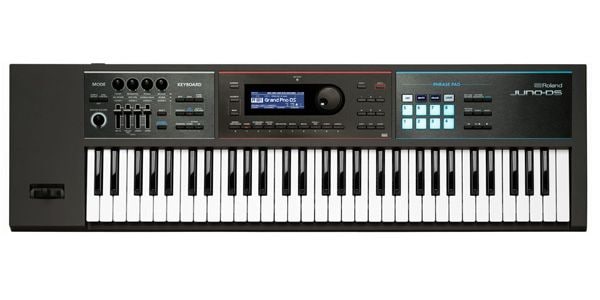
While it is an entry-level machine, it is an excellent piece of gear that can be used for a long time as a sub-machine even if you buy a second one.
Since it can produce various sounds such as piano, electric piano, strings, wind instruments, and organ, it can handle almost any band.
⇒ Sound House Synthesizer List
Note that even with digital piano types, there are some that can produce strings or organ sounds in addition to the piano, but be aware that this is not practical.
Since those are not sounds meant for a playing style on heavy keys like an acoustic piano, if you purchase a digital piano type, you should accept that the only sounds you can practically use are about the piano or electric piano sounds.
■ Read the Manual Inside Out
It is no exaggeration to say that a synthesizer's job within a band is sound design.
Of course, the performance itself is important, but if you can’t master various sounds, even if your playing ability is high, it will be a wasted talent.
Conversely, a synthesizer is also something where you can get by somehow even if your playing ability is low.
To achieve that, first read the manual thoroughly and learn how to master various sounds.
Synthesizers come packed with many pre-installed, cool preset sounds.
However, you cannot say you have mastered it just by loading that preset and playing.
Until you can create your own unique sound tailored to the song, you need to be prepared to fiddle around with the equipment constantly with the manual in hand.
■ Learn Chords
It is rare to be handed a five-lined staff sheet music in a band. That only really happens when you are in a cover band playing a song for which sheet music has been published. In most cases, you will only get a chord sheet, and when playing original songs, it is a common story to be handed a chord sheet made by a member that is full of mistakes.
Since guitarists and bassists can manage to play in a band as long as they know the chords even if they cannot read a five-lined staff, there are not many people who can read or write it properly.
Conversely, pianists who started with classical music almost never know chords. Even if they manage to memorize chords, a common beginner keyboardist experience is not knowing what to do next just by being told the chords.
Even so, let's start by memorizing chords. Since you are inherently strong with sheet music, studying hard for about a week will allow you to master chord theory at a higher level than most guitarists or bassists.
If you can do that, you will be able to point out mistakes on the chord sheets brought in by other members, or revise the chord progressions of original songs to make them even cooler.
■ Learn Rhythms that Will Fit With the Band
When someone who has studied solo piano in classical music joins a band, they tend to be told that they have a bad sense of rhythm. In reality, it’s not a bad sense of rhythm but a difference in playing style, but at first, you will struggle getting into the groove together with the other members.
People who have done solo piano have also tended to practice using a metronome, but when actually performing in front of people, it is free tempo. They have a habit of intentionally changing the tempo to match the modulation of the song. This is not a bad thing for solo piano; rather, it is something everyone does as a matter of course.
However, doing that within a band is rare. The tempo does not change as frequently as in solo piano, and when intentionally shifting it, it is necessary for all members to sync up perfectly.
Many keyboardists have likely been told to listen carefully to everyone else's sound because they just can't seem to break the habit of playing at their own pace.
Even when they’re told to listen carefully, they aren't fully aware that they are out of sync, making this a wall that almost every person with piano experience inevitably hits.
Since getting used to it is part of the process, you just need to take your time to adapt to playing in a band.
As a piece of advice, try playing while keeping your eyes on the drums during studio practice.
The drums are responsible for the rhythm of the entire band, and they are a highly visual and easy-to-understand instrument.
First, learning to play while feeling a sense of unity with the drums will lead everyone into a groove across the entire band.
■ Summary
For some reason, there are extremely few introductory books regarding the keyboard (especially the synthesizer).
There are a few specialized magazines, but currently, most of them are published infrequently, and there only are few articles for beginners to read.
Perhaps partly due to this background, many pianists who became keyboardists in a band end up quitting the band without ever figuring out what they should do.
However, the piano experience cultivated before starting a band contains plenty of positive elements that are useful for playing in a band. I hope this column serves as a helpful reference so that you can make the most of that experience, even if just a little.
The “sound & person” column is made up of contributions from you.
For details about contributing, click here.









 Roland 電子ピアノデジタルピアノ購入ガイド
 キーボードスタンドの選び方
 キーボードスタートガイド
 最新コラム&動画をCheck!! OTOYA通信
 キーボード・ピアノ講座
 サウンドハウス虎の巻 !
 Discount Sale
 Outlet
 New Arrivals
 Podcast (streaming)
 Headphones / Earphones
 Microphones
 Wireless Equipment
 Speakers
 Power Amps
 Mixers
 Processors
 Portable PA Systems
 Recorders
 Karaoke
 Guitars
 Basses
 Ukuleles
 Drums & Percussion
 Pianos / Synthesizers
 Wind Instruments
 Stringed Instruments
 Japanese Instruments
 Harmonicas, Other
 Software
 DJ & VJ
 Stands
 Cables & Connectors
 Racks & Cases
 Lighting
 Stage & Truss
 Video Equipment
 PC PERIPHERALS
 Power Supplies
 Studio Furniture
 Household Items, Other
 Alcoholic Beverages