The Antithesis to Traditional Music by Key Figures in the Domestic Music Scene
This is the final domestic edition of the permanently preserved live recordings. I was unsure which live album to choose for this last one. In the end, I decided on a YMO live performance. The reason for that was it was the most epoch-making at the time as music originating from Japan, with a fresh approach and intent toward engaging with music. Moreover, I considered the fact that such unique music could be reproduced live as a band.
Music is an act carried out actively by humans, yet there were people who thought of the outrageous idea of entrusting a central part of it to machines. One such person was Haruomi Hosono, a bassist and musician. Hosono explored new music by entrusting part of human performance to machines, allowing humans to align with the machines.
In an interview at the time, Ryuichi Sakamoto said something along the lines of, “Machines can play fast passages that humans cannot,” and that these parts could be entrusted to machines. On the other hand, that alone seemed superficial to me and it didn’t carry much sense of purpose. It’s possible the media chose to highlight just that part because it was easy to understand.
At the time, I thought that simply having machines play phrases humans couldn’t perform, or entrusting rhythm to a drum machine that never falters, was meaningless. As a result, I dismissed YMO as boring music. I believed there was no point in listening to music performed by machines. Therefore, I didn’t like music led by machines and, frankly, I disliked it on principle. That attitude persisted for quite a long time.
At the same time, I also felt that, as music, it was “unexpectedly cool.” At my university, YMO’s Firecracker was used as the theme song for the school festival, and I developed a certain fondness for the plastic-sounding quality of the music.
However, the actual concept of YMO existed in a different place than what I had thought. Haruomi Hosono’s idea was that machines would handle only a part of the music performed by humans, and that humans would coexist with machines, creating new music through a system where humans align themselves with machines. In that sense, the subject was not the machine, but the human. I learned about this idea much later and came to realize the brilliance of the musician Haruomi Hosono.
Now, onto a YMO live performance. Even though we call it “machine music”, humans are involved in every sound. The members were Ryuichi Sakamoto on keyboards, Haruomi Hosono on bass, and Yukihiro Takahashi on drums. At the time YMO was formed, Sakamoto was a student at the University of the Arts and was interested in synthesizers. In actual session work, he used instruments like the ARP Odyssey and the KORG PS-3100, a polyphonic synthesizer.
Hosono used a Fender Precision Bass and other instruments, but in the early stages of YMO, he also used the ARP Odyssey (2-note duo-phonic). Perhaps this was partly for show to have the bass played on a synthesizer. Later, Hosono switched from the ARP Odyssey to a real bass.
As for drummer Yukihiro Takahashi, initially it seems that a skilled drummer from Tin Pan Alley was supposed to take the role, but that didn’t happen, and Takahashi ended up taking it. In the end, this turned out to be a perfect choice. For a drummer playing mechanically along with a rhythm click, no one else could have done it better than Takahashi. His drumming was metronome-like yet rare in its ability to create groove on top of it.
In addition to the three of them, a fourth member, Hideki Matsutake, the synthesizer manipulator, joined YMO. While listening to the clicks and melodies Matsutake had programmed into the computer, the three of them played along with the click.
The music created by these three (and Matsutake) on synthesizers was so innovative that it gained many listeners not only in Japan but also overseas. At first, people said that YMO’s music couldn’t be reproduced live. However, YMO had the ability to recreate that music not just in the studio recordings, but also in live performances. This time, the theme is this live album, born from the coexistence of humans and machines.
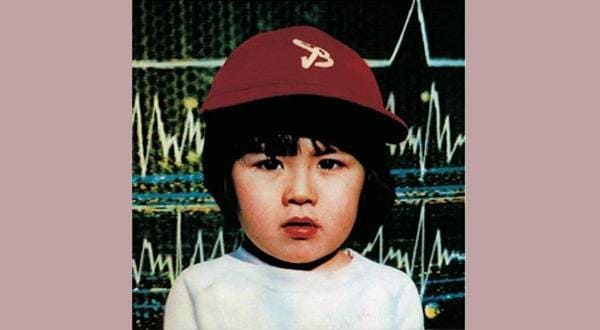
■ Recommended Album: YELLOW MAGIC ORCHESTRA PUBLIC PRESSURE (1980)
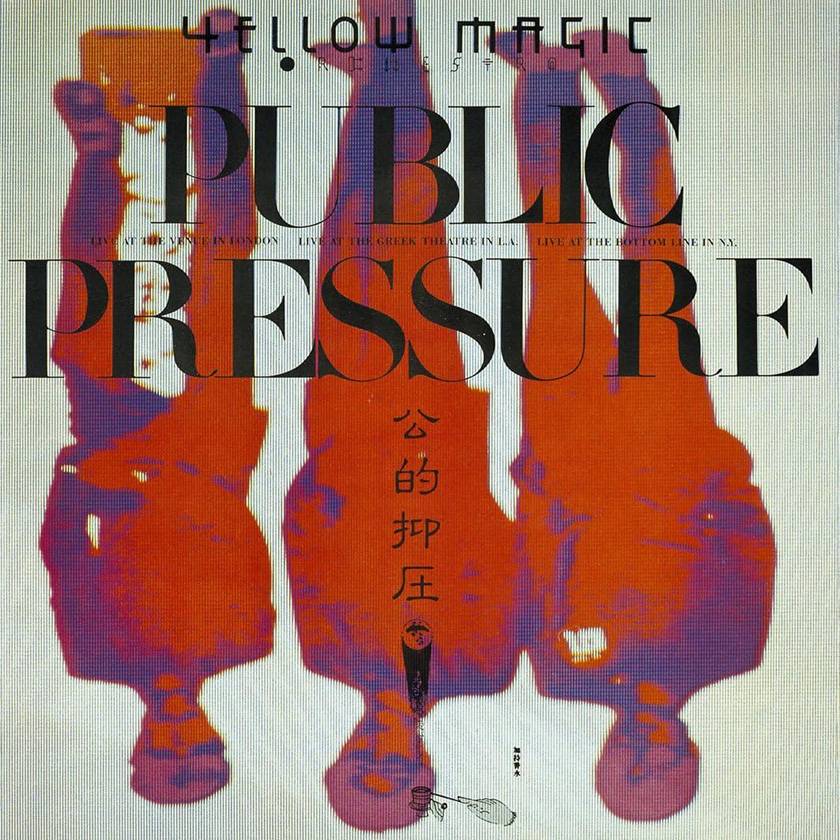
Live recordings from the 1979 world tour at The Venue in London, Greek Theatre in London, the Bottom Line in New York, and Tokyo’s Nakano Sunplaza. The dazzling YMO world unfolds. One of the features of this live album is that you can enjoy a more human groove than in the studio recordings. Within a somewhat plastic and uniform ensemble, the groove of the band exists. The presence of support members Akiko Yano and Kazumi Watanabe may also play a significant role in this.
However, due to rights issues, all of Kazumi Watanabe’s guitar parts were cut, and solo sections are played by Ryuichi Sakamoto on the ARP Odyssey instead.
Akiko Yano serves as a support keyboardist. What she mainly plays is backing. In terms of synthesizer roles, Sakamoto plays the melody lines, while Yano provides chordal backing for those melodies. Since YMO is a synthesizer band, Yano’s role is to add harmonies using the Oberheim 8-voice synthesizer. Her backing on the synth is highly rhythmic and gives the band a certain sense of groove.
Even though they are performing music based on clicks, the human feel and groove emerge during the performance, which I find extremely interesting. In that sense, the music Hosono aimed for may be reflected precisely in this aspect.
Recommended Track: “Rydeen”
A signature YMO track composed by Yukihiro Takahashi. The song opens with Sakamoto’s vocoder voice on the Roland VP-330 declaring, “We are Yellow Magic Orchestra.” At the time, Sakamoto’s setup had a Polymoog synthesizer in front. The Polymoog has its control section slightly above the keyboard, with space on top to place other synthesizers. In that space, two ARP Odysseys from different years were placed. On the left-hand side was a Prophet-5, a 5-voice polyphonic synth, with the Roland VP-330 vocoder on top.
In Rydeen, the A-melody section is played with string-like sounds, while the newer version in the B-melody section is played on the right-side ARP Odyssey (black panel) using a sawtooth wave. It produces that rich, characteristic Odyssey tone. In the second chorus, the B-melody section on the left uses an early-model Odyssey (white panel), the same one used in Tatsuro Yamashita’s Pit Inn live. A square wave was selected, producing a flute-like sound. At that time, monophonic synthesizers like the Odyssey or MiniMoog didn’t have patch memory functions, making it impossible to change sounds during performance. That’s likely why two Odysseys with different tones were set up side by side, allowing them to switch as needed.
Recommended Track: “Tong Poo”
A signature YMO track composed by Ryuichi Sakamoto. The intro and A-melody are played with the Polymoog’s rich, layered string sounds. In the second A-melody section, the pitch of the string sound is bent. This bending play is something unique to live performance. The Polymoog has a ribbon controller, a metal strip about 1.5 cm vertically and 15 cm horizontally, located in the center of the keyboard. By touching the ribbon with a finger and sliding it left or right, Sakamoto could raise or lower the pitch. He used this ribbon very skillfully. Operating a ribbon controller like this is difficult for a machine, and it’s precisely in these moments that you can glimpse the human touch (?? haha). Being able to hear these fragments where humans confront the machines is one of the greatest pleasures of this live performance.
Musicians, Album, and Recommended Tracks Featured This Time
- Artists: Haruomi Hosono, Ryuichi Sakamoto, Yukihiro Takahashi, Hideki Matsutake, Akiko Yano, Kazumi Watanabe, and others
- Album: PUBLIC PRESSURE
- Recommended Tracks: “Rydeen”, “Tong Poo”
The “sound & person” column is made up of contributions from you.
For details about contributing, click here.

![[2026 Latest Edition] Choosing a Synthesizer/Popular Synthesizers Ranking](/contents/uploads/thumbs/2/2022/9/20220916_2_19446_1.jpg)
![[2026 Latest Edition!] Popular Modular Synthesizer/Semi-Modular Synthesizer Ranking [Recommendations]](/contents/uploads/thumbs/2/2021/12/20211202_2_15495_1.jpg)
 シンセサイザー 入門ガイド
 PLAYTECH キーボードセレクター
 PLAYTECH 鍵盤特集
 ブランド別!おすすめの人気ワイヤレスイヤホン
 キーボードスタートガイド
 Discount Sale
 Outlet
 New Arrivals
 Podcast (streaming)
 Headphones / Earphones
 Microphones
 Wireless Equipment
 Speakers
 Power Amps
 Mixers
 Processors
 Portable PA Systems
 Recorders
 Karaoke
 Guitars
 Basses
 Ukuleles
 Drums & Percussion
 Pianos / Synthesizers
 Wind Instruments
 Stringed Instruments
 Japanese Instruments
 Harmonicas, Other
 Software
 DJ & VJ
 Stands
 Cables & Connectors
 Racks & Cases
 Lighting
 Stage & Truss
 Video Equipment
 PC PERIPHERALS
 Power Supplies
 Studio Furniture
 Household Items, Other
 Alcoholic Beverages