Hello!
I’m Fujioka Takuto, a chiropractor who specializes in guitarists.
Let’s get started!
When I play guitar, whether pressing chords or playing leads, I often think about what I’m consciously focusing on with my left hand. Most of the time, I focus on fingerings. But what is it about the thumb that supports everything from behind?
Today, I want to focus on the often-overlooked left-hand thumb. It actually has a very important role. I like to call it not just the “unsung hero” but the “powerhouse behind the neck”. I want to consider the thumb’s role when handling the neck with different grips along with fingering techniques!
So, let’s get started!
■ Characteristics of the Thumb
First, I want to look at the characteristics of the thumb from anatomical and kinesiological perspectives.
From the surface, the thumb might not look very complex, but it’s made up of three joints. The one I want to focus on today is the joint at the base—the carpometacarpal joint of the thumb. That’s the part in the red circle.
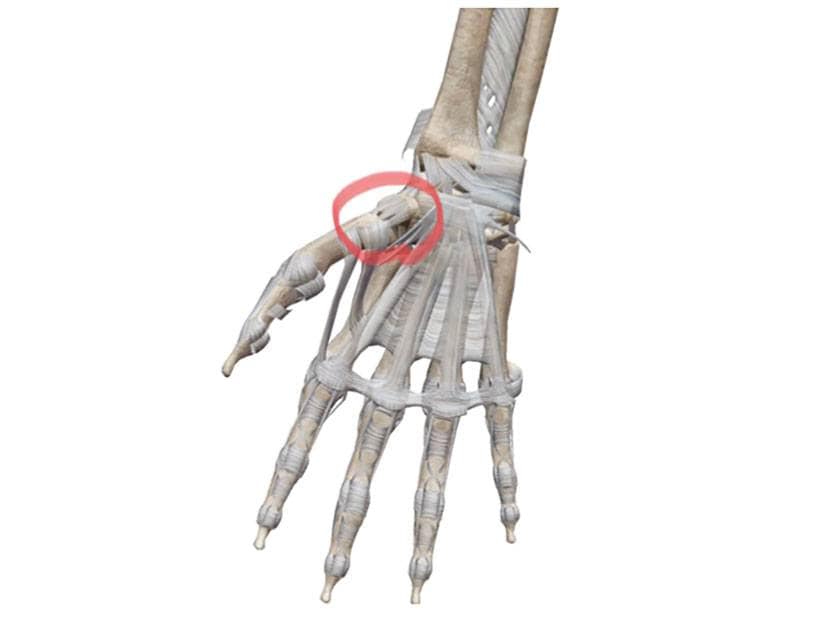
This joint is a type called a saddle joint. One of the bones has a protruding surface shaped like a saddle—the kind you’d use to ride a horse—and the other bone fits right into it. A key feature of this joint is that it’s biaxial, which means that by combining movements along its axes, circular motions become possible. Thanks to this, my thumb can move in all sorts of directions with a twisting, rolling motion.
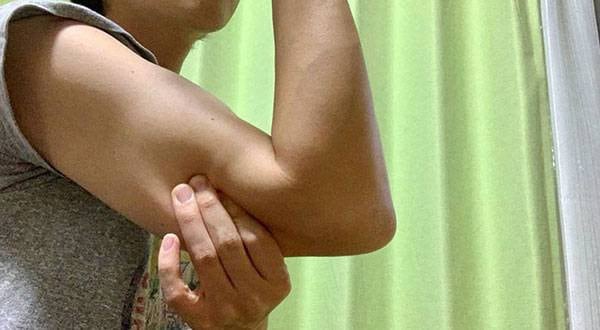
In addition, many muscles attach to the base of the thumb to allow this wide range of motion. When I look at the base of my thumb, it appears slightly swollen—that’s called the thenar eminence, and it houses a lot of small muscles. (As a side note, each of these muscles is small, so they can tire out easily. Even if there’s no pain or obvious fatigue, I recommend massaging this area regularly to keep the hand muscles soft and in good condition.)
Next, I want to explore how these thumb movements influence guitar playing and fingerings!
■ Grip Differences Depending on Thumb Position
I notice that my grip can generally be divided into two main types when I hold a guitar neck depending on the position of my thumb.
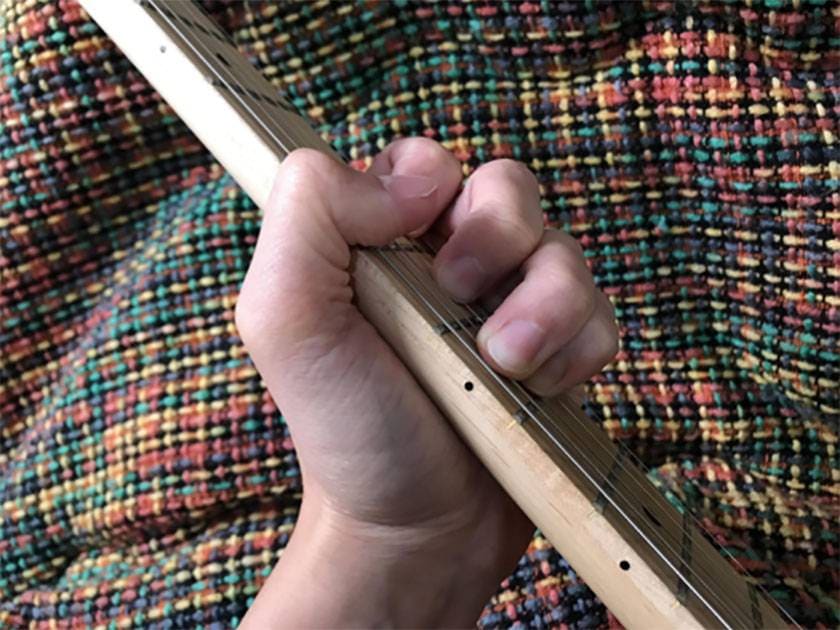
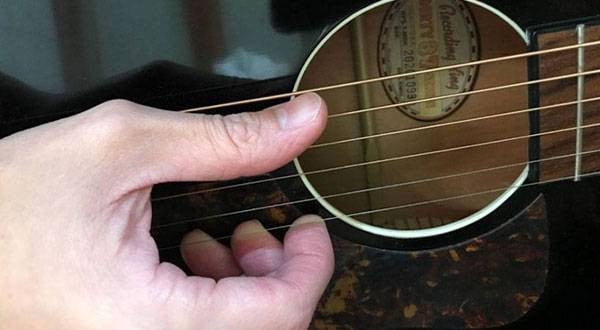
One method is to place the thumb over toward the 6th string and grip the neck firmly, which is sometimes called the Western grip.
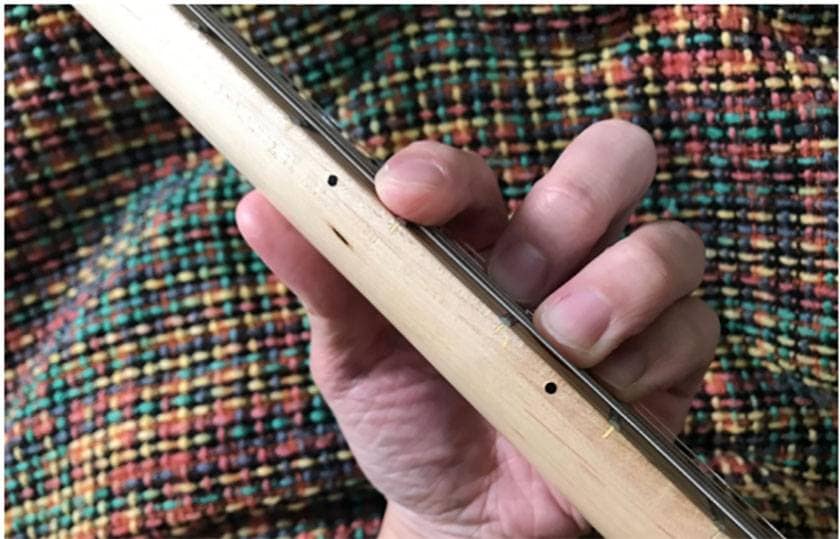
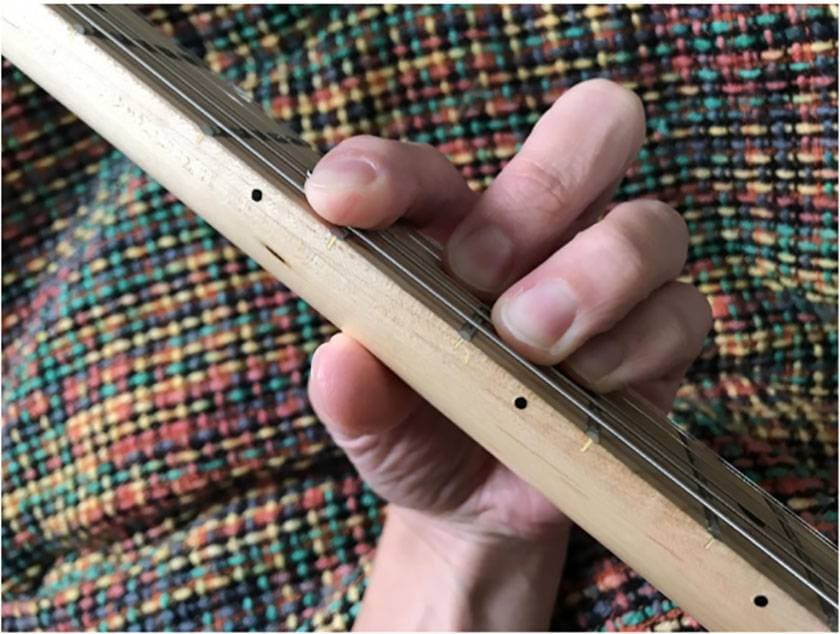
The other more common method I’ll call the normal grip for simplicity. Even within this normal grip, the position of the thumb can change how I hold the neck. One variation is to keep the thumb spread out sideways, and the other is to keep the thumb upright.
Depending on the song or playing style, I may use different grips, but I want to consider how the thumb works in each case.
Let’s start with the Western grip.
In this case, because I’m gripping the neck firmly, the movement of the carpometacarpal joint of the thumb I mentioned earlier is restricted and stabilized. My whole palm supports and grips the neck, which creates a very solid, fixed fingering position, but frequent lateral movements become difficult.
For this grip, the thumb’s main role is to press or mute the 6th string.
Now, let’s look at how the thumb works when I use the normal grip with the thumb spread sideways.
In this case, the carpometacarpal joint of the thumb is in abduction, meaning it’s opened outward. The grip is relatively loose in this position, so lateral movements are easier to perform. However, because it lacks stability, my fingering can feel less secure, which is a drawback.
Finally, let’s examine the thumb when I use the normal grip with the thumb upright.
Here, the carpometacarpal joint is in opposition, with the thumb turned inward. In this position, the thumb becomes very stable while still maintaining a high degree of freedom. This is because the thenar eminence can work effectively in this direction. Also, due to the structure of the hand, my fingers naturally gather toward the center of the palm. By placing the thumb here, it positively affects my other fingers, making fingering feel more natural and easier.
So, how about you?
When I play guitar, I try to notice where my thumb is positioned. If you’ve never thought about it consciously, this might be a good chance to pay attention to your thumb position along with your fingerings.
See you next time!
The “sound & person” column is made up of contributions from you.
For details about contributing, click here.

 お化けを倒してサウンドGET!
 バンドあるある相談
 ○○やってみた!
 ギターの選び方
 最新コラム&動画をCheck!! OTOYA通信
 サウンドハウス虎の巻 !
 Discount Sale
 Outlet
 New Arrivals
 Podcast (streaming)
 Headphones / Earphones
 Microphones
 Wireless Equipment
 Speakers
 Power Amps
 Mixers
 Processors
 Portable PA Systems
 Recorders
 Karaoke
 Guitars
 Basses
 Ukuleles
 Drums & Percussion
 Pianos / Synthesizers
 Wind Instruments
 Stringed Instruments
 Japanese Instruments
 Harmonicas, Other
 Software
 DJ & VJ
 Stands
 Cables & Connectors
 Racks & Cases
 Lighting
 Stage & Truss
 Video Equipment
 PC PERIPHERALS
 Power Supplies
 Studio Furniture
 Household Items, Other
 Alcoholic Beverages