When people think of a wind ensemble, many probably think of saxophones or trumpets, but the trombone is actually a very cool instrument that can take center stage.
Everyone has probably seen a trombone at least once, but there are many who don’t really know what kind of instrument it is.
The trombone is a brass instrument used not only in wind ensembles but also in classical music, jazz, pop, and many other genres.
This time, I will introduce the charm of the trombone.
If you are thinking of joining a wind ensemble or starting a brass instrument, this article might be helpful for you.
■ What is a Trombone?
First, let’s look at the characteristics of the trombone.You can hear its sound on platforms like YouTube, but since the trombone can produce a wide variety of tones, just watching one video might not fully convey its appeal.
○ Basic Features
It is an instrument that produces various tones by moving a U-shaped slide back and forth.While other brass instruments use pistons or valves, the trombone is unique in having a slide. (There is also a slide trumpet, but it looks like a trombone.)
The slide length is about 120 cm and can extend to approximately 150 cm.
Because of this, trombone players are often positioned at the front during marching to avoid hitting others with the slide, making them stand out.
The total length of the tubing from the mouthpiece (where you place your lips) to the bell (the flared end) is an astonishing 270 cm—very long indeed.
○ What kind of sound does it produce?
It mainly handles the mid-to-low range.Sometimes it plays the melody along with the trumpet, sometimes it provides harmony with the horn or euphonium, and other times it keeps rhythm alongside the tuba—it’s truly a versatile instrument.
The trombone’s range is divided into bass, tenor-bass, tenor, alto, and soprano, with the tenor being the most commonly used.
It is said to have originated as a religious instrument for church performances, and its range is close to that of an adult male voice.
The harmony created by multiple trombones is very beautiful, earning it the nickname “the instrument of God.”
As a brass instrument, it can also produce high tones (high notes) and pedal tones (fundamental low notes).
High tones reach the trumpet’s mid-range, while pedal tones can go two octaves below the standard B♭ tuning and even lower.
○ How to Produce Sound
The trombone adjusts pitch by moving the slide back and forth.One thing that often surprises beginners is that the slide has no markings.
Just like a fretless bass, the player moves the slide by feel.
There are seven positions on the slide, and the further the slide is extended forward, the lower the pitch becomes.
Because the pitch changes continuously as the slide moves, it’s easier to play quarter tones (smaller than a half step, sharper or flatter than the usual # or ♭).
There are also trombones with valves, where pressing a lever with the left thumb allows a C note (normally played in the 6th position) to be produced in just one position.
The trombone’s charm, which is also what makes it difficult, is that the pitch is not fixed.
Since brass instruments are made of metal, the pitch rises when the air or room temperature is high.
In such cases, it is necessary to slightly adjust the slide position, and constantly matching the pitch is key to producing a good sound.
In other words, changing the slide position can reduce the amount of adjustment needed with the mouth.
Another challenging point is that, unlike other instruments, you cannot control pitch simply by fingering. (The 5th position is particularly tricky.)
■ Famous Trombone Pieces
When you try listening to trombone pieces, you might think, “I want to play a piece like this!”Here are three pieces where the trombone really shines.
○ Trombonanza – Frank D. Coffield
The first piece is this one. It was a favorite of the late talent Kei Tani.
The piece makes heavy use of glissandos, with a bright, Latin-inspired, and humorous sound and harmony that is irresistible.
When people think of trombone music, this piece often comes to mind.
○ 76 Trombones – Meredith Willson
The piece starts with a trombone melody right from the beginning.
This piece is quite famous as a marching song. While other instruments have their parts, trombone countermelodies are woven throughout, and if you listen carefully, you can hear that distinctive trombone tone.
The melody from “Stars and Stripes Forever,” by the great American composer Sousa, who also created the saxophone and euphonium, appears in the piece as well.
○ Hitomi - Main Theme – Kōsuke Yamashita
This is the main theme from the NHK morning drama Hitomi, which aired in the first half of 2008.
The piece is performed by Eiichiro Nakagawa, one of Japan's internationally acclaimed trombonists.
It’s a refreshing tune that suits a sunny morning, and its gentle sound will soothe your heart.
Since the trombone is the main instrument in this piece, it’s perfect for practicing solo play.
■ Is the Trombone Difficult?
It takes time to get used to playing the trombone, but since the mouthpiece tends to fit the size of the mouth more easily, producing the first sound is surprisingly simple.For wind instruments, before you can play melodies, you start with learning how to produce sound.
In comparison to smaller mouthpieces like those on trumpets or horns, or larger ones like those on tubas, the trombone’s mouthpiece makes it easier to produce sound, allowing you to experience the thrill of playing more quickly.
Unlike woodwind instruments, there is no need for a wooden reed.
As long as you know how to buzz your lips, you can start practicing right away.
Also, the trombone requires a large lung capacity, but you’ll get used to it over time.
By maintaining proper posture and practicing long tones (sustaining a note at a consistent volume), you will start to see progress.
■ How to Start Playing the Trombone?
Now that you’ve decided you want to play, you might be wondering where to actually practice.If you're a student, you may have opportunities to get involved through a school brass band or club.
For adults or those whose school doesn't have a brass band, try reaching out to local brass bands or music organizations in your area.
Once you’ve found a place to perform, the next step is to get your instrument.
Trombones aren’t cheap, but there’s a good option for beginners: a plastic tenor bass trombone PTSL-110BK from PLAYTECH, which is priced around 15,000 yen.
PLAYTECH / PTSL-110BK Tenor Bass Trombone (Black)
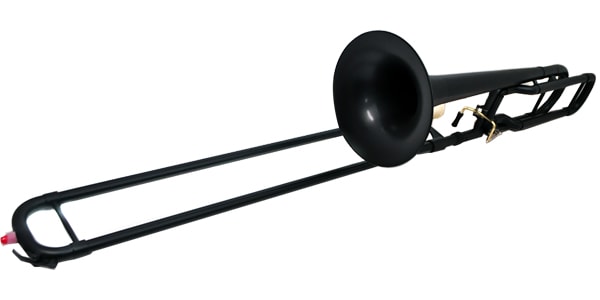
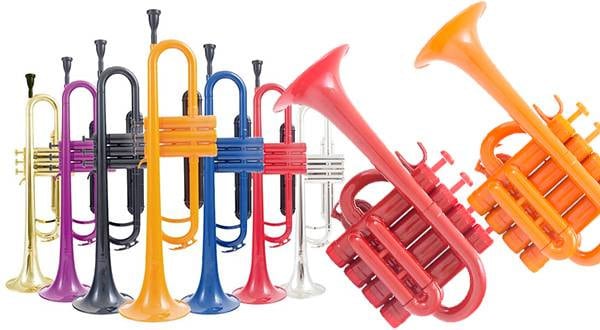
This model comes in several colors, not just black, making it really stand out.
Compared to metal ones, this plastic model is lighter and more affordable, while still offering a touch close to that of a metal trombone, making it a popular choice for outdoor performances.
When practicing indoors, a "mute" is essential.
A mute is an accessory that fits into the bell of the trombone, allowing you to control the volume and tone of the sound.
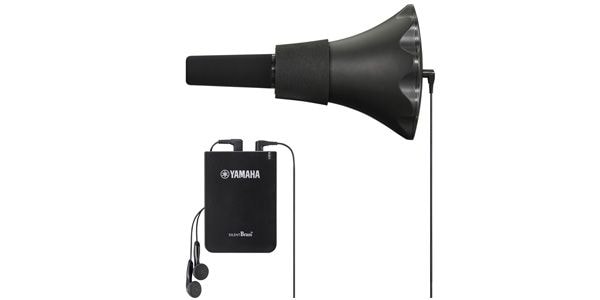
I highly recommend the YAMAHA / SB5X Silent Brass Trombone, as it allows you to listen to the sound through earphones.
With this, you can practice freely indoors without disturbing anyone.
YAMAHA / SB5X Silent Brass Trombone
Note: Prices as of October 2021.
The “sound & person” column is made up of contributions from you.
For details about contributing, click here.
 サウンドハウス社員が選ぶ 『おもしろ商品』はコレだ!
 プラスチック管楽器特集
 デジタル管楽器とは
 PLAYTECH 管楽器特集
 サウンドハウス虎の巻 管楽器入門ガイド
 最新コラム&動画をCheck!! OTOYA通信
 Discount Sale
 Outlet
 New Arrivals
 Podcast (streaming)
 Headphones / Earphones
 Microphones
 Wireless Equipment
 Speakers
 Power Amps
 Mixers
 Processors
 Portable PA Systems
 Recorders
 Karaoke
 Guitars
 Basses
 Ukuleles
 Drums & Percussion
 Pianos / Synthesizers
 Wind Instruments
 Stringed Instruments
 Japanese Instruments
 Harmonicas, Other
 Software
 DJ & VJ
 Stands
 Cables & Connectors
 Racks & Cases
 Lighting
 Stage & Truss
 Video Equipment
 PC PERIPHERALS
 Power Supplies
 Studio Furniture
 Household Items, Other
 Alcoholic Beverages