“The Chicken” in Its Many Forms…
Last time, we featured the tune “The Chicken,” which is widely known among jazz fans, rock fans, and people who play in bands. “The Chicken” originated with the James Brown Band, then had its possibilities expanded by Jaco Pastorius, and has come to be recognized as a piece played not only by professionals but also by amateurs. There are many factors that influence musical taste, but simply being “cool” is an eternal rule, and “The Chicken” fits that perfectly. “The Chicken” is a syncopated funk blues based on a simple B♭ blues progression.
The Structure of “The Chicken”
“The Chicken” begins with a four-bar bass solo phrase, after which it follows this simple chord progression:
| Bb7 | Bb7 | Bb7 | Bb7 |
| Eb7 | Eb7 | D7 | G7 |
| C7 | C7 | C7 | final hit B♭7|
| Bb7 Eb7 | Bb7 Eb7 | Bb7 Eb7 | Bb7 Eb7 |
Within this framework, multiple powerful riffs and phrases are combined to form the piece. Each individual riff and phrase is perfect. First is the bass phrase created by Jaco Pastorius. Second is the opening brass-like melody part, followed by a third striking melody part that connects to it, and fourth is the C7 section plus the final hit riff. It is a rare piece in which musical “coolness” is condensed into such a simple structure. It also contains elements of a pop song in that it is easy to remember and easy to sing.
The Difficulty of “The Chicken”
“The Chicken” is a piece our band also performs. With its simple chords and relatively short structure, it may sound easy. However, this piece is surprisingly challenging. It can be difficult to lock into the rhythm properly, and creating melodies during improvisation is not easy. I always struggle with how to approach the D7 and G7 sections. In my case, for the B♭7 and E♭7 sections, I play using either the Lydian 7th or Mixolydian scale. For the D7 and G7 sections, I use the altered scale, but even then, it’s hard to perfectly fit the approach musically.
On the Jaco Pastorius live album I introduced last time, Bob Mintzer takes a solo, but what scales he is actually using remains a complete mystery (laughs). From the phrasing, it doesn’t seem like he is consciously thinking about the melody. I would love to hear what approach he is taking. If anyone has proper advice, I would be grateful.
This time, I would like to feature various versions of “The Chicken” performed by different artists and bands, each with their own unique approach.
■ Recommended Album: Yoichi Murata Solid Brass & Big Band Featuring Randy Brecker Tribute To The Brecker Brothers (2008)
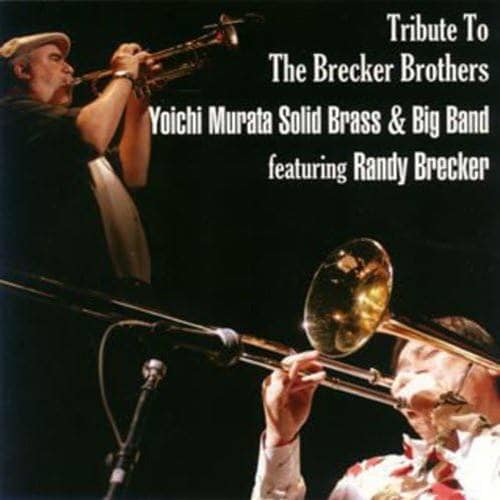
A masterpiece live album from 2008 by Yoichi Murata Solid Brass, led by Yoichi Murata, one of Japan’s leading arrangers and composers, paying tribute to saxophonist Michael Brecker, who passed away in January 2007. The album features a guest appearance by Michael Brecker’s brother, trumpet player Randy Brecker. Randy Brecker uses a synthesizer device on his trumpet, producing sounds different from a normal trumpet. This approach to music likely laid the foundation for the innovative Brecker Brothers sound and may be a reason why he continues to be a first-call musician today. Yoichi Murata (tb), leading the Solid Brass, delivers performances equally full of passion and energy. The repertoire includes fan-favorite tracks such as Jaco Pastorius’s “The Chicken,” “Donna Lee,” “Three Views of a Secret,” as well as Brecker Brothers classics like “Some Skunk Funk” and “Sponge.”
Recommended Track: “The Chicken”
“The Chicken” begins with Jaco Pastorius’s bass line, but in Yoichi Murata Solid Brass, led by Yoichi Murata, there is no bass player on either upright or electric bass. Interestingly, the bass line is played by a tuba. Unlike the refined performance of “The Chicken” I recently saw with the Yoichi Murata Big Band, this performance from 17 years ago is full of youthful energy.
Here, Randy Brecker’s trumpet improvises with a tone that sits somewhere between a trumpet and a steel pan. As the performance progresses, the sound shifts closer to a traditional trumpet tone. I once read an interview with Randy Brecker in which he was asked, “What are you thinking about when you play?” and he replied, “When I play, I’m thinking about nothing except the technical side.” I am not a horn player, but this made me oddly understand the nature of the trumpet. Also, during Yoichi Murata’s trombone solo, the final hit note of the second iteration and the first note of the following solo were both the same B♭. I have interviewed Murata several times and remember him saying, “You can tell a player’s sense from the very first note of their improvisation.”
■ Recommended Album: Dave Weckl Band LIVE & Very Plugged In (2003)
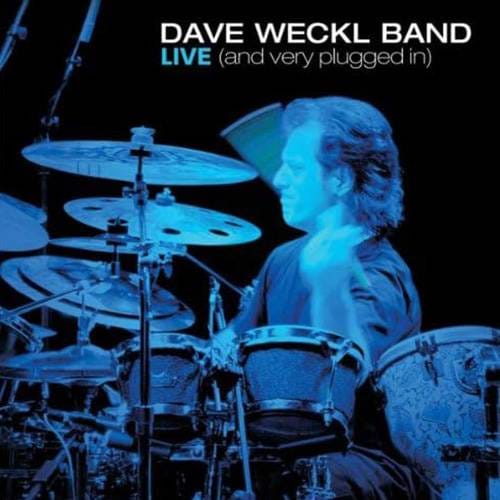
A masterpiece live album from 2003 by the Dave Weckl Band. The lineup consists of drummer Dave Weckl, keyboardist Steve Weingart, saxophonist Gary Meek, and bassist Tom Kennedy. Dave Weckl is known as an early member and virtuoso of the Chick Corea Elektric Band. Listening to the album, it becomes clear that all the other members are also extraordinary technicians. In particular, bassist Tom Kennedy’s fast playing is incredibly rapid. While Dave Weckl’s drumming is impressive as always, the presence of Tom Kennedy’s bass is overwhelming. He plays an astonishing number of notes, yet within these high-speed phrases, a unique groove is alive and vibrant.
Recommended Track: “The Chicken”
The James Brown Band’s “The Chicken” starts with a drum fill in. Whether it’s paying homage or not, the intro here is a powerful drum solo by Dave Weckl. This leads into a jaw-dropping bass line that twists and elevates Jaco’s solo even further. While Jaco’s live recordings are memorable for the groove he shares with Peter Erskine, the Dave Weckl Band’s version of “The Chicken” opens up an entirely different world. Of course, the groove between drums and bass is incredible, but keyboardist Steve Weingart is also phenomenal. Even small fill-ins he places in the gaps are striking. Most musicians performing synthesizer solos tend to use analog synths because their sound is fuller and more present compared to digital synths. However, in the Dave Weckl Band live footage, it appears Steve Weingart is using a YAMAHA MOTIF. He produces a sound even thicker than what George Duke achieved with the Synclavier. While it’s possible he is slaving analog sound sources via MIDI, this is a sound never heard before from a digital synth. The improvisation using this sound is astonishing—an absolute must-listen for synthesizer enthusiasts!
Musicians, Albums, and Recommended Track Featured This Time
- Artists: Yoichi Murata Solid Brass, Dave Weckl, Tom Kennedy, Steve Weingart, and others
- Albums: Tribute To The Brecker Brothers, LIVE & Very Plugged In
- Recommended Track: “The Chicken”
The “sound & person” column is made up of contributions from you.
For details about contributing, click here.

![[2026 Edition] 4 Recommended FREE Apps for Guitarists to Practice Playing By Ear/Apps You Can Buy That Are Also Convenient!](/contents/uploads/thumbs/5/2025/6/20250604_5_31602_1.jpg)
![[2025] Exploring the Appeal of Digital Saxophones! Features, Selection, and Enjoyment](/contents/uploads/thumbs/2/2025/3/20250321_2_30937_1.jpg)
 シンセサイザー 入門ガイド
 PLAYTECH キーボードセレクター
 プラスチック管楽器特集
 サックスを演奏してみよう
 虎の巻 トランペット
 サックスとは
 Discount Sale
 Outlet
 New Arrivals
 Podcast (streaming)
 Headphones / Earphones
 Microphones
 Wireless Equipment
 Speakers
 Power Amps
 Mixers
 Processors
 Portable PA Systems
 Recorders
 Karaoke
 Guitars
 Basses
 Ukuleles
 Drums & Percussion
 Pianos / Synthesizers
 Wind Instruments
 Stringed Instruments
 Japanese Instruments
 Harmonicas, Other
 Software
 DJ & VJ
 Stands
 Cables & Connectors
 Racks & Cases
 Lighting
 Stage & Truss
 Video Equipment
 PC PERIPHERALS
 Power Supplies
 Studio Furniture
 Household Items, Other
 Alcoholic Beverages