When discussing the tone of musical instruments, one essential factor is resonance. For wind instruments, resonance is used to create pitch, while in string instruments such as guitars and pianos, the body acts as a resonating device to bring louder volume. Membranophones also have a similar structure to string instruments.
■ Wind Instruments Obtain Pitch Through Resonance
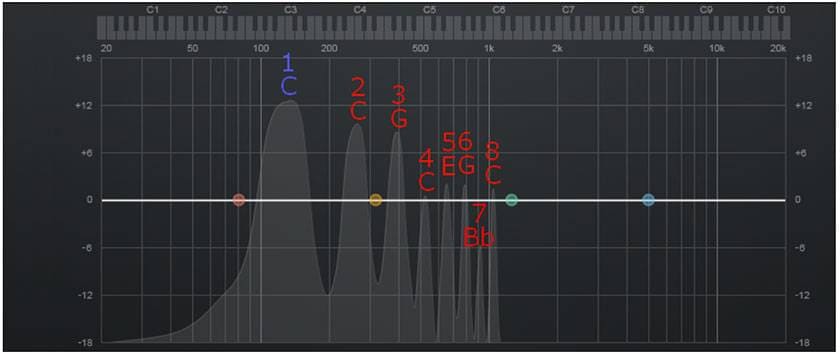
In brass instruments, the length of the tube determines the resonant pitches that can be produced. By blowing air with the correct pressure, the lips vibrate, and the sound is created through coordination with the tube. If the length of the tube is fixed, only harmonics can be produced. The basic principle of pitch production in wind instruments relies on resonance. Depending on the instrument’s structure, the harmonics can also vary.
Below is a diagram showing the resonant points when shortening the tubing of a trumpet. The fundamental tone (blue) is not used.
■ String Instruments Amplify Sound Through Resonance
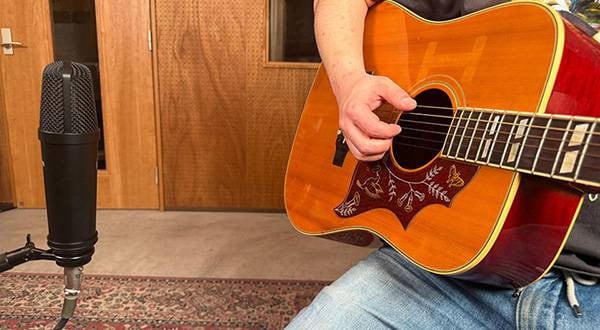
For string instruments, the sound source is the string. However, the vibrations of the string alone are insufficient to vibrate the air and produce a louder sound. The body of the instrument acts as a resonance device to amplify the sound. However, it cannot simply amplify the sound of the string directly; instead, the sound becomes characterized by the unique qualities of the instrument. Even if instruments have the same shape, each one produces a different tone. This shows how much the resonance device influences the timbre and how it affects the quality of the instrument.
In acoustic instruments, the resonance device is usually box-shaped. The sound reverberates inside the box, creating a richer tone. The size of the box affects which pitch range resonates most easily, so instruments are typically sized to match their intended pitch range.
The material of the resonating box also greatly affects the tone of the instrument. In most cases, traditional wood is used, but in guitars, various materials have been experimented with, including metal, fiberglass, and carbon fiber. In some toy guitars, cheap plastic is used, but this results in a cheap sound. The main reason for this is that plastic has a high internal loss, meaning it absorbs too much sound. On the other hand, metal has less internal loss, but the material produces a sharp, metallic tone that is not very pleasant. The only notable exception to this is the steel guitar used in country music, where some parts are made of metal to increase volume.
It wasn't until the late 1960s that materials with a balanced internal loss—neither too large nor too small—were adopted. Ovation introduced guitars with fiberglass backs in the late 1960s, and their innovative appearance helped them spread worldwide. By using wood for the top plate, they were able to maintain a familiar tonal quality, which I believe was key to their success. The advantages of synthetic materials are that they can be engineered to have specific acoustic properties, and they can be mass-produced with consistent quality. Carbon fiber, which is even more advantageous in terms of acoustics and strength, is the most favorable material, but its high cost has prevented it from becoming widely adopted. Even today, wood remains the dominant material for guitars.
■ Dead Spots in String Instruments (Wolf Tones)
Dead spots, also known as wolf tones, are a weak point of string instruments. The body of the instrument has frequencies that are more prone to resonance. When the same frequency is played, it produces a louder sound compared to other pitches. In the case of instruments like the guitar, while producing a loud sound might not be an issue, the problem lies in the inability to sustain the sound. The tone will start to fade immediately after being struck, and depending on the frequency of the dead spot, it could be a serious issue. This phenomenon also occurs with octave-related frequencies, so there will always be certain points where it happens. To minimize the issue, sometimes fine adjustments are made, such as shifting the resonant frequency slightly by a quarter tone.
Additionally, the weaker the guitar’s sound quality, the less noticeable these weak points tend to be. However, just because they are not noticeable does not mean that it's a good thing.
■ Not Hearing the Contrabass in Brass Bands
First of all, it’s a bit unusual that there is a contrabass in a brass band. The brass band is primarily made up of wind instruments, and even though there are tubas in the same pitch range, the contrabass is also present. Perhaps the composer wanted the distinct low tones of the strings, which led to its inclusion. Despite being the only string instrument, the contrabass is often not heard clearly in brass band performances. However, this changes when performing in a suitable hall.
The contrabass has a metal rod called an "endpin," which connects the body of the instrument to the floor during performance. The string vibrations are first transmitted to the solid body of the instrument, causing it to vibrate and then transmitting the vibrations to the air to produce sound. With the endpin, the vibrations are also transferred to the floor, allowing the hall floor to resonate along with the instrument. This is similar to placing a tuning fork on a table—causing the table to vibrate as well. This allows the soft, warm resonance of string instruments to fill the space. However, this doesn’t work with concrete floors, which is why the contrabass is often said to be inaudible in such settings. In environments where the contrabass needs to be heard more clearly, electrical amplification may be a solution.
■ Is the Body of an Electric Guitar Unnecessary?
The mainstream body structure of an electric guitar is a solid body, which is a solid, filled-in body, not a hollow one. The pickups, which serve as the entrance for sound, pick up the vibrations of the strings directly through magnetic force. Since this is electrically amplified, the role of the body in acoustic guitars, which amplifies sound through resonance, has been entirely replaced by electricity. Still, the body of an electric guitar plays an important role in determining the tonal quality, and its significance is not overlooked. This is a pursuit unique to solid bodies.
■ Tuning Fork Resonance
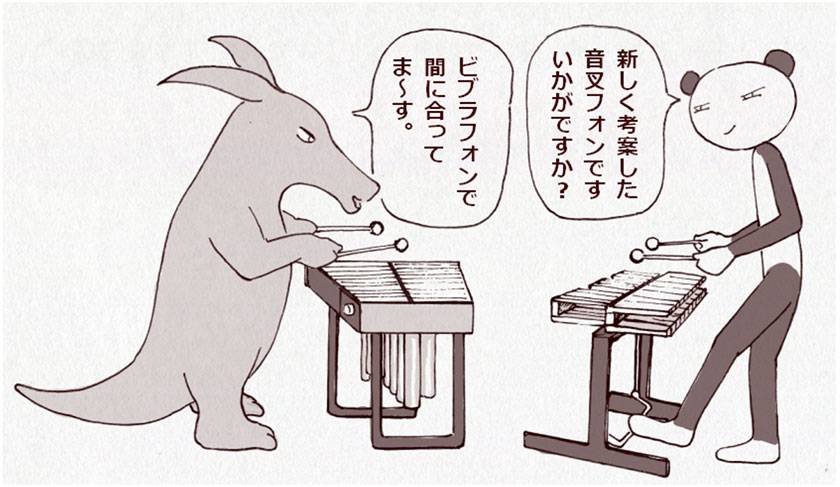
As you may know, when one of the two prongs of a tuning fork is vibrated, the other prong vibrates in harmony, producing a pure tone that persists. This phenomenon is more accurately described as resonance rather than simply vibration. The prongs of a tuning fork are parallel to each other, but when the angle is altered from acute to obtuse, it becomes harder to achieve resonance.
Instruments like the xylophone consist of parallel metal bars, but if these bars were arranged in a U-shape or placed parallel and connected, the sustained sound would likely last longer, allowing for new uses for it. However, such instruments don't seem to exist. Perhaps the reason is that immediately producing a pure tone results in a sound that lacks depth or complexity, making it less interesting.
■ The Mystery of Resonance
Resonance phenomena are quite fascinating and have some interesting aspects. For a musical example, let's consider the case of a metronome. If 100 mechanical metronomes are lined up and set to the same tempo and triggered at the same time, they will start out with a slight variation in timing, but over time they will synchronize.
For the metronomes, it seems like it’s easier to match with the surrounding ones. While it's intriguing to imagine the metronomes that resisted synchronization, once all of them are synchronized, it feels strangely satisfying, almost as though it holds a certain power. This phenomenon can also be applied to ensemble performances.
The “sound & person” column is made up of contributions from you.
For details about contributing, click here.






 お化けを倒してサウンドGET!
 バンドあるある相談
 サウンドハウス社員が選ぶ 『おもしろ商品』はコレだ!
 ○○やってみた!
 最新コラム&動画をCheck!! OTOYA通信
 サウンドハウス虎の巻 !
 Discount Sale
 Outlet
 New Arrivals
 Podcast (streaming)
 Headphones / Earphones
 Microphones
 Wireless Equipment
 Speakers
 Power Amps
 Mixers
 Processors
 Portable PA Systems
 Recorders
 Karaoke
 Guitars
 Basses
 Ukuleles
 Drums & Percussion
 Pianos / Synthesizers
 Wind Instruments
 Stringed Instruments
 Japanese Instruments
 Harmonicas, Other
 Software
 DJ & VJ
 Stands
 Cables & Connectors
 Racks & Cases
 Lighting
 Stage & Truss
 Video Equipment
 PC PERIPHERALS
 Power Supplies
 Studio Furniture
 Household Items, Other
 Alcoholic Beverages