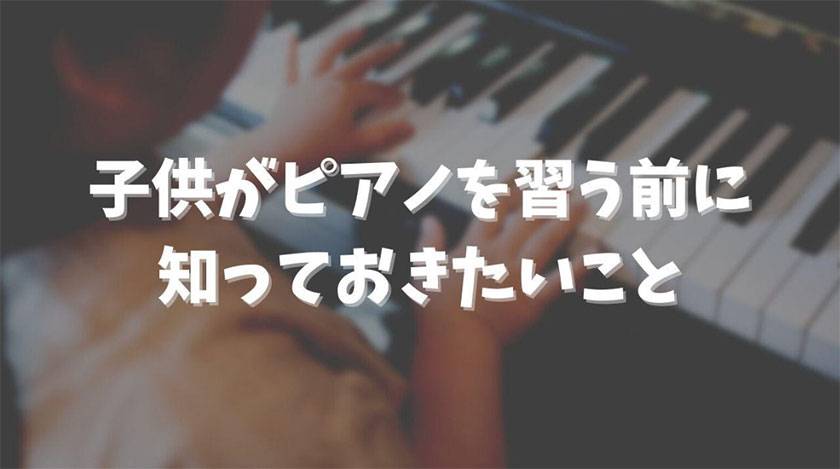
Young children love making sounds.
Even before they learn to speak, they are interested in anything that produces sound, and at kindergarten or nursery school, music and dance time seem to be what they enjoy the most. It’s easy to see why the piano is such a popular choice in lessons from a very early age.
Many parents have long wished for their children to learn piano—for reasons such as wanting them to have an enriched life through music or as part of emotional and artistic education.
Of course, that is undoubtedly a wonderful thing, but there are a few things you should know before starting piano lessons. Parents who have never experienced piano lessons themselves are invited to read along with this column for a bit.
■ Do you have time to support your child’s practice time?
Many parents with no piano experience think, “I’ll leave the lessons to the teacher.”
That may be fine for children around the middle elementary school years.
However, expecting that from a child around five years old—when most children start piano—is unrealistic.
Even if a teacher assigns homework, very few children will willingly practice if their parents are not watching.
Even if they do start on their own, their practice methods will be inefficient, and they will likely get bored quickly.
Please don’t misunderstand this as a lack of motivation.
Children at this age have a strong desire for their parents to watch them, pay attention to them, and praise them.
If parents show no interest, the child will also lose interest in the activity.
In other words, whether or not a parent has piano experience is not very important in the early stages.
During practice at home, parents should help remind the child of what they learned from the teacher, and when the child is focused, simply watch them quietly.
If you cannot make time for this, there will be little benefit even if your child takes piano lessons.
At first, start at about 15 minutes, and once they enter elementary school, it doesn’t have to be every day, but you should be prepared to spend about 1 to 2 hours a day watching over them.
■ How seriously will you commit?
Just because a child is learning piano doesn’t mean everyone needs to aim to win competitions.
Whether children only want to play their favorite songs by sight-reading, become a professional pianist, or learn an instrument to accompany singing, all of these are wonderful goals.
However, even parents with no piano experience can probably imagine that piano tends to be more expensive than other lessons.
So, how much does it actually cost? It varies greatly depending on the goal, so let’s look at a few different cases.
○ As part of emotional and artistic education
This is a case where the focus isn’t strictly on piano itself, but rather on hoping it has some positive influence as the child grows.
In this case, there is usually no need to participate in competitions, so the costs are mainly monthly lesson fees, materials, and exam fees.
On average, it’s a little over 10,000 yen per month annually.
Even if they occasionally enter a competition to test their skills, it’s about 10,000 yen per entry.
Electronic pianos are recommended because they are easy to handle.
Even models under 100,000 yen are sufficient for practice.
I have also previously written a column titled “Shouldn’t an Electronic Piano Be Enough if a Child is Learning Piano?”, so please refer to that article as well.
However, even if they don’t participate in competitions and use an electronic piano instead of an acoustic one, the need for parents to supervise practice does not change. If this is not properly maintained, the child may lose interest in the piano itself, and it defeats the purpose of emotional education.
○ As a lifelong hobby
Even if parents themselves can’t play the piano, those who have been involved in music in some way often encourage their children to enjoy music as a hobby or passion.
In this case, it’s preferable to have an electronic piano in the 200,000 yen range or an upright piano.
While they don’t match the sound and action of a grand piano, their expressive capability is significantly better compared to cheaper models.
Also, by actively participating in competitions and recitals, children can set goals, gain a sense of achievement, and improve more quickly.
Competitions involve participation fees and, if they place highly, travel expenses, which can total around 10,000 to 50,000 yen per competition.
○ Considering a music college
There probably aren’t many parents who expect their child to go as far as a music college.
Parents who do think this way often have piano experience themselves, so they may not even need to read this column.
However, even if parents don’t initially have that intention, some children become deeply passionate about piano and aim for music college from an early age.
In such cases, the question becomes whether you have the determination and financial flexibility to support that path.
First, a grand piano becomes essential, with a purchase cost of around 1 to 2 million yen.
If you decide that you would rather have it set up on the second floor or higher, a crane may be required, and tuning costs are typically needed about once a year.
In addition to tuition for music college, it is not widely known that expenses may continue both before enrollment and even after graduation.
Music colleges vary widely in difficulty, and if your child ends up aiming for a top-tier university, they often need to enter high schools with music programs and take specialized lessons from well-known teachers tailored for music college entrance exams.
After graduation, more than half of students choose paths such as graduate school or studying abroad to further develop their skills, so four years is rarely enough.
Additionally, if a student is serious about life as a music college student, they usually cannot focus on part-time jobs, meaning that parental support often covers the majority of living expenses.
Tuition and rent vary widely, so it’s hard to generalize, but without roughly 20 million yen in total from early childhood through independence, it would be difficult to send a child to a music college with peace of mind.
I’ve written some slightly negative points, but few children aim to attend music college, and even among those, the number who actually proceed to the entrance exams is smaller.
Still, it’s important to at least be aware of the total potential costs if your child were to enter a music college, even if the probability is low.
There’s no need to fear such a distant future and end up closing off one of the possibilities.
■ Summary
Broadly speaking, it’s best to consider financial aspects and the amount of time parents can dedicate before starting piano lessons.
Piano is a wonderful hobby that can be started from a young age and become a lifelong skill, but this column aims to help minimize situations where you might end up feeling“This isn’t what I expected,” after starting lessons.
The “sound & person” column is made up of contributions from you.
For details about contributing, click here.

![[For beginners] Keyboard types and how to choose one](/contents/uploads/thumbs/2/2020/9/20200923_2_11196_1.jpg)

 Roland 電子ピアノデジタルピアノ購入ガイド
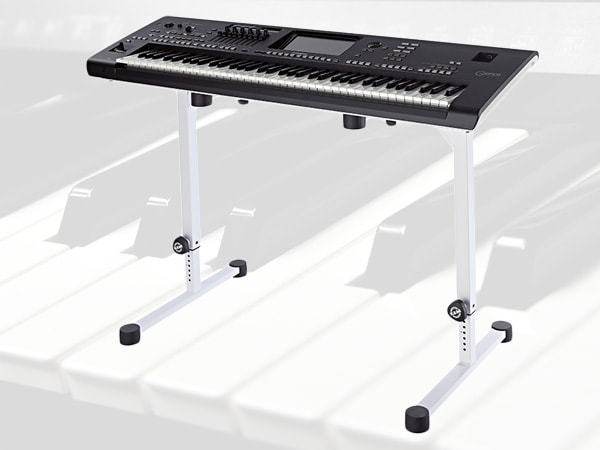 キーボードスタンドの選び方
 おすすめの電子ピアノ
 自分にあったピアノを選ぼう!役立つピアノ用語集
 キーボードスタートガイド
 キーボード・ピアノ講座
 Discount Sale
 Outlet
 New Arrivals
 Podcast (streaming)
 Headphones / Earphones
 Microphones
 Wireless Equipment
 Speakers
 Power Amps
 Mixers
 Processors
 Portable PA Systems
 Recorders
 Karaoke
 Guitars
 Basses
 Ukuleles
 Drums & Percussion
 Pianos / Synthesizers
 Wind Instruments
 Stringed Instruments
 Japanese Instruments
 Harmonicas, Other
 Software
 DJ & VJ
 Stands
 Cables & Connectors
 Racks & Cases
 Lighting
 Stage & Truss
 Video Equipment
 PC PERIPHERALS
 Power Supplies
 Studio Furniture
 Household Items, Other
 Alcoholic Beverages