===== Falling into the Swamp of Sound ====
It has been said in the media that some people infected with COVID do not develop a fever, so if you feel general fatigue, you should be cautious. But once you’re over 40, that kind of full-body fatigue becomes a normal, everyday occurrence—so how are you supposed to tell the difference? Since age 42 is traditionally considered an unlucky year, it’s probably fair to think of that period as when physical strength begins to decline. Human hearing is said to range from 20 Hz to 200,000 Hz, but in reality the upper limit is around 150,000 Hz, and it is said to gradually decline from around the age of 20. Furthermore, sound is not only perceived through the ears; we also feel air vibrations through our skin and recognize that as sound, so it’s natural that people perceive sound differently. The nerves in the skin also weaken with age. If you want to become a musician, you need to train as early as possible. From around the age of 40, all physical abilities begin to decline rapidly. It’s depressing.
After buying a guitar and a tuner, the next thing that caught my interest was an amplifier.
Back in the 1980s, I did play some guitar, but I was originally a bassist. For some reason, during my time as a bassist, I had no interest in amps or effects, and I was perfectly satisfied plugging a Jazz Bass directly into an amp. Nowadays, there are many effects available for bass, but in the 1980s, if you used effects on bass, it was probably just a compressor. Speaking of which, I remember being told at the time that using a compressor on bass would make the sound sustain longer, so I bought one. However, unlike today, there were no explanatory videos on platforms like YouTube, so I didn’t understand how to use it. Instead of sustaining, it felt like the sound was getting cut off, and even though it was expensive, I ended up throwing it away. Isn’t it more accurate to say that a compressor doesn’t actually extend the sound, but it creates the effect of longer sustain by smoothing out the decay? Maybe there were explanations like that back then, but since the only sources of information were magazines, I couldn’t really understand it. If you actually want to extend the sustain, you need to apply compression and then raise the level (volume), but I probably didn’t know that at the time. I later saw this explained as a common mistake in YouTube videos. It really is a much better time now.
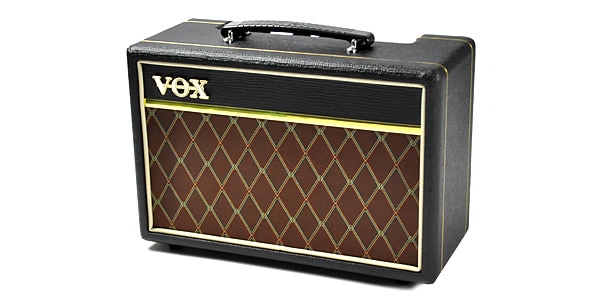
When I restarted playing guitar, the first thing I bought was the VOX Pathfinder 10. I bought two units, one for guitar and one for bass. The reason was that they were labeled as practice amps at a major music store, and both were priced under 10,000 yen.
VOX / PATHFINDER10 Guitar Combo Amp
VOX / Pathfinder Bass 10 Bass Amp
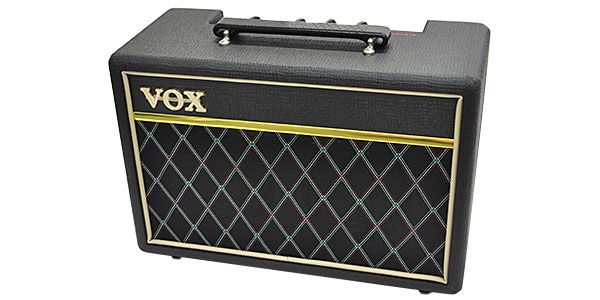
I was truly amazed by the PATHFINDER amp. Despite being so inexpensive, the sound was incredibly good! That’s what I thought five years ago. (Nowadays, there are many amps with great sound even at low prices, so it might not be as surprising.) It’s strange—back then I didn’t really care about sound quality, but gradually I became more and more particular about it. In other words, I had fallen into the so-called “swamp of sound.” Thinking about why I didn’t fall into that obsession back in the day, one reason was that practice amps sounded terrible. Expensive ones sounded good, but they were too costly to afford (and still are). I’ve heard that people from the generation before me would plug their guitar cable directly into the microphone jack of a radio-cassette player and practice through its speakers, so their practice environment must have been even worse.
The PATHFINDER did have a drawback: it didn’t have a mid control on the equalizer. When practicing with good sound, I started wondering what would happen if I boosted the highs and lows to create a “scooped” sound, or did the opposite and boosted the mids to create a boxy sound. Also, on YouTube, people often describe guitars as having a “good mid presence,” but I didn’t understand what that meant. Questions kept piling up—what exactly do mids sound like? With my limited allowance, I started debating whether to buy a preamp effects unit. But even if I bought one, setting up guitar → preamp → amp every time I practiced felt like a hassle—especially for a middle-aged guy who only practices for about 15 minutes. And with a tight budget, even cheaper preamp effects cost around 10,000 yen. As a side note, “PATHFINDER” means “explorer”—maybe I ended up becoming one myself.
While I was pondering over this, I came across an amp with a 3-band equalizer that was relatively affordable: the ROLAND CUBE10.
ROLAND / CUBE-10GX
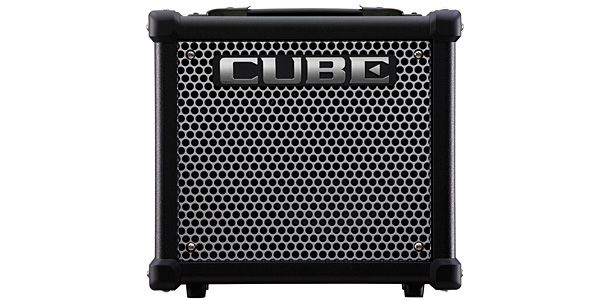
I traded in my PATHFINDER to purchase it. Looking back now, I had only used it for about three months, and the trade-in value was just 1,000 yen, so I should have kept it instead of trading it in.
Come to think of it, whenever I go to recycle shops, I often see many nearly new PATHFINDER amps lined up. Maybe there are a lot of people like me.
The CUBE10 is now in its fifth year, and I still use it. It’s a bit cheaper now, but at the time I remember it costing around 20,000 yen.
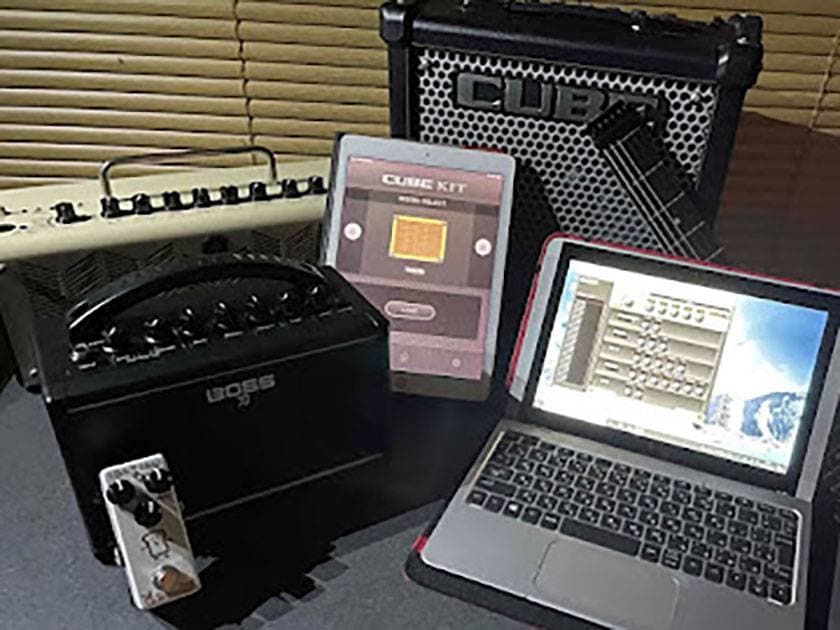
This CUBE also amazed me. It’s a type of modeling amp that uses COSM technology. By default, it has three types of amp sounds, but by changing settings with software, you can enjoy up to ten different amp sounds.
What’s more, it can even function as a bass amp. With that said, I no longer needed a separate bass amp, and within a few months after buying it, my bass amp disappeared into the closet. That said, it took me about two months to fully understand what a modeling amp actually is…
One of the reasons I’m writing this is that I want to reduce the number of people like me—unskilled and short on money, yet still buying unnecessary gear. Because I’m not very good, I feel hesitant to ask questions to staff at music stores. I also don’t want them to think, “This middle-aged guy is a moron.” Maybe the only way to solve things is to buy and try, but I’d still like to avoid wasting money as much as possible.
About a year later, I started wanting to practice in different places depending on my mood that day. When I was playing in the living room while watching TV, my wife said, “Hey, you’re too loud—go somewhere else.” Modern dads are weak—we’re in the way. So reluctantly, I carried my CUBE and guitar back to my room.
That’s when I found the YAMAHA THR10. It’s lightweight, can run on batteries, and is easy to move around. Even now, it remains as my main practice amp.
Currently, its successor model, the THR10 II, has been released, adding features such as wireless functionality.
YAMAHA / THR10II Guitar Combo Amp
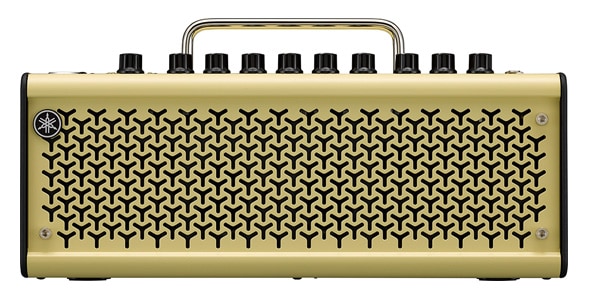
For me, the THR was what made me fall even deeper into the “swamp of sound.” I restarted guitar playing after turning 40, and even though simply being able to play a little should have been enough, I still became obsessed with the sound.
Interestingly, it wasn’t that the sound was bad and bothered me in the same way as with the PATHFINDER, it was actually because the sound was so good that I started paying attention to it. This THR comes with simple digital effects, and they are impressive. When combined with the dedicated software, you can make very detailed adjustments.
It includes basic effects such as compressor, chorus, delay, and reverb.
Because the THR’s digital effects are fairly basic, I started wanting to try other effects as well. I will talk about effects in more detail in the effects section.
Recently, however, I also added a Roland amp, the KATANA-MINI.
BOSS / KATANA-MINI Guitar Amplifier
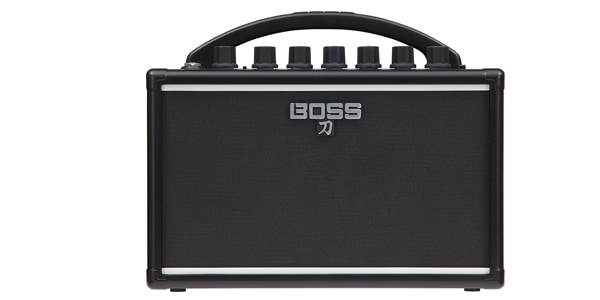
I have a third-year junior high school student at home who is preparing for entrance exams. I want to keep things quiet for them, so I try to practice outside the house as much as possible. I could use the THR for outdoor practice, but I was looking for something even smaller, with a 3-band EQ and around 10,000 yen in price. That’s when I found this. Other candidates were the Orange CRUSH Mini and the Blackstar FLY 3. Both sounded good—I tried them at a music store. After five years of playing, I’m still not very good, but I’ve reached the point where I can ask to try instruments at music stores. They might still think, “Here comes that annoying middle-aged guy who doesn’t really buy anything…” but oh well. One nice thing about the KATANA-MINI is that it has a carrying handle, which makes it easy to transport.
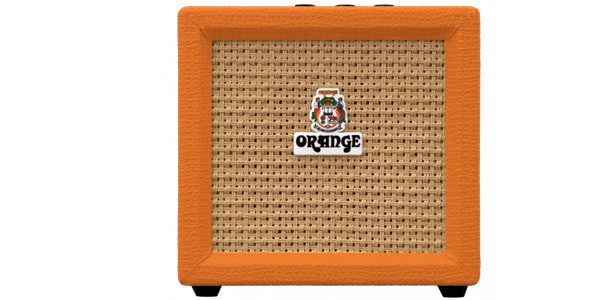
ORANGE / CRUSH MINI
BLACKSTAR / FLY3
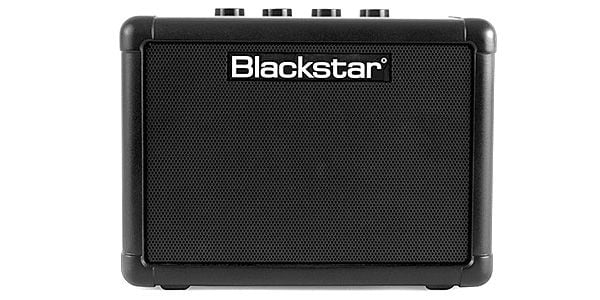
For people who don’t adjust a 3-band equalizer, the CRUSH Mini or FLY3 offer better bang for your yen. As a side note, I was quite torn because the CRUSH Mini has a cuter design.
My main practice amp is the THR10, but I still sometimes notice that with digital amps, I become aware that the sound is digitally created. It’s difficult to put into words, but sometimes the sound feels a bit “grainy” or rough.
I am currently considering buying a Fender-style tube amplifier, but since it is large and expensive, I have a feeling an intense negotiation battle with my wife will begin.
That said, were the three amps mentioned above a waste of money? The answer is no. They helped me figure out where my preferred sound really is. Without this process, I don’t think I would have reached any conclusion. For anyone currently looking for a practice amp: if all you need is sound output, there are many cheap and good amps available, so choosing based on design and size is perfectly fine. For those exploring sound, the CUBE is also an option, but BOSS multi-effects units also use COSM technology, allowing you to try many more variations. For people like me who are lazy and don’t like reading manuals, I recommend the THR.
Most people who read this far will probably end up buying a tube amp in the end anyway. You might think, “Then why not just recommend a tube amp from the start?” However, tube amps are loud and can disturb neighbors in urban areas. For practicing, small transistor amps are better. Recently, there are low-wattage tube amps and ways to use attenuators, but they still cost quite a bit. As I mentioned at the beginning, digital vs analog, transistor vs tube—sound perception differs from person to person, so you really can’t know without trying. Sorry for the inconclusive conclusion (haha). Finding your preferred sound and practicing with it naturally increases practice time, so it may actually be the fastest way to improve.
The “sound & person” column is made up of contributions from you.
For details about contributing, click here.

 Discount Sale
 Outlet
 New Arrivals
 Podcast (streaming)
 Headphones / Earphones
 Microphones
 Wireless Equipment
 Speakers
 Power Amps
 Mixers
 Processors
 Portable PA Systems
 Recorders
 Karaoke
 Guitars
 Basses
 Ukuleles
 Drums & Percussion
 Pianos / Synthesizers
 Wind Instruments
 Stringed Instruments
 Japanese Instruments
 Harmonicas, Other
 Software
 DJ & VJ
 Stands
 Cables & Connectors
 Racks & Cases
 Lighting
 Stage & Truss
 Video Equipment
 PC PERIPHERALS
 Power Supplies
 Studio Furniture
 Household Items, Other
 Alcoholic Beverages