During Covid, many people most likely bought microphones to make telework and calls with friends more comfortable. It’s well known that audio interfaces became scarce, but what kind of microphones did everyone buy?
Microphones can be broadly divided into two types: those that connect via USB, and those that connect through an audio interface. They bought a USB microphone because they prioritized convenience over sound quality, they didn’t use it very frequently, or they didn’t care about appearance (I think it cost about 4,000 yen online). However, after starting DTM, I increasingly found myself dissatisfied with the USB microphone. So, I decided to upgrade my microphone this time, and I would like to talk about its benefits. By the way, the microphones I’m introducing here are aimed at beginners to intermediate users, so the hurdle to entry isn’t very high. Please consider giving them a try.
What do you want to do with a microphone?
What do you want to do with a microphone? What are you interested in doing? This is the biggest question. Until now, I had only used a microphone for calls, so a USB mic posed no inconvenience. But after starting DTM and using a DAW (music production software), I wanted to record my own voice and the sound of my acoustic guitar. However, with my USB microphone, I couldn’t record into the DAW without using external mixer software. In other words, a strange situation occurred in which the electric guitar had to go through the audio interface into the mixer software, the USB microphone audio also went into the mixer software, and only then could both be sent to the DAW through that mixer software.
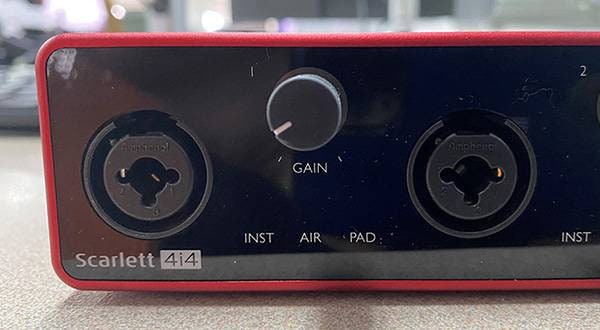
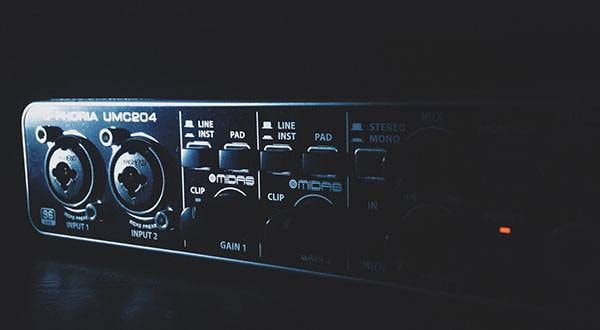
What solved all of this at once was using a microphone through an audio interface. This way, both the electric guitar and microphone audio can be input into the audio interface and sent directly to the DAW.
What should you buy?
When I first considered buying a microphone, I had no idea what to get. Condenser mics, dynamic mics, pop guards, arms, stands—and even cables…
After doing some research, I found that the following two microphones suited my needs:
For a dynamic microphone
CLASSIC PRO / CM5S Dynamic Microphone
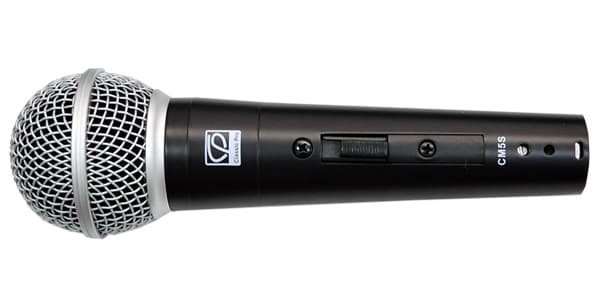
An extremely famous, dynamic mic at an unbeatable price. You could buy six of these for the price of a certain well-known microphone. It was my top candidate among dynamic mics.
For a condenser microphone
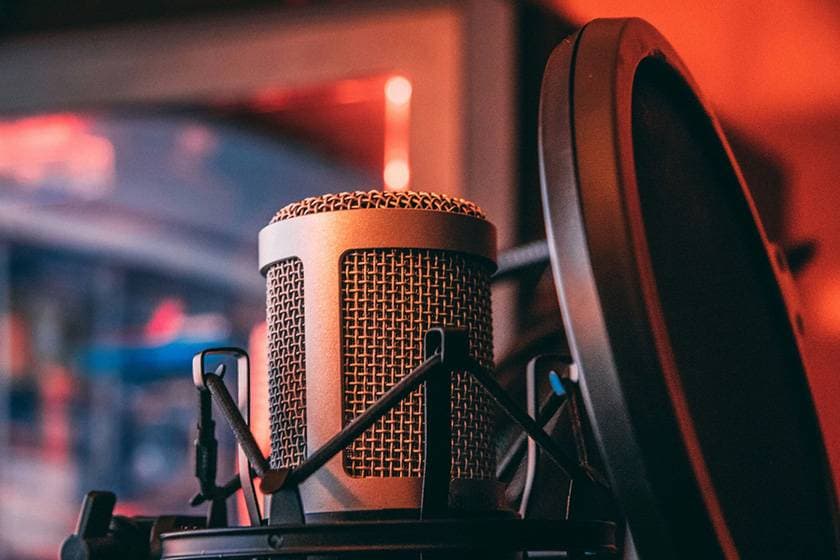
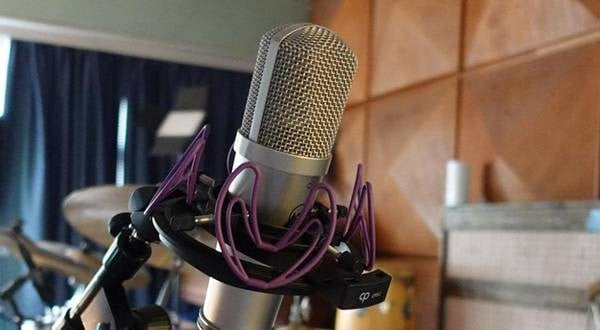
BEHRINGER / C-1 Studio Condenser Microphone
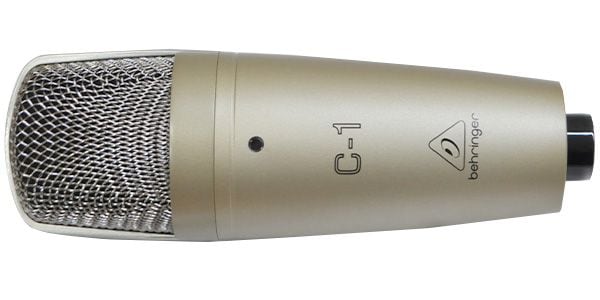
This was a mic I had been curious about for a long time. For a condenser microphone, the price is quite good…
After various twists and turns, I ultimately decided on a condenser microphone. There were several reasons: I wanted to record acoustic guitar, the price was great, and, to be honest, and for the simple reason that it looked more professional for the price.
By the way, I also purchased a mic cable, mic stand, and pop guard along with it.
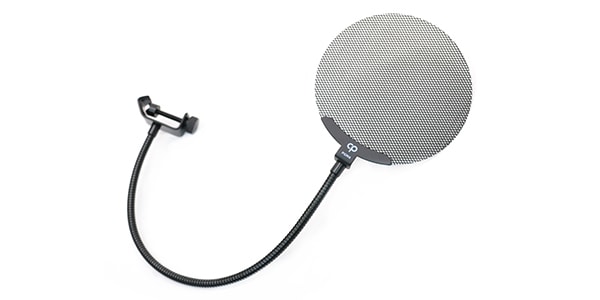
Because condenser microphones are highly sensitive, sibilant sounds (like s or th) and they easily pick up breathing noise, so I recommend using a pop guard. I bought this one from CLASSIC PRO.
CLASSIC PRO / HMX010 High-End Microphone Cable
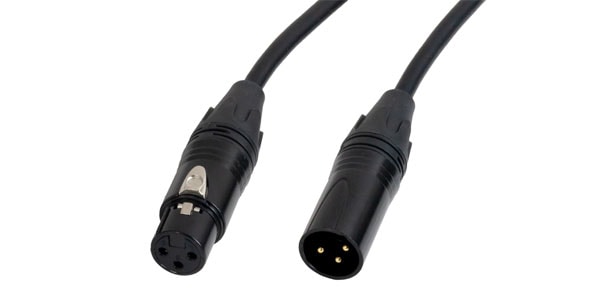
The cable uses an XLR type, which is different from instrument cables, so be careful not to mix them up.
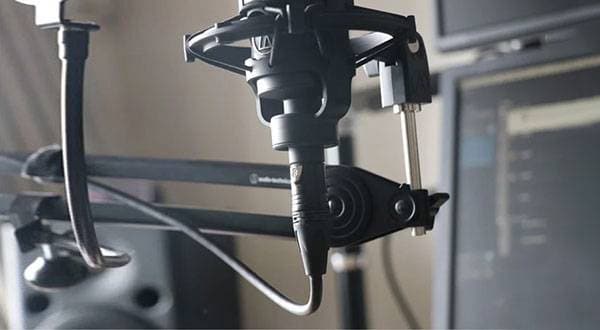
CLASSIC PRO / MSB/BLACK Boom Microphone Stand
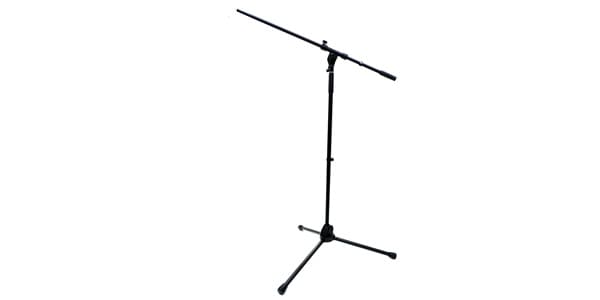
A stand isn’t absolutely essential, but without one, you’ll have to hold the mic by hand the whole time. Since my desk shakes easily, I chose a floor-standing type.
Other products I considered
Actually, I struggled quite a bit before arriving at the conclusion above. Here are some other candidates that I considered.
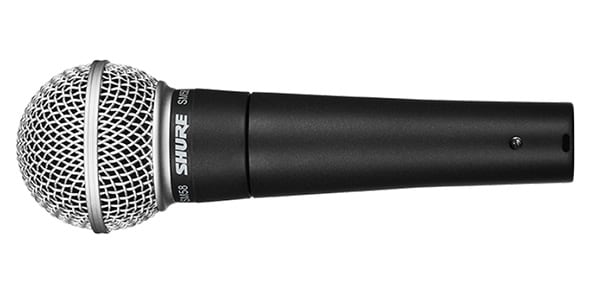
A classic, iconic dynamic microphone. I’ve used it in a studio, and as its reputation suggests, it seems very robust. However, I passed on it due to budget constraints…
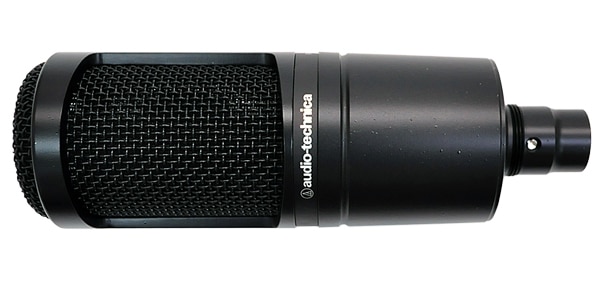
This is often used by streamers, from the impression I get. The higher-end AT4040 is also popular. If you could unify the look with an audio-technica pop guard and arm, it would also look good aesthetically.
JTS / PDM-57 Instrument Microphone
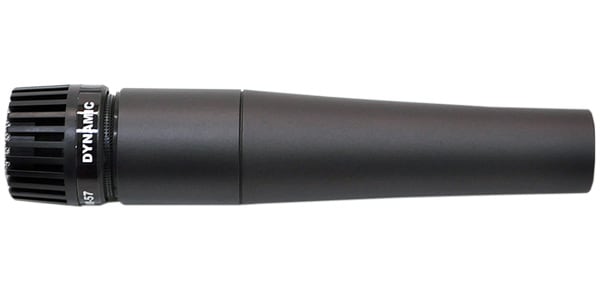
I decided against this one because I don’t play acoustic guitar every day. I do think it would work very well for singing with guitar accompaniment.
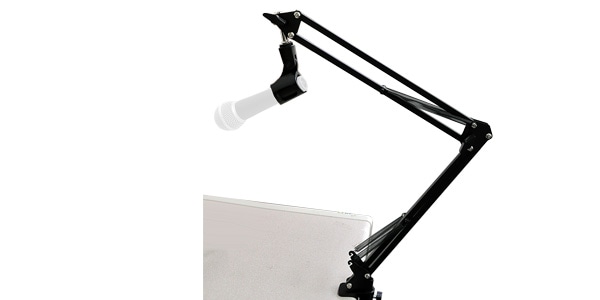
CLASSIC PRO / CDA5B Desk Arm Stand
CLASSIC PRO / DTMS Desktop Microphone Stand
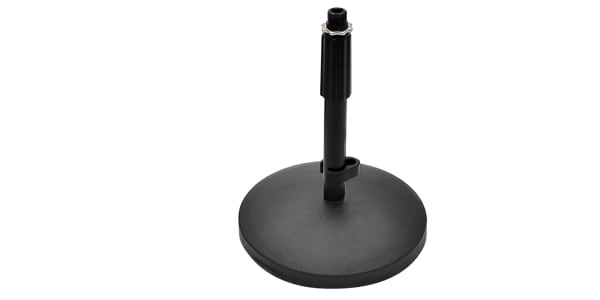
Placing a stand on the floor reduces shaking, but it can feel cramped. Arms and desktop stands like these are also good options.
Summary
How was it? For those of you who are using a USB microphone and also own an audio interface—why not take this opportunity to upgrade your mic? Not only will the sound quality improve, but the appearance will look better too, which is sure to boost your motivation.
⇒ List of Equipment Needed for DTM
The “sound & person” column is made up of contributions from you.
For details about contributing, click here.














![[For Beginners] Lets Use a Microphone Preamplifier](/contents/uploads/thumbs/2/2023/5/20230523_2_22754_1.jpg)
![[For Beginners] A Forgotten Piece of Equipment but Equally as Important! Recommended Stands for Computer Music](/contents/uploads/thumbs/5/2022/4/20220430_5_17753_1.jpg)

 SHURE特設ページ
 機能で選ぶ オーディオインターフェイス
 DTMに必要な機材
 CLASSIC PRO
 K&M マイクスタンド比較表
 ケーブル購入ガイド
 Discount Sale
 Outlet
 New Arrivals
 Podcast (streaming)
 Headphones / Earphones
 Microphones
 Wireless Equipment
 Speakers
 Power Amps
 Mixers
 Processors
 Portable PA Systems
 Recorders
 Karaoke
 Guitars
 Basses
 Ukuleles
 Drums & Percussion
 Pianos / Synthesizers
 Wind Instruments
 Stringed Instruments
 Japanese Instruments
 Harmonicas, Other
 Software
 DJ & VJ
 Stands
 Cables & Connectors
 Racks & Cases
 Lighting
 Stage & Truss
 Video Equipment
 PC PERIPHERALS
 Power Supplies
 Studio Furniture
 Household Items, Other
 Alcoholic Beverages