How’s your tone crafting coming along, everyone?
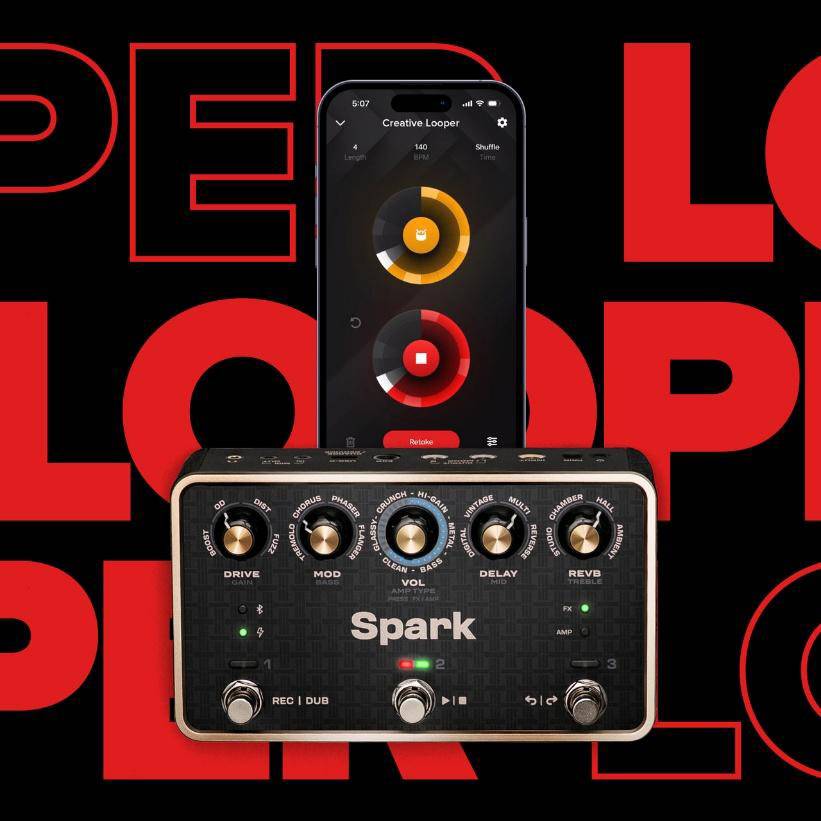
This time, I’d like to introduce an exciting new product from Positive Grid: the Spark PEDAL!
When you think of Positive Grid, the popular Spark Series of guitar amps probably comes to mind. And now, those Spark amps have been transformed into a pedal-style multi-effects processor!
I’ve personally been using the BIAS FX app for a long time, so much so that I have complete confidence in Positive Grid’s amp sounds. Since you can now use those same sounds at high volume, let’s take a closer look!
A Quick Review of the Main Features
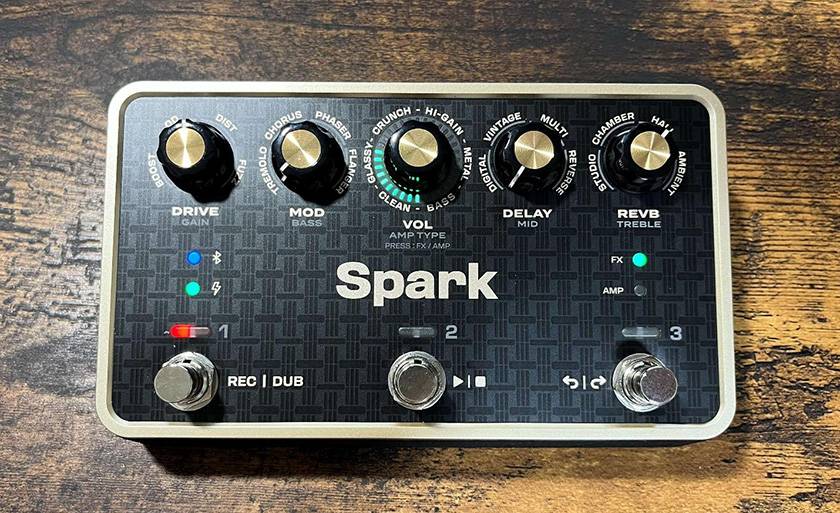
First, let’s go over the Spark PEDAL’s features.
- Amp Models: 33 (cabinet simulator can be switched ON/OFF)
- Effects: 43
- Built-in Looper: 60 seconds
- Onboard Presets: Up to 6 presets can be saved to the unit
- Built-in Functions: Equipped with a tuner
- Versatile Output Options: Guitar amp, PA system, FRFR speaker, and USB audio output
- Expandability: Expression pedal input, MIDI IN/OUT, and support for connection to Spark Control X
- Spark App Compatibility
Now that the Spark has evolved from an amp series into a multi-effects processor, I think one of the key features is the ability to switch the cabinet simulator ON/OFF.
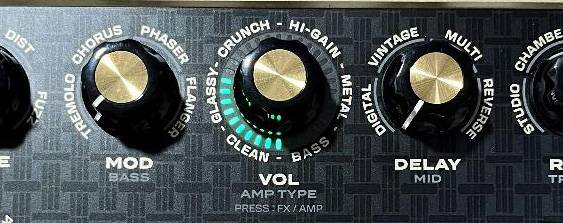
↑ You can turn the cabinet simulator on and off by double-clicking the VOL knob in the center of the unit.
The previous Spark Series models were designed as modeling amps that handled the entire signal chain, from the amplifier to the speaker. In other words, the sound output through the speakers or headphones was essentially the same as a ‘miked-up sound’. One of the reasons the Spark Series has been so highly regarded is its ability to deliver a polished, complete sound that includes everything from effects and amplifiers to cabinets.
However, with this new multi-effects format, connecting to a separate amplifier represents a new challenge for the Spark Series. It includes simulations up to the amp head, while allowing the cabinet simulator to be switched on and off independently with ease. I think this is a feature that could only come from Positive Grid, a company that really understands things from the player’s perspective.
3 Footswitches in a Compact Body!
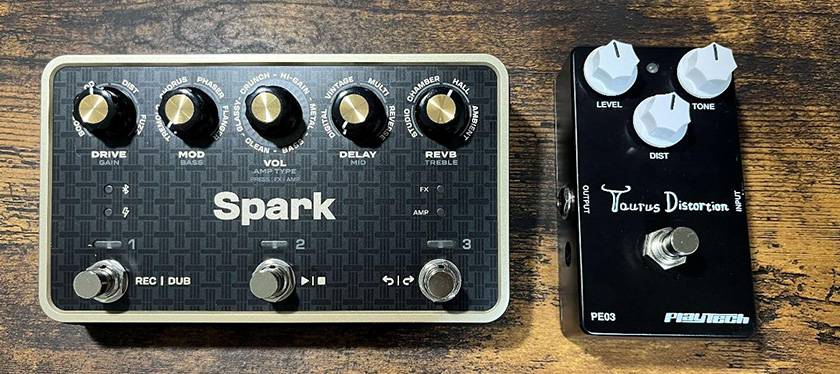
The unit is extremely small and lightweight. Here’s how compact it is, even compared with a standard compact effects pedal. It has a reasonable amount of weight, giving it a solid feel. The surface also has a premium-quality finish, similar to that of the Spark GO and other models.
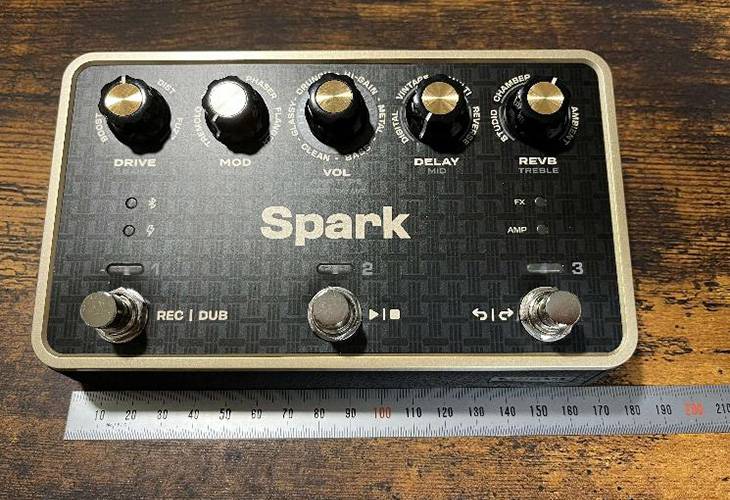
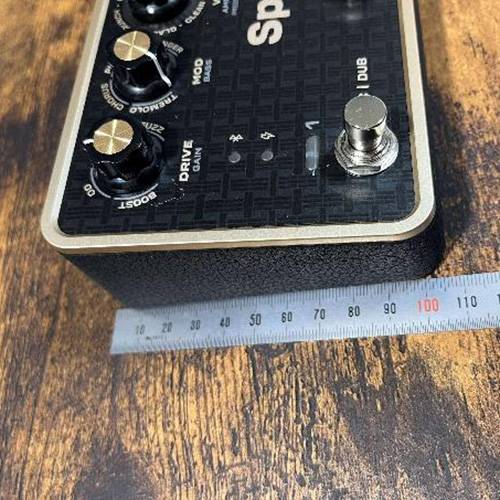
↑ The unit measures 175 mm × 104 mm and weighs 560 g.
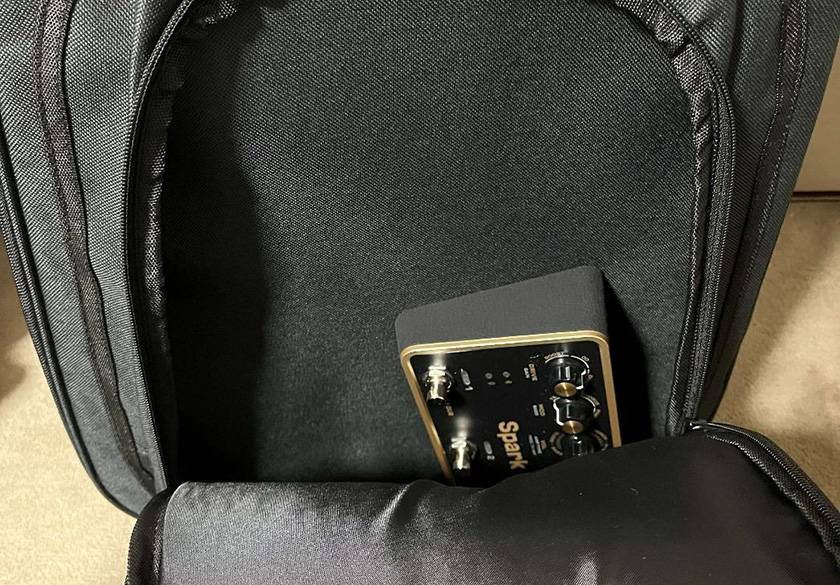
↑ I tried carrying it in the pocket of a gig bag, but it’s almost so small that you start to wonder whether there’s really a multi-effects processor inside!
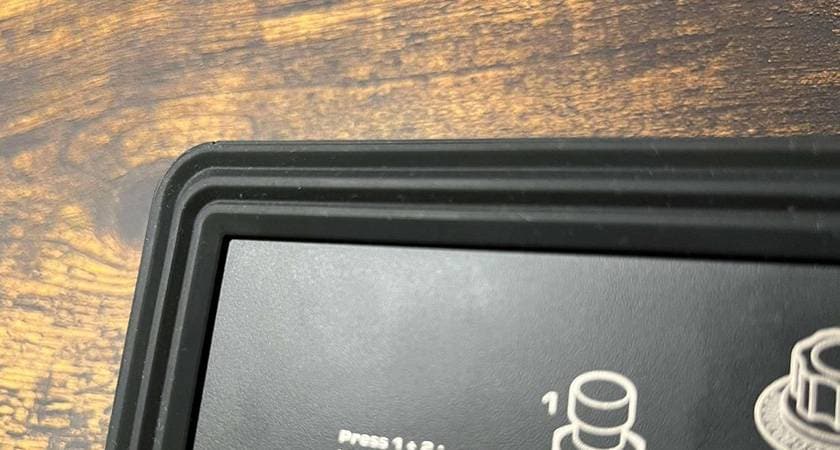
↑ The underside of the unit features rubber anti-slip material, so it didn’t slide around even when operating the switches with my feet.
Each of the three footswitches can be used to call up an assigned preset. You can save a total of six presets on the unit, arranged in two banks of three presets each.
This is another feature I personally really like.
In recent years, multi-effects processors have been getting smaller at an astonishing rate, but many of them have no more than two footswitches. When you actually play a song, you often need three different sounds, such as clean → backing → solo. This means that there are situations where a multi-effects processor with only two footswitches simply can’t keep up. The Spark PEDAL manages to achieve a practical three-switch layout while maintaining this compact size.
Let’s Connect the Spark App!
The unit is fully compatible with the Spark App, the editing app that is one of the defining features of the Spark Series. This time, I tried two features: ToneCloud, a preset library containing more than 100,000 presets shared among users, and Spark AI, a tone-generation feature that uses AI to create sounds based on text prompts.
● ToneCloud
This feature allows users to share presets they’ve created and actually use presets made by others. One of the great things about the Spark App is that you can easily try out a preset before deciding whether to select it.
This time, I searched for some band names whose sounds I personally found difficult to recreate, but both presets turned out to be highly polished. It’s amazing that you can get these sounds so easily (and for free), and even use them as effects...
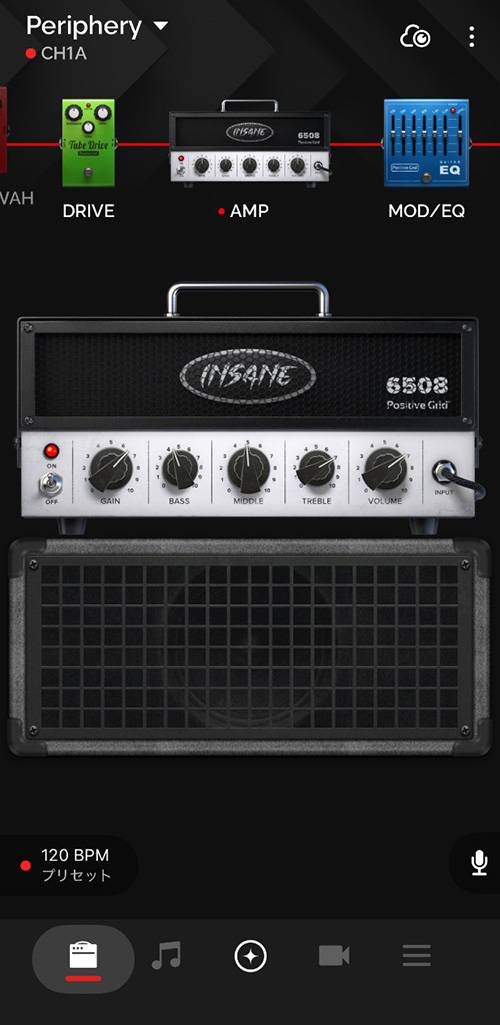
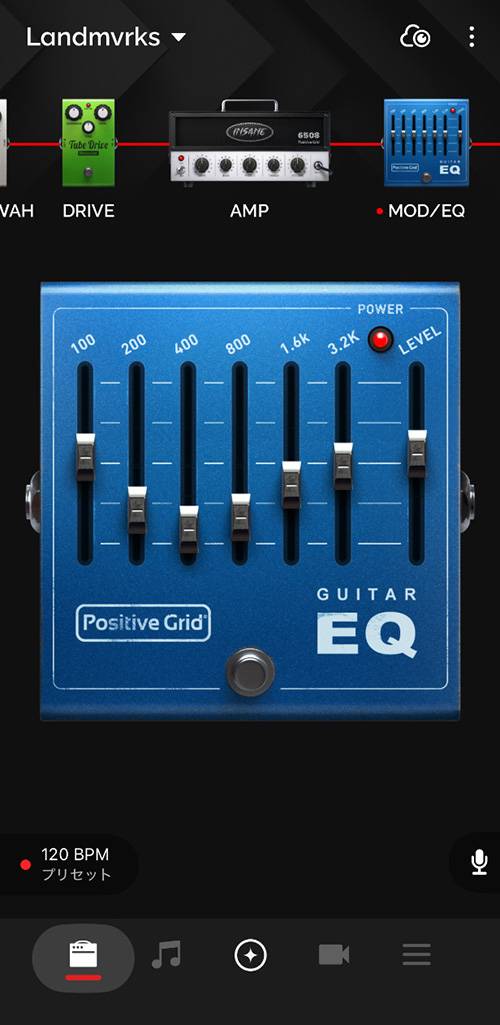
↑ These presets are so convincing that they even make you think, “Oh, so that’s how they set it up!”
● Spark AI
This was my first time using AI tone generation. The number of amps equipped with this kind of feature is gradually increasing, but I don’t think there are many products yet that let you use AI-based tone generation as an effects processor.
First, since the app interface was in English, I thought I’d try entering my prompts in English, but it actually understood Japanese, too. However, the explanations of the sounds are returned in English, so please use a translation service as needed.
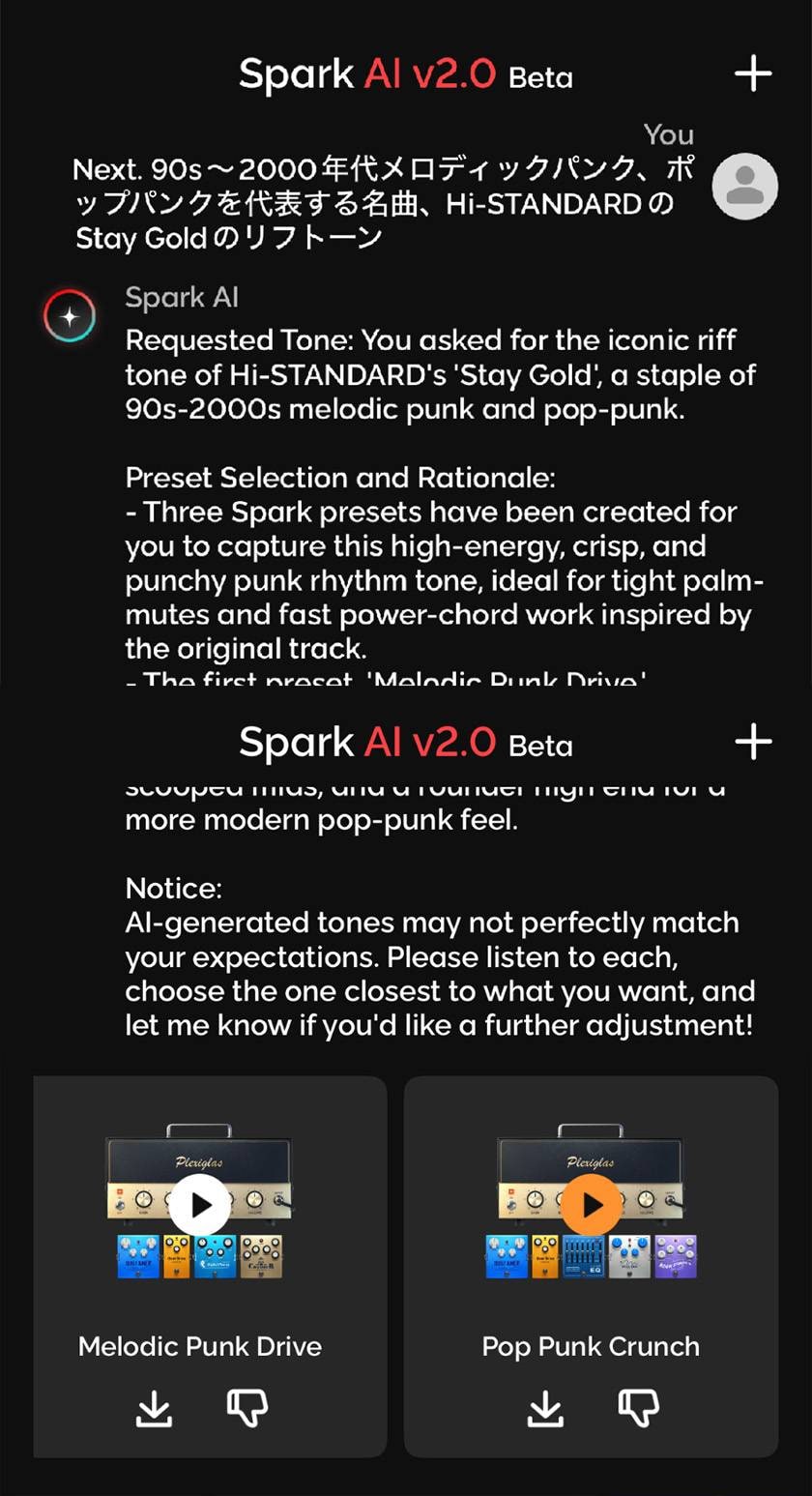
↑ It creates three presets along with explanations of each sound.
You can try them out by tapping the ‘▷’ icon.
My impression is that this feature has a lot of potential for practical use. This time, I requested a sound for a fast-tempo riff, but all of the suggested presets had slightly lower gain than I wanted for the distortion, and they also included spatial effects that weren’t really necessary.
However, I think the accuracy could be improved by providing more detailed instructions about the desired sound or specifying which effects to use. In particular, for students whose main focus is playing in cover bands, this could provide a good starting point: first, they can get a feel for the key elements of a sound here, then tweak the settings further to get closer to their ideal tone.
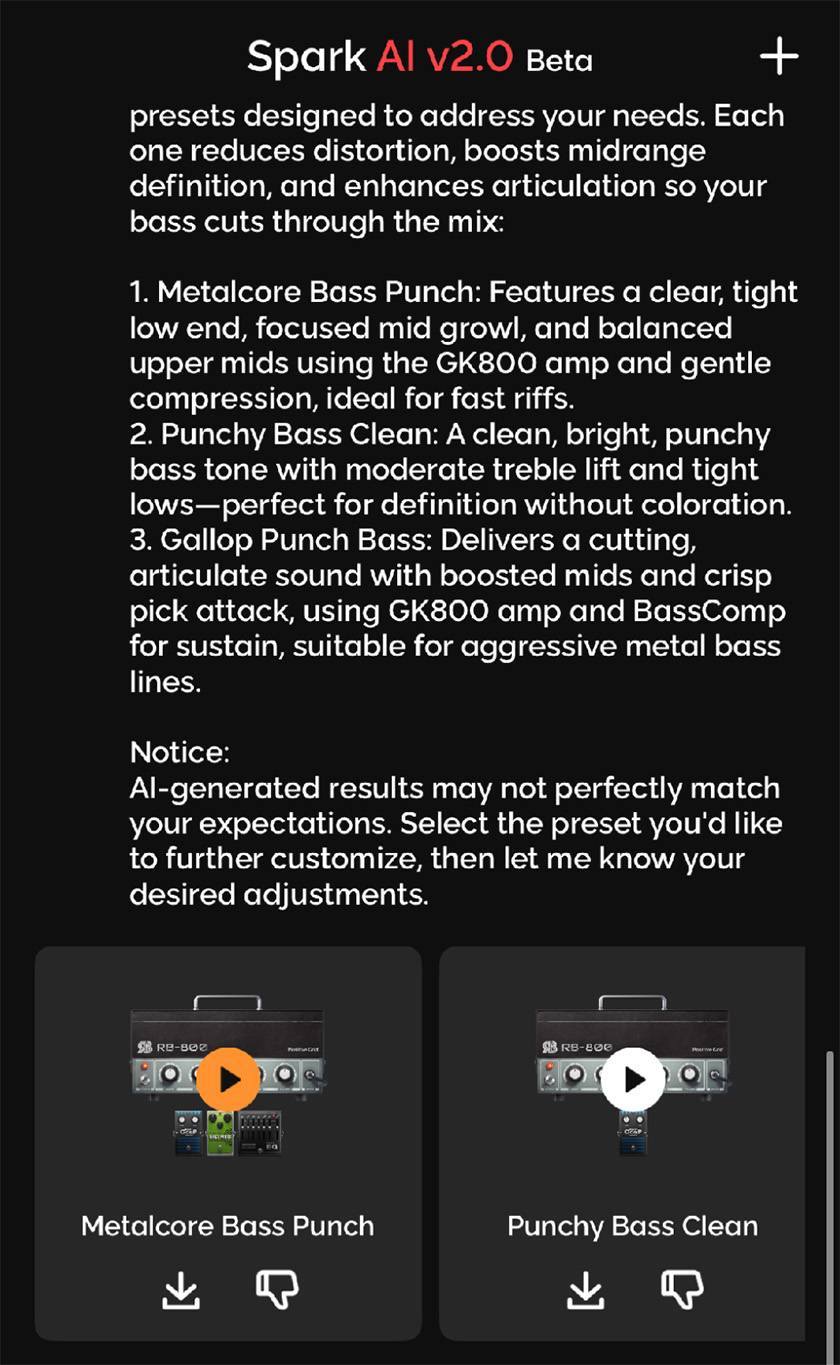
↑ It was also possible to create effects for bass guitar.
Conclusion
What do you think of Positive Grid’s much-anticipated new addition, the Spark PEDAL?
Positive Grid has achieved success with products such as the Spark GO and Spark NEO by directly responding to what players need. I think the Spark PEDAL is another excellent product that lives up to those expectations. Rather than offering extensive freedom in effect-chain routing or advanced effect-switching functions, it focuses on making high-quality sounds easy to try anywhere. And now, that ‘anywhere’ finally extends to the stage. I could really feel the steady evolution of the Spark Series in this product.
Whether it’s your first multi-effects processor, the centerpiece of a compact pedalboard, or a companion for trips and gigs away from home, this is a versatile unit that can be useful in a wide range of situations. Be sure to check it out!
See you next time!






 Positive Grid 特集
 【初心者向け】エフェクター講座
 あなたのエフェクターボード見せてください
 ベース用エフェクターの種類
 エフェクターのつなぎ方
 エフェクターの種類
 Discount Sale
 Outlet
 New Arrivals
 Podcast (streaming)
 Headphones / Earphones
 Microphones
 Wireless Equipment
 Speakers
 Power Amps
 Mixers
 Processors
 Portable PA Systems
 Recorders
 Karaoke
 Guitars
 Basses
 Ukuleles
 Drums & Percussion
 Pianos / Synthesizers
 Wind Instruments
 Stringed Instruments
 Japanese Instruments
 Harmonicas, Other
 Software
 DJ & VJ
 Stands
 Cables & Connectors
 Racks & Cases
 Lighting
 Stage & Truss
 Video Equipment
 PC PERIPHERALS
 Power Supplies
 Studio Furniture
 Household Items, Other
 Alcoholic Beverages