M44G Masterpieces Album Vol. 3 - Comparing the Stylus for M44G with the Beatles’ Album “Revolver”! [Side B]
In this blog series, I compare the sound of Nagaoka DJ-44G and 100Sounds RS-44-100B2 replacement styli for M44G/M44-7 by playing records of classic albums.
Last time, I compared their sound using Side A of the US original stereo pressing of The Beatles’ album Revolver. This time, I would like to continue with a comparison of the songs on Side B.
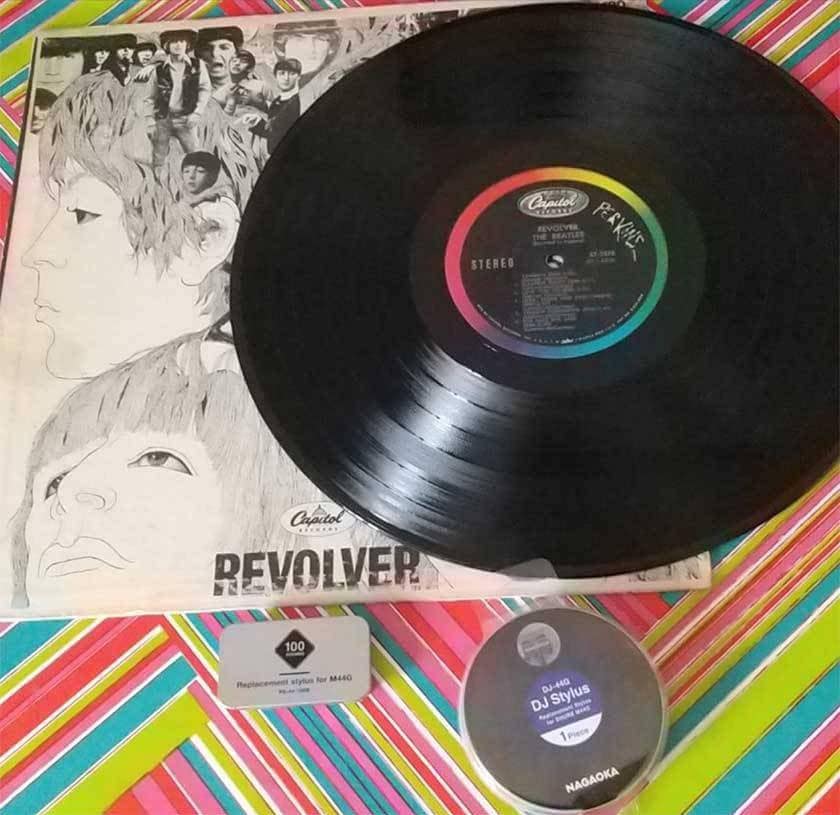
There have been various discussions online about the differences in sound between the UK and US pressings of this album, so I will not go into detail here. However, as I mentioned last time, my impression is that the UK pressing has a powerful sound that hits you straight in the body, while the US pressing has a panoramic, wide sound, as if a vast Hollywood landscape were spreading out right before your eyes. Last time, I also realized once again that the way the music sounds can differ slightly depending on the stylus, and I thoroughly enjoyed comparing them.
And now, Side B. Since it contains an ultimate psychedelic pop chaos in a state of frenzy, I am really looking forward to seeing what kind of differences we will hear this time.
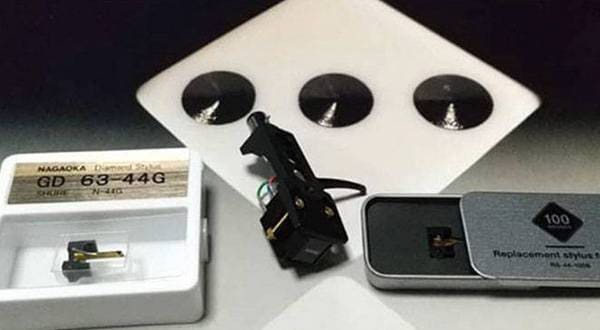
Before we start playback, let me introduce the two styli I got for this comparison.
Once again, the styli used this time are replacement styli from trusted Nagaoka and the up-and-coming DJ stylus brand 100Sounds.
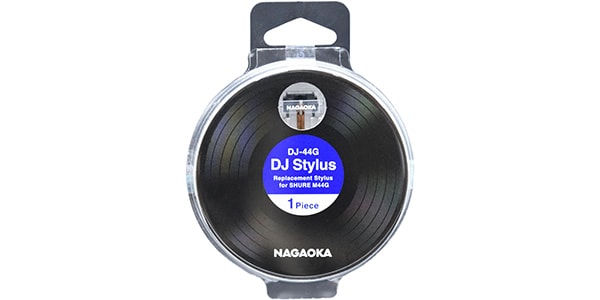
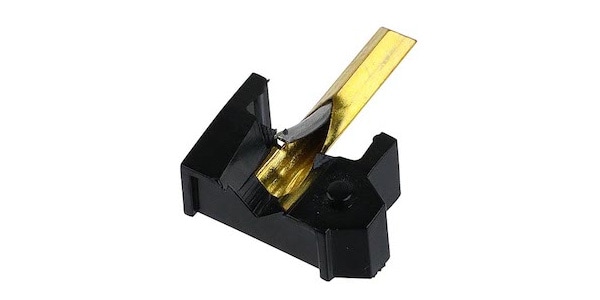
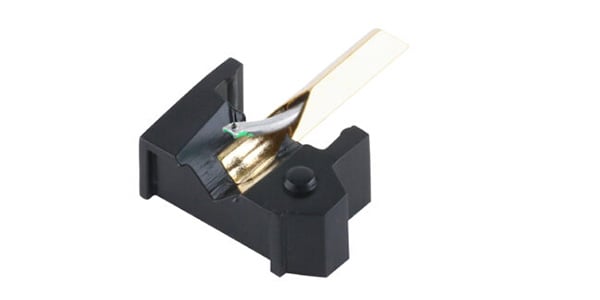
Nagaoka / DJ-44G - Replacement Stylus for M44G/M44-7
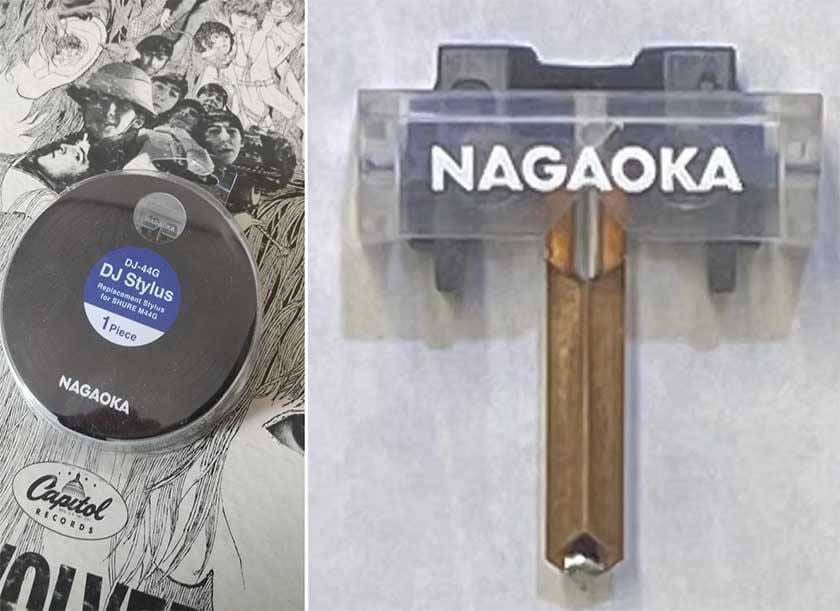
This model is said to achieve a powerful sound pressure and a dynamic sound with a delicate wide range, without sacrificing the tough, rock-solid sound quality of the original. Its sound quality is appealing both for listening closely and for getting fired up while DJing. The attention to detail of having a cover over the stylus tip, just like the old genuine Shure styli, is truly touching.
When I played the UK-made original single of Paul McCartney’s “Jet,” it seemed to perfectly reproduce the exquisite balance between the vividness of the brass and strings and the roughness of the guitar and vocals. I listen to the “Jet” single with this stylus.
100Sounds / RS-44-100B2 - Replacement Stylus for M44G/M44-7
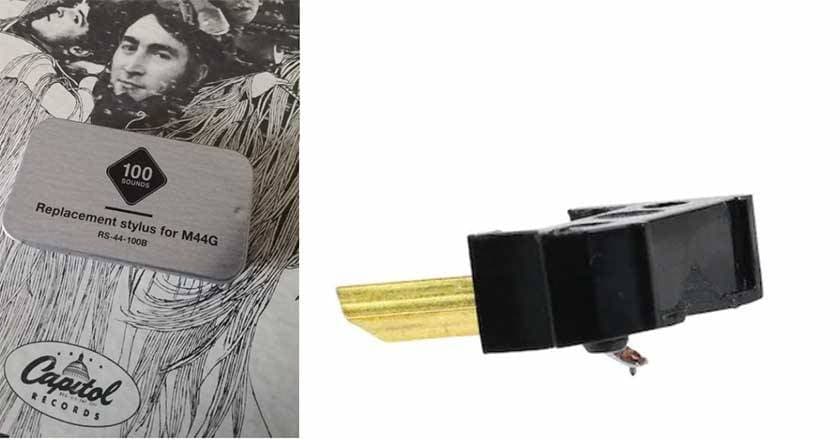
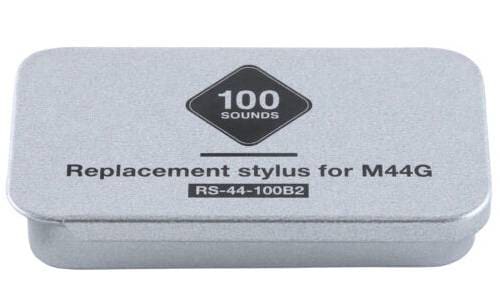
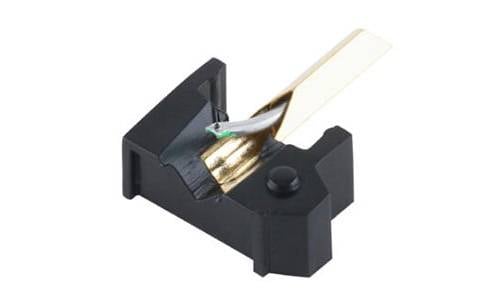
Its appeal lies in the way it makes various styles of music sound trance-like, and when playing reggae or soul, it produces a sound that emphasizes the roaring low end and the shouty vocals. Incidentally, when I played George Harrison’s album 33 1/3 with this stylus, the powerful, bottom-heavy, groovy sound was intense.
I always get excited at the moment I slide open the metal package.
Well then, let’s get started with the comparison!
Please note that these impressions are entirely subjective, and the sound quality will also vary depending on the turntable, amplifier, and speakers. Once again, I am playing the records on a relatively modest audio setup. On the other hand, I hope this will serve as a useful reference showing that even without particularly high-end equipment, you can still enjoy quite a lot of the power and realism of the original pressing and the M44G.
1. Good Day Sunshine
●100Sounds
The piano has a slightly muddy yet loud sound, giving it the character of old American music. Among that, I can sense an atmosphere connected to ’50s rock ’n’ roll—in other words, the key point is that you can enjoy the roughness in the sound of an American pressing! I like how you can feel the dubiousness of rock ’n’ roll even in such a bright, poppy song. Maybe it is because I am listening to it with that feeling in mind, but the reverb on the vocals also feels slightly stronger. It has a sound that tickles your oldies-loving heart, one that would probably be fun to listen to by following this song with Jerry Lee Lewis from his Sun Records period!
●Nagaoka
The vocals sound incredibly realistic, with the wonderful quality of making you feel as though he is singing right nearby! The piano on the left sounds even more old-fashioned than when heard with other cartridges or styli, which it has in common with 100Sounds. However, rather than old rock ’n’ roll, this one has a soothing tone that sounds like listening to an old vaudeville song on an SP record, making use of the roughness of this 1960s-made US original pressing in yet another way. The contrast between the clear, pure sound of the vocals and the muffled piano is irresistible. It gives me the same feeling of happiness as when listening to the Kinks from the 1970s.
2. For No One
●100Sounds
Paul’s vocals resonate so loudly and thickly that they almost sound brazen, making them feel incredibly fresh. What is interesting is that, despite this being a number that is essentially Paul’s solo showcase, the sound somehow still has a band-like quality. Perhaps this is a characteristic of 100Sounds—squeezing out the groove no matter what the song? Following “Good Day Sunshine,” the French horn has an even more old-fashioned sound, but here it is an approachable sound that makes me feel as though I am listening to an album by the Temperance Seven, the British traditional jazz band that George Martin produced before The Beatles.
●Nagaoka
Here, the vocals sound as though Paul is singing a little more carefully, with a resonance that seems to give the lyrics greater conviction. The sad lyrics sound as though he is singing them slowly and carefully while reading aloud from a book, reminding me of the opening section of the video for Paul’s “We All Stand Together.” The hi-hat on the right and the guitar sound realistic, while the French horn has a smooth and noble sound. It reminds me of scenes from the British drama Downton Abbey, which used to be broadcast on NHK.
3. I Want to Tell You
●100Sounds
The piano on the right resonates remarkably loudly, while the vocals and backing vocals sound incredibly powerful. The bottom-heavy sound of the bass and drums is also robust and has a live-like quality. For anyone who went to see George Harrison’s concerts in Japan, I think this is a sound that inevitably brings the opening back to mind.
●Nagaoka
The guitar in the intro has a clear and powerful sound. With this stylus, the piano is also fairly prominent, but overall, it is George’s world, with George’s voice taking powerful control of the sound! Amid all this, the handclaps are also incredibly clear. The tambourine resonates just the right amount, once again reminding me of the work of percussionist Ray Cooper, who could also be seen performing at George’s concerts in Japan.
4. Got to Get You Into My Life
●100Sounds
With the 100Sounds stylus, the tambourine sounds particularly loud and stands out in this song. It was the first time I had ever been so conscious of the tambourine in this song, and I realized once again that it is a soulful number suited to the club. The dynamics of the drums and brass are relatively difficult to perceive, and they sound as though they continue with an almost consistently steady groove throughout, making it a sound that makes you want to keep dancing. Northern Soul records also get you really fired up when you listen to them with this stylus. Indeed, I can see why.
●Nagaoka
With Nagaoka, the drums and tambourine are not so loud as they are clear. Here, the dynamics of the brass are easier to hear, creating a sound that reminds me of the experience of being in a recording studio. The vocals sound more forward, and the brilliance of the brass is simply irresistible. It brings back the excitement I felt when Paul performed this song with live brass at his 2018 concert in Japan.
5. Tomorrow Never Knows
●100Sounds
I think this song is exactly where the real fun of comparing the two styli lies. First, let’s play “Tomorrow Never Knows” with 100Sounds. The bassline runs wild in a tremendously powerful looping frenzy. In opposition to it, the intensely looping hi-hat sounds like it forms the core of the song. Without feeling much of the dynamics of the rhythm section, John’s vocals, which sound as though they are calmly and holistically speaking to you, resonate without being particularly loud. It is a sound that focuses on the trance-like side of this song. Listening to it this way, rather than simply thinking of it as a classic of psychedelia, it is perfect when you want to hear it as a timeless floor-killer classic, without even having to cite The Chemical Brothers’ “Setting Sun,” which was later influenced by it. What euphoria this is for those who want to “use” it!
●Nagaoka
From the tumbler at the intro onward, the sound has tremendous power. With the Nagaoka stylus, the bass and hi-hat sounds are so clearly defined that you can even hear the dynamics—that is, the performer’s individual playing habits. You can also tell that those playing habits contribute to the chaos of this song just as much as the tape-loop sound effects do. As a result, the hi-hat sounds less rhythmic and more like it is amplifying the power of the sound effects. The left-to-right movement of the tape loops and other sound-effect solos is emphasized even more strongly, allowing you to fully immerse yourself in the innovative aspects of this song. It was truly a goosebump-inducing sound. Even the piano at the end sounds clearer, while still making use of the characteristic roughness of the US pressing here as well. It felt like I had enjoyed every last bit of the crab meat without leaving anything behind!
And so, I have compared The Beatles’ album Revolver using these two styli. Both M44G replacement styli have their own distinct personalities. To be honest, it is difficult to say which is better, but what kind of M44G magic will emerge when I compare them on other classic rock albums?
So, what will the next classic album comparison be...?





![M44G Masterpieces Album Vol. 2 - Comparing the Stylus for M44G with the Beatles’ Album “Revolver”! [Side A]](/contents/uploads/thumbs/2/2024/10/20241029_2_29186_1.jpg)

![Hot Selling DJ Equipment & Popularity Ranking [Record Needle/Cartridge Edition]](/contents/uploads/thumbs/2/2022/7/20220716_2_18645_1.jpg)
![[Make the most of your time at home!] Introduction of DJ equipment & vinyl record cleaners!](/contents/uploads/thumbs/2/2021/1/20210122_2_12107_1.jpg)
 Shimbol ビデオモニター&レコーダー 比較表
 CLASSIC PRO モニタースタンド特集
 スタジオモニタースピーカーを選ぶ
 音楽好きSNSアプリ SOUND NAVI
 音楽フェスをご紹介
 ケーブル購入ガイド
 Discount Sale
 Outlet
 New Arrivals
 Podcast (streaming)
 Headphones / Earphones
 Microphones
 Wireless Equipment
 Speakers
 Power Amps
 Mixers
 Processors
 Portable PA Systems
 Recorders
 Karaoke
 Guitars
 Basses
 Ukuleles
 Drums & Percussion
 Pianos / Synthesizers
 Wind Instruments
 Stringed Instruments
 Japanese Instruments
 Harmonicas, Other
 Software
 DJ & VJ
 Stands
 Cables & Connectors
 Racks & Cases
 Lighting
 Stage & Truss
 Video Equipment
 PC PERIPHERALS
 Power Supplies
 Studio Furniture
 Household Items, Other
 Alcoholic Beverages