Hello, I’m Joshua and I love talking about Western music. For the second article, I’ll be focusing on the legendary drummer of the rock world, Carmine Appice. If I were to describe him in one line: “The living encyclopedia of hard rock drumming—those thundering bass drums all started with him.” In Japanese media, his name is usually written as “アピス” (Apisu), but even Westerners struggle with the pronunciation of his surname. As he jokes himself, pronounced in the traditional Italian way of his ancestors, it’s “Appice,” within his family it’s “Appicy,” and after Rod Stewart suggested standardizing it for stage purposes, it became “Appice” as we know it.
Writing out Carmine’s career alone is like recounting the history of hard rock. Born in 1946 in New York, Carmine made his debut in 1967 with the psychedelic rock band (as it was called back then) Vanilla Fudge. After leaving Vanilla Fudge, he planned to form a trio with guitarist Jeff Beck and Vanilla Fudge’s longtime friend Tim Bogert (bass, vocals), but the plan was derailed by Jeff’s traffic accident. Instead, Carmine and Tim went on to form the hard rock band Cactus. After Cactus disbanded, a few years later they formed Beck, Bogert & Appice (BB&A), which dissolved after just one original album in 1973 (plus a live album released exclusively in Japan).
■ BB&A “Superstition” (1973)
This song was originally offered to Jeff Beck by Stevie Wonder, but Stevie later released it on his own album, where it became a hit. This video is from the May 1973 Santa Monica performance. Jeff uses a talking modulator (a speaker-equipped hose held in the mouth that creates a talking-like effect), Tim’s bass is heavily distorted, and Carmine hits a crash on the “offbeat” of the A section—drumming so wild it hardly seems like backing for a song.
In 1977, Carmine joined Rod Stewart’s band, the former Faces singer, helping energize Rod’s peak period. He also contributed as a songwriter to the huge hit “Da Ya Think I’m Sexy?” (Japanese title: “I’m Sexy”). In 1983, he joined Ozzy Osbourne’s band during the Jake E. Lee era. However, he was abruptly fired unilaterally by Ozzy’s manager Sharon (Ozzy’s wife), which later led to a lawsuit (though reportedly his friendship with Ozzy continued).
■ Rod Stewart “Hot Legs” (1977)
One of the finest rock ’n’ roll numbers in Rod’s solo catalog. Here, Carmine uses a heavy amount of cymbals from the A section of the vocals, adds fills throughout the chorus, and plays so energetically it’s almost surprising Rod didn’t get upset. The cheap-feeling promotional video adds to the charm.
Carmine also led younger musicians in the heavy metal band King Kobra, and later formed Blue Murder with former Whitesnake guitarist John Sykes (g, vo) and former The Firm bassist Tony Franklin (b), gaining significant popularity. After the band went on hiatus, he participated in recordings with Pink Floyd and Marty Friedman, collaborated in units with guitarists like Pat Travers and Rick Derringer, and more recently formed a drum duo unit with his drummer brother Vinnie, touring actively.
■ Blue Murder “Blue Murder” (1989)
The intro alone—with tank-like heavy snare fills and half-time shuffle is already overwhelming, but then Tony Franklin’s fretless bass and John Sykes’ metallic guitar enter one after another, creating a sonic feast that only these three could achieve.
Carmine’s style is characterized by playing a large double-bass drum set at high volume, adding swinging, intricate fills, and performing over-the-top, flashy stage actions. His cymbal work is also distinctive, often reversing the sides of China cymbals for a standout sound. Influences include drummers such as John Bonham (Led Zeppelin), Neil Peart (Rush), Ian Paice (Deep Purple), Cozy Powell (Rainbow, etc.), and Phil Collins (Genesis), among many others.
However, Carmine’s style is not just brute force. Behind it, you can clearly feel the influence of big band jazz drummers such as Gene Krupa and Buddy Rich. The fact that he was friends with Buddy Rich, who was famously anti-rock, is a testament to this influence.
As a personal memory, I saw the reformed Vanilla Fudge on January 18, 2005, at the 9:30 Club in Washington DC, and the reformed Cactus on December 8, 2012, at Shimokitazawa Garden.
At the former, the opening acts were Canned Heat and Mountain, with special guest Pat Travers—both the performers and audience had an average age that was a lot older—but Carmine delivered top-level playing full of vitality, while still conveying the weight of his long career. You could feel that weight from a single bass drum hit; he twirled his sticks every bar, stood from his chair during breaks to pump up the crowd, struck cymbals like he was taking revenge, alternated snare, open hi-hat, and bass drum in sixteenth notes, and added plenty of triplets and sextuplets. He even held the hi-hat stand like a vocalist’s mic stand with one hand while pounding the hi-hat with the other. It was truly playing with complete freedom. The amazing thing was that all this wild playing and performance still perfectly fit into the band’s ensemble. One of my fondest memories is receiving two sticks he threw into the crowd during the performance (one of which was broken).
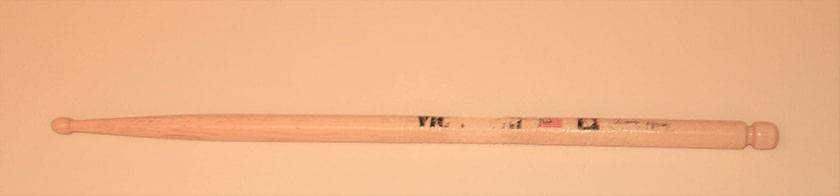
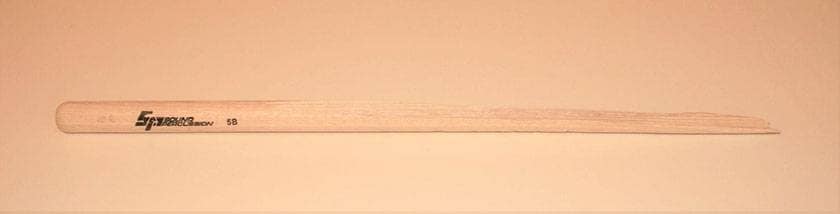
At the latter concert, I still vividly remember his drum solo. The classic high-speed double bass, playing rhythms while doing call-and-response with the vocals—he generously showed all of that. He played complex rhythms with just one stick, came to the front of the stage, and made the audience clap while performing using only drumsticks, demonstrating incredible showmanship. On YouTube, you can enjoy watching his drum solo from a Vienna performance around the same time.
■ Cactus “Evil” (with drum solo)
At the time of writing this article, Carmine is 74 years old, but during the COVID-19 pandemic, he actively updated social media and showcased his powerful drumming. Once the pandemic ends, I hope he will perform for his fans in Japan so they can witness his drumming live.
The “sound & person” column is made up of contributions from you.
For details about contributing, click here.


 Discount Sale
 Outlet
 New Arrivals
 Podcast (streaming)
 Headphones / Earphones
 Microphones
 Wireless Equipment
 Speakers
 Power Amps
 Mixers
 Processors
 Portable PA Systems
 Recorders
 Karaoke
 Guitars
 Basses
 Ukuleles
 Drums & Percussion
 Pianos / Synthesizers
 Wind Instruments
 Stringed Instruments
 Japanese Instruments
 Harmonicas, Other
 Software
 DJ & VJ
 Stands
 Cables & Connectors
 Racks & Cases
 Lighting
 Stage & Truss
 Video Equipment
 PC PERIPHERALS
 Power Supplies
 Studio Furniture
 Household Items, Other
 Alcoholic Beverages