




- Guitars
- GUITAR EFFECTOR
- Fuzz
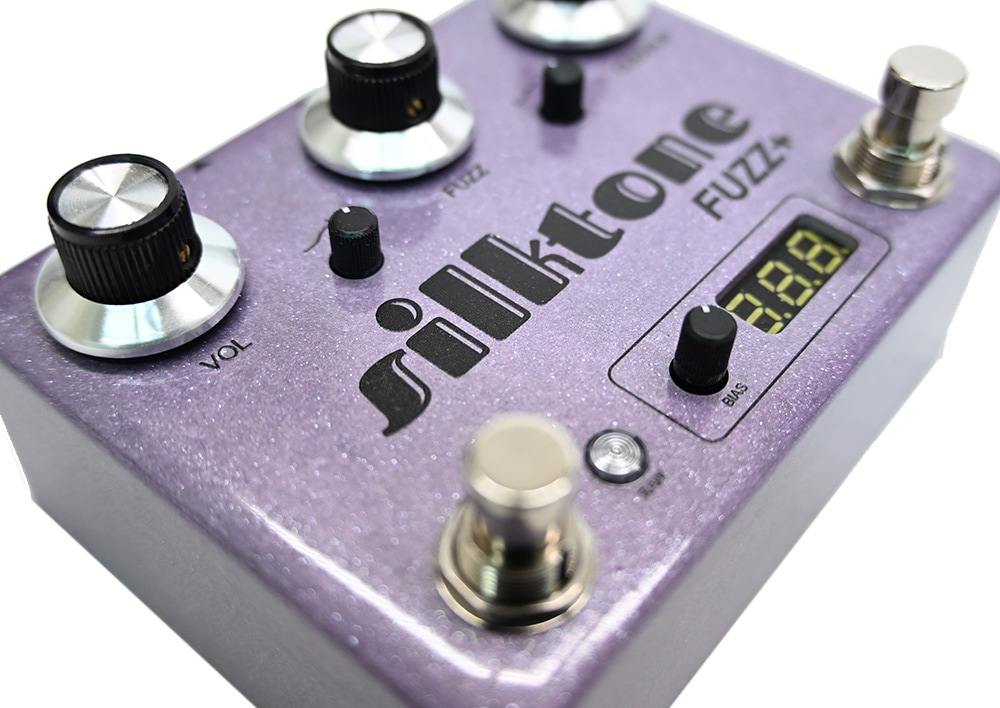
- Silktone/FUZZ+ PEARL LAVENDER 【サウンドハウス限定カラー】
Silktone / FUZZ+ PEARL LAVENDER 【サウンドハウス限定カラー】



Variations
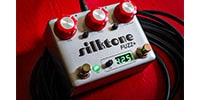
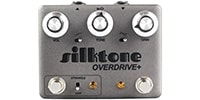
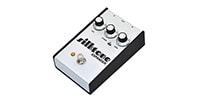
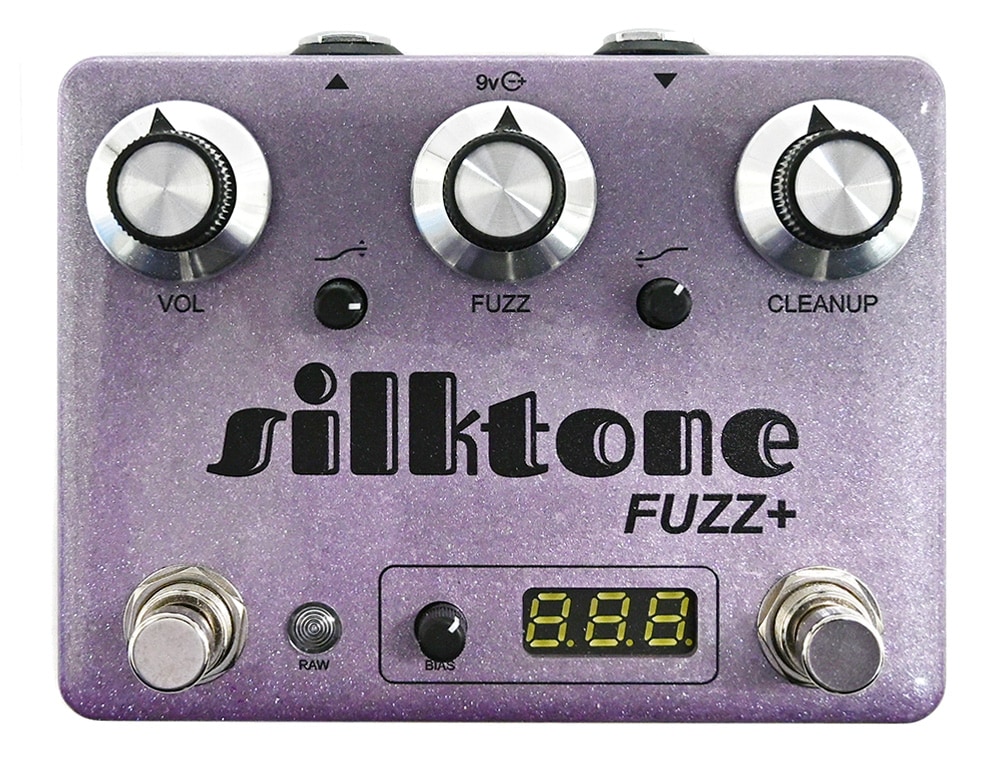
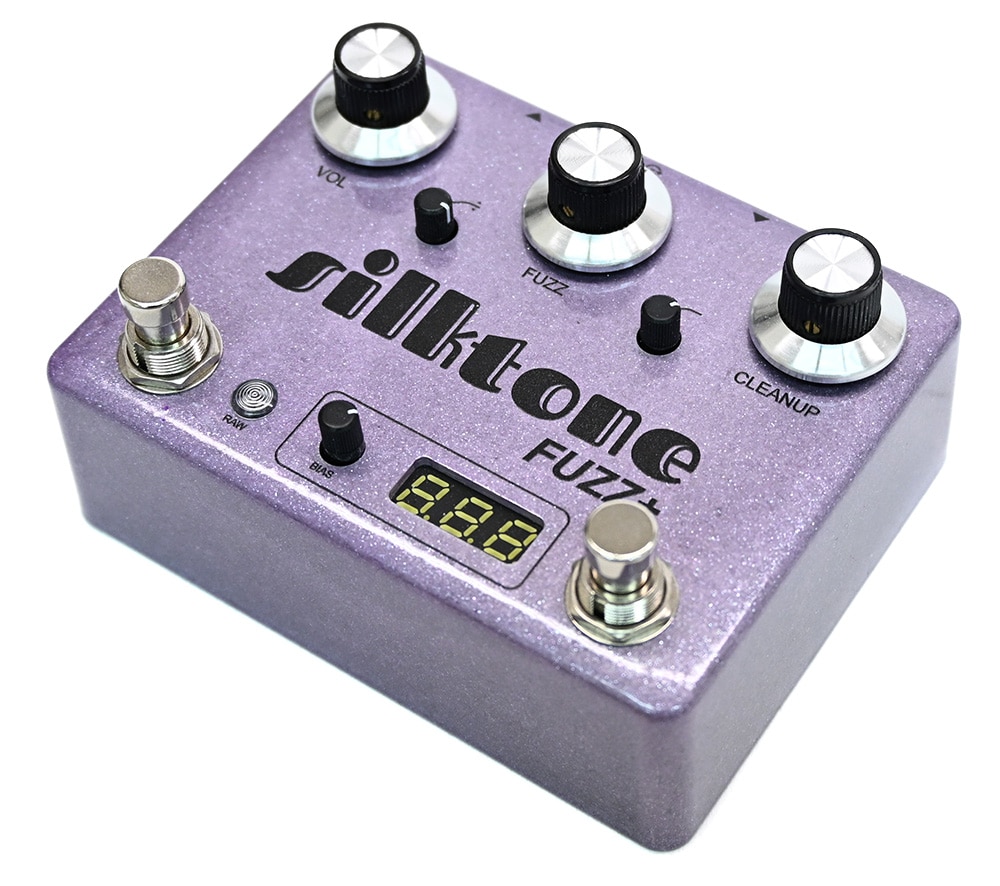
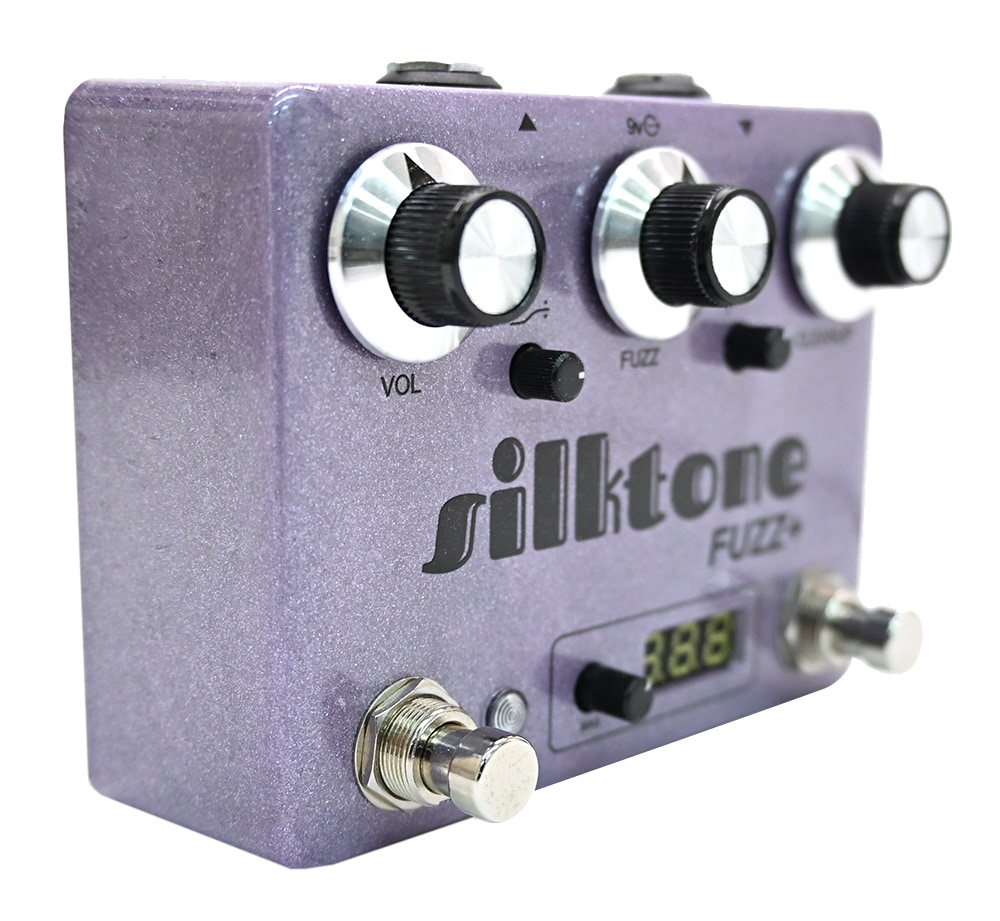
<> At the heart of the Silktone Fuzz+ are two germanium transistors that can be fine-tuned to deliver a wide range of tones and eliminate all the common issues that typically occur with germanium fuzzes. We wanted to recreate the great tone you know and love when these transistors are biased in their sweet spot, and even when they're not.
The unique bias control makes it easy to achieve all of this.
Want that sweet spot? - Set it to 4.50.
Prefer a fat, sticky fuzz? - Set it to 7.50 or higher.
Want a gating fuzz with a spitting sound? Yeah, me too - Set it to 1.00.
■What the heck is the ""CLEANUP"" knob?
Cranking this knob up cleans up the fuzz. It works in conjunction with the pickup simulator by mimicking your guitar's volume knob, giving you the cleaner, sparklier boost/light overdrive tone that's characteristic of a good germanium fuzz when you back off a little.
■Why is there a ""pickup simulator""?
Because many fuzzes have very low input impedance, placing a high-impedance guitar in front of them produces a very pleasant high-mid bump and roll-off, while maintaining a relatively gentle and musical sound. Connecting a low-output-impedance buffer or other pedal before a typical low-impedance fuzz pedal results in a very unpleasant squealing and a complete loss of musicality and nuance. Anyone who's ever placed a buffered Tube Screamer or wah before a fuzz pedal knows this all too well. The Silktone Fuzz+ corrects this problem with an onboard pickup simulator, so no matter where you place the pedal in the chain, it behaves just like a direct-plugged guitar. I like using it after a cooked-back wah for its cool Q filtering.
■What is ""bias""?
Bias is the operating voltage of a transistor, determining how it distorts and clips the audio signal. To achieve adjustable bias in a Fuzz Face circuit, there are a few common approaches most builders take. One is to make both transistors adjustable. This can easily complicate things, as the transistors interact with each other and the first transistor is very sensitive to changes. It's difficult to nail down a consistently good tone, especially with germanium, which is sensitive to temperature...
Another approach (one I see often) is to make only the second transistor adjustable. This narrows the tonal range, but works better unless you use germanium and don't let it get temperature-driven, which would mean there's no compensation for the first transistor, which could get totally out of whack.
We take a slightly different approach to either of these. The beauty of the Fuzz Face circuit is that the two transistors are directly coupled, so changing the value of one automatically affects the value of the other. We take advantage of this by carefully biasing both transistors internally to get them in the state we want, and then using the external bias control to achieve a wide, easily accessible range of tones. All of these tones are characteristically great-sounding and can be easily recalled at any time (or regardless of temperature).
■Why an LED Bias Meter?
Because germanium fuzz is so sensitive to temperature, even adjusting the bias knob on other pedals becomes completely meaningless if the temperature fluctuates significantly. You have to adjust it by ear every time, which isn't always easy. If you only have a traditional bias knob with no display and you set it around 10 o'clock in a 70°F room and it sounds great, you might then play outside in 90°F or in a 50°F basement. The previous 10 o'clock position will sound completely different, probably causing a gating effect or something, forcing you to find a new spot you like every time. This has always been a pain for me.
The Silktone Fuzz+'s Active Bias Monitor eliminates the guesswork. Just memorize the number that matches the tone you're going for, and the meter will reflect any significant temperature changes, so you can quickly and easily return it to your preferred position and never have to worry about it again. No need to constantly shift—just a big temperature fluctuation. It also doubles as an on/off indicator, and it looks really cool.
Specifications
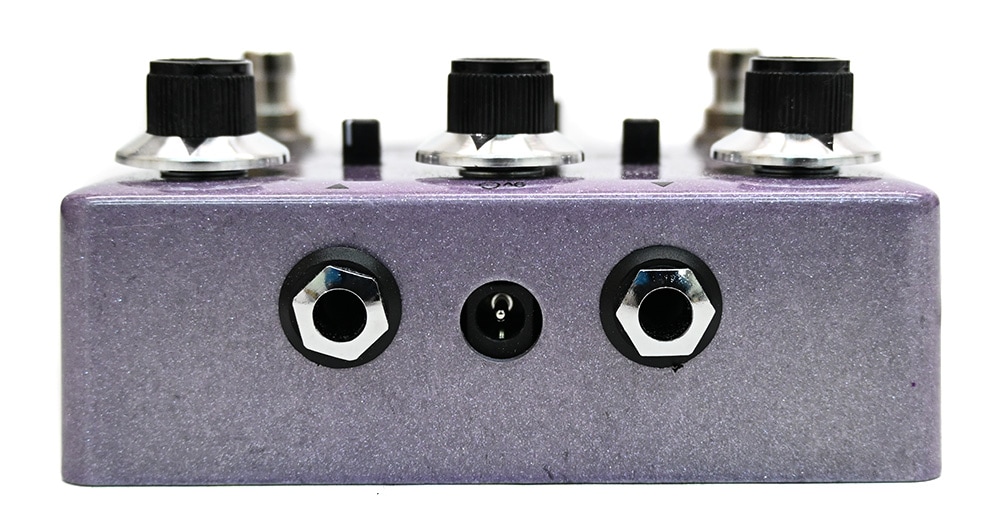
Power Supply: 9V DC (center negative). Daisy chain connection possible. Current Consumption: 35mA
Want that sweet spot? - Set it to 4.50.
Prefer a fat, sticky fuzz? - Set it to 7.50 or higher.
Want a gating fuzz with a spitting sound? Yeah, me too - Set it to 1.00.
■What the heck is the ""CLEANUP"" knob?
Cranking this knob up cleans up the fuzz. It works in conjunction with the pickup simulator by mimicking your guitar's volume knob, giving you the cleaner, sparklier boost/light overdrive tone that's characteristic of a good germanium fuzz when you back off a little.
■Why is there a ""pickup simulator""?
Because many fuzzes have very low input impedance, placing a high-impedance guitar in front of them produces a very pleasant high-mid bump and roll-off, while maintaining a relatively gentle and musical sound. Connecting a low-output-impedance buffer or other pedal before a typical low-impedance fuzz pedal results in a very unpleasant squealing and a complete loss of musicality and nuance. Anyone who's ever placed a buffered Tube Screamer or wah before a fuzz pedal knows this all too well. The Silktone Fuzz+ corrects this problem with an onboard pickup simulator, so no matter where you place the pedal in the chain, it behaves just like a direct-plugged guitar. I like using it after a cooked-back wah for its cool Q filtering.
■What is ""bias""?
Bias is the operating voltage of a transistor, determining how it distorts and clips the audio signal. To achieve adjustable bias in a Fuzz Face circuit, there are a few common approaches most builders take. One is to make both transistors adjustable. This can easily complicate things, as the transistors interact with each other and the first transistor is very sensitive to changes. It's difficult to nail down a consistently good tone, especially with germanium, which is sensitive to temperature...
Another approach (one I see often) is to make only the second transistor adjustable. This narrows the tonal range, but works better unless you use germanium and don't let it get temperature-driven, which would mean there's no compensation for the first transistor, which could get totally out of whack.
We take a slightly different approach to either of these. The beauty of the Fuzz Face circuit is that the two transistors are directly coupled, so changing the value of one automatically affects the value of the other. We take advantage of this by carefully biasing both transistors internally to get them in the state we want, and then using the external bias control to achieve a wide, easily accessible range of tones. All of these tones are characteristically great-sounding and can be easily recalled at any time (or regardless of temperature).
■Why an LED Bias Meter?
Because germanium fuzz is so sensitive to temperature, even adjusting the bias knob on other pedals becomes completely meaningless if the temperature fluctuates significantly. You have to adjust it by ear every time, which isn't always easy. If you only have a traditional bias knob with no display and you set it around 10 o'clock in a 70°F room and it sounds great, you might then play outside in 90°F or in a 50°F basement. The previous 10 o'clock position will sound completely different, probably causing a gating effect or something, forcing you to find a new spot you like every time. This has always been a pain for me.
The Silktone Fuzz+'s Active Bias Monitor eliminates the guesswork. Just memorize the number that matches the tone you're going for, and the meter will reflect any significant temperature changes, so you can quickly and easily return it to your preferred position and never have to worry about it again. No need to constantly shift—just a big temperature fluctuation. It also doubles as an on/off indicator, and it looks really cool.
Specifications
Power Supply: 9V DC (center negative). Daisy chain connection possible. Current Consumption: 35mA
関連商品
-
¥10,800(incl. tax)
 In Stock
 -
¥110(incl. tax)
In Stock -
¥80(incl. tax)
In Stock -
 ELECTRO-HARMONIX / EHX 9V Battery
¥250(incl. tax)
In Stock -
 PLAYTECH / Position Seal Red/White
¥380(incl. tax)
In Stock -
 CLASSIC PRO / Power adapter DC9V 0.5A 2.1mm center negative
¥680(incl. tax)
 Back Order
 -
 One Control / HOOK & LOOP - HOOK 1m
¥416(incl. tax)
In Stock -
 One Control / HOOK & LOOP - LOOP 1m
¥416(incl. tax)
In Stock -
¥580(incl. tax)
Back Order -
¥2,860(incl. tax)
In Stock
 TC ELECTRONIC / Polytune 3
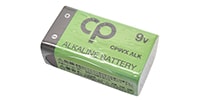 CLASSIC PRO / CP9VX ALK
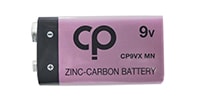 CLASSIC PRO / CP9VXMN
 PLAYTECH / Pedal Riser 10
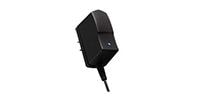 BOSS / PSA-100S2
商品レビューProduct Review




不適切な投稿として報告しますか?
理由
ご協力ありがとうございました
投稿を削除しますか?
投稿されたレビューを削除しました。
Silktone
FUZZ+ PEARL LAVENDER 【サウンドハウス限定カラー】
Item ID:381012
49,940 yen(incl. tax)

499Pt(1%)Detail
- 499Pts
通常ポイント
- 499Pts
Total
- In Stock
- In Stock, can be shipped when order is confirmed.
- Low Stock
- Low Stock, may be sold out soon.
- Scheduled date
- Expected to arrive at Sound House on this date.
- TBA
- Expected date of arrival at Sound House to be determined.
- Back Order
- It needs to be orderd from the manufacturer. Please inquire about the estimated date of arrival.
- Mfr. Delivery
- Must be ordered from manufacturer. Please inquire about the estimated date of arrival.
- Download
- Only the serial number will be sent to your registered email address.
- Special Order
- Made to order item or must be ordered from manufacturer. May take several weeks or months.
- No Longer Available
- Product is no longer available due to having been discoutined or other reasons.
Rating


この商品に関連するセレクションRelated Articles



-
 Discount Sale
-
 Outlet
-
 New Arrivals
-
 Podcast (streaming)
-
 Headphones / Earphones
-
 Microphones
-
 Wireless Equipment
-
 Speakers
-
 Power Amps
-
 Mixers
-
 Processors
-
 Portable PA Systems
-
 Recorders
-
 Karaoke
-
 Guitars
-
 Basses
-
 Ukuleles
-
 Drums & Percussion
-
 Pianos / Synthesizers
-
 Wind Instruments
-
 Stringed Instruments
-
 Japanese Instruments
-
 Harmonicas, Other
-
 Software
-
 DJ & VJ
-
 Stands
-
 Cables & Connectors
-
 Racks & Cases
-
 Lighting
-
 Stage & Truss
-
 Video Equipment
-
 PC PERIPHERALS
-
 Power Supplies
-
 Studio Furniture
-
 Household Items, Other
-
 Alcoholic Beverages
Search by Brand
Brand List






- Sound House
- 〒286-0825 14-3 Shinizumi , Narita City, Chiba
- Monday-Friday 10:00-17:00
- Narita Call Center
- TEL. 0476-89-1111
- FAX. 0476-89-2222
- Tokushima Call Center
- TEL. 0885-38-1111
- FAX. 0885-38-1100
- Showroom Hours
- Monday-Friday 10:00-17:00
closed on Saturdays, Sundays and Holidays


© Sound House

すべてのレビューを見る